How to visualize architectural concepts in SketchUp using D5 Lite for faster design exploration.
How to visualize architectural concepts in SketchUp using D5 Lite for faster design exploration.
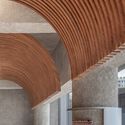
The week began with World Architecture Day, drawing attention to the global housing crisis as a fundamental element of human dignity, inclusion, and well-being. In a joint message between the UIA and the United Nations, this year's call is to focus disciplinary efforts on building not only residential structures but also systems to better distribute and use what already exists, proposals that enable new ways of living and alternatives for a more sustainable industry. Aligned with this concept, we featured three projects where reuse and representation converge, and three others that help establish a dialogue between what we consider old and what we can expect from the new. On this week's radar, we find another instance to reexamine the canons of modern architecture in Switzerland, the start of construction on a translucent yet hurricane-resistant building in the United States, and a winning entry for a mixed-use urban complex in Austria.

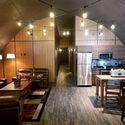
Far from simply transporting goods from A to B, shipping containers have become a go-to building material across the US, forming the basis of everything from tiny homes to container pools, site offices to workshops. But given the size of the country, and the range of climates found within its borders, the approach to container architecture can vary significantly from state to state, even county to county.
A container conversion in the desert Southwest faces very different conditions from one in New England, while projects along the Gulf Coast must account for humidity, storms, and salt air. These regional differences can influence everything from insulation and ventilation to roofing, foundations, and exterior protection. Let's take a closer look at these regional approaches, the local climate challenges to consider before a build, and the adaptations that can address them.
The North Gate of Taipei, also known as Beimen, stands not only as a reminder of the city's complex history but also as a witness to the changing urban landscape around it and its shifting attitudes towards the urban spaces bordering heritage buildings. Initially a Chinese imperial frontier, spared from demolition during the Japanese colonial dominion, crowded by overpasses and highways in the postwar modernization efforts, it has recently regained its prominent status through the development of the plaza that now frames it. The gate's resilience through shifting urban priorities and architectural policies tells a story of heritage preservation not only through the built form, but also through the open spaces framing it.


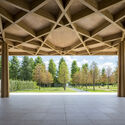
The timber-framed structure designed by Marlon Blackwell Architects for the U.S. Pavilion at the 2025 Venice Architecture Biennale will be reconstructed at Crystal Bridges Museum of American Art in Bentonville, Arkansas, in late 2027. Originally installed in the Giardini as part of PORCH: An Architecture of Generosity, the structure will return in a new setting as a freestanding pavilion on the museum's 134-acre campus. Following the close of the Biennale in November 2025, it was dismantled and transported from Venice to Arkansas, where it has remained in storage ahead of its planned reconstruction.


Architecture firm HENN has launched CarbonBudget, a digital tool that calculates project-specific CO2 budgets for buildings. The new platform, free of charge, is a contribution for designers to help reach the 1.5°C target, a global goal from the Paris Agreement to limit long-term global warming to 1.5°C above pre-industrial levels. As the construction industry is responsible for around one-third of global CO2 emissions, architectural design decisions can effectively contribute to containing global warming. The tool is designed to calculate whether the emissions of a building project located in Europe are compatible with the Paris Agreement target, based on specific inputs such as location and building area. The new platform joins other projects from international offices such as MVRDV NEXT's CarbonSpace, Grimshaw's Minoro, and Henning Larsen's OpenDetail, addressing decarbonization through shared digital information.

In the face of the climate crisis and within the framework of the United Nations Sustainable Development Goals, the reuse of materials has become prominent in the fields of construction and architecture in recent years. From "urban mining" to life cycle assessments (LCAs), professionals, organizations, and researchers are exploring different solutions and strategies to address the same overarching challenge. Project (Un)Build is a research initiative developing reversible timber construction methods that use straps and friction pads to facilitate material reuse. It contributes to the ongoing debate and reflection on the act of building itself.