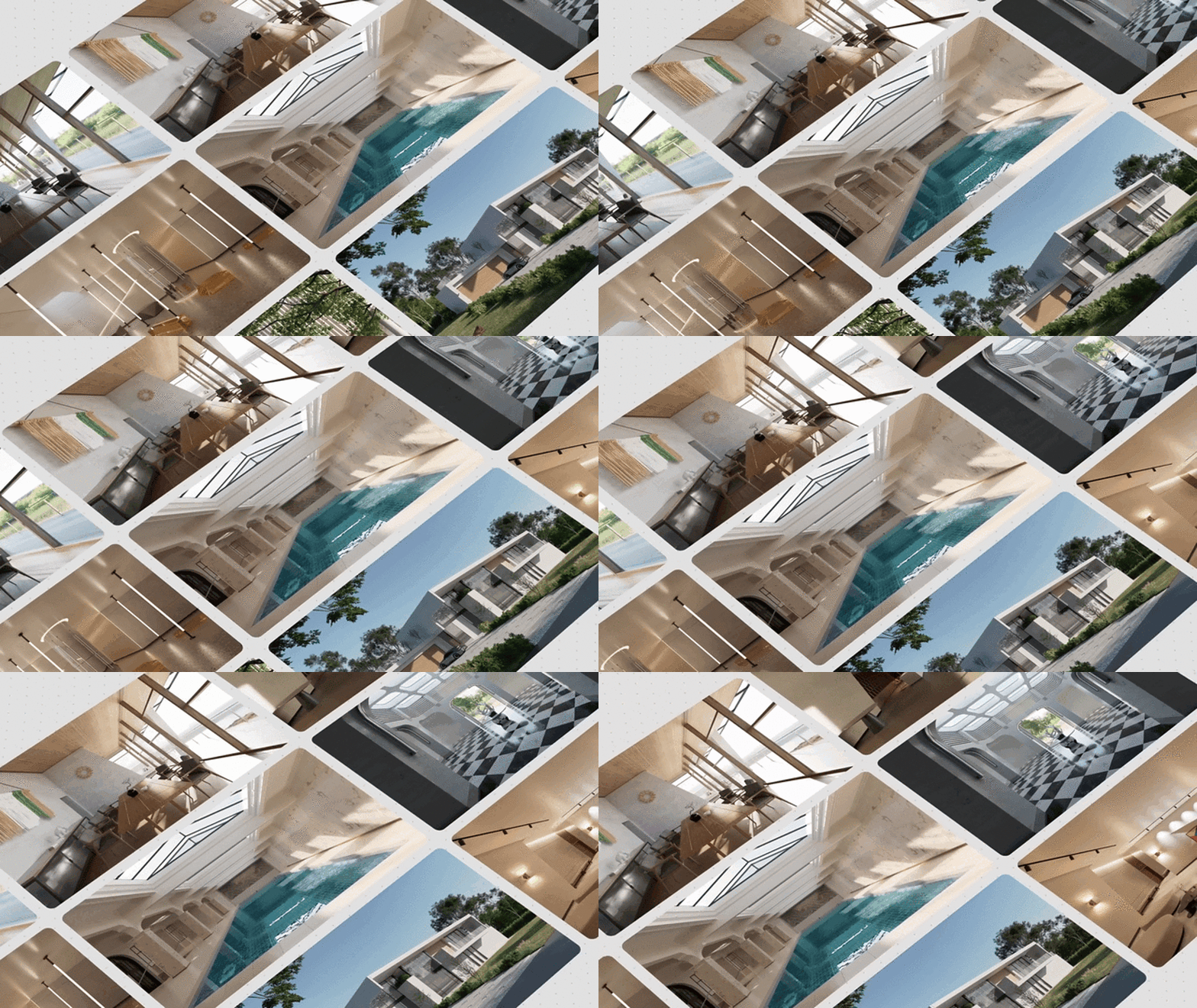
How to visualize architectural concepts in SketchUp using D5 Lite for faster design exploration.
How to visualize architectural concepts in SketchUp using D5 Lite for faster design exploration.

Wellbeing is no longer confined to exclusive resorts, spas, or hospitality settings. Today, it has become an essential part of contemporary living, inspiring homeowners to create private spaces dedicated to relaxation and personal care. Collections such as LEMI's Home Spa Collection explore this growing interest in residential wellness through a selection of massage beds and relaxation loungers.

What happens when architecture is asked to create a room without boundaries? Convention halls, stadiums, factories, and logistics centers all begin with the same architectural challenge: creating large, uninterrupted interiors that can accommodate movement, visibility, and changing uses. The larger the span, the greater the structural demands, and the greater the architectural possibilities.
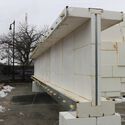
Long-span architecture is not a recent ambition. For centuries, architects have sought ways to enclose large public spaces, from the monumental dome of the Pantheon to the iron-and-glass halls of London's Crystal Palace. Each breakthrough expanded the possibilities of architecture, replacing thicker walls and denser structural systems with lighter, more efficient ways of spanning distance. Today, steel continues that evolution, making it possible to span distances that would be difficult to achieve with conventional structural systems while keeping large public spaces open, flexible, and adaptable. Steel's high strength-to-weight ratio makes longer spans possible with fewer columns and lighter structural systems, while prefabricated components simplify construction and reduce on-site work.

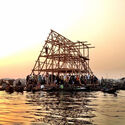
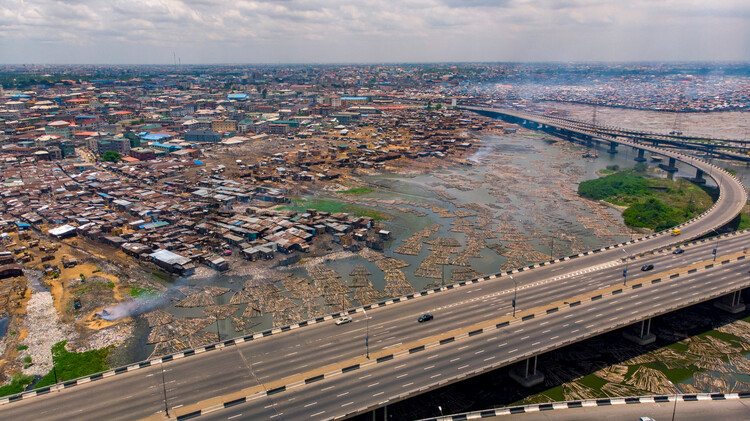
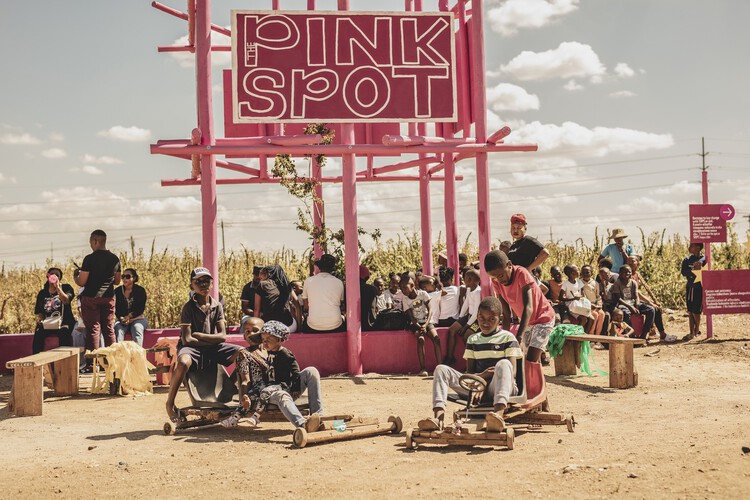
Lagos is a city shaped by time, human interaction, the forces of nature, and its evolving, sometimes uneasy relationship with all three. Nowhere is this more visible than when the rain comes.
Eko sits on a floodplain. Its geographical condition predates the city itself, reaching back to a time before the first road was laid, the first boundary drawn. The drainage systems, the developments that have gradually become privatised waterfronts, are all built on a landscape that has always been, at its foundation, in continuous conversation with water. The flood is not an anomaly; it is the land insisting on a dialogue that was always going to return.

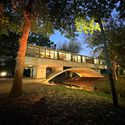
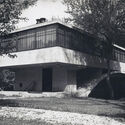
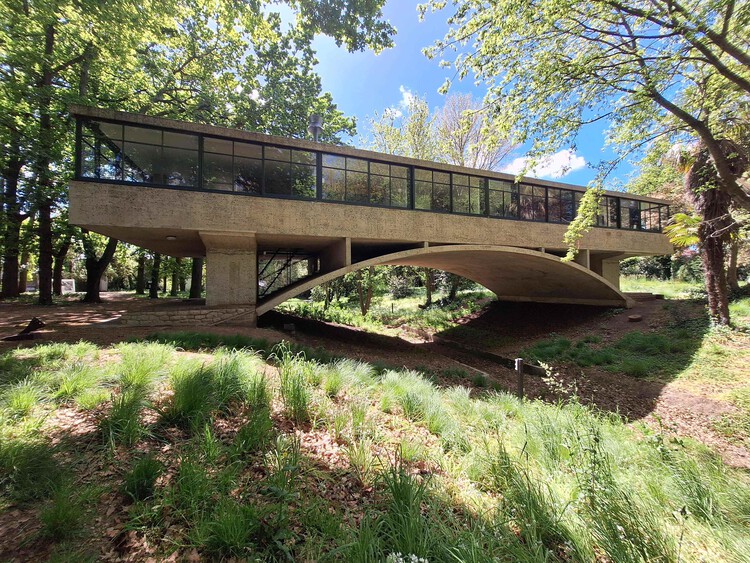
What happens to a house when the life it was designed for ends? In Casa sobre el Arroyo, the answer developed gradually as the building changed use, ownership, and condition over nearly eight decades. Even as these conditions changed, the structure, circulation, and relationship to the site remained central to how the house was understood and, eventually, restored.
Designed by Amancio Williams and Delfina Gálvez Bunge de Williams beginning in 1943 for Amancio's father, Alberto Williams, Casa sobre el Arroyo grew directly from the conditions of its site in Mar del Plata, Argentina. Rather than treating the Las Chacras stream as something to work around, the project uses it to organize the house itself. A reinforced concrete arch crosses the water and lifts the living spaces above it, turning the stream into part of the experience of moving through and inhabiting the house.

Symbols have always traveled through architecture. They appear in carved stone, woven textiles, painted ceilings and walls, door hardware, and everyday objects, carrying the beliefs, rituals, and histories of the cultures that first created them. Across contemporary interiors, designers continue this dialogue with place by revisiting historical symbols and translating them through new materials, manufacturing techniques, and architectural forms.
The Ruyi knot is one such example. For centuries, the interwoven motif has been part of the Chinese knotting tradition, symbolizing continuity, harmony, and good wishes. Its gently looping geometry has appeared across decorative objects and ceremonial crafts, demonstrating how cultural references can become part of a design vocabulary that extends far beyond ornament.

Public space is often intended to be perceived as universal, but access is unevenly experienced. For many women, moving through the city involves a continuous assessment of exposure, visibility, proximity to others, lighting, transport access, escape routes and the likelihood of harassment. These calculations are shaped by spatial conditions as much as social ones. Safety is a question of urban form, maintenance, mobility, governance and the distribution of public investment. While the built environment may not cause gender-based violence, it can intensify vulnerability and normalize unequal access, especially to public spaces.
For architects and planners, there is a critical distinction between designing for security and designing for safety. Security strategies tend to focus on surveillance, control, policing and the management of movement, while safety depends on whether people can see and be seen, if routes are legible, whether public spaces support activities throughout the day, and how long-term maintenance is supported. The role of design is to alter the conditions under which public life takes place.

Filippo Brunelleschi and the dome of Santa Maria del Fiore, completed in 1436 in the Italian city of Florence, represent an important chapter in the history of architecture, often associated with the growing distance between drawing and building. This separation, gradually consolidated over time, finds a decisive turning point in the Renaissance. Drawing becomes an instrument for anticipating and asserting authority over construction. The building site, once a space for invention and decision-making, came to be understood primarily as a place of execution.
Over the following centuries, this distance becomes increasingly pronounced, particularly with modern construction. Industrialization, technical specialization, and corporate organization fragment the building process into increasingly distinct stages. Those who design rarely build; those who build do not always participate in decision-making; those who finance, manage, and inhabit occupy positions that are even further removed from one another. The efficiency of this model made it possible to build at scale, but it also concentrated knowledge and decision-making power in the hands of certain agents.

This article is part of "Thresholds", a special edition printed newspaper by Cobe Notes x ArchDaily.
Architecture is most often represented as a stable object: a building captured at a moment of visual clarity, isolated from surrounding contingencies. Plans, sections, and photographs promise legibility by suspending time. Yet many of the world's most enduring public environments resist this mode of representation altogether. They are not designed to be read instantaneously, nor do they reveal their logic through form alone. Their spatial intelligence emerges gradually, through repetition, occupation, and duration.
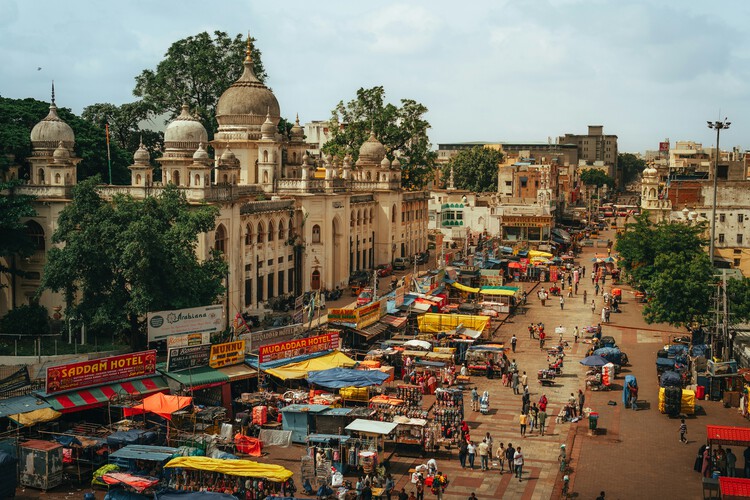
The bazaar belongs firmly within this category. It cannot be understood through a single drawing or a finished elevation. Its organization is not fixed but rehearsed. What sustains it is not purely architectural composition, but shared timing, collective memory, and long-standing patterns of use. Togetherness in the bazaar does not arise from formal design decisions; it is produced through repeated encounters, negotiated proximities, and social familiarity accumulated over time.

This article is part of our new Opinion section, a format for argument-driven essays on critical questions shaping our field.
For centuries, most of the world has looked at itself through a 16th-century instrument of spatial representation. On September 4, the United Nations General Assembly voted to change that, adopting a resolution that asks governments, schools, media organizations, and technology companies to retire the Mercator projection wherever the relative size of countries actually matters, in favor of equal-area alternatives like the 2018 Equal Earth projection. The vote passed 164 to 1. The United States was the sole vote against.

In broad terms, a structure is a testament to its time. An architectural project's proposal and material scale often exceed the lifespan of a single human being, becoming, in this way, part of a historical narrative. This cross-cutting characteristic is particularly evident in specific project typologies: memorial sites, cemeteries, museums, and even educational and community centers. Lately, this value has extended not only to buildings but also to construction techniques, ancestral forms and geometries, and to nature itself. This historical value and its symbolic connotation are represented in this selection of five buildings designed by ArchDaily readers, still unbuilt, in Kosovo, Canada, China, Egypt, and Bangladesh.

This article is part of "Thresholds", a special edition printed newspaper by Cobe Notes x ArchDaily.
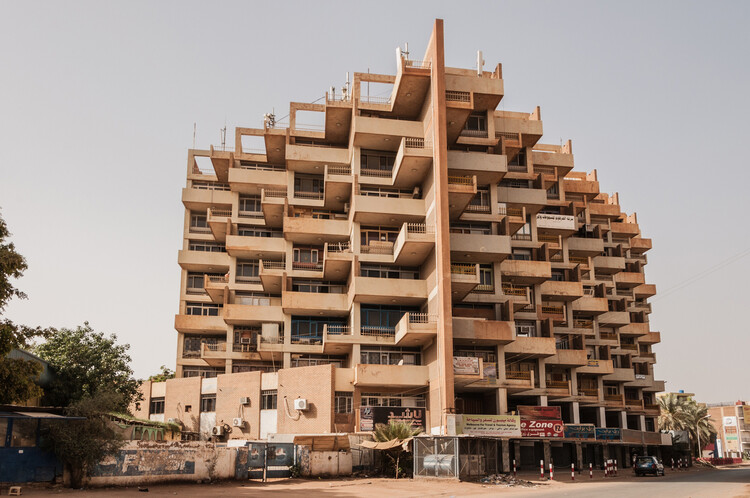
Launched in September 2024, the Rediscovering Modernism in Africa series joined a growing worldwide interest in this topic. Previously underrepresented in architectural discussions, the work of architects and researchers on the continent and abroad has continued to tell the story of these high-quality modern works of architecture. These buildings represent designers striving to create locally suited architecture using global concepts and technologies, coinciding with huge political changes as most African countries gained their independence.

Historically, the way we design has been closely linked to the way we build. Architecture moved through physical testing, trial and error, projection drawings, mock-ups, and physical models: each introducing a new layer of abstraction, but still remaining tied to material, scale, and construction. The introduction of CAD significantly changed this dynamic. At first, it was largely understood as the computerization of precise geometry for construction. Over time, however, digital tools moved earlier into the design process, replacing sketching, physical trial and error, model-making, and other forms of thinking that had once kept scale and material close at hand.
The lineage of architectural design can therefore be understood, in part, as an evolution of abstractions. Some have been extraordinarily productive. Plans and sections, for example, isolate particular dimensions of architecture while still allowing the mind to reconstruct the whole. They flatten, cut, and reduce, but they do not abandon the building. Through the combination of drawings, one can understand rooms, circulation, structure, openings, and spatial relationships without becoming lost in the complexity of the project. Their abstraction is disciplined because it remains tied to an architectural reality that must eventually be measured, built, and inhabited.

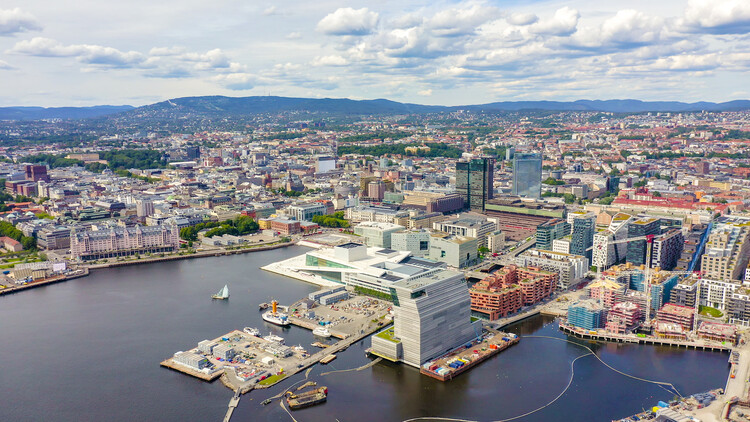
Oslo is the capital of Norway as well as its largest city, serving as the country's political, economic, and cultural center. Nestled at the head of the Oslofjord and surrounded by forested hills, it's home to roughly 700,000 people in the city, with over a million living in the greater metropolitan area. Founded around a thousand years ago, Oslo has a long history as a trading post and administrative seat. However, much of its modern character was shaped after a major fire in the seventeenth century led to a full rebuilding under Danish rule, when it was briefly renamed Christiania. Today it consistently ranks among the world's most livable cities, prized for its blend of urban life and easy access to nature.
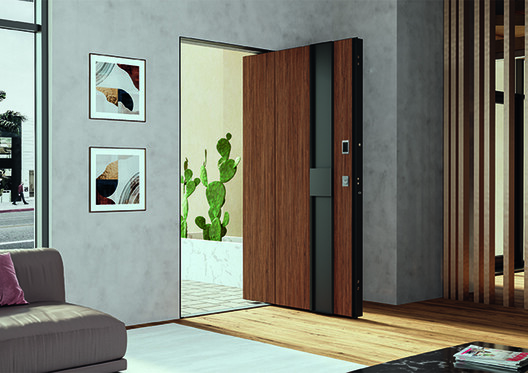
What transforms a space of living into a home? Beyond ownership or shelter, a home is tied to a quieter sense of certainty: the feeling that one can retreat, rest, and momentarily step away from the world's unpredictability. Homes are where routines accumulate, memories settle into spaces and objects, and where personal identity takes physical form through occupation and everyday rituals. Yet this sense of belonging depends on another condition that often goes unnoticed until disrupted: security. To feel "at home" implies a condition of comfort and stability. When domestic environments fail to provide this, spaces designed for rest become sources of unease, subtly affecting routines and well-being.

This article is part of "Thresholds", a special edition printed newspaper by Cobe Notes x ArchDaily.
When we enter a museum, walk through a historic center, or check a country's heritage list, we rarely think about the process behind these choices. Who decided, on behalf of us all, that these objects, places, and architectures deserved to be preserved and promoted, while others are cast aside?
Generally, it is specialist professionals who hold the decision-making power—be they historians, museologists, architects, or geographers. But on what basis are these decisions made? Can the complexity of history fit into a checklist? Or, even more fundamentally, on which version of history are these decisions being based?

How can daylight tackle global challenges? This question lies at the heart of Light of Tomorrow by VELUX, a global student competition that encourages architecture students to explore the future potential of daylight in the built environment. In its 12th edition, the competition received hundreds of responses from around the world, culminating in eight finalist projects presented to an international jury at the UIA World Congress of Architects in Barcelona. The 2026 global winner, Sun the Quilt, developed by students from Xi'an University of Architecture and Technology in China, was chosen for its strong concept, design thinking, and innovative use of daylight that transforms an everyday domestic ritual into an innovative facade system shaped by daylight, climate, and care.
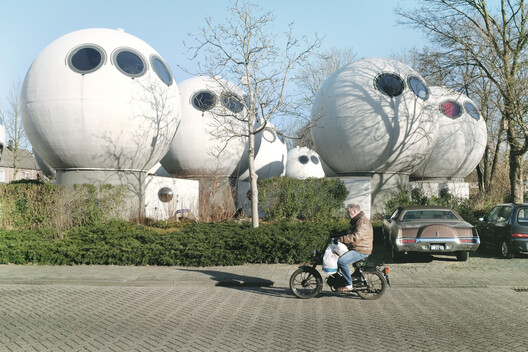
Throughout the history of architecture, the circle has been associated with multiple meanings—from the cosmic geometry of ancient temples and the oculus of classical buildings to the rose windows of Gothic cathedrals and the portholes of ships. However, in the 20th century, the circle acquired a new cultural meaning. As aviation, space exploration, and technological innovation transformed the way society imagined the future, circular forms began to evoke machines, spacecraft, capsules, and even new forms of habitation.

This article is part of "Thresholds", a special edition printed newspaper by Cobe Notes x ArchDaily.
San Francisco is a city that has always remade itself under pressure. Its Victorian streetscapes have survived seismic retrofits and glass towers, its neighborhoods defined as much by change as by its resistance to change. But no force in the city's history has reshaped the built environment as completely, or as quickly, as the technology economy. What began in the postwar sprawl of Silicon Valley migrated north and inscribed its logic onto the skyline and the lives of residents. The result of this logic is an architectural culture of considerable technical refinement and refined material palettes, yet one that remains largely indifferent to the existing population.
The cost of indifference is measurable and mounting. San Francisco must accommodate more than 82,000 additional housing units by 2031 under California's Regional Housing Needs Allocation framework, in a city where median rent already ranks among the highest of any American metropolitan area. Teachers, healthcare workers, and service employees are actively displaced by a real estate market calibrated to a single sector's income levels rather than the city's largest workforce.

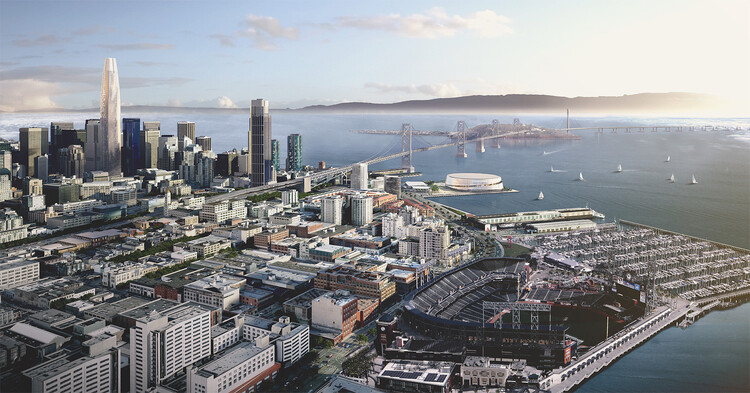
At one point, Jakarta's future coastal defense took the form of a giant Garuda rising from the sea. The mythical bird, Indonesia's national symbol, gave form to a vast coastal intervention intended to protect the sinking capital from floods while creating new territory offshore. It was an extraordinary image: a seawall transformed into a city. The Great Garuda is revealing because it shows what happens when climate adaptation begins to overlap with urban development. Once protection infrastructure also creates valuable land, defending a city and remaking it can become difficult to separate.

The original promise of BIM (Building Information Modeling) went far beyond the three-dimensional representation of a building. Its ambition was to turn the model into a coordinated information structure, in which geometry, components, systems, and data remained connected as the project evolved. Changes to one element could be reflected across corresponding plans, sections, elevations, and quantities; clashes between different disciplines could be identified before construction; and information associated with building components could follow the project through different stages of its life cycle.

Since the 2008 crash, a scatter of small practices (none more than fifteen years old and none large enough to need a manifesto in the traditional sense) have arrived, independently of one another, at some version of the same refusal: to sound too certain, too soon, in a discipline that had spent the previous decade selling confidence as a finish. They would probably resist being filed under one heading, but the coincidence itself is that something about practising architecture after 2008 made innocence look like the only posture worth trying.
At least from 2019 onwards, Fala has circulated a two-word description of itself, repeated verbatim across dozens of architecture outlets: a "naïve architecture practice." No footnote, no irony, just an office, founded in 2013, that built a decade of houses, birdhouses and institutional commissions on a term architecture had spent a century trying to outgrow. The question the phrase raises is not whether the buildings are any good (as they generally are) but what it means for a practice to choose innocence as a public position. Where does post-irony end and marketing begin?

This article is part of "Thresholds", a special edition printed newspaper by Cobe Notes x ArchDaily.
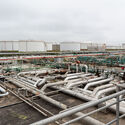
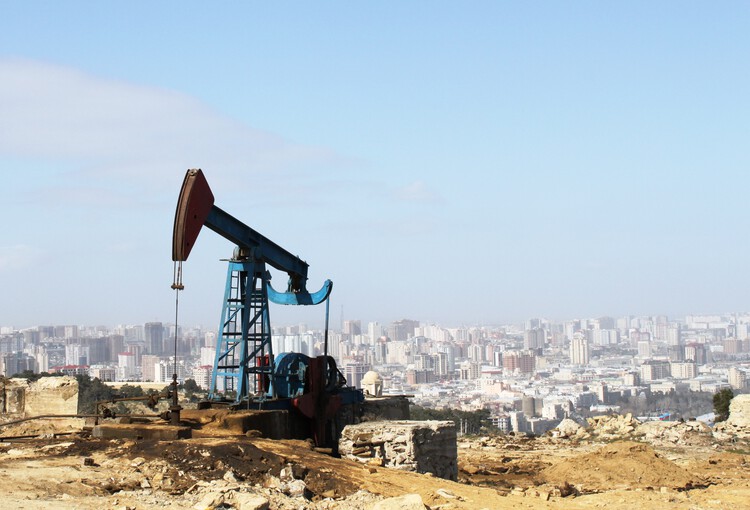
Beneath the ground lies a material that has quietly shaped the architecture of the modern world. Petroleum is rarely discussed within architectural discourse, yet the extraction, circulation, and consumption of oil have profoundly reorganized the spatial logic of territories. Pipelines, refineries, drilling platforms, ports, highways, and petrochemical complexes form a vast infrastructural landscape that sustains contemporary life, composing a dispersed architecture of energy.
Throughout the twentieth and twenty-first centuries, oil became the material foundation of industrial society. It fueled transportation, powered factories, and supported the growth of cities whose spatial organisation depended on continuous energy flows. Yet the infrastructures that enable these flows rarely become objects of architectural inquiry. Attention remains largely directed toward form, typology, or urban density, while the material systems that sustain these environments tend to remain displaced within the discipline.

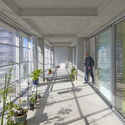
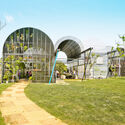
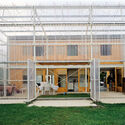
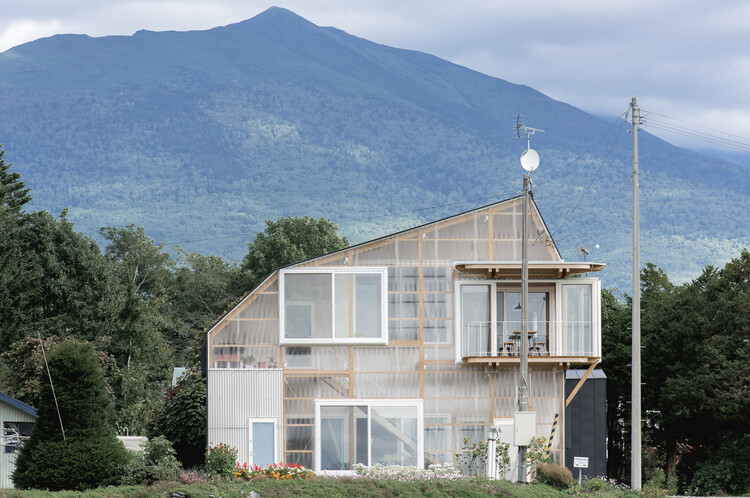
A greenhouse is a building designed to create one climate inside another. By controlling sunlight, heat, and ventilation through its enclosure, it produces conditions that differ from those outside. Traditionally, that controlled environment was designed around plants. In housing, the same principle is increasingly being used to shape spaces for people.
Bringing greenhouse construction into a house offers more than additional enclosure. It can create sheltered spaces without conditioning them like conventional interior rooms, capture solar heat when it is useful, provide ventilation when temperatures rise, and extend the periods of the year when certain areas of the home remain comfortable to occupy.

Some of India's most convincing architectural worlds have never existed outside a film set. Courtyards, palaces, streets and even entire neighbourhoods have been constructed, lit and framed for the camera, then dismantled when filming ends. Their images remain. For millions of viewers, these spaces become references for how cities look, how wealth is displayed and how particular neighbourhoods or versions of India are remembered. Cinema constructs spatial worlds, compressing complex histories into images that audiences can recognise almost instantly. Those images can later shape how physical places are understood.