

-
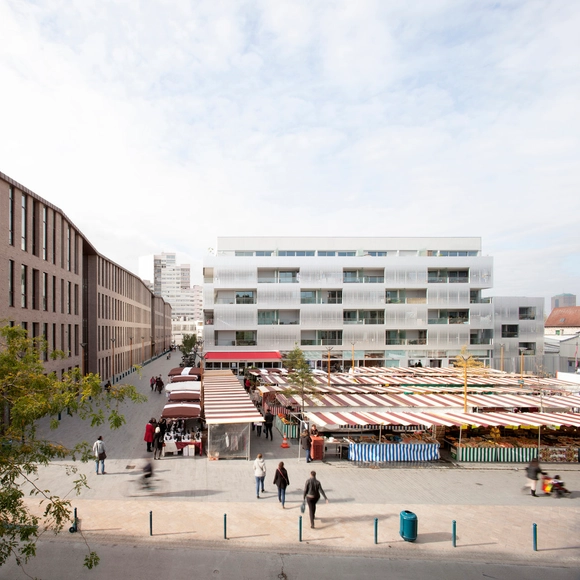
Architects: Ateliers 2/3/4/
- Area: 4341 m²
- Year: 2014
-
Professionals: Berim


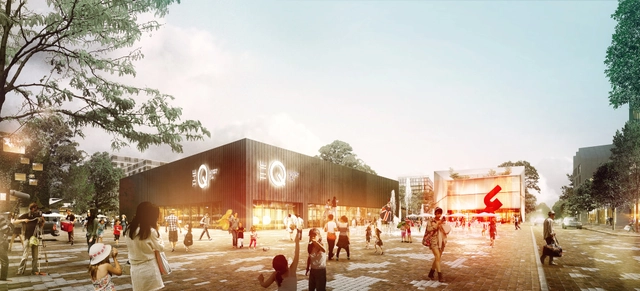
The Downtown Q 2025 Design Ideas Competition, aimed at revitalizing Queanbeyan, New South Wales’ downtown area, has just selected its first place winner. A collaboration between STEWART ARCHITECTURE, Stewart Hollenstein, and ASPECT Studios, the winning proposal focuses on increasing pedestrian traffic, creating more green spaces, and taking full advantage of the town’s riverfront property.
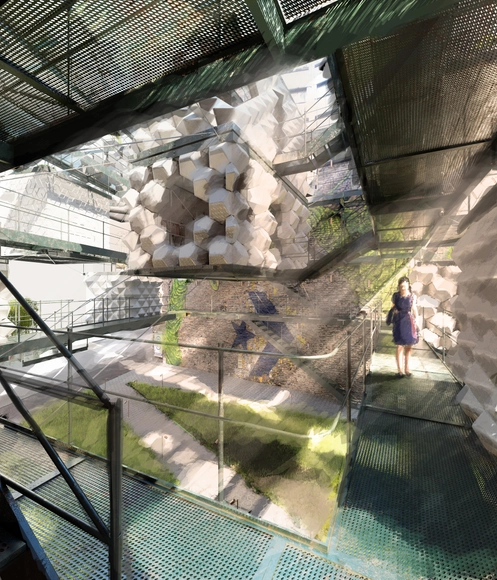
3D printing technology is quickly emerging as a technology that could be applied at the scale of the built environment. But could we use 3D printed materials to create engaging urban spaces that are constantly changing? Creative communications agency, The Neighbourhood, has imagined speculative architecture based on 3D printed materials.

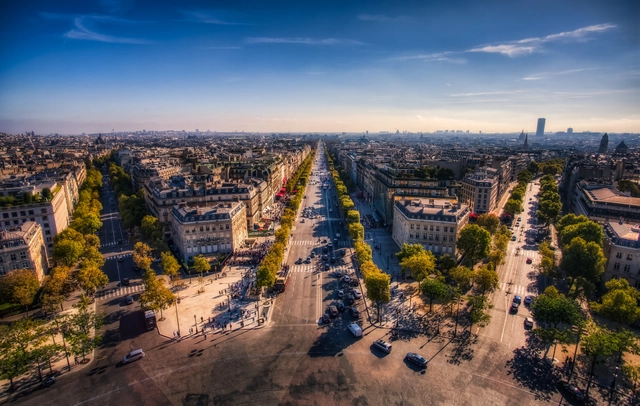
Why do cities exist and how will they grow and change? As more than half of the world’s population now lives in cities it is becoming increasingly important for urban designers and planners to seek answers to these questions. This article by Laura Bliss from City Lab presents the “science of cities,” and the ways in which the urban-planning world is moving away from traditional methods of simply putting cities into categories, in favor of a more evolutionary theory. Benefiting from the vast amounts of data available today on statistics such as crime and voting patterns across cities, researchers have worked to establish the quantifiable characteristics of urban areas as a whole, and recent studies in this area reveal how the shapes of cities themselves could be connected to internal economic and social processes. Learn more about these radical developments in the full article from City Lab.
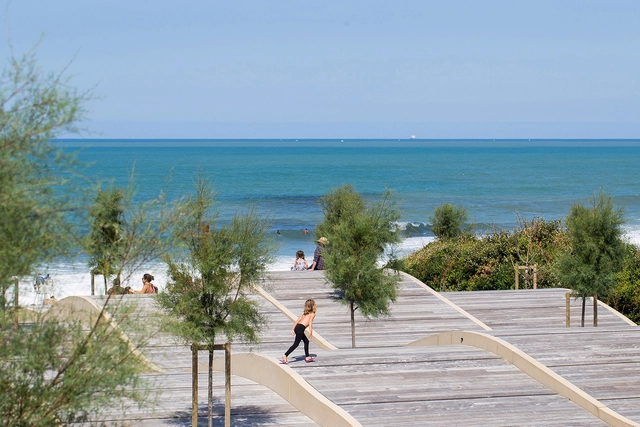
Youngchae_Park.jpg?1414039175&format=webp&width=640&height=580)
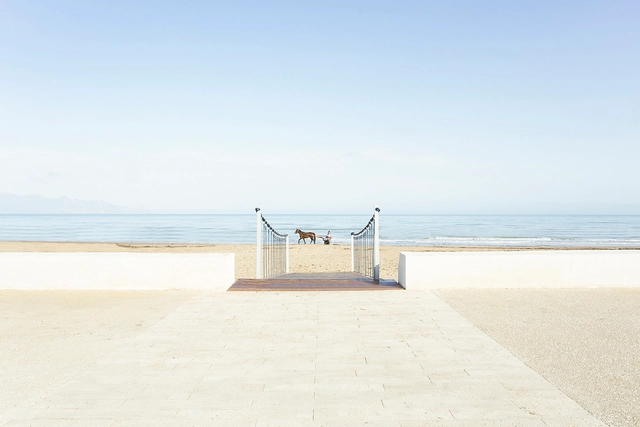

Following a three-year redesign, the Place de la République in Paris reopened this year, welcoming back the regular organized protests that make it one of the most important public spaces in Paris. For the designers of the space, TVK agency, it was important not to infringe on what many Parisians consider their inalienable right to protest - however a question remained over how the square could be more amenable to other uses at the same time. In this article, originally published by Metropolis Magazine as "Place for Protest," Veronique Vienne explores how TVK agency allowed Parisians to have their cake and let them eat it too.
In Paris, rituals of political discontent are traditionally celebrated on Place de la République. It is a favorite kick-off point for the countless marches that define democracy in the French capital. But before taking to the street in a slow-moving procession, crowds block traffic all around the esplanade, creating a gridlock that can cripple the city from Sacré Coeur to the Opéra. Meanwhile, citizens get to unfurl banners and shout slogans. It’s legal, good, clean fun.
Well, no more.
Imagine luminaires that could fly and visualise new buildings or individually guide you through space. What would happen if you could even interact with these flying pixels? These concepts could be realised in the near future as the first prototypes and experiments are being introduced. Software-driven LED pixels combined with drone swarm technology provide extraordinary possibilities for inducing new forms of spatial experience. These luminous pixel clouds emerge as digital patterns, but at the same time they emanate a romantic quality with their unique star formations twinkling in the night sky. The first projects have shared a playful note, but laboratories such as MIT's SENSEable City Lab, ARES Lab and Ars Electronica Futurelab have shown an intriguing future in urban design for guidance systems or envisioning real estate developments, as advances in battery technology and wireless control have opened new perspectives for a life with smart flying pixels.
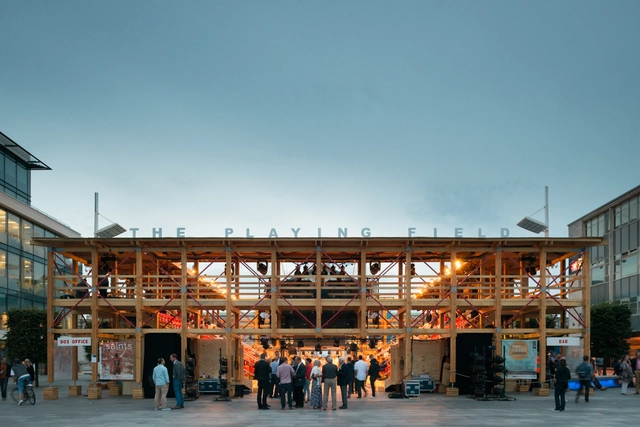
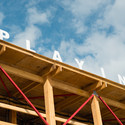
The Playing Field, a 450-seat "high tech Tudor theatre" in the heart of the British city of Southampton, represented a major collaboration between the city’s arts organisations and was realised through a collaborative effort between engineers Structure Workshop and Assemble Studio, the London based practice known for innovative interventions within the public realm. Their Cineroleum, coupled with a bold renovation of a yardhouse, are part of a small canon of cultural buildings designed to temporarily reimagine the urban landscape on a small scale.
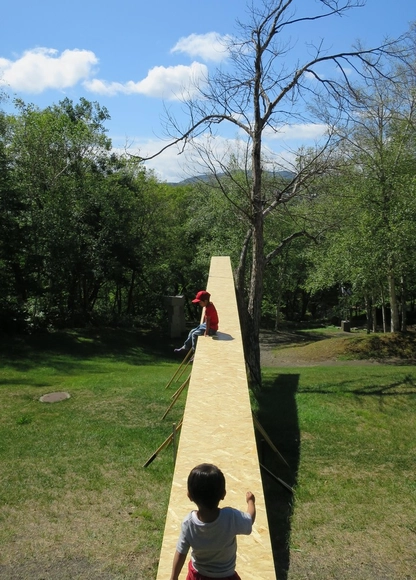
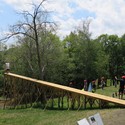
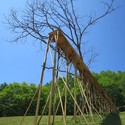
Ryo Yamada's "Air Garden" installation is a passage, but not in the traditional sense of the word. It's not a passage that connects one point to another, since the walkway does not lead to a tangible destination, but rather a passage that connects an enclosed garden to the vastness of the open sky. The artist believes everyone shares a common desire for the sky, which represents freedom and equality. Read on after the break for more information, images and a video.
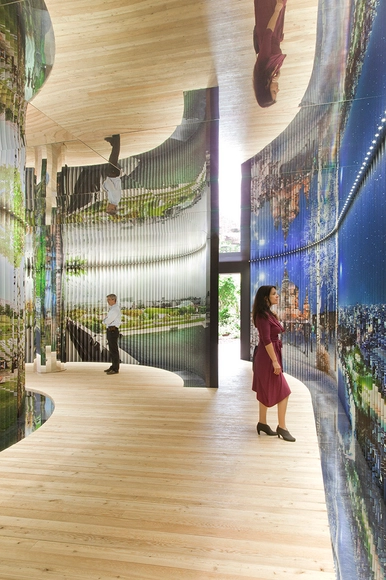
In their collateral event for the debut of the Moscow pavilion at the Venice Biennale, the exhibition "Moskva: urban space" explores the historic development of public spaces and examines the city’s progress in the context of Diller Scofidio + Renfro’s winning proposal for Zaryadye Park. Curated by Sergey Kuznetsov, Chief Architect of Moscow together with Kristin Kristin Feireiss from AEDES, and organized by MCA - Moscow Committee of Architecture and Urban Development, the exhibition comes at a pivotal moment in determining the future of urban development in Moscow. As Kuznetsov states, "While the face of Moscow in the past 100 years was largely determined by the architecture of its buildings, representing political and economic developments, today’s urban singularity is based on the “connective fabric” of its public spaces that have become equally important identity-makers and contributes significantly to improving the quality of urban life for its citizens." To see photos of the exhibition by Patricia Parinejad and learn more about the story behind it, continue reading after the break.

In 2011, the Tribeca-based design duo of James Ramsey and Dan Barasch proposed a radical project to transform an abandoned subterranean trolley terminal in Manhattan's Lower East Side into an underground park filled with natural light and vegetation, eventually proving their design with a full size mock-up of their design for light-capturing fiber-optic tubes. Since then, they haven't had nearly the same level of publicity - but that doesn't mean they aren't still working. This article by The Architects' Newspaper catches up with Ramsey and Barasch as they attempt to make their $50 million project a reality by 2018. Read the full article here.
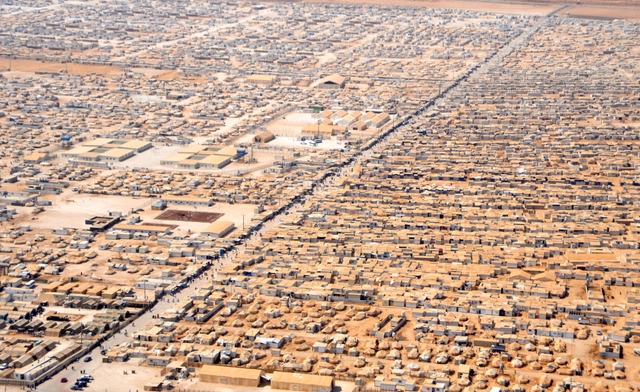
As the Syrian civil war continues to rage, more and more Syrian citizens are emigrating across the border to refugee camps in Jordan. While these camps were intended to be temporary, the sheer number of people they support and the uncertainty of when the Syrian crisis will end has leant them a sense of permanence. This article from the New York Times takes a look at how Syrian refugees are prompting urban development and what this means for the future of refugee camp design.




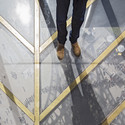
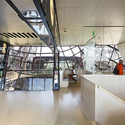

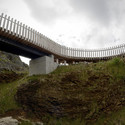

a.jpg?1415762213 "© Artur Silva")
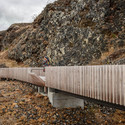



Youngchae_Park.jpg?1414039205 "© Park Young-chae")
Youngchae_Park.jpg?1414039200 "© Park Young-chae")
Youngchae_Park.jpg?1414039106 "© Park Young-chae")
Youngchae_Park.jpg?1414039078 "© Park Young-chae")
Youngchae_Park.jpg?1414039175)