What is architecture? For some, its traditional role is to bring together imagination, technical knowledge, and problem-solving, allowing architects to design and construct while balancing ideas with the means to realize them. From the stone and wood of early buildings to the steel and concrete of the 20th century, each era demanded not only an understanding of form but also of the properties and potential of the materials in use. This grasp of materials has always been a core part of the creative process, though its scope was limited by the know-how and technologies available.
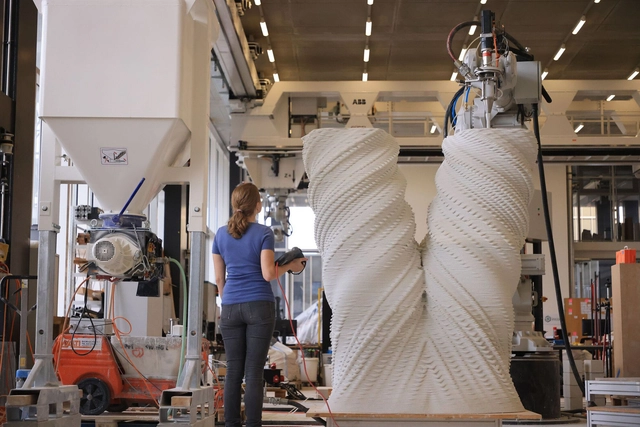
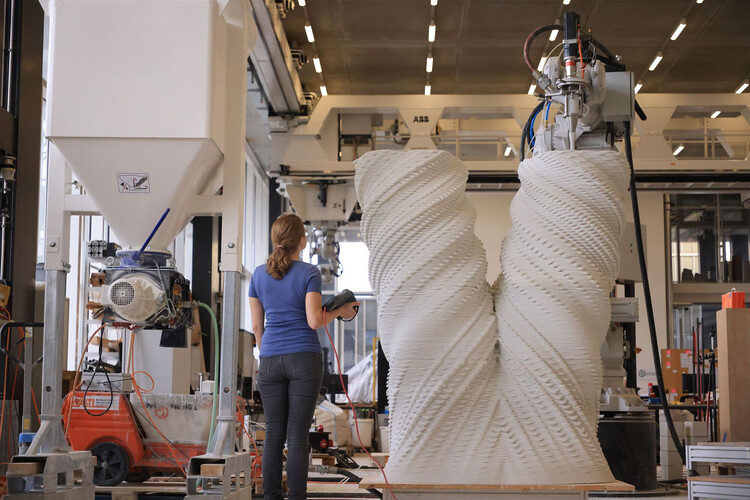
Over time, that balance has begun to shift. Architects have moved from merely using materials to actively designing them, applying scientific principles and experimenting with biological, chemical, and computational processes. This evolution has expanded the possibilities of architecture, intersecting nature, technology, and art, while pushing the role of the architect into a more experimental, science-driven dimension, where the manipulation and creation of materials becomes central to the creative act rather than merely a means to achieve forms or structures.
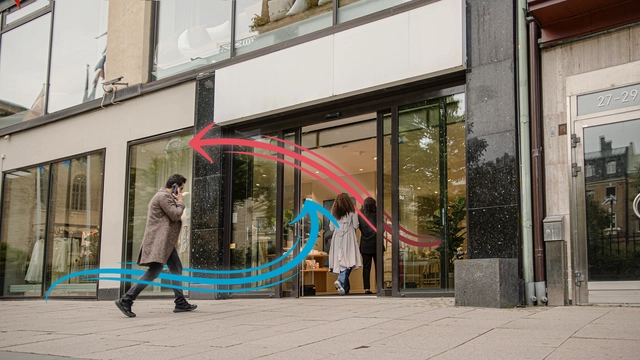
In Jacques Tati's Mon Oncle (1958), architecture itself becomes a character: sliding doors, an automatic fountain, gates that emit mechanical sounds, devices that both enchant and frustrate the inhabitants. The comedy arises precisely from the fact that these seemingly trivial systems silently shape everyday life. More than six decades later, the observation seems prophetic. In contemporary buildings, countless systems work autonomously and discreetly, going unnoticed when they function well. Among them, automatic doors, traditionally seen as secondary elements, are emerging as part of a new "invisible infrastructure": connected, efficient, and intelligent systems that support comfort, sustainability, and operational resilience.
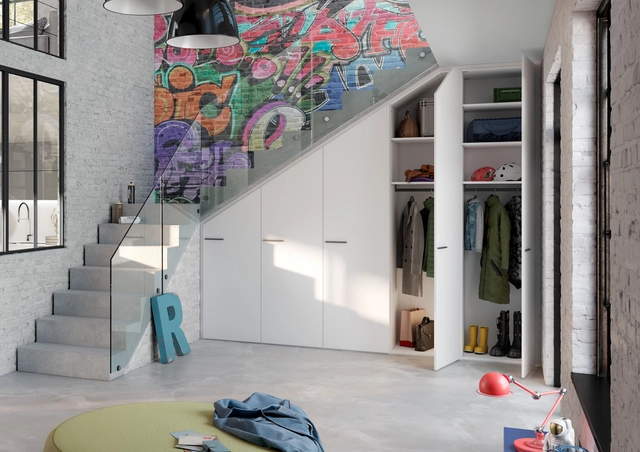
The capsule wardrobe concept, popularized in the 1970s by Susie Faux, proposes an exercise in synthesis: a compact set of versatile pieces, capable of combining in countless ways to suit different occasions. In visual culture, there are a few metaphors for this: in cartoons like Doug Funnie or Dexter's Laboratory, opening the closet revealed rows of identical clothes, ready to simplify life (and, in the case of animators, the work). In the real world, figures like Steve Jobs turned this logic into a method, adopting a daily uniform to eliminate the small but recurring decision of "what to wear?", freeing up time and energy for more important matters.
For others, however, this would be far from a burden. Choosing what to wear is a pleasurable moment, capable of setting the tone for the day and influencing one's mood. In this sense, the wardrobe is also an extension of identity, a space where practical and symbolic choices meet. Unsurprisingly, expressions like "coming out of the closet" or "skeleton in the closet" are deeply rooted in language, revealing the cultural dimension of this element of the home. In contemporary interior design, this notion has gained new layers: the wardrobe can define the character of a space, guide circulation, influence perception, and even shape the atmosphere of an environment.
Surfing is, without a doubt, one of the most visually striking and fascinating sports. A fluid choreography that combines strength and delicacy, like a dance on the waves, gathers enthusiasts across the world's oceans. Yet, behind this image of freedom and connection with nature, the sport also carries contradictions. It is a symbol of outdoor life and respect for the ocean, but on the other hand, it is marked by territorial disputes over waves and by an environmental footprint that rarely receives the same attention given to its aesthetics. In times of climate crisis, this paradox becomes even more evident. Surfing depends directly on the health of marine ecosystems, the very ones most affected by pollution and global warming. This tension has been pushing a new generation of shapers, architects, and material designers to seek alternatives, from plant-based and recycled foams to the reuse of industrial waste, in order to reconnect the sport with its ecological dimension.
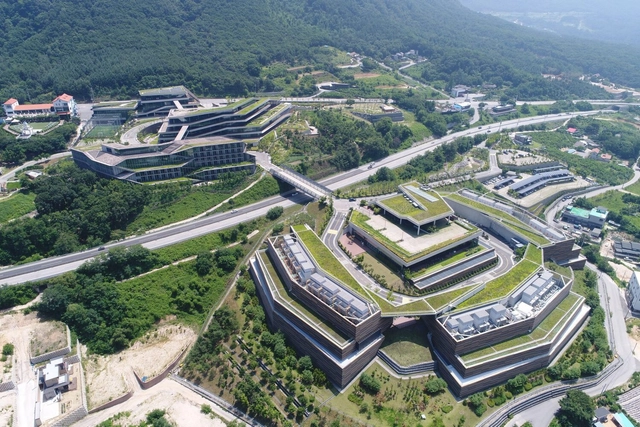
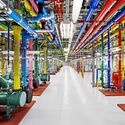
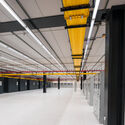
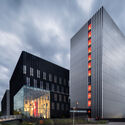
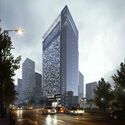
As the AI fervor continues to reshape how people see the world, 2025 looms as yet another year in the march toward technological advancement. While some worry about the dominance of technology in society, architects are shifting their attention to the foundations of a digital future: data centers. The design of data centers challenges designers to reconcile the demands of technological functionality with the principles of architectural excellence. As the dependence on cloud computing, IoT ecosystems, and big data analytics deepens, data center architecture demands more attention. As data consumption skyrockets, data center consumption rates match the demand. These structures were once relegated to nondescript industrial zones, but are now becoming integral components of urban and suburban environments. While some community members are upset about the encroachment of data centers in their localities, others see them as indicators of economic development.
Touted as the new era in construction, Building Information Modeling (BIM) has captured global attention with its promise of seamless coordination, trimmed budgets, and newfound efficiencies. Yet in India's construction landscape, the adoption of technology tells a more nuanced story about cultural barriers and technical limitations.
"The bigger barrier isn't the technology but rather the planning culture," explains Rahul Bahl Managing Director of Krishna Buildestates Pvt Ltd, highlighting what may be BIM's most fundamental challenge in India. "BIM requires that every detail be finalized before construction begins, from electrical switch locations to final finishes. In India, we often break ground with just the shell resolved and spend the next several months value-engineering as we go."
The 19th International Architecture Exhibition of La Biennale di Venezia features a notable presence from the SCI-Arc community, including students, alumni, and faculty. Their work appears across a range of contexts—from national pavilions to independent installations and research projects—engaging critically with this year's theme, Intelligens. The exhibition offers a compelling platform for exploring questions central to SCI-Arc's pedagogy: the future of design, the role of technology, and the possibilities of architectural experimentation.
Humanity rarely embraces major transformations right away, often held back by fear, skepticism, or attachment to what already works. Gutenberg's press raised fears of misinformation; urban electrification drew warnings from doctors; and office computerization sparked concerns over the devaluation of human experience. Such ruptures often provoke resistance, but they tend to open space for critical reflection and innovation.
Today, with the rise of artificial intelligence and the rapid succession of technological innovations, we are living through another of these inflection points. The debate is broad, inevitable, and, as always, necessary. At the TRUE Conference 2025, hosted by Midea Building Technologies (MBT), this discussion takes on practical and strategic dimensions by linking digital advancements with tangible goals for sustainability, efficiency, and quality of life.
How many software tools and platforms are involved today in developing a contemporary project? From designing a single-family house to a public library, relying on just one or two programs is no longer common. Instead, multiple tools combine, overlap, and interact throughout various stages, including analysis, design, rendering, coordination, and construction. This widespread use of software in the virtual world reflects not only the technical complexity of today's practice but also a more subtle yet equally significant shift: software has become less a specific tool and more an environment that accompanies and even challenges the process.
https://www.archdaily.com/1031629/architecture-in-the-age-of-platforms-what-role-does-software-play-in-practice-todayEnrique Tovar
Artificial intelligence is becoming an undeniable presence in our daily lives. It teaches, generates content, and disrupts the fragile boundaries—both visual and imaginative—that once governed our interactions on social media. On platforms like Instagram, we witness a flood of imagery where every kind of speculative exercise is freely shared, recalibrating our understanding of the relationship between architecture and image. Amid this transformation, entire professions find themselves on uncertain ground, as AI begins to challenge areas once defined by human expertise.
Yet beneath this apparent abundance lies the opaque core of closed-source AI: an algorithmic black box that systematically conceals the origins of the data it consumes. As a result, its outputs are inevitably prone to factual distortions, anachronisms, and subtle or overt biases. This same machinery can hollow out the significance behind the languages and stylistic signatures of canonical architects—manifest, for instance, in AI-generated visions speculating how famed designers, living or dead, might have reimagined the Eiffel Tower. We shared one such image to observe and better understand how people—especially architects—respond to AI's current possibilities and limitations, and the ways it mimics architectural intent. The response was quite fascinating, revealing a mix of curiosity, concern, and critical reflection.
Courtesy of AIA Conference on Architecture & Design
The future of architecture isn't just being drawn—it's being coded. Since mathematician John W. Tukey coined the term "software" in 1958 in The American Mathematical Monthly, its influence has steadily expanded, from revolutionizing science and engineering to quietly transforming architecture. What was first embraced as an innovation for structural calculations and drafting has since revealed a much broader potential, becoming a creative driver in architectural narrative and practice.
While that transformation has already taken root—software now embedded in the way we design and think—it continues to evolve. At the recent AIA Conference on Architecture & Designin Boston, current innovations made it clear that we're entering a new chapter: one where software and artificial intelligence aren't just enhancing workflows but actively shaping sustainability, regulation, and decision-making. Architects and software developers now treat code with the same logic as a material—shaped not by modeling or carving, but through parameters, cycles, constant evolution, and feedback. At the same time, architects are working with AI as a co-pilot in the design process, collaborating with it to support decision-making and enhance the design.
https://www.archdaily.com/1030942/ai-and-architecture-software-at-aia25-from-code-to-concrete-in-the-digital-futureEnrique Tovar
What can a pavilion’s architecture reveal about its country? At major World Expos, national pavilions are designed to answer this question, transforming into spaces laden with symbolism. Though temporary, these structures are rich in meaning, functioning as architectural expressions of political identity. Their forms and materials encapsulate national ambitions. Expo Osaka 2025, the latest chapter in this ongoing narrative, showcases how nations increasingly use built space to construct global images of themselves—sustainable, technological, culturally distinct, and geopolitically relevant.
"The limits of our design language are the limits of our design thinking". Patrik Schumacher's statement subtly hints at a shift occurring in the built environment, moving beyond technological integration to embrace intelligence in the spaces and cities we occupy. The future proposes a possibility of buildings serving functions beyond housing human activity to actively participate in shaping urban life.
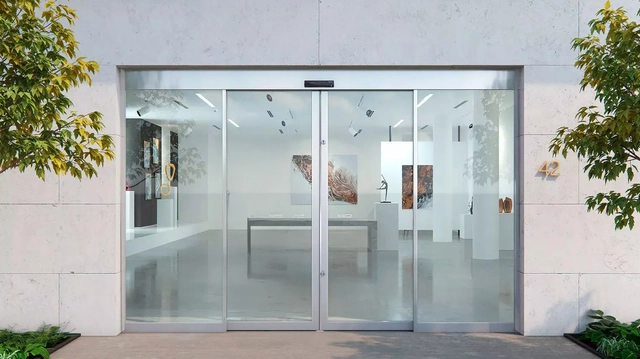
SL500 Sliding Door System. Image Courtesy of ASSA ABLOY
Throughout history, doors—and later automatic doors—have served a far greater purpose than merely marking an entrance or exit. They define thresholds, guide the flow of movement, and subtly shape the way people interact within a space. We can trace their evolution back to the 1st century, when Heron of Alexandria devised a steam-powered door—an early example of technology merging with architecture. Since then, contactless automatic door systems have incorporated technological advancements that enhance operation and redefine their role within buildings. Today, they are integrated across a range of building types and scales, acting as transitional elements that enhance comfort, energy efficiency, and the overall quality of indoor spaces.
https://www.archdaily.com/1029498/the-greener-future-of-automatic-door-systems-a-shift-in-design-and-performanceEnrique Tovar
As artificial intelligence (AI) becomes increasingly embedded in society, it's essential to pause and reflect on the foundations that sustain it—and the dimensions to which it extends. At the heart of AI's learning are datasets, whose structure and content shape how these systems interpret and respond to the world. This reliance creates a deep interdependence—one that not only informs AI's capabilities but also defines its potential blind spots. In light of this, we must ask: What forms of understanding might this process exclude, especially those not easily captured in digital form?
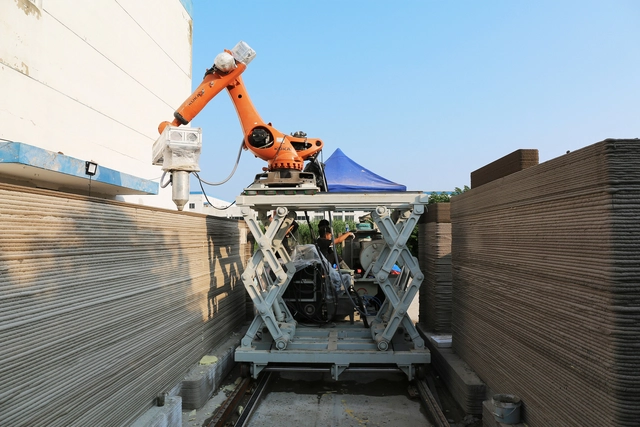
Impresión de paredes exteriores. Image Cortesía de XWG Archi Studio at Tsinghua University
According to the analysis firm Gartner, 3D printer sales surged by 75% around 2014, nevertheless, the technology continues to experience significant growth. While there are multiple debates in the field of architecture about whether 3D printing can be considered craftsmanship or if it is feasible to mix local materials with 3D printing, its implementation from academia aims to create new experiences, research, and knowledge that contribute to its development and practical application. Now, how might the integration of 3D printing in academia provoke future changes in the construction industry? And how could education in architecture and design encourage collaboration with other disciplines to create new applications across different fields?
For decades, technological evolution was driven by the exponential growth in computer processing power—a trend famously predicted by Moore’s Law. From rudimentary mechanical devices to highly sophisticated microprocessors, this trajectory fueled the miniaturization and popularization of personal computers, laptops, and smartphones. Now, with the advent of quantum computing, a new leap is on the horizon. Unlike classical bits, which represent only one value at a time—either 0 or 1—qubits can simultaneously represent a combination of both states. This means that while a traditional computer tests one possibility at a time, a quantum computer can explore many at once, dramatically accelerating the resolution of complex problems. Molecular simulations, logistical optimizations, and advances in cryptography are just a few of the areas transformed by this new frontier.
In the construction industry—a sector historically resistant to abrupt changes—the evolution of materials also has its breakthrough moments. From carved stone to reinforced concrete, from raw timber to high-performance composites, each new material has expanded the structural, aesthetic, and functional boundaries of architecture. In recent years, however, researchers have been testing a new generation of materials that transcend the traditional idea of passivity. These are intelligent materials, capable of sensing, reacting to, and even interacting with their environment and users, challenging the very concept of inert matter.
Following a broader trend across architectural spaces, bathrooms have evolved from strictly utilitarian functions into environments integrated with intelligent systems, where physical, cognitive, and sensory parameters are considered in the development of spatial solutions. But, it is always important to remind that cutting-edge technology doesn't always guarantee a better experience. While high-end automation and digital controls offer impressive capabilities, it's often the subtle, user-friendly features—the ones that feel intuitive rather than intrusive—that leave a lasting impression. These are the quiet innovations that elevate daily routines without overcomplicating them. The adoption of user-centered ergonomics—a design approach that takes human needs and limitations as its starting point—has guided the creation of components that respond adaptively to the presence, behavior, and preferences of users. Technologies such as toilets with automated features, proximity-activated faucets, concealed cisterns, and intuitive temperature controls not only enhance comfort and accessibility but also contribute to more efficient management of water and energy resources.