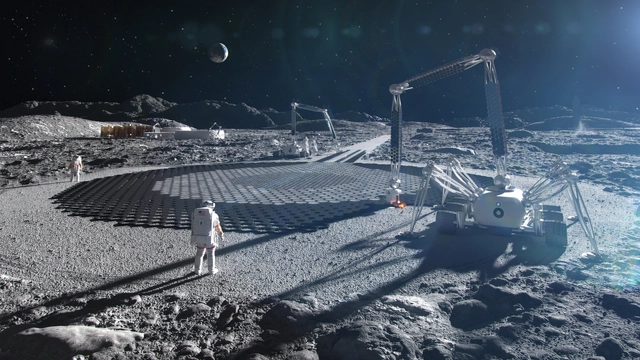
A new award from NASA will support ICON in developing construction technology that could be used on the Moon and Mars. Image Courtesy of ICON/BIG-Bjarke Ingels Group
From inflatable and 3D-printed structures to entire habitats, architecture plays an unprecedented role in space exploration missions. As NASA plans for long-term human exploration of the Moon and Mars under Artemis and CHAPEA missions, new technologies are required to meet the unique challenges of living and working in another world. In response, figures like Buckminster Fuller, Foster + Partners, SOM, and BIG-Bjarke Ingels Group, in collaboration with emerging businesses such as ICON and SEArch+, have nourished the architectural catalog in outer space.
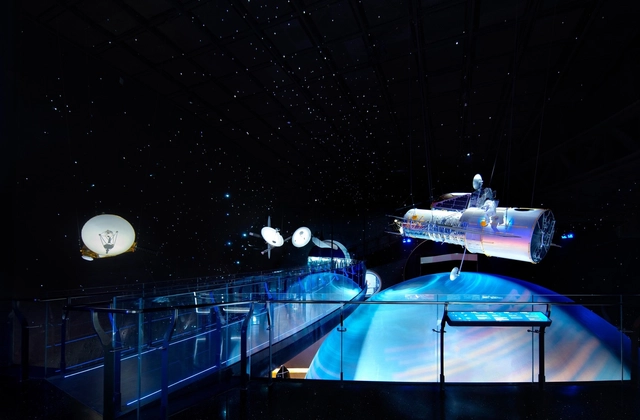
In the latest update, NASA awarded Austin-based company ICON a contract to continue ICON's Olympus construction system in partnership with BIG-Bjarke Ingels Group. The project will help build infrastructures such as landing pads, habitats, capsules, and roads on the lunar surface and Mars, using extrusion-based additive construction technology (3D printing) and local materials like lunar regolith. The contract runs through 2028 and supports Artemis, a mission for long-term human exploration of the Moon.
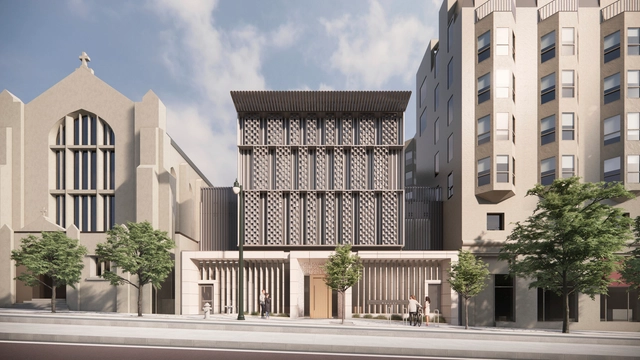
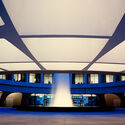
Designed by Skidmore, Owings & Merrill (SOM), the new American Buddhist Cultural Society Temple, also known as the San Bao Temple, has broken ground in San Francisco, California. Located on Van Ness Avenue, the new six-story facility will include a community center, a Buddhist shrine, and a meditation room on the upper levels, along with three levels of private dormitories for visiting monastics and volunteers. In the center of the building, a light-filled atrium offers additional amenities, such as a public art gallery, bookstore, teahouse, and community gathering hall. The temple is expected to open by the end of 2024.
Walking through the streets of Mumbai, India, is an experience unmatched anywhere else. The energy of India’s largest and most populous city is palpable through the people, their activities, and most importantly, the built environment. The city’s dynamic culture is evidently expressed through the structures that dot its landscape.
Mumbai is an eclectic mix of buildings large and small, old and new, and traditional and modern. The city of contrasts boasts an architectural legacy that goes back over 2000 years. Located in the state of Maharashtra along the west coast of India, Mumbai hosts a variety of architectural styles such as Victorian, Gothic, Art Deco, Indo-Saracenic, Modern and Post-modern. The city is characterized by its old charm and liveliness, a diverse stage for people to pursue their dreams.
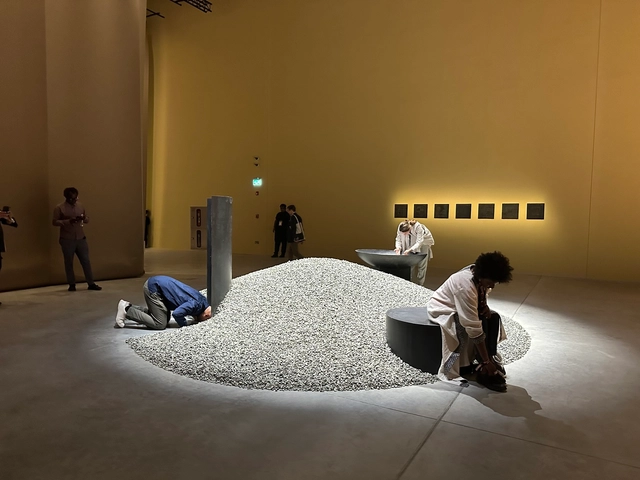
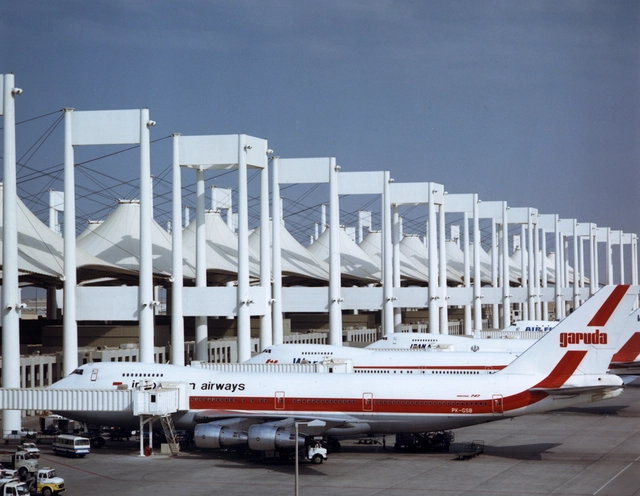
The Islamic Arts Biennale re-imagines the Western Hajj Terminal at King Abdulaziz Airport in Jeddah, Saudi Arabia, as a cultural space to create an evocative journey to explore Islamic heritage. The terminal, designed by Skidmore, Owings & Merrill and a winner of the 1983 Aga Khan Award, will be extended and complemented to create the setting for the event. Through the contributions of over 60 artists from over 20 countries, the biennale aims to become a platform to explore and reflect the diversity of the Muslim experience worldwide. Themed Awwal Bait, or The First House, the event intertwines commissioned works with never-before exhibited historical artifacts to convey a holistic perspective of the Islamic arts. The Biennale, curated by Sumayya Vally, now in its inaugural edition, will be open from January 2023 to April 2023.
As the new year begins, we look forward to the most exciting projects planned to open in 2023. The world's second-tallest tower is currently under construction in Malaysia; Egypt is almost ready to open its largest archeological museum, while MVRDV is currently renovating a large-scale brutalist landmark in Albania. Featuring internationally renown architectural offices such as Snøhetta, OMA, Studio Gang, Zaha Hadid Architects, BIG, along with the latest winner of the Pritzker Prize, Francis Kéré, the following selection presents projects from all around the world. They also range in scale and program, from international airports to sculptural arts galleries or museum expansions.
Several projects presented here have also featured in the previous year's compilation. Resource availability and labor issues generated by the pandemic have also continued to influence opening schedules, but with a diminishing impact. Following the predicted trends for 2023, more and more projects involve the adaptive reuse of existing structures. An underlying theme is visible in the increased interest in expanding artistic and cultural venues and integrating historical heritage into the expression of contemporary architecture.
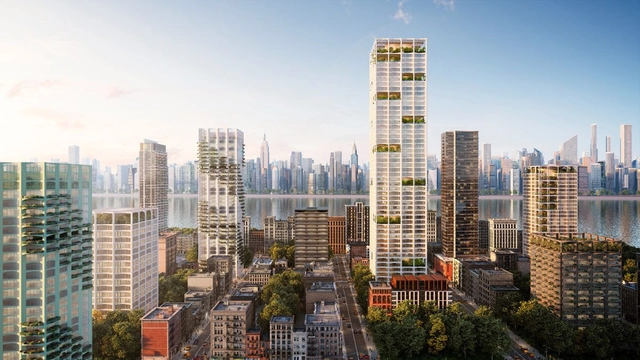
In a presentation at the Buildings Pavilion Auditorium during COP27, the UN Climate Change Conference in Sharm El-Sheikh, Egypt, Skidmore, Owings & Merrill (SOM) presented the Urban Sequoia NOW concept. The proposal, developed by an interdisciplinary team at SOM, represents a design that can sequester carbon from the atmosphere throughout its lifecycle. The design can be implemented with today’s technologies. This represents SOM’s concept of going beyond net zero carbon by combining multiple strategies: reducing embodied carbon, generating energy, absorbing carbon, and increasing the typical 60-year lifespan of the building.
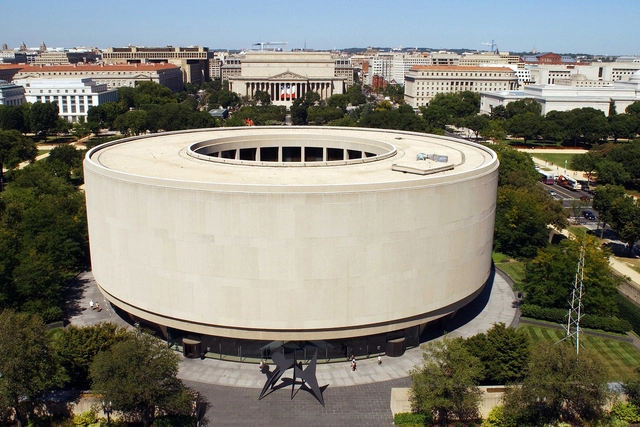
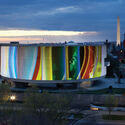
Hirshhorn Museum. Image Courtesy of Hirshhorn Museum
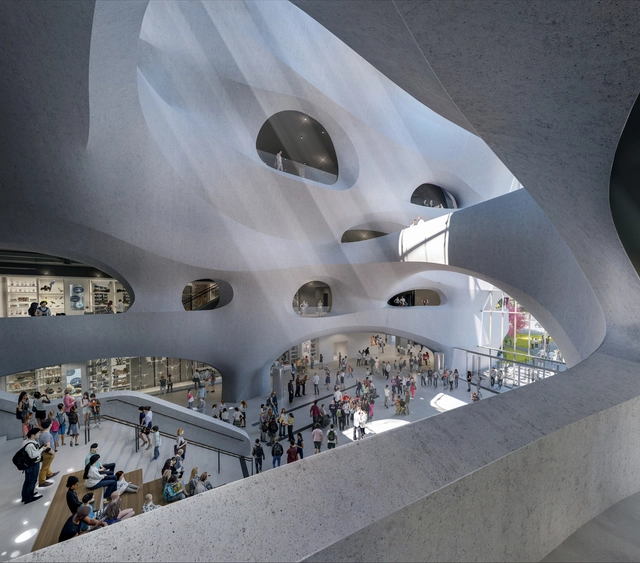
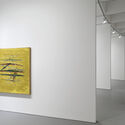
The Smithsonian’s Hirshhorn Museum and Sculpture Garden has selected Skidmore, Owings & Merrill and Selldorf Architects to jointly develop the modernization plan for the Hirshhorn Museum’s interior and plaza. As the first renovation in the last fifty years, the museum plans to upgrade its galleries and public spaces in order to fit the contemporary requirements of a public museum of modern art. It also represents a response to the increased attendance during the past five years. The federal contract was awarded following a competitive process by Smithsonian Facilities in consultation with the Hirshhorn. The concept design, to be submitted in 2023, will be subject to a public consultation process.
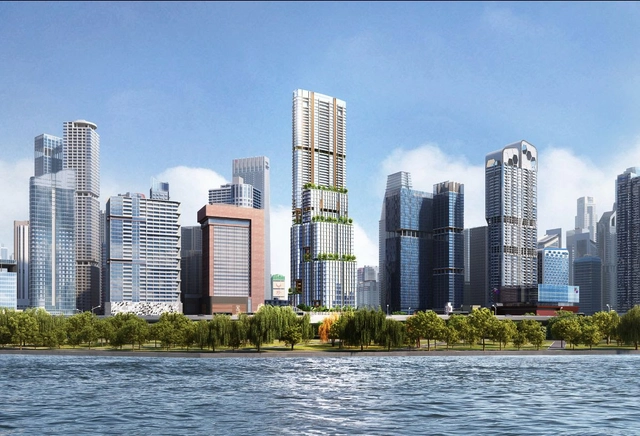
Skidmore, Owings & Merrill (SOM) has revealed the design of 8 Shenton Way, a 305 meters-high tower. Once completed it would become not only Singapore's Tallest Building but one of Asia's most sustainable skyscrapers. The mixed-use tower takes cues from bamboo forests to create an indoor-outdoor vertical community with public spaces, offices, retail, a hotel, and residences. In partnership with DCA Architects, the project is scheduled for completion in 2028 and will become the newest landmark on the Singapore skyline, along with Marina Bay and CapitaSpring Tower.
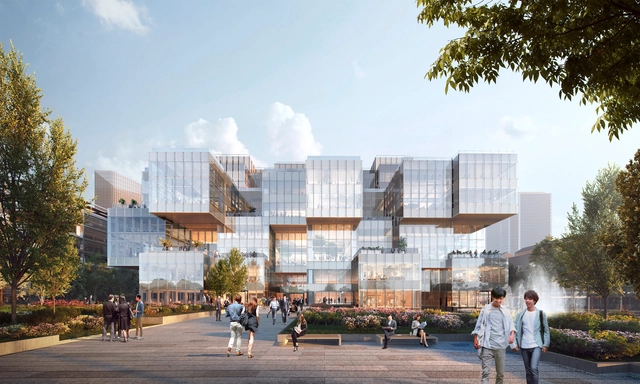
Skidmore, Owings & Merrill (SOM) has unveiled a dynamic, user-controlled headquarters for Chinese multinational technology company Alibaba's Xuhui District campus in Shanghai. Located in one of the city's premiere arts and innovation districts, the new workplace transforms the typical headquarters building “inside out”, highlighting the company’s "collaboration and creativity". The building's architecture is designed to resemble a cloud, symbolizing the company's digital presence in the Cloud, as well as the technology industry’s shifting skies of innovation.
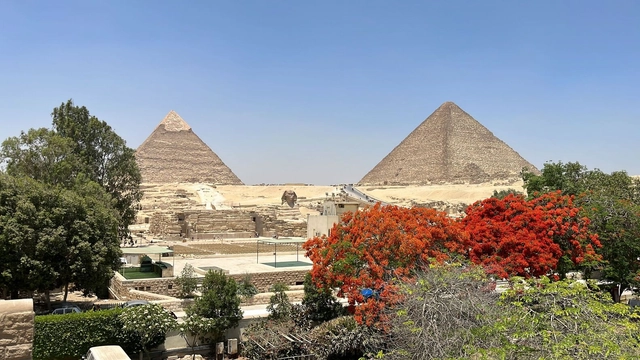
Skidmore, Owings & Merrill (SOM) and Egypt-based Raafat Miller Consulting (RMC) have been selected by OSL for Entertainment Projects to reimagine the visitor experience at one of the Seven Wonders of the World, the historic Pyramids and the Sphinx of Giza, Egypt. SOM will serve as lead designer of the project's concept, design, and masterplan, which will feature the transformation of the existing show facilities into a world-class visitor experience with a program that ensures environmental and preservation measures.
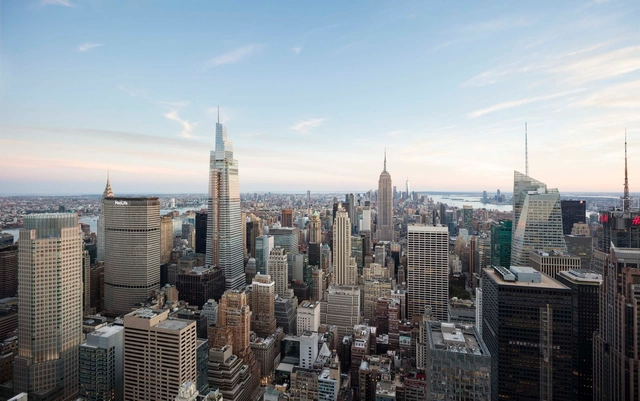
As the largest city in the United States, New York City is one of the most diverse and vibrant cities in the world, recognized by many as the center for global media, culture, fashion art, and finance. The city was founded in 1624 by settlers from the Dutch Republic and has since grown into “the city that never sleeps”.
While almost every style of architecture exists in New York City, the metropolis is most well known for its skyscrapers, both in historical styles such as Neoclassical and Art Deco and in their varied contemporary expressions. The first building to bring the world's tallest title to New York was the New York World Building, in 1890. Later, New York City was home to the world's tallest building for 75 continuous years, starting with the Park Row Building in 1899.
The importance of the use of advanced technologies, such as the likes of virtual reality in the scene of architecture, is becoming increasingly necessary. No matter how beautiful a rendered image may be, it will always lack the capacity to fully convey the scope and feel of a project as a whole, further perpetuating the necessity to incorporate the use of these technologies at a professional practice level.
Architects who choose not to adopt the use of virtual reality technologies into their design process fall victim to being at a significant disadvantage, and the problem no longer even lies within accessibility, as VR is very much a possibility for architects of all backgrounds in the present age.
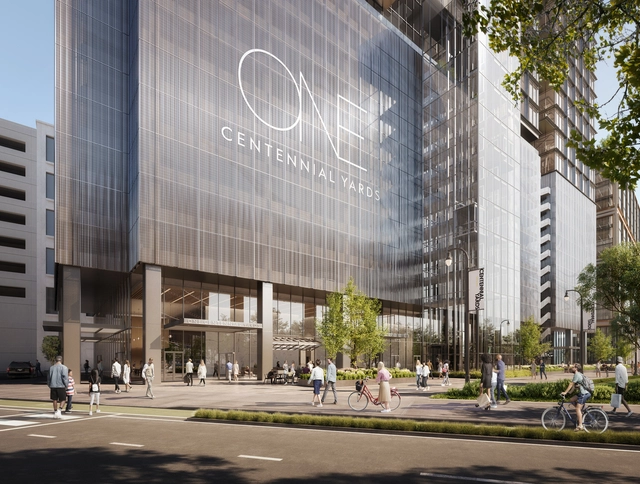
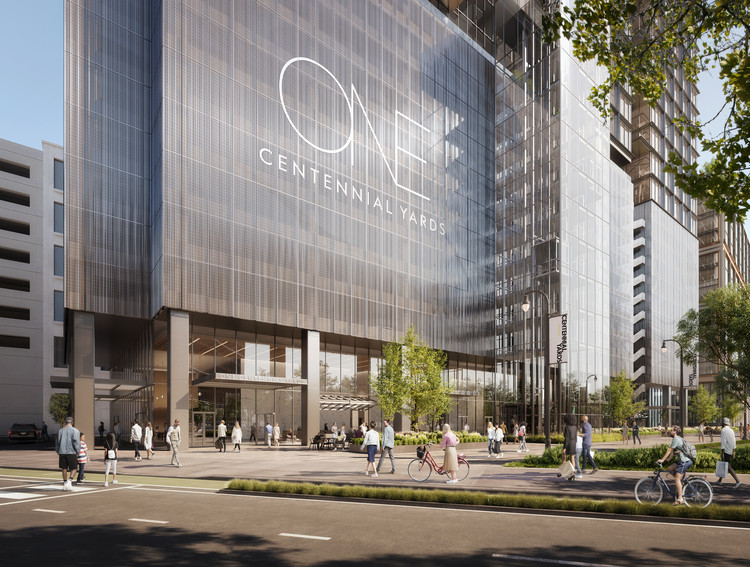
Skidmore, Owings & Merrill, in partnership with Atlanta’s Goode Van Slyke Architecture (GVSA), have unveiled Centennial Yards' first ground-up tower. Titled One Centennial Yards, the project will feature 28 stories and over 500,000 square feet of office space, 19,000 square feet of amenities, and 21,980 square feet of outdoor spaces, all aligned with the innovative, health, and wellness goals of the Foster + Partners designed master plan.
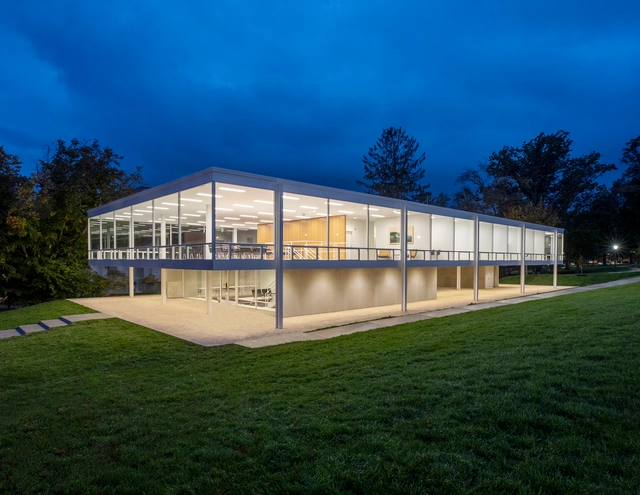
Indiana University inaugurated a new shared facility for the Eskenazi School of Art, Architecture + Design, which materializes a recently rediscovered design by Mies van der Rohe. The 1952 project intended for a fraternity house on the same IU Bloomington campus was entrusted to New York-based firm Thomas Phifer and Partners to be adapted to contemporary building codes and its current academic function while preserving the intended architectural aesthetic. The two-storey, 930 square meter building has officially opened to students and faculty.
Seven decades after designing Lever House, SOM returns to the iconic modernist building to resume its restoration, continuing its long-lasting stewardship of the project. SOM previously revisited the building in 2001, restoring its façade using high-performance materials while preserving the original architectural image. This time, the intervention concerns the ground floor and the third level terrace, as well as the mechanical systems, to significantly improve the building’s energy performance. When complete in 2023, the renovation will become an important example of extending the life of the midcentury built environment.
Zhanjiang Central Station Hub by Aedas. Image Courtesy of Aedas
This week’s curated selection of Best Unbuilt Architecture highlights projects submitted by established firms. From river-side commercial centers to mixed-use towers, this article explores commercial and residential functions designed by global architecture offices that are either conceptual, have won first-prize in design competitions, or are currently being realized.
Featuring a pedestrian bridge by Grimshaw Architects in France, and a finance-district skyscraper dubbed as the "Lighthouse of the 21st Century" by Ronald Lu & Partners, this roundup explores how established architecture firms have designed buildings that cater to the spatial and environmental needs of their users and respective functions. This round up also includes designs from SOM, IMPLMNT, Gensler, and Aedas, among other notable architects.
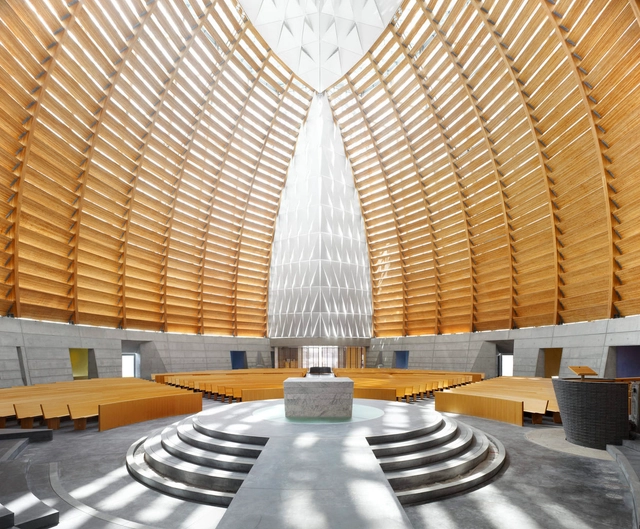
Architecture has long been designed to symbolize and venerate shared values and beliefs. This is especially true in cathedrals and places of worship, structures that exists across environmental, economic and cultural boundaries. These buildings encompass ritual and gathering as they explore the relationship between human experience and the divine. Today, cathedrals are being reimagined for contemporary life and new building traditions.