




-
Interior Designers: Atelier About Architecture
- Area: 1200 m²
- Year: 2017



A 440 feet (134 meters) tall stack of twisting cubes, Nexus is an upcoming residential tower planned for the northern edge of downtown Seattle, as the city experiences a shortage of for-sale housing amidst a thriving rental market. Designed by local practice Weber Thompson and commissioned by Vancouver-based Burrard Development, the tower includes 367 residential units and 3200 square feet of retail, aiming to offer one of few residential opportunities in Seattle’s downtown core.
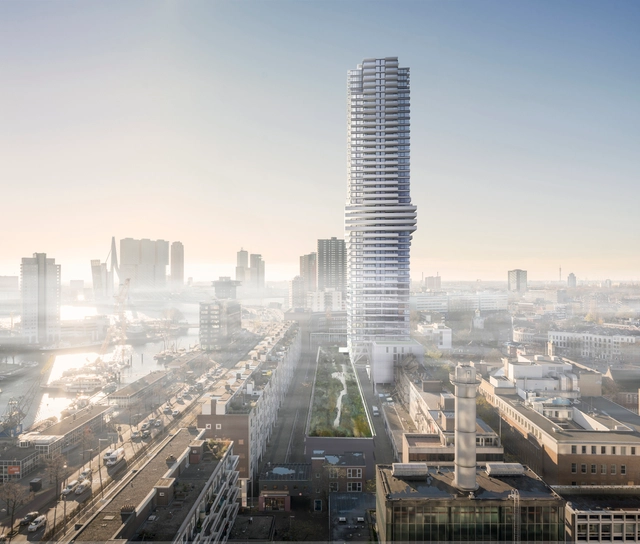
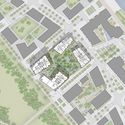
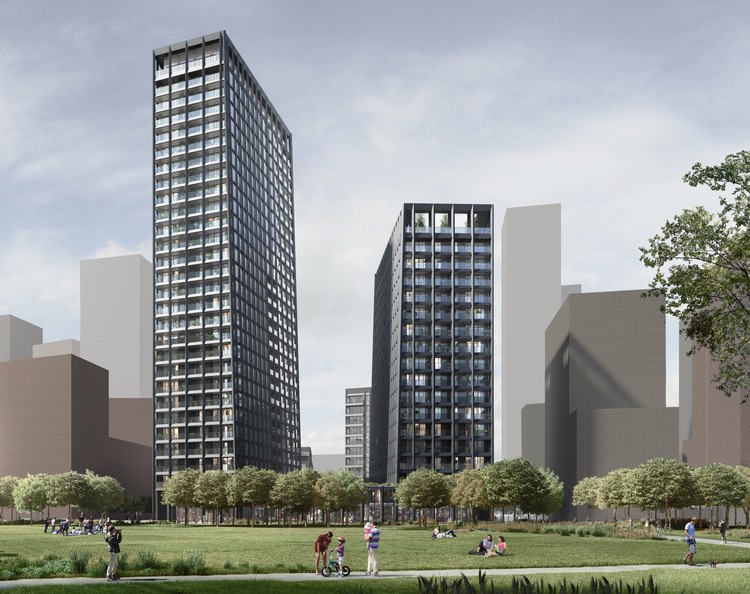
Rotterdam’s skyline is set to welcome a soaring new addition in the form of Cooltoren, V8 Architects’ 150-meter tower that upon completion, will become the city center’s tallest residential tower. Located in the Baan quarter, the design aims to integrate itself within the post-war urban fabric of the district and embody Rotterdam’s historical double layered characteristics – that of the low rise and the skyline.

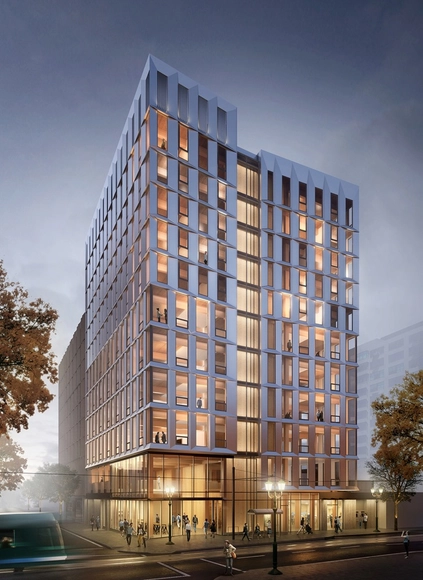
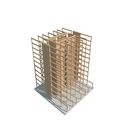
The United States’ first mass-timber highrise (defined by Emporis Building Standards as a building with an architectural height of 115-328 feet, or between 12 and 40 floors) has been granted planning permission, allowing construction on the landmark project to begin. Located in downtown Portland, Oregon, the building known as Framework will cap out at 12 floors and approximately 128 feet, ushering in a new era of tall building construction in the US.
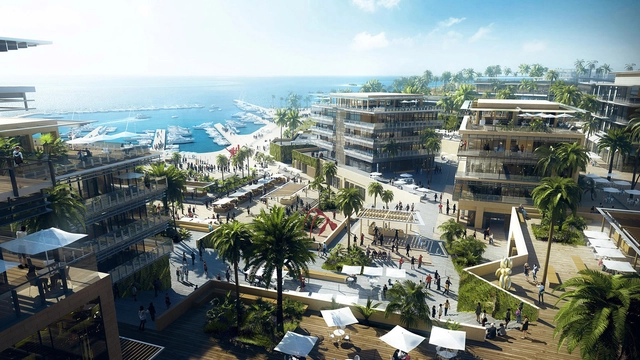
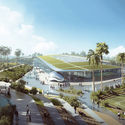
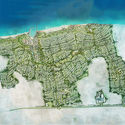
International Architecture office 10 Design has released their first images of their Jefaira Seafront Development along Egypt’s North Coast. Spanning 550 hectares, the site stretches 3km along the Mediterranean coastline. The project is in collaboration with INERTIA, one of Egypt’s prominent real-estate developers leading various luxury residential and commercial developments across the country.
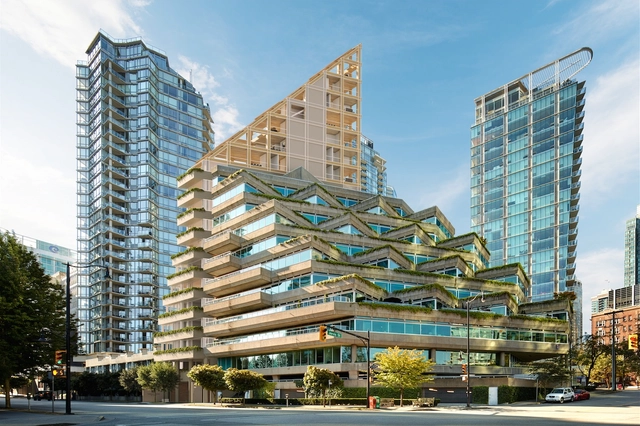
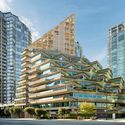
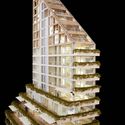
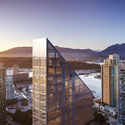
The design of the world’s tallest hybrid timber building, by Shigeru Ban Architects, has been revealed by Vancouver-based developer PortLiving. Named “Terrace House,” the project will be located in Vancouver’s Coal Harbour neighborhood, adjacent to the landmark-listed Evergreen Building, designed by late architect Arthur Erickson. The design of the “Terrace House” pays tribute to its neighbor, picking up the architectural language of triangular shapes, natural materials, and an abundance of greenery.


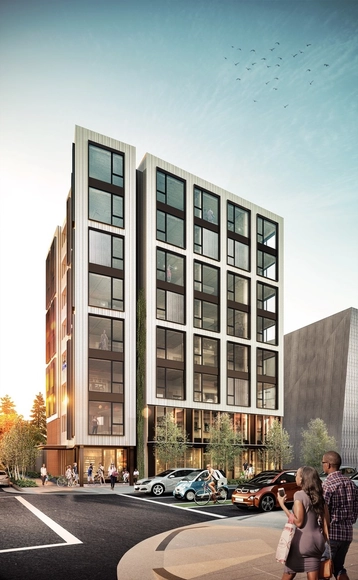
Continuing the ever-increasing growth of timber construction architecture in North America and around the world, Carbon12’s recent topping out has resulted in its newly achieved status as the tallest mass timber building in the United States. Situated in Portland and designed by PATH Architecture, the 8-storey condominium is an example of the cost-effectiveness and labor sensitivity of engineered wood products while helping regenerate Oregon’s local timber industry.
With a growing population and rapid development, much of recent focus has been on Portland’s city center, in an effort to preserve the existing natural landscape that surrounds the urban areas. Built of prefabricated cross-laminated timber panels and glu-lam beams around a steel core, Carbon12’s hybrid construction aids the city’s densification, given its off-site construction and quick assembly that help both reduce costs and respond to residential needs.
Herzog & de Meuron have completed construction of their latest project, a high-rise luxury residential skyscraper on 56 Leonard Street, New York City. Conceived as a stack of individual houses resembling a Jenga tower, the building is the tallest in its Tribeca neighborhood. With its tall and slender silhouette, 56 Leonard Street is the latest in a series of contemporary skyscrapers punctuating Manhattan’s skyline.

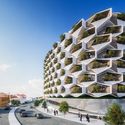
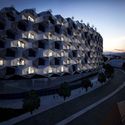
The American/Turkish architecture firm Eray Carbajo has unveiled Urban Rural, a new typology of urban living set to become a benchmark for future development in Istanbul, Turkey. The vision behind Urban Rural is for a hybrid model of living, combining close proximity to urban centers with the lush landscape of rural life. Challenging the status quo of typical residential typologies, the scheme will consist of modular hexagonal units with triangular gardens, forming an active façade designed to become a future landmark for the city.

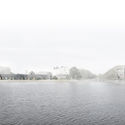
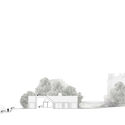
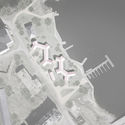
When placed in a historic landscape, contemporary architecture requires a layered approach. It must often strike a respectful, vernacular tone, whilst embracing the innovative, functional hallmarks of a modern building. This balance has particular relevance at Suomenlinna Sea Fortress, located off the coast of Helsinki, Finland. Throughout its 300-year history, it was once occupied by the armies of Sweden, Russia and Finland – a rich history attracting UNESCO World Heritage status, and almost one million annual visitors. The site is more than a museum, however, but a living district of Helsinki with 800 inhabitants and 500 jobs.
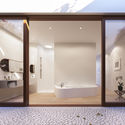
Against the prerequisites of past and present, Heikkinen & Kangasaho Architects have combined sharp, functional modernity with respectful, restrained simplicity in a new housing scheme to sit amongst Suomenlinna’s historic fortifications.
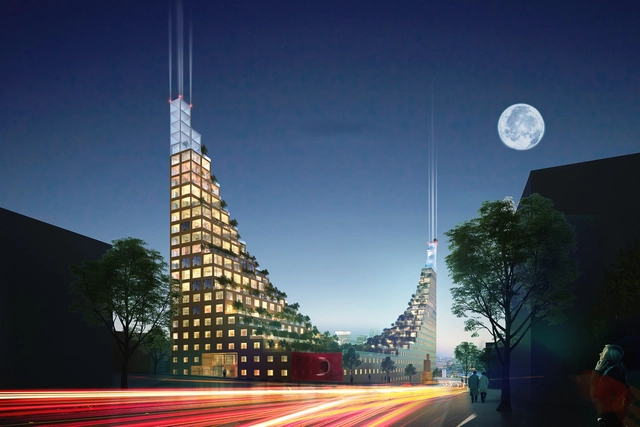
A new housing complex in the form of 500 terraced units has been proposed by London practice Architects of Invention for the city of Birmingham, in response to its growing multicultural population. Drawing inspiration from the ancient Hanging Gardens of Babylon, Garden Hill’s formal composition is that of two staggered 25-storey towers, with private and communal gardens on each level of terraces.
With the project's swooping mass, the residences aim to offer panoramic views of Birmingham, given its central location in the Digbeth area, a 10-minute walk from the city center. Additionally, the staggered towers capture ample daylighting over the course of the day, with the south end benefitting from the morning sun and the north end in the evening.
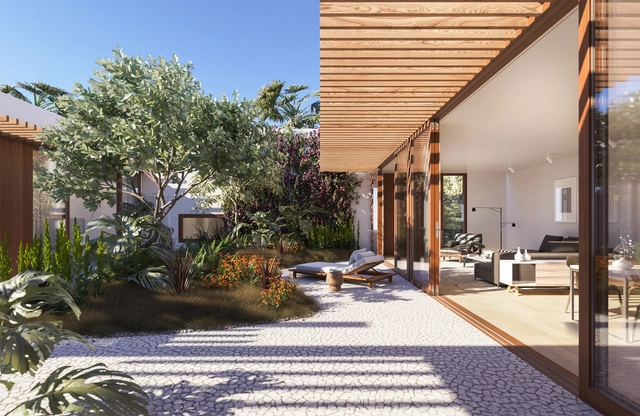
Renderings have been revealed for Herzog and de Meuron’s new luxury loft residences in Miami, designed in collaboration with local developer Robert Wennett. In contrast to the firm’s acclaimed parking garage located nearby, which capitalized on Miami’s surrounding views, 1111 Lincoln Residences will be a far more inwardly-focused endeavor, with the 2,115-square-foot lofts opening onto a series of rooftop courtyards.
Located near the city’s bustling intersection of Alton and Lincoln, the complex accommodates a multi-level parking garage, over 100,000 square feet of interior office space, dedicated event space on the seventh floor, as well as 11 selected retailers on the ground floor. Notable tenants include Alchemist, Jo Malone, Rosetta Bakery, and Chotto Matte, in addition to the various restaurants available to residents along Lincoln Road.
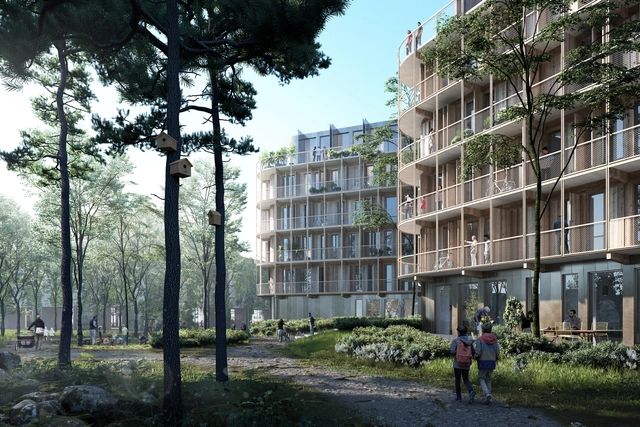
Swedish architecture firm Kjellander Sjöberg has released images of their proposed new city block to enrich the Swedish city of Uppsala. The four competition-winning residential buildings, known collectively as the Tunet, will feature cross-laminated timber construction and wood detailing, creating an environmentally-friendly addition to the city.
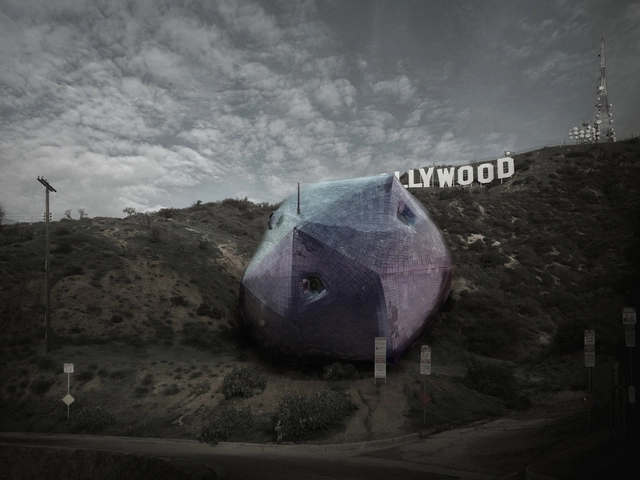
Architectural research initiative arch out loud, in partnership with Last House on Mulholland (LHOM), has released the winner of their competition to design a house of the future, to be sited directly below the Hollywood Sign.
Serving as a “design charette” to generate ideas about potential uses for the currently open site, the competition called for residential designs that demonstrate the use of innovative technology and integrative environmental strategies, while capitalizing on the prominence of the site.
The Hollywood competition received entries from 500 designers across the world, selecting three winners, with an additional owner’s choice.
The winners of the Hollywood design competition are:
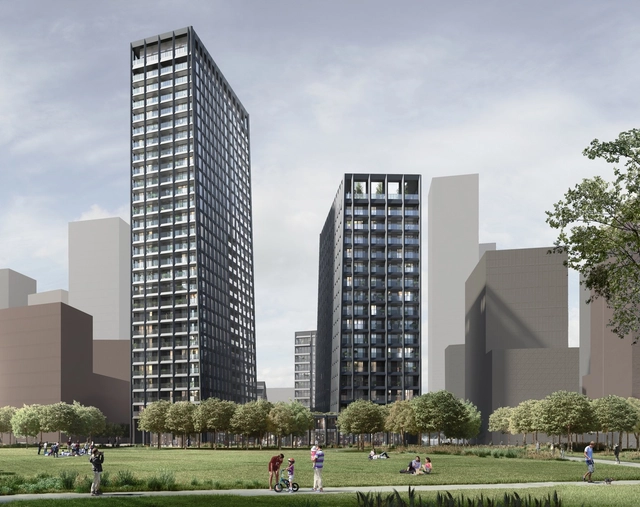
Alison Brooks Architects has revealed designs for their first London highrise as the project receives planning permission. The mixed-use scheme will consist of a cluster of 4 residential towers of varying heights, with co-work and leisure at the ground floor and podium levels, contributing community value to the regeneration of London’s Greenwich Peninsula, the site of Roger Stirk Harbour + Partners’ O2 Arena and a future £1 Billion Mixed-Use Project by Santiago Calatrava.
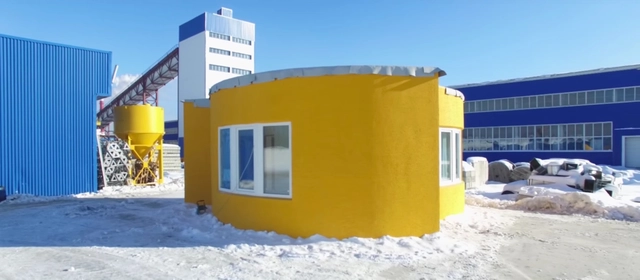
In recent times, 3D printing technology has made some great strides in its production content and quality, and now it has successfully printed the world’s first liveable house in Stupino, Russia. Responsible for this feat are San Francisco 3D printing startup Apis Cor, and Russian real estate developer PIK, who began the project in December of last year.
“Now we can say with confidence that with Apis Cor solution, the construction 3D printing has leaped to a new evolutionary stage,” said the project team. “The company and its partners are confident that the house in Stupino was the first step that can convince the world that 3D technology in the construction market is a reality.”










.jpg?1496072870&format=webp&width=640&height=580)