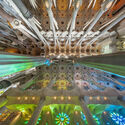
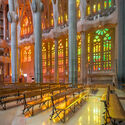
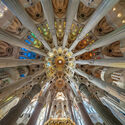
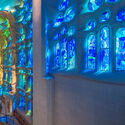
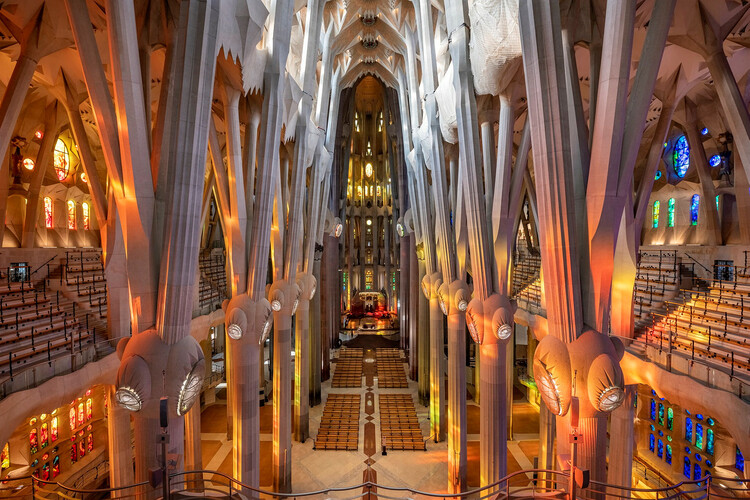
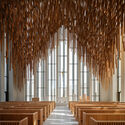
It is afternoon in the summer, and the nave of the Sagrada Família is saturated with warm colors. Shafts of amber and crimson sweep across the stone floor, shift as a cloud passes over Barcelona, then deepen again. Around you, visitors slow without quite realizing it. Some raise their phones — not to capture the architecture, but to step into the light itself, positioning themselves in a pool of orange or gold as if the colours were something you could wear.
They are, without knowing it, doing exactly what Gaudí intended: surrendering, however briefly, to the sensation of being bathed in something larger than themselves.
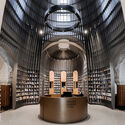
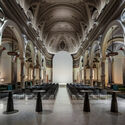
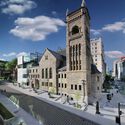
The conversion of disused religious temples through cultural programs constitutes one of the most compelling adaptive reuse strategies in contemporary urban planning. This functional compatibility seems to be rooted in the specific characteristics of churches: their central naves offer large-scale, clear floor plans and monumental cross-sections that easily accommodate the volumetric requirements of museums, theaters, or community hubs. Furthermore, the acoustic properties inherent to their vaulted ceilings, combined with intentional natural lighting filtered through stained glass windows or domes, create the spatial conditions for activities ranging from the performing arts to the exhibition of cultural artifacts. By assuming a public and cultural role, these buildings not only avoid demolition or physical abandonment but also preserve their status as urban and identity landmarks within the city fabric, revitalizing their immediate surroundings without altering their historical significance.
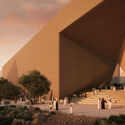
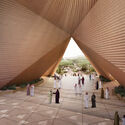
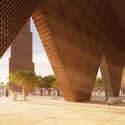
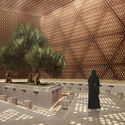
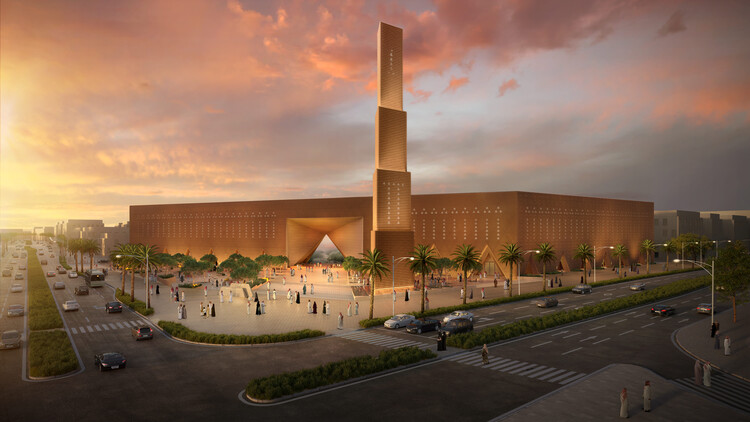
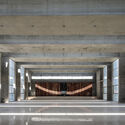
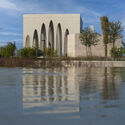
Set within the historic district of Diriyah, widely recognized as the birthplace of the first Saudi state, the Grand Mosque by X Architects forms part of the ongoing transformation of the area into a major cultural destination in Riyadh. Envisioned within the Diriyah Gate II development, the project is positioned at the intersection of heritage preservation and large-scale urban redevelopment, contributing to a broader master plan that includes museums, civic institutions, residential neighborhoods, and public spaces. Within this context, the mosque is conceived not only as a place of worship but also as an urban anchor embedded in the evolving fabric of the district.
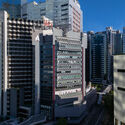
When Hong Kong's architectural story is told, it is often reduced to a handful of icons. Many people most readily name I.M. Pei—Pritzker Prize laureate and architect of the Bank of China Tower in Central (1990), as well as global works such as the Le Grand Louvre in Paris and the Miho Museum in Shiga. Looking elsewhere, one also encounters a long lineage of British and international architects whose imprints have shaped the city's institutional skyline: from Ron Phillips' civic works—most notably the former Murray Building (1969), now The Murray Hotel, and Hong Kong City Hall (1962)—to Norman Foster's infrastructural and corporate monuments, including the Hongkong and Shanghai Banking Corporation (HSBC) Tower (1986) and Hong Kong International Airport (1998), and, more recently, Zaha Hadid Architects' The Henderson (2024).
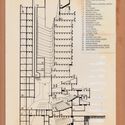
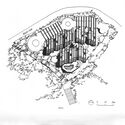
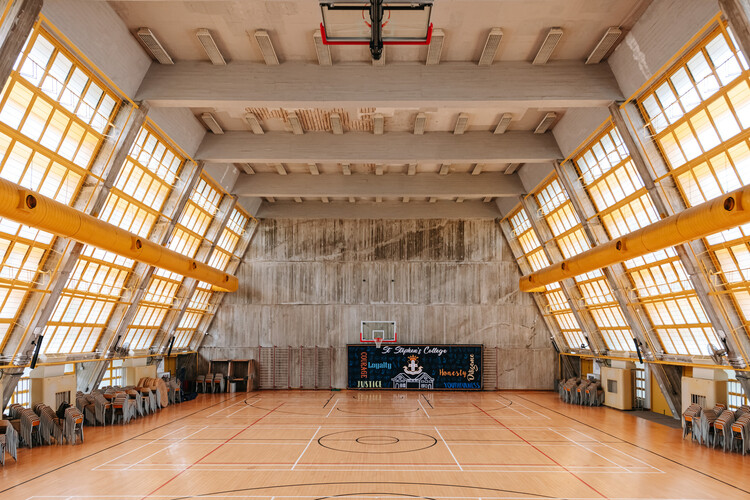
Yet within the same period as Pei and Foster, local architects were also producing buildings of enduring significance—works that carried the legacies of Bauhaus, but translated them into a language distinctly calibrated to Hong Kong's climate, density, and civic life. These projects may not always read as commercially prominent icons, yet they often register a sharper sense of social responsibility and public agenda. Among the most important figures in this lineage is the late architect Tao Ho, whose work and public role formed a quieter—but no less foundational—strand in Hong Kong's modern architectural heritage.
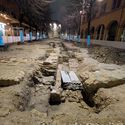
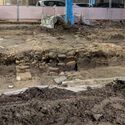
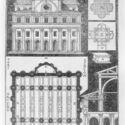
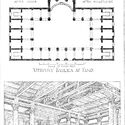
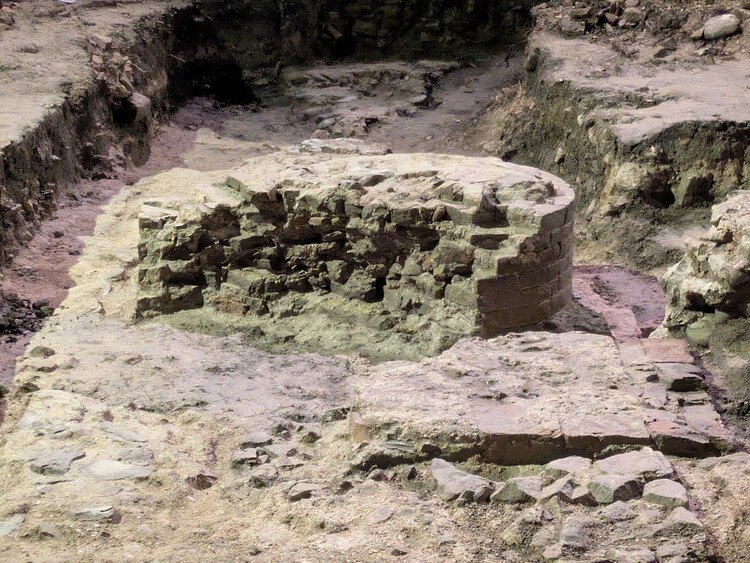
Archaeological excavations in Fano, Italy, have revealed the basilica described by Vitruvius in De Architectura, a finding of major architectural significance, as it represents the only structure that can be attributed with certainty to the Roman architect. Identified during redevelopment works in Piazza Andrea Costa, the discovery provides rare physical evidence of Vitruvian theory translated into built form and offers new insights into Roman architectural design, proportions, and construction practices. The announcement was made during a press conference at the Montanari Media Library, attended by representatives of local, regional, and national institutions, including Italy's Minister of Culture Alessandro Giuli.
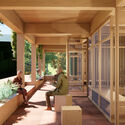
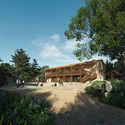
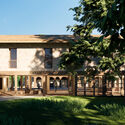
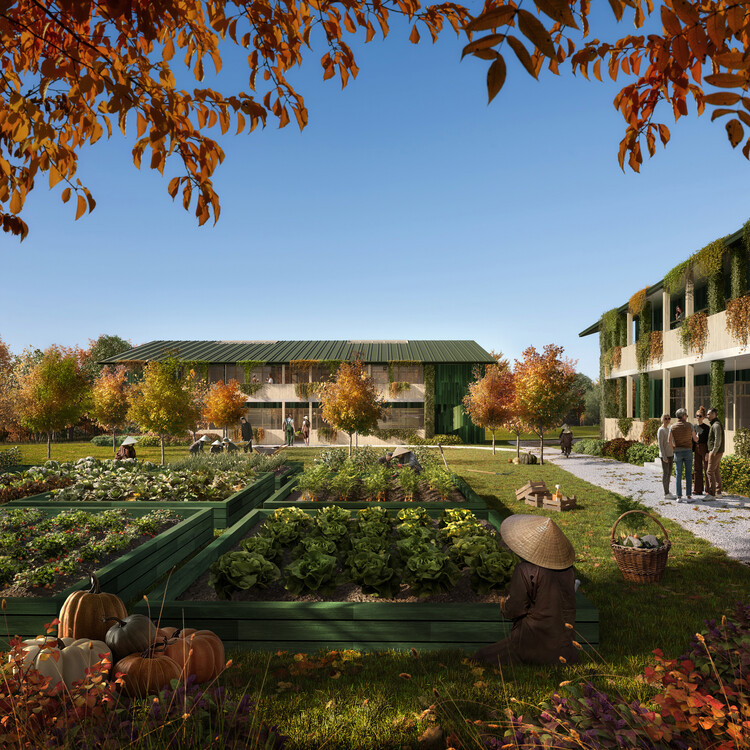
The Plum Village BuddhistMonastery in southern Dordogne, France, has received construction approval for the first phase of its ongoing collaboration with Dutch architecture studio MVRDV. The approvals cover the Upper Hamlet masterplan phase, including the construction of new guest houses and the renovation and expansion of the monastery's bookshop, as well as a new nunnery building at the Lower Hamlet. Developed in collaboration with co-architect MoonWalkLocal and consultants OTEIS, VPEAS, and Emacoustic, the wider project includes two masterplans for the Monastery's Upper and Lower Hamlets, four communal guest houses, a new nunnery, and the transformation of an existing bookshop. Working on a non-profit basis, the design team prioritises renovation alongside the use of circular and bio-based materials, aligning the architectural approach with the monastery's philosophical principles. The proposed additions aim to better accommodate the annual visitors who travel to Plum Village to engage with the teachings of Engaged Buddhism.
Architecture—one of the few cultural artifacts made to be publicly lived with, preserved, and often capable of standing for centuries—contributes significantly to the cultural identity of places and people. Historically, buildings have expressed institutional attitudes, influence, and power; they are clear demonstrations of culture. Yet longevity complicates preservation: when a structure is rebuilt, repaired, or entirely reassembled, in what sense is it still the same building?
There's the classic Ship of Theseus puzzle from Plutarch. if a ship's planks are replaced one by one over time, is it still the same ship? Thomas Hobbes adds a twist—if the original planks are reassembled elsewhere, which ship is "the original"? The paradox tests what grounds identity: material fabric, continuous use and history, or shared recognition. In architecture and conservation, it reframes preservation as a choice among keeping matter, maintaining form and function, or sustaining the stories and practices that give a place meaning.
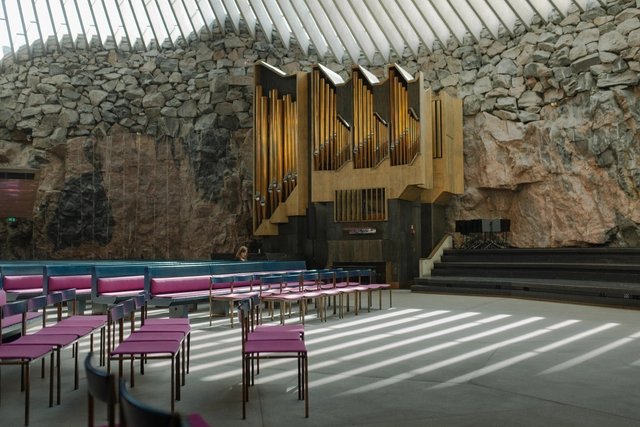
Near the center of Helsinki, Finland, in the Töölö neighborhood, one can find the Temppeliaukio Church, an unusual-looking Lutheran church nestled between granite rocks. Approaching the square from Fredrikinkatu street, the church appears subtly, a flat dome barely rising above its surrounding landscape. An unassuming entrance, flanked by concrete walls, leads visitors through a dark hallway, and into the light-filled sanctuary carved directly into the bedrock. The exposed rock walls earned it the alternative name “The Church of the Rock.” To contrast the heaviness of the materials, skylights surrounding the dome create a play of light and shadows and a feeling of airiness.
The church is the result of an architectural competition won by the architect brothers Timo and Tuomo Suomalainen in 1961. Their original solution was recognized not only for its creativity but also for the respect it showed to the competition’s goal: “to include the organization plan for the whole Temppeliaukio Square, taking into attention that as great part as possible of the rock outcrop of the square to be preserved.” The winning proposal achieves this by embedding the church inside the rock and placing parish facilities on the edges of the hillock. This article explores the story behind the Temppeliaukio Church both narratively and visually, through the lens of Aleksandra Kostadinovska, a professional photographer from Skopje.
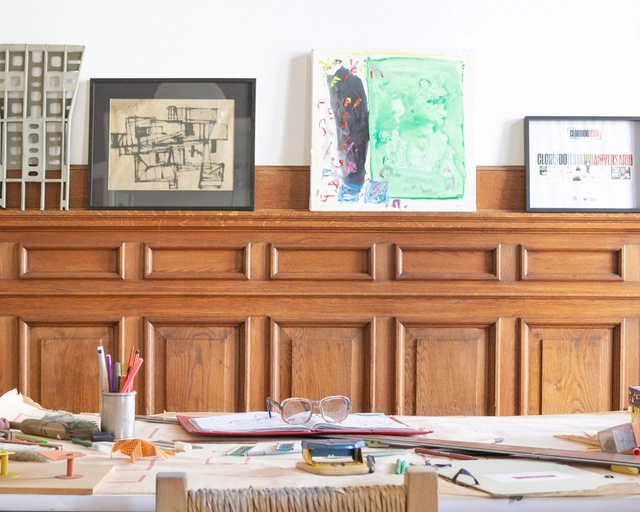
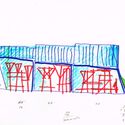
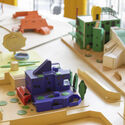
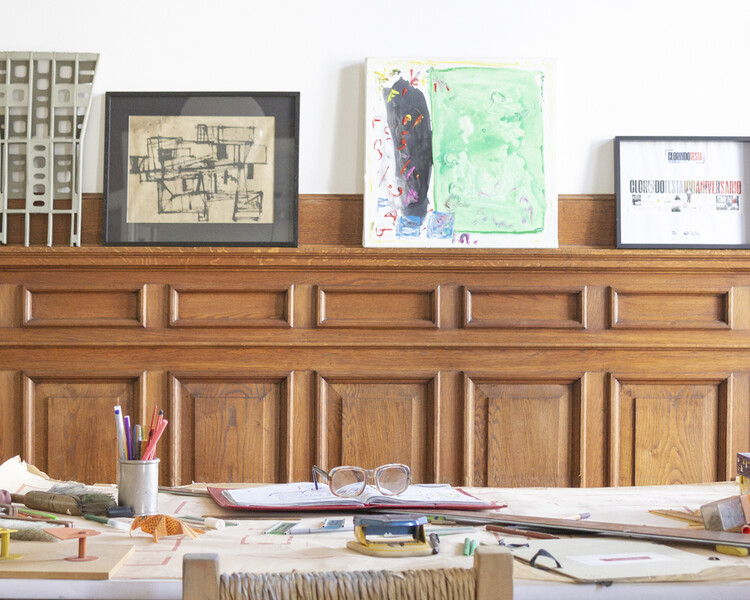
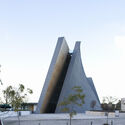
Amid questions, reflections, and debates, the work of Clorindo Testa embodies an innate connection between artistic and architectural experimentation, reflected in many of his built projects, sketches, models, and plans. From the Mariano Moreno National Library to the former Bank of London building in Buenos Aires, his production is of such scope, diversity, and complexity that it constitutes a major source of study, one that also includes unbuilt projects that deserve visibility and recognition on a global scale. In his final years of professional activity, two unbuilt projects of religious architecture highlight Testa’s work not only as an architect but also as a visual artist.
The use of primary colors, pure forms, and concrete represent some of the most distinctive characteristics of Clorindo Testa’s architecture, which is inseparable from his visual art. Reflecting on themes such as living in large cities or the conditions of life in urban spaces, the powerful expressiveness and plasticity of his works, together with the character of the line, his typical color palette, and the frequent presence of the human figure, reveal the importance and meaning he attributed to scales, uses, and perceptions as an architect who never settled for the first idea.
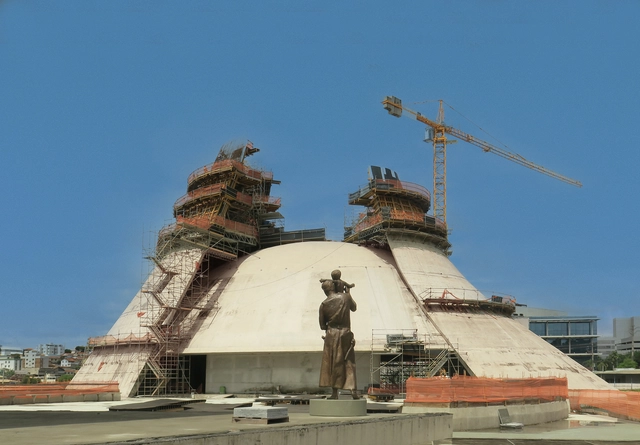
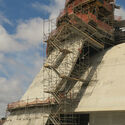
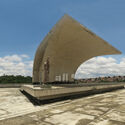
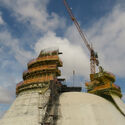
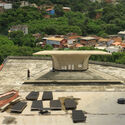
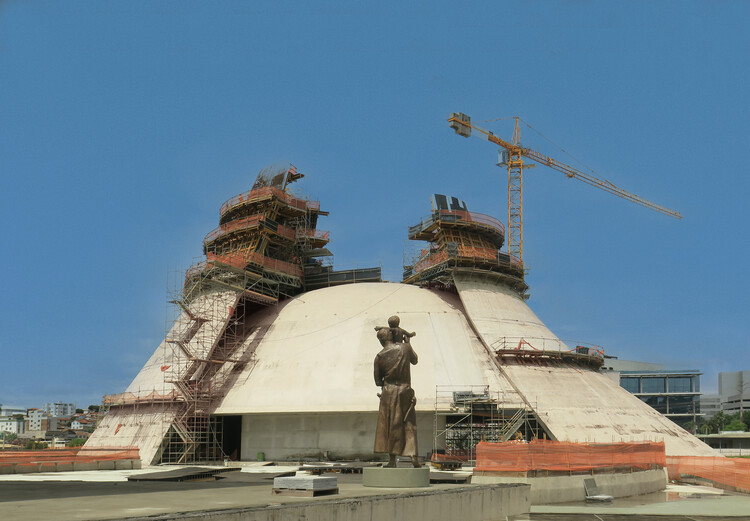
The Cristo Rei Cathedral is Oscar Niemeyer's design for the cathedral of Belo Horizonte, the capital of the state of Minas Gerais in southeastern Brazil. Conceived between 2005 and 2006, it is one of the late architect's final projects in the country. The design features a domed structure approximately 60 meters in diameter, suspended by two towering elements rising 100 meters high. Niemeyer referred to the project as a "square," consisting of a cathedral with a capacity for 3,000 people and an external altar designed to accommodate up to 20,000 worshippers for mass and public events. Construction began in 2013 and is still ongoing. Earlier this year, photographer Paul Clemence visited the site, documenting the building process and capturing the emergence of Niemeyer's signature curves.
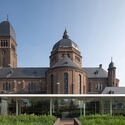
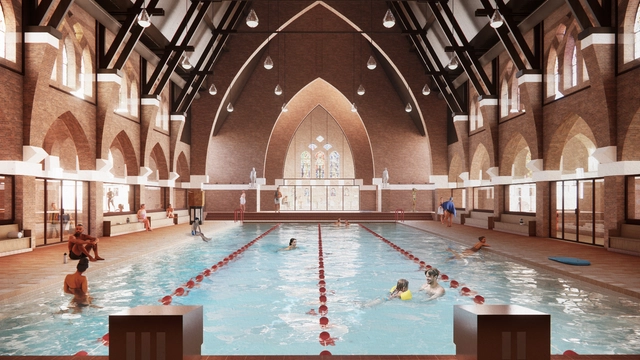
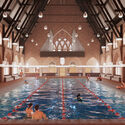
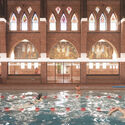
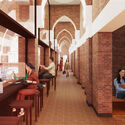
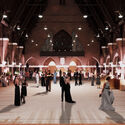
MVRDV and Zecc Architecten have won the competition to transform the St. Francis of Assisi Church in Heerlen into a public swimming pool. Originally built over 100 years ago, the church stopped hosting services in 2023, presenting the municipality with the opportunity to repurpose the building for community use. Nicknamed Holy Water, the adaptive reuse project is meant to give this listed national monument, with its recognizable silhouette, a new social function while preserving its historic elements. The design was created through a collaboration between MVRDV, Zecc Architecten, IMd Raadgevende Ingenieurs, Nelissen Ingenieursbureau, and construction economics consultancy SkaaL, and is expected to be completed at the end of 2027.
After two weeks of open voting in the16th edition of the Building of the Year Awards, our readers have meticulously narrowed down a pool of almost 4,000 projects to a select group of 75 finalists spanning 15 categories. This year's awards honor the pinnacle of design, innovation, and sustainability on a global scale, showcasing an exceptional range of projects within the shortlist. As a crowdsourced award, we take pride in affirming that your selections authentically mirror the current state of architecture, and the caliber of this year's finalists further underscores the excellence and diversity prevalent in the field.
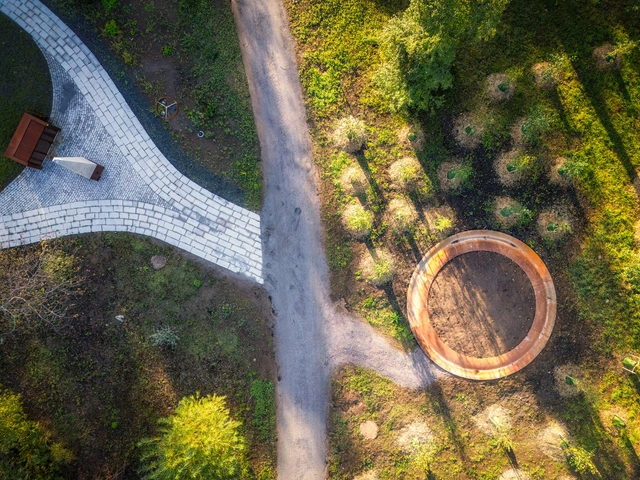
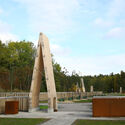
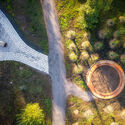
Opened in October 2024, the Järva Cemetery offers everyone, regardless of faith or beliefs, a space for remembrance, continuing Stockholm's long tradition of funeral history. After overcoming significant planning obstacles, the site, designed by Kristine Jensen Tegnestue and Poul Ingemann, was created to accommodate burials and funeral ceremonies, with options for coffins, urns, ash groves, and a commemorative forest. During the last edition of Open House Stockholm, visitors could explore its surrounding natural landscapes and connect with the space.
Religious architecture in Asia is evolving by incorporating modernist influences while preserving its spiritual essence. Clean lines, minimalist aesthetics, and materials like concrete, steel, and glass are a common sight. These interventions often replace or complement the intricate ornamentation and natural materials traditionally associated with sacred spaces in the region. This approach allows these structures to achieve a universal appeal while still reflecting their cultural and spiritual foundations.
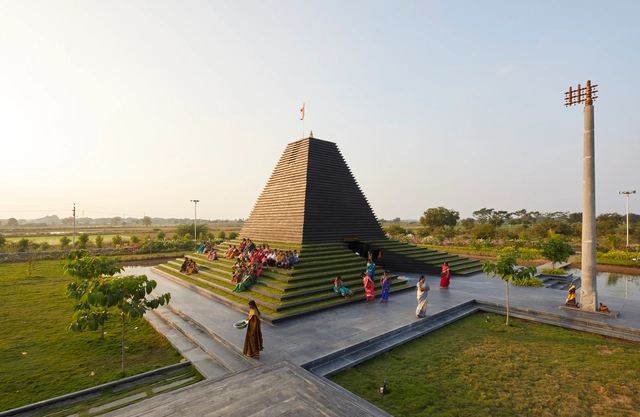
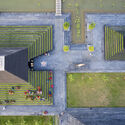
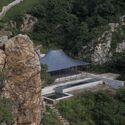
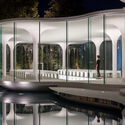
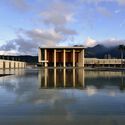
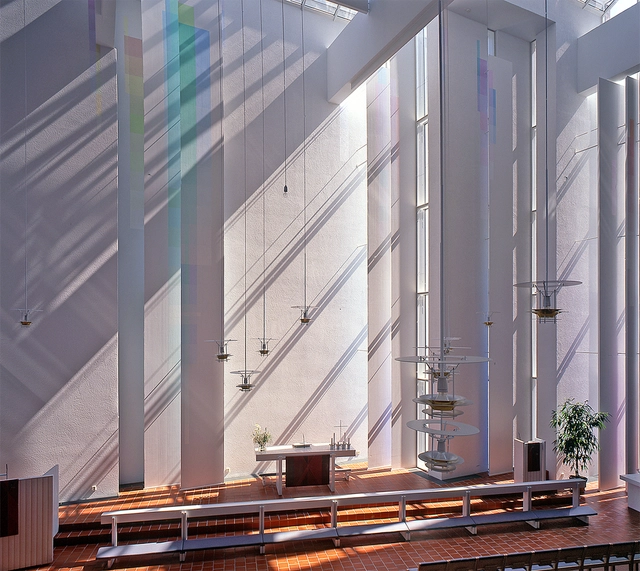
Several examples highlight this blend of tradition and modernity. The Cloud of Luster Chapel in Japan uses slender columns and abundant natural light to create a luminous atmosphere, evoking Frank Lloyd Wright's Johnson Wax Building. The Temple of Steps in India incorporates cascading steps that emulate the traditional Ghats, combining cultural symbolism with Brutalist aesthetics. Similarly, the Water-Moon Monastery in Taiwan employs concrete, straight lines, and reflective pools in a manner influenced by Le Corbusier's Five Points of Architecture. Finally, the Jetavana Buddhist Temple in South Korea and the Upper Cloister in China integrate their layouts with the surrounding stone and hillside, drawing parallels to Wright's desert houses. Together, these projects demonstrate how Asian religious architecture is redefining sacred spaces through a modernist lens while honoring their traditional heritage.
As communities grow more multicultural and increasingly diverse, these spaces serve as physical manifestations of religious inclusion, encouraging the acceptance of religious and ethnic minorities within multicultural landscapes. Their proliferation reflects a growing need for inclusive environments that cater to diverse spiritual needs while promoting interfaith understanding. However, designing and implementing these spaces presents complex challenges, often sparking debates about representation, neutrality, and the very nature of sacred space. These discussions underscore the delicate balance architects must strike in creating spaces that are both universally welcoming and spiritually meaningful.