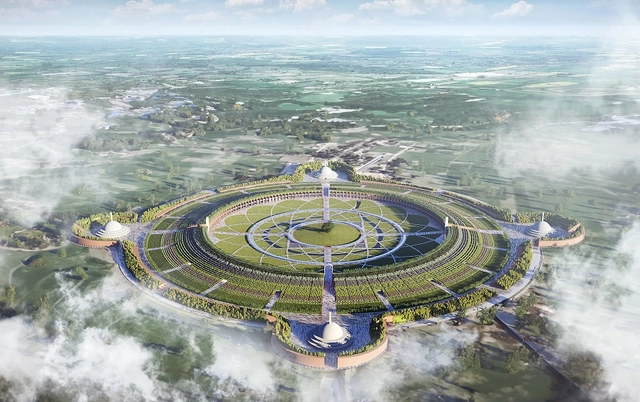
Stefano Boeri Architetti has revealed the designs for the Ramagrama Stupa in Nepal, a master plan intended to enrich this sacred Buddhist location. The proposal features a Biodiversity “Ring Garden” and a Peace Meadow, which encircles the revered Bodhi tree. Situated in Nepal’s Parasi district, the Ramagrama municipality holds immense cultural and religious significance, sheltering a preserved portion of Buddha’s relics.
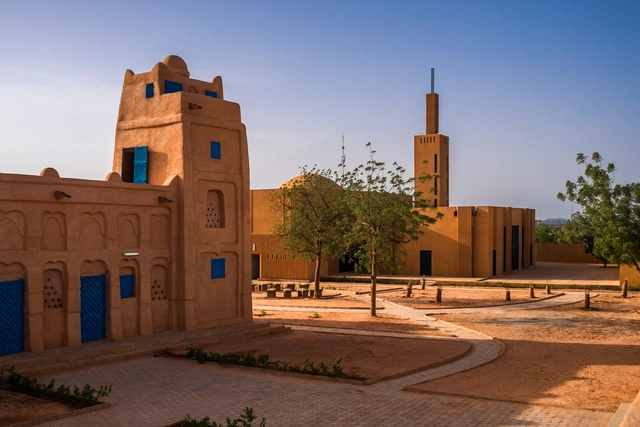
Sub-Saharan Africa is home to an enormous number of religious adherents – within which there is extraordinary diversity in religious expression. Iconic buildings serving a religious purpose are found throughout the continent, such as The Cathedral Basilica of the Holy Family in central Nairobi or the Hare Krishna Temple in South Africa. What is evident is that architecture that hosts religious gatherings makes up a key part of the urban fabric of sub-Saharan African cities and that in a lot of cases, religious structures go against the grain – leaving aside or tweaking classical models in favor of a unique architectural approach.
The history of architecture is marked by a rich array of styles and expressions, each of which reflects the specific environment it was created in. Numerous unique narratives have emerged, giving rise to various architectural traditions. The notion of a single, universal tradition is quickly debunked when one explores the pages of any architectural history book.
While contemporary architectural movements may share common principles, it's important to note that this doesn't necessarily result in a uniform appearance. However, when we consider the diversity of historical architectural styles and traditions, it becomes evident that specific regions have distinct architectural identities. Portugal has a well-defined architecture, and Carlos Castanheira is one of its notable representatives.
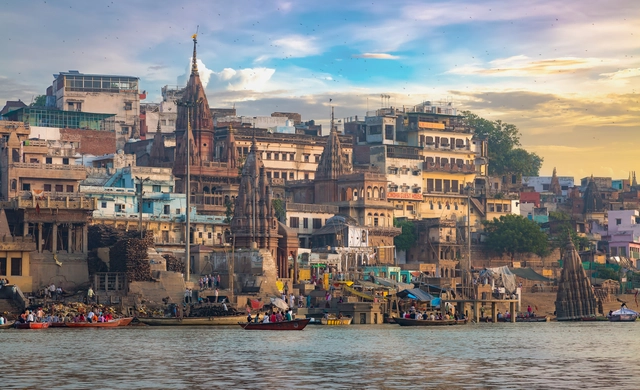
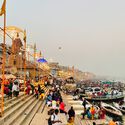
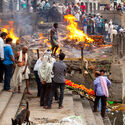
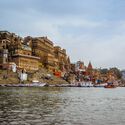
Water, with its religious connotations as a symbol of purification and life, holds great significance in many cultures. Nowhere is this respect for water more evident than in India, a country that reveres its rivers as holy. Water bodies serve as a testament to the veneration and use of water in religious rituals, embodying cultural heritage as public spaces, ritual sites, and places for cremation. Central to daily life in India, water and water architecture intertwine spirituality, and cultural traditions, offering a glimpse into the rich traditions of communities.
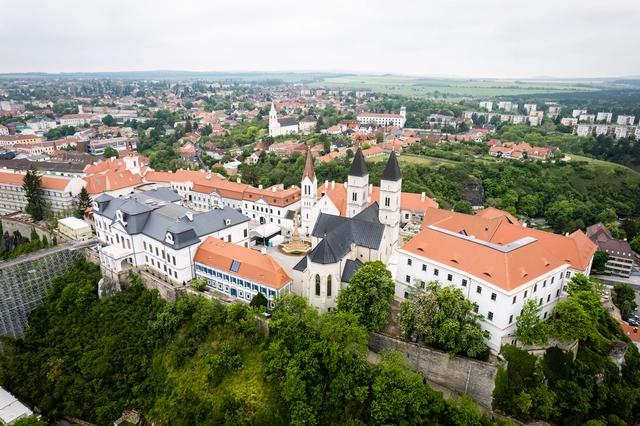
Though lesser known, the Hungarian city of Veszprém is one of the oldest and most important cities in the country. Designated as the European Union Capital of Culture for 2023, Veszprém boasts a longstanding history, visible through its evolving, yet well-preserved architectural monuments. In fact, one of the first notable observations as one walks through the city streets is its eclecticism and layers of historically diverse buildings, that sporadically arise. Despite the difference in styles and architectural languages, they collectively tell the story of the county and its spiritual and political relevance. Its pedestrian-friendly streets, many parks and public spaces, connect the Veszprém monuments, as one delves into a historic promenade.
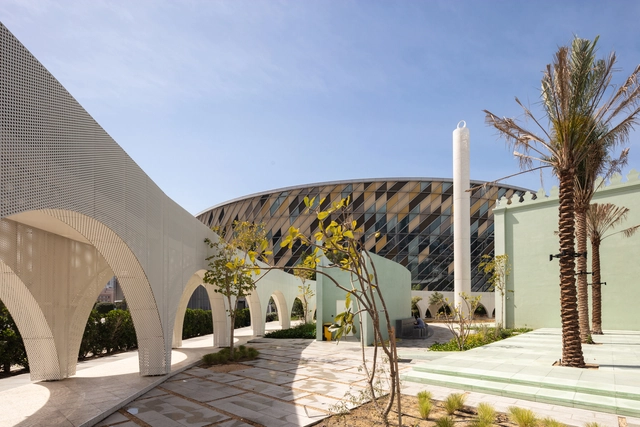
The mosque; the Islamic holy place of prayer, carries a distinct structural characteristic and identity. It is a serene and spiritual architecture that brings individuals closer to their faith and divine entity. Prophet Muhammad's original house in Medina (in present-day Saudi Arabia) is believed to be the first place of prayer, and served as a model for early mosque architecture; a mud-brick structure with living quarters on one side of an enclosed rectangular courtyard. Soon after, the allocation of open spaces in the center of towns where Muslims could gather and pray became more frequent, resulting in several spaces of worship with a universal spatial characteristic: their orientation towards Mecca.
The design process of the mosque started with a single enclosed geometric form, reinforcing the idea of spirituality and seclusion. Soon after, this simple spatial prototype evolved into the first formal hypostyle mosque, known for its vast prayer hall and series or arcades. Variations of this model saw the first mosque in Medina, known as the Quba Mosque (622 CE), the Kairouan Mosque in Tunis (670 CE), and the Umayyad mosque in Damascus (715 CE), some of which incorporated column details from ancient Greek and Roman architecture. However, the role of mosques evolved throughout the years from just a place of worship to an architecture that helps in re-establishing the values of Islam and offers contributions to society, including educational, civic, and ceremonial.
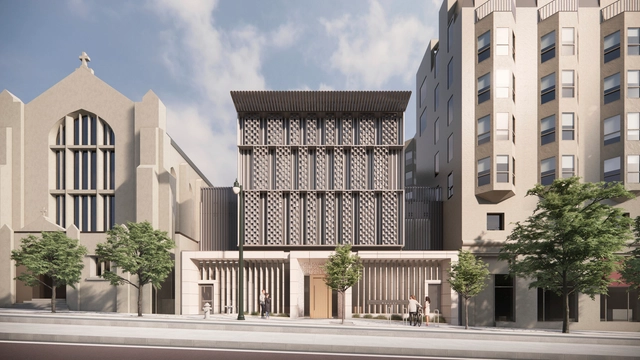
Designed by Skidmore, Owings & Merrill (SOM), the new American Buddhist Cultural Society Temple, also known as the San Bao Temple, has broken ground in San Francisco, California. Located on Van Ness Avenue, the new six-story facility will include a community center, a Buddhist shrine, and a meditation room on the upper levels, along with three levels of private dormitories for visiting monastics and volunteers. In the center of the building, a light-filled atrium offers additional amenities, such as a public art gallery, bookstore, teahouse, and community gathering hall. The temple is expected to open by the end of 2024.
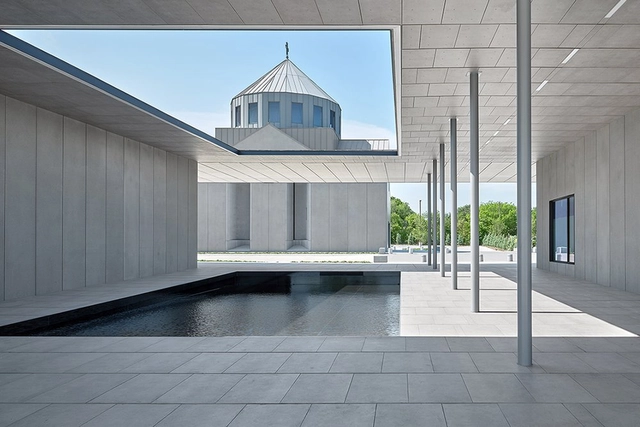
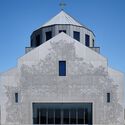
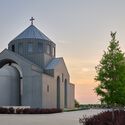
David Hotson (b. 1959) founded his New York City-based practice David Hotson Architect in 1991. His projects – houses, loft residences, penthouse apartments, and galleries – are known for their remarkable spatial and visual complexity. His Church of Saint Sarkis in Carrollton, Texas is especially distinguished for the luminous and sculptural qualities of its interior space as well as the exterior grade high-resolution digital printing on its west façade. Earlier this year this appealing work won the US Building of the Year award by World-Architects.com. Hotson obtained his Bachelor of Environmental Design from the University of Waterloo in Ontario, Canada, and earned his Master of Architecture in 1987 at Yale.
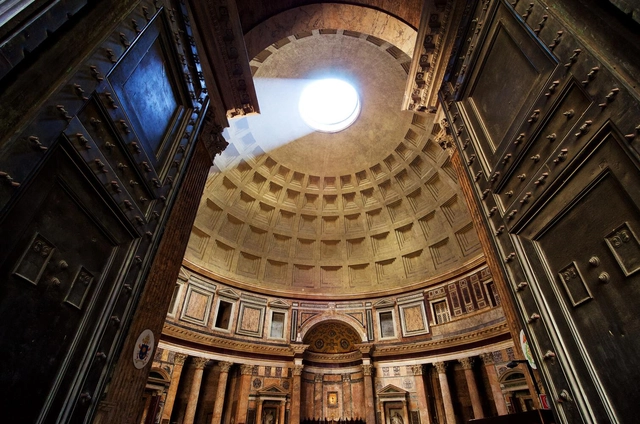
In the following interview with David Hotson, we discussed the architect’s design process, focusing on making concave spatial voids legible and primary, being inspired by Byzantine architecture and his favorite building ever built, what structure he considers the most important work of contemporary architecture, what makes his award-winning Church of Saint Sarkis special, and the use of space and light as the essential tools in creating architecture as a figural void and ultimately an art form.
The significance of daylight in volumes of space exceeds its function of illumination. Light is a creative tool manipulated by architects to infuse a space with a metaphysical spirit, influencing the emotional states of its occupants. Having a phenomenological effect on the human psyche, light and shadow have been played with to invoke a sense of divinity and spirituality into the character of religious buildings. The interplay between architecture and light is a powerful one, shaping a deeper experience of spirituality.
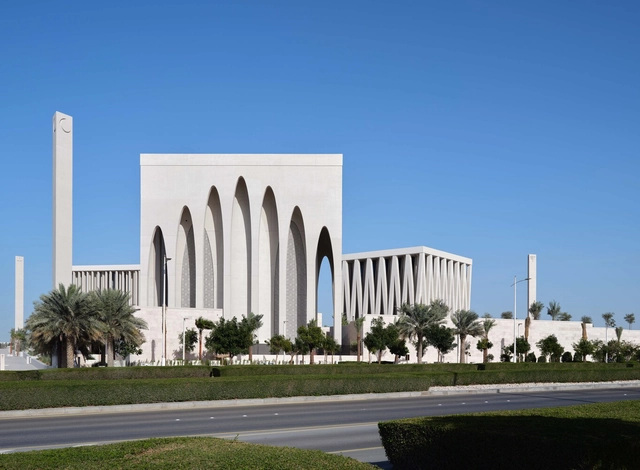
Abrahamic Family House, overview. Image Courtesy of Adjaye Associates
Designed by Adjaye Associates, the Abrahamic Family House is a landmark project located in the Saadiyat Cultural District in Abu Dhabi, the capital of the United Arab Emirates. The center encompasses three separate houses of worship: a mosque, a church, and a synagogue, along with spaces for gathering and dialogue. First announced in 2019 following an international competition, the interfaith complex was officially inaugurated and opened to worshippers on 16th February 2023. Access to the forum and guided tours will be available to visitors from 1 March 2023.
After two weeks of voting in our 14th edition of the Building of the Year Awards, our readers have narrowed down over 4,500 projects to just 75 finalists across 15 categories, casting over 100,000 votes. This year's awards celebrate the very best in design, innovation, and sustainability from around the globe, with the shortlist featuring an exceptional range of projects, from a house in a favela to cutting-edge cultural centers and innovative public spaces that are sure to impress. As a crowdsourced award, we are proud to say that your selections are a true reflection of the state of architecture, and this year's finalists are no exception.
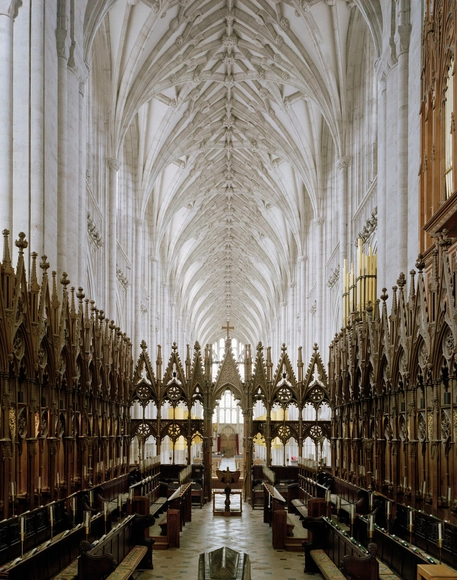
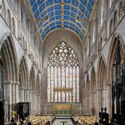
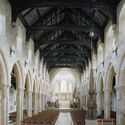
Using only natural light to document English cathedrals can turn into a logistical and technical challenge. However, Peter Marlow's photography has resulted in a remarkable series of iconic spiritual sites whose contemplative atmosphere is rarely accessible to others. Looking east with the camera towards the nave as the dawn light streamed through the main window opens a purist and mystical perspective to the time when these sacred structures were erected.
What is good architecture? More than two thousand years ago, Vitruvius would have answered that good architecture is that which contemplates three basic principles: firmitas (firmness), utilitas (utility), and venustas (beauty), as he described in his treatise De Architectura, and probably no one would have questioned it. Today, this broad question is capable of eliciting hundreds of answers, all personal and subjective, which have to do with the experience of each person.
Canary Islands-born architect Fernando Menis has received the highest honor at the Faith & Form International Awards for Religious Art & Architecture in the United States, for his design of the Holy Redeemer Church of Las Chumberas in Tenerife. Co-sponsored by Faith & Form, Partners for Sacred Places, and Interfaith Design, the annual awards program has honored outstanding religious architecture since 1978.
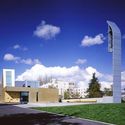
The Chapel of St. Ignatius in Seattle, designed by Steven Holl Architects, has been honored by the American Institute of Architects (AIA) with its Twenty-five Year Award. AIA’s award is conferred on a building that has set a precedent, stood the test of time for 25 to 35 years and continues to set standards of excellence for its architectural design and significance. The Chapel of St. Ignatius finished in 1997, reflects the ideal of the Jesuit practice, a religious order of the Catholic Church, in which no single method of worship is prescribed. Instead, the sect recognizes that “different methods helped different people.” That idea is reflected in the Chapel of St. Ignatius, Seattle University’s main chapel, where differences in light unify to support the worship and ritual needs of the university community.
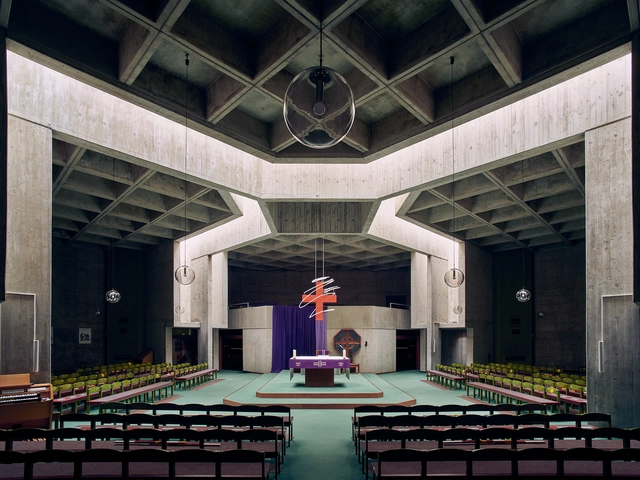
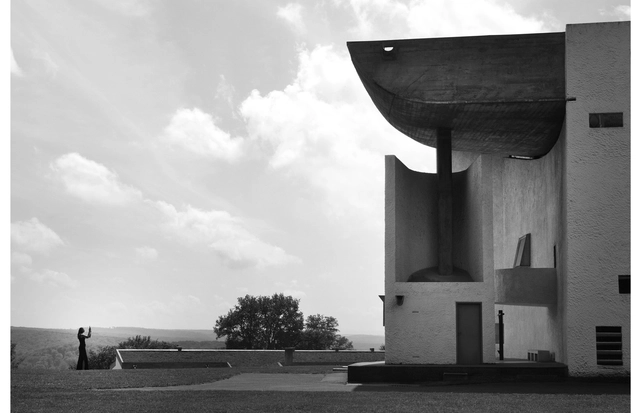
If one were asked to picture a Catholic Church, the first image to come to mind would probably resemble a medieval gothic cathedral with buttresses, pointed arches, and a spire pointing toward the sky. On second thought, many more styles could easily be identified as catholic architecture: the simple yet grandiose structures of the Romanesque or maybe the ornate styles of Baroque and Rococo. An image more difficult to associate with sacred architecture is that of Modernism. The Roman Catholic Church is a particularly conservative establishment. Modernism, on the other hand, is revolutionary; it is rational, functional, and technical; it rejects ornaments and embraces innovation. Surprisingly, in the years after the end of the Second World War, places of worship defied expectations. Blocks of concrete, raw materials, angular shapes, and exposed structures have all been employed to break from tradition and create churches that barely resemble a church. This article will explore Modernist mid-century Church architecture with the support of images from Jamie McGregor Smith.
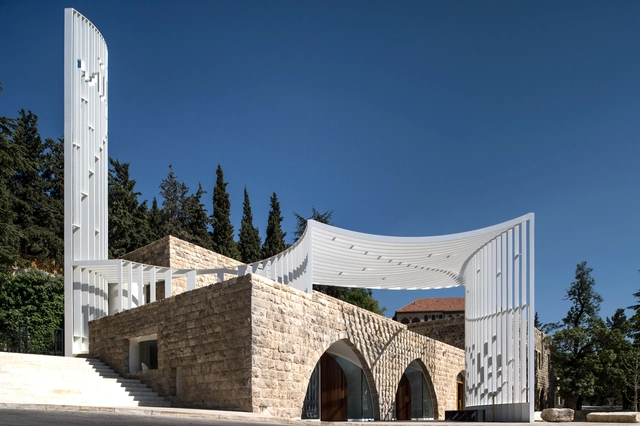
Amir Shakib Arslan Mosque / L.E.FT Architects. Image Courtesy of Abdullatif Alfozan Award for Mosque Architecture
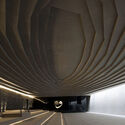
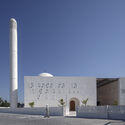
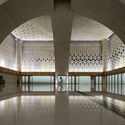
The Abdullatif Alfozan Award for Mosque Architecture has honored seven awarded mosques in its third cycle under the theme "Mosque architecture in the twenty-first century", evaluating their unique architectural concepts as well its connectivity with local communities.
https://www.archdaily.com/974298/projects-in-saudi-arabia-lebanon-and-indonesia-among-the-winners-of-the-iii-abdullatif-alfozan-award-for-mosque-architectureArchDaily Team
It is easy to show cool images of adaptive reuse. The contrast of living history and control over it makes for dynamic visuals. But there is a deeper meaning to adaptive reuse. Architecture embodies humanity and humanity changes, so our buildings change.


























.jpg?1656484624&format=webp&width=640&height=580)
.jpg?1656484650 "© Paul Warchol Photography")
.jpg?1656484668 "© Paul Warchol Photography")
.jpg?1656484634 "© Paul Warchol Photography")
.jpg?1656484624)