Videos
Courtesy of Javier Corvalan + Colectivo Aqua Alta
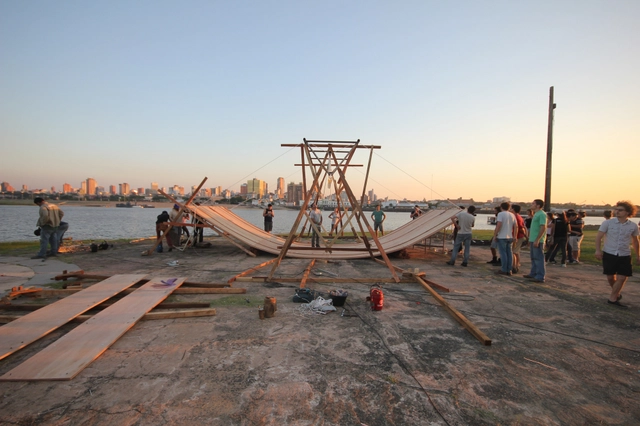
Paraguay means “water that flows toward the sea” in the language of the country’s indigenous Guarani people. It is no surprise, then, that Paraguay’s entry for the 2014 Venice Biennale uses water as the primary structural member. Titled “Aqua Alta,” the Paraguayan pavilion responds to the Biennale’s focus on modern fundamentals by stating that modern architecture must achieve more with less.
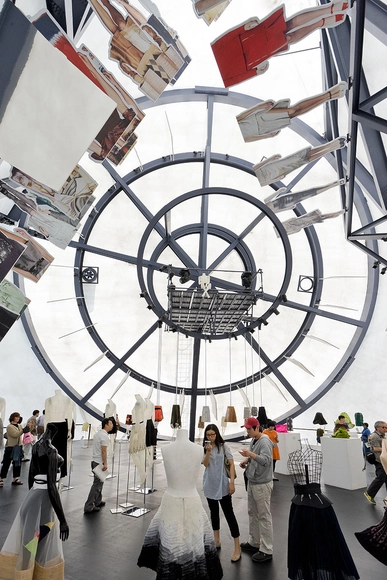
Today marks the fifth anniversary of the opening of OMA’s Prada Transformer. This fantastical temporary structure, erected in 2009 adjacent to Gyeonghui Palace in Seoul, Korea, is one of Rem Koolhaas’ most popular projects to date. Composed of a stark white membrane stretched across four steel frame shapes, The Transformer was often referred to as an "anti-blob" --a hexagon, a rectangle, a cross, and a circle leaning against each other to create a tetrahedron-like object reminiscent of a circus tent. The name Transformer came from the idea that any one of the pavilion's sides could serve as the building's floor, allowing for four unique spaces in one building devoted to exhibitions of modern art, fashion and design.
The Prada Transformer played host to four such events, being lifted up and repositioned onto a different face each time via crane. The first was a garment exhibition, displayed using the hexagonal floor plan. The second, a film festival that took place on the rectangular floor plan. A fashion show was staged using the Transformer's circular floor plan, and an art installation was shown using the cruciform floor plan. As patron Miuccia Prada stated in an interview with The New York Times, “In my mind they [the arts] may be mixed but I want to keep them separate… So the Transformer concept was not for a generic space, but to be very specific, with all things separate in one building.”
We asked OMA's Vincent McIlduff to tell us more about this project. See his answers, a photo gallery and a time-lapse video of the transformation after the break!
The design/buildLAB at the Virginia Tech School of Architecture + Design has recently released a new documentary by Leon Gerskovic titled Reality Check, a film that chronicles the journey of 16 students as they undergo the design and construction of their Masonic Amphitheatre in Clifton Forge, Virginia. The project was a complete redevelopment of a post-industrial brownfield into a public park and performance space; the video relates how students collaborated with local community and industry experts to bring meaningful architecture to this struggling American rail town.
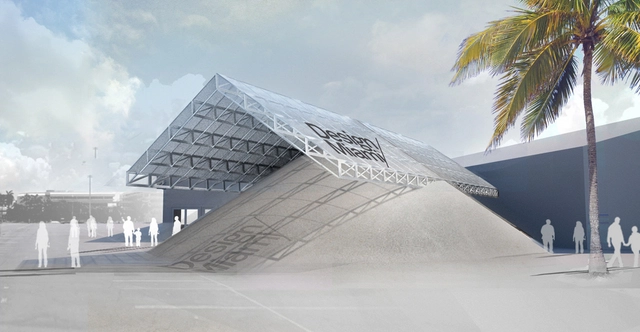
Each December, Design Miami/ commissions early-career architects to build a designed environment for the fair's entrance as part of its biannual Design Commissions program. This year's winning proposal, dubbed "Tent Pile," was designed by the New York-based architectural practice formlessfinder. Its design harnesses the properties of sand and aluminum to create shade, seating, cool air and a space to play for Miami's public.
Synthesis Design + Architecture (SDA), the forward-thinking Los Angeles-based architecture firm led by architect and USC professor, Alvin Huang, has recently won an international competition to design a rapidly deployable pavilion to showcase and charge Volvo’s new plug-in electric hybrid, the V60.
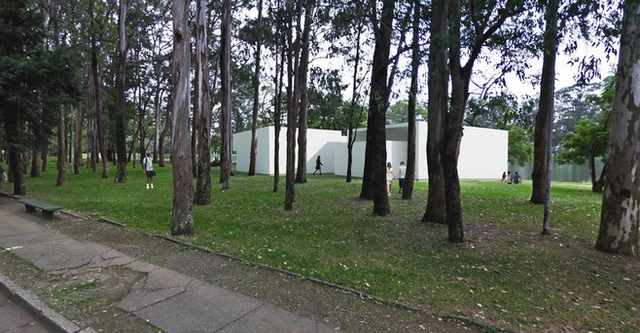
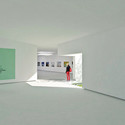
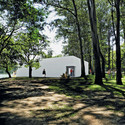
Thanks to Alvaro Siza and Eduardo Souto de Moura, Portugal's two Pritzker Laureates, Sao Paulo will soon have its own temporary summer pavilion - a la the Serpentine Gallery - in the city's most important green space: Ibirapuera Park.
Shigeru Ban Architects shared with us their timelapse video for their latest construction, the IE Paper Pavilion. Made up of 173 paper tubes, this temporary structure is located in the grounds of IE’s Madrid campus and will be used to host executive education events and other activities. The structural design is eminently efficient. It took only two weeks to build, is based on sustainability objectives, and there was a requirement that it be a temporary construction. For more information on the project, please visit here.
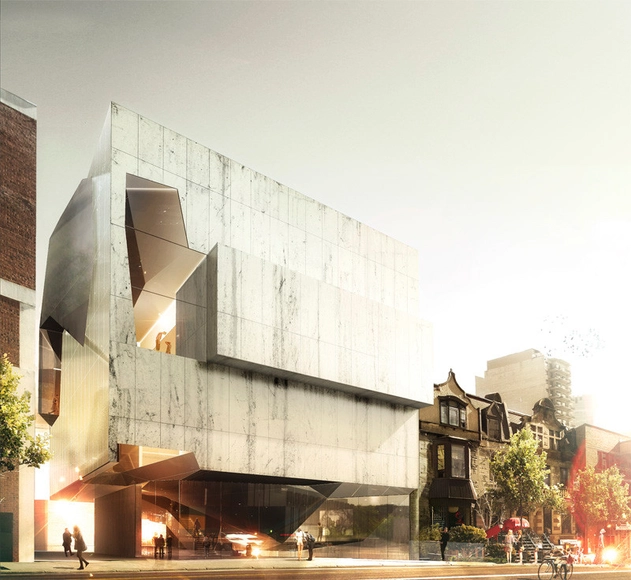
Just as layers of history accumulate through time to offer varying perspectives on culture and environment, Saucier + Perrotte’s design for the Fifth Pavilion of the Montreal Museum of Fine Arts is composed of a series of mineral strata that form a home for the Hornstein collection of art. Floating gently above street level, each marble stratum is superimposed to produce a sculpted volume containing the collection and defining a space dedicated to the next generation of Montreal art lovers. Their proposal was recently announced as a finalist in the competition
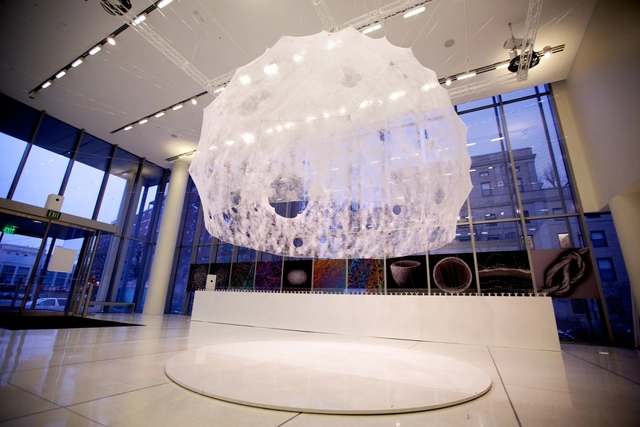
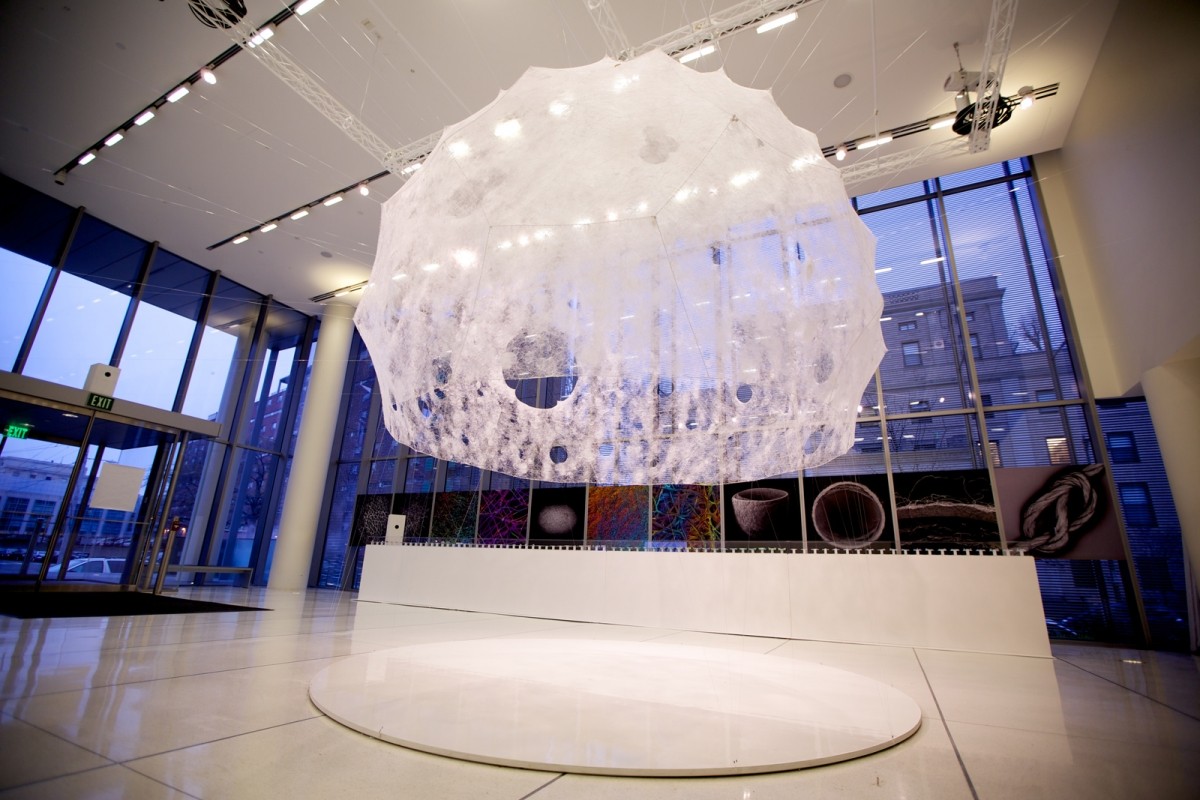
"Our research integrates computational form-finding strategies with biologically inspired fabrication", claims the 'about' page of MIT Media Lab's Mediated Matter Group. Though this may sound like run-of-the-mill architectural boasting, you are unlikely to find any more exemplary combination of scientific research, digital design and biomimetic construction than their recently completed Silk Pavilion.
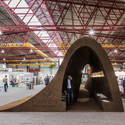
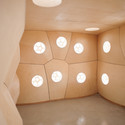
Constructed for the Changwon Suclpture Biennale 2012 held in Changwon city, South Korea the Brick-Pod Pavilion defines architecture as ‘a sculpture with interior space’, and attempts to create a dome with black bricks which has been used for traditional architecture here in Korea. Designed by Kazuya Morita Architecture Studio, you can enjoy the breezing air, moving leafs, and sparkling sunshine through its numbers of the openings, feeling much more sensitive than when we are outside. More images and architects' description after the break.
Located at the mouth of Marseille’s World Heritage-listed harbor, the Vieux Port Pavilion, designed by Foster + Partners, provides a new sheltered events space on the eastern edge of the port. Bringing new focus to the city, these photographs by Edmund Sumner demonstrate the stainless steel canopy's ability to amplify and reflect the surrounding movement of the harbor, creating a spectacle that encourages pedestrians to linger. Since its opening early this year, the project is truly an invitation to the people of Marseille to enjoy and use this grand space for events, markets and celebrations once again. A complete gallery of Sumner's images can be viewed after the break.
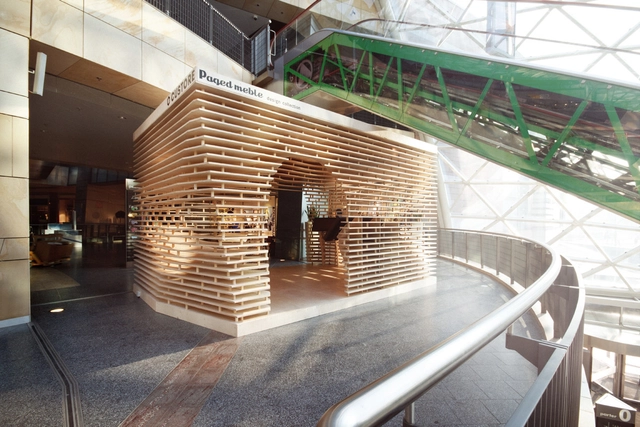
Custore, an experimental project, is a pavilion that explores the areas of parametric architecture used for the commercial market. Designed by Anna Dobek + Mateusz Wojcicki, they had to deal not only with the aesthetic issues of computer-generated sculptural forms, but also with practical problems associated with the execution of the project inside a commercial building, and - most importantly – with the real clash of artistic forms and commercial market guidelines. More images and architects’ description after the break.
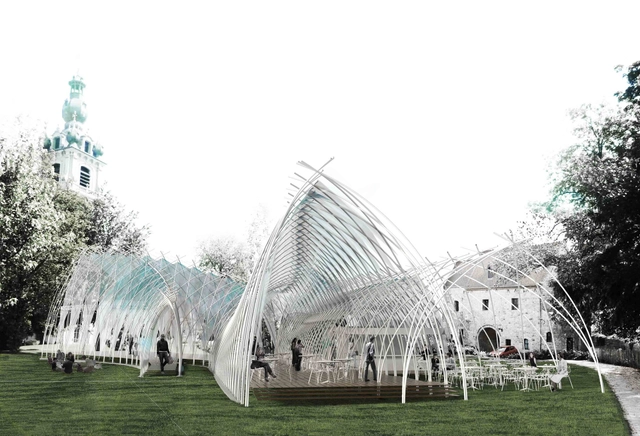
Designed by Appareil,their proposal for Naves, a temporary pavilion for the city of Mons, Capital of Culture in 2015, addresses a contextual relationship to the gothic surroundings as an exploration on lightness and transparency. Inspired by this historical context, this project explores structural and material logics to revisit the gothic arch; the ‘curve’ is examined as a bending element caught within a woven collaborative structure of glass fiber tubes, in which the use of compression is exchanged by the one of tension for the building to achieve maximum lightness. More images and architects' description after the break.