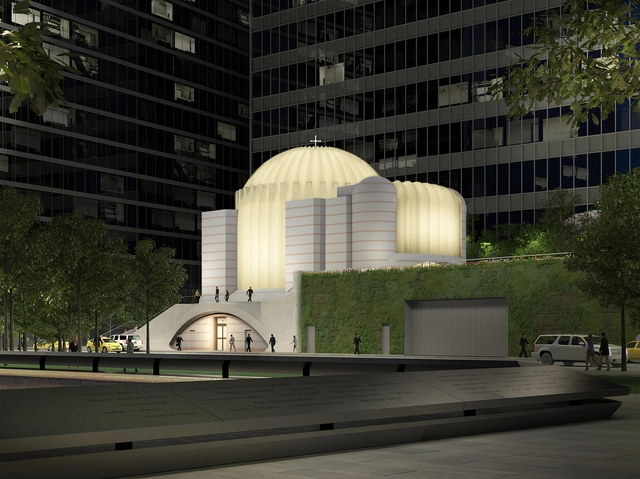
Spanish architect and engineer Santiago Calatrava is rebuilding World Trade Center’s St. Nicholas Greek Orthodox Church and National Shrine in New York City. The church, which was destroyed during the 9/11 attacks, began its reconstruction process in 2015, and is finally reaching completion in 2022. The new structure's design is inspired by a mosaic of Istanbul's Hagia Sophia Grand Mosque, formerly the Church of Hagia Sophia, which was one of the fundamental factors in defining the original architecture of the St. Nicholas Greek Orthodox Church.
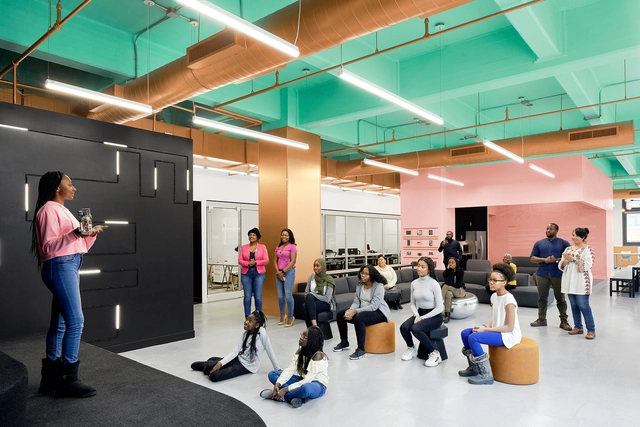
Last year, architect Danish Kurani completed a new tech lab in New York City in partnership with Black Girls Code. As a place where young women from all over New York can come together to learn about technology, the revamp project includes 3,900 square feet of space at Google’s New York offices that were turned into a tech exploration lab.
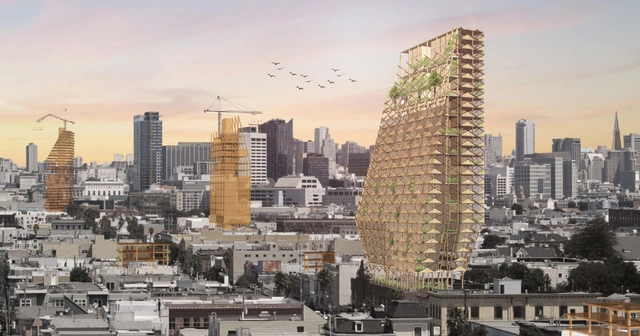
The potential for mass timber to become the dominant material of future sustainable cities has also gained traction in the United States throughout 2018. Evolving codes and the increasing availability of mass timber is inspiring firms, universities, and state legislators to research and invest in ambitious projects across the country.
https://www.archdaily.com/905601/4-projects-that-show-mass-timber-is-the-future-of-american-citiesNiall Patrick Walsh
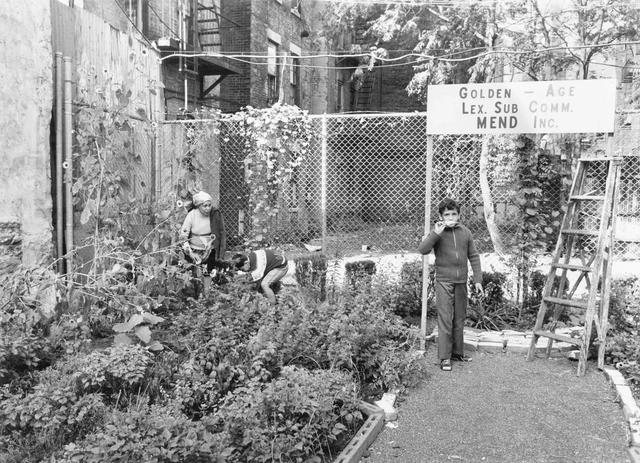
Mogilevich’s study of how the Lindsay administration leveraged political and on-the-ground will to build pocket parks, stump for closing streets and introducing outdoor dining, and reducing racial economic inequality could point the way forward for modern architects and planners. Image Courtesy of Minnesota Press
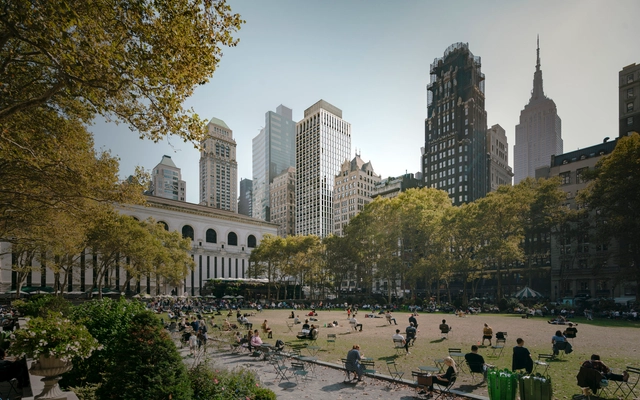
In this week's reprint from the Architect's Newspaper, author Karen Kubey, an urbanist specializing in housing and health questions if the invention of Public Space is "Invented Or Agreed Upon?" Basing her ideas on a book by Mariana Mogilevich, The Invention of Public Space, the article asks if public spaces are a product of negotiation in the city.
Recent extreme weather events and the acceleration of climate change, paired with decarbonization efforts that are not on track, make climate-related disruption unavoidable for urban environments, raising the issue of climate-risk adaptation. Moving past what can be done to prevent climate change, there is a strong imperative to develop strategies to prepare urban environments to cope with inevitable challenges such as sea-level rise, floods, water scarcity or extreme heat. The following discusses how cities can build resilience and adapt to undergoing and expected future climate threats.
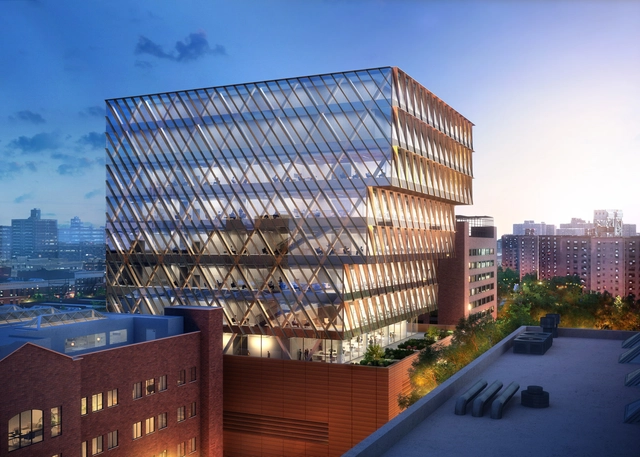
Skidmore, Owings & Merrill (SOM) unveiled its design for the New York City Public Health Laboratory, a ten storey building meant to strengthen the metropole's capability to respond to a variety of public health issues and future challenges. The laboratory is organized within a cubic glass volume stepping outward, which rises from a masonry-clad podium containing community-related functions. In order to give the new facility an active role within the Harlem neighbourhood, the design incorporates a training lab and an auditorium available to the community.
New York Governor Andrew Cuomo has announced that Adjaye Associates and Studio Zewde's proposals have been selected to redevelop the unoccupied part of the Kingsboro Psychiatric Center campus in the East Flatbush section of Brooklyn. The $400 million project is part of the $1.4 Billion Vital Brooklyn Initiative, and will transform 7.2 abandoned acres in central Brooklyn into an ecological development with residential and commercial facilities.
This week's curated selection of Best Unbuilt Architecture highlights different competition-winning designs submitted by the ArchDaily Community. From large scale urban developments to small interventions in the landscape, from commercial projects to public spaces and urban planning strategies with an environmental focus, this article showcases a variety of design approaches, programs and scales. The proposals featured are the results of local and international competitions, either creative concepts or projects currently in progress.
The award-winning entries include a range of different projects, designed by both young architects and established firms. An adaptive reuse project for office towers in New York, the redevelopment of an industrial site in China, an abstract installation for a Russian festival, or a masterplan focused on climate resilience and ecosystems protection are a few of this week's highlights.
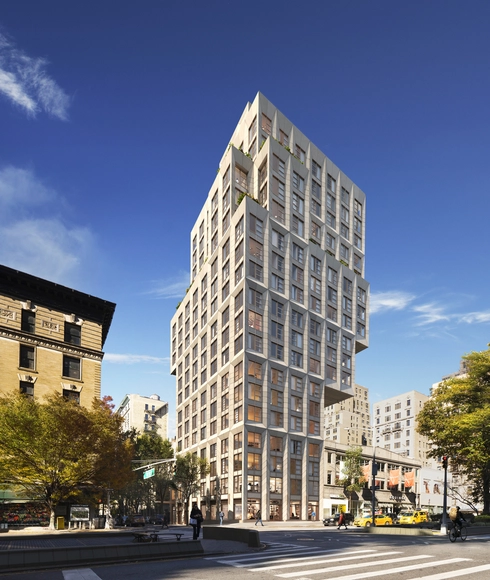
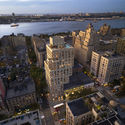
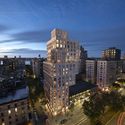
ODA New York have released images of their newest project "Era", Manhattan's largest residential cantilever building. Located in the Upper West Side, the 20-storey condo features a striking 50-foot cantilever structure and the neighborhood's only rooftop pool. The project’s unique cantilever design allows for more expansive views as it ascends, wide common spaces, grand residences, and a rooftop recreational space.
Practice for Architecture and Urbanism (PAU) has shared new details of its proposal to reimagine Niagara Falls in New York. Attracting millions of annual visitors, the region has become a global tourist destination, while the downtown area has yet to experience the same level of interest. Now PAU is leading an urban design and economic development strategy, in partnership with Forsyth Street Advisors and a community advisory group, to imagine a more lively future.
HANNAH office, founded by Leslie Lok and Sasa Zivkovic, is a US-based architecture and research practice that has been experimenting with digital design and fabrication techniques across all types of projects ranging from furniture to urbanism. Both professors at Cornell University College of Architecture, Art, and Planning, Leslie and Sasa lead a studio with a focus on innovative design, where technology plays a crucial role in their work, combined with a sharp study of materials, new applications, and construction techniques, resulting in highly creative projects.
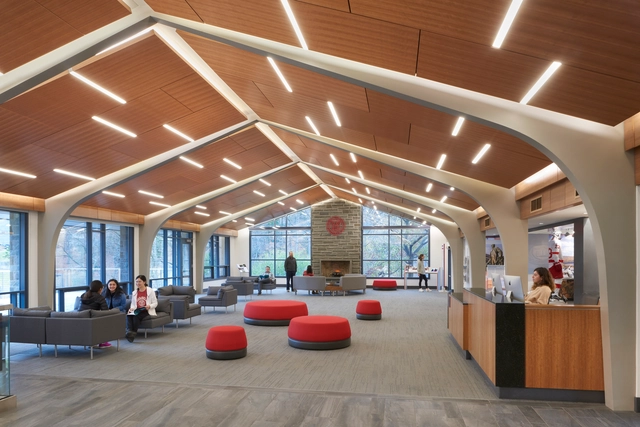
JMZ Architects is a firm realizing both long-term visions and local spatial needs. With a background in planning and architecture, they are a Women-owned business creating campuses and new structures alike. Practicing from a single office of 23 employees in Glens Falls, New York, they have focused exclusively on architecture and planning for higher education institutions, primarily public colleges, and universities, and state higher education systems.
Responding to artistic director and curator Es Devlin's theme ‘Resonance’, designers from different countries, territories, and cities showcased how they envision new perspectives and solutions to global issues, exploring topics such as sustainability and the environment, globalization, migration, and the future of humanity. The diversity of the contributing curators was not only present in the solutions they presented, but in how they displayed them as well. While some opted for the tactile experience of exploring natural elements, others relied on one of the most prominent themes of the 21st century: digitalization and the virtual world.
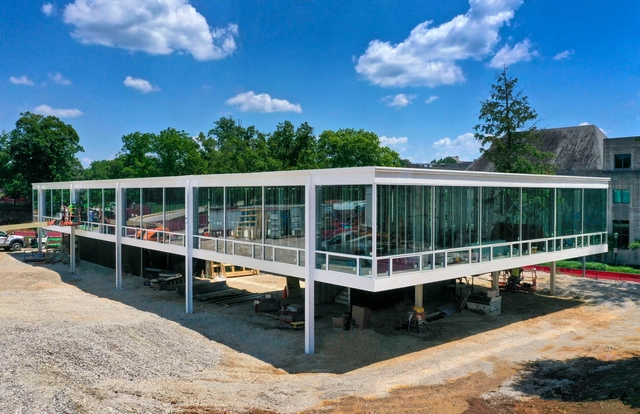
A new shared facility for Indiana University's Eskenazi School of Art, Architecture + Design, materialises a recently rediscovered design by Mies van der Rohe. The 1952 project was intended for a fraternity house on the same IU Bloomington campus where it is currently being built, and the design incorporated the same white steel frame and expansive glass panes aesthetic as the Farnsworth House, created around the same time. After being forgotten for six decades, the design resurfaced in 2013, and the two-storey building will open its doors this fall.
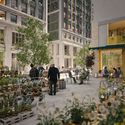
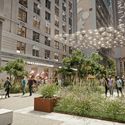
ODA has just launched its latest project, an urban vision for the future of the streets of New York. The project titled Beyond the street- Reimagining the flower district proposes to transform a city block from the outside in, altering the pedestrian experience and introducing new zoning changes that would give landowners air rights or tax credits in exchange for handing over their inner courtyards to be transformed into public/private spaces.
ArchDaily had the chance to talk with Eran Chen, founding principal and executive director of ODA, about the firm’s very special proposal that seeks to improve our urban environment. Check the interview and watch ODA’s explanatory movie.
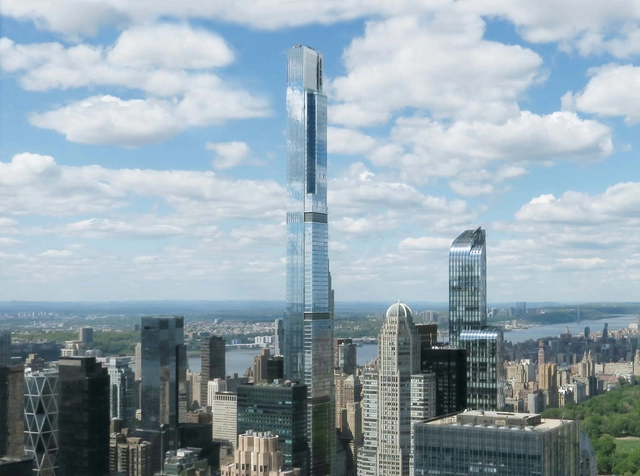
Paul Clemence has released a new series of images, showcasing the on-going construction works on Manhattan's Central Park Tower. The project is designed by Adrian Smith + Gordon Gill architecture and is set to be the tallest residential building in the world once completed. The building, as seen in the photographs, has neared completion and is set to open later this year.
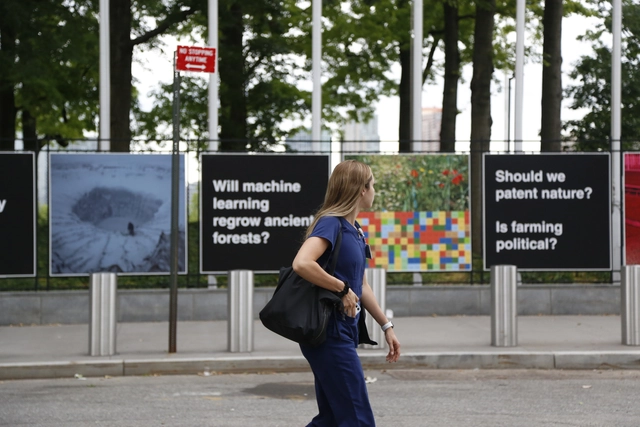
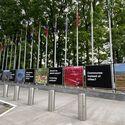
OMA's research and publication branch AMO has taken over the fences of the United Nations Headquarters in New York for a public exhibition showcasing a follow-up of the 2020 Countryside, The Future project. Curated by Rem Koolhaas and Samir Bantal, director of AMO, Countryside at the United Nations, invites reflection and public discussion on the topics of agricultural innovation, ecological change and food production in anticipation of the UN Food Systems Summit taking place in September 2021.








.jpg?1628110754&format=webp&width=640&height=580)
.jpg?1628110608 "© Andriy Bezuglov")
.jpg?1628110779 "© Andriy Bezuglov")
.jpg?1628110702 "© Andriy Bezuglov")
.jpg?1628110630 "© Andriy Bezuglov")
.jpg?1628110754)












.jpg?1625518957&format=webp&width=640&height=580)
.jpg?1625519477 "© Andy Chen")
.jpg?1625519474 "© Andy Chen")
.jpg?1625518958 "© Andy Chen")
.jpg?1625519242 "Courtesy of HANNAH")
.jpg?1625518957)