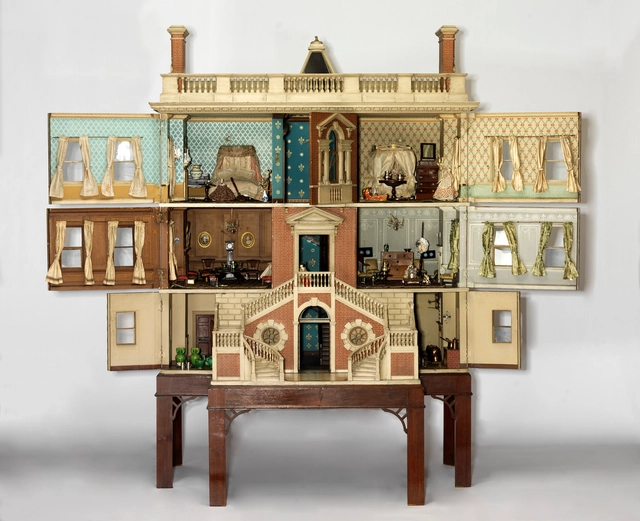
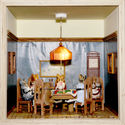
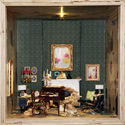
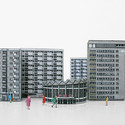
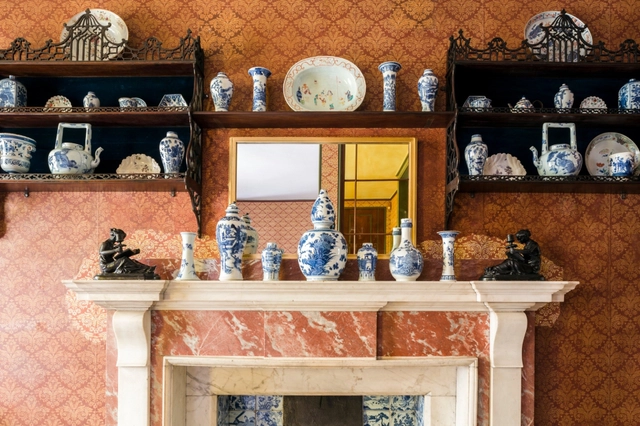
As part of a new exhibition at the National Building Museum in Washington D.C., twelve dollhouses tracing the history of British domesticity have been lent by London's Victoria & Albert Museum of Childhood. The show—Small Stories: At Home in a Dollhouse—spans 300 years and presents a miniature-sized, up-close-and-personal view of developments in architecture and design – from lavish country mansions, to an urban high-rise.
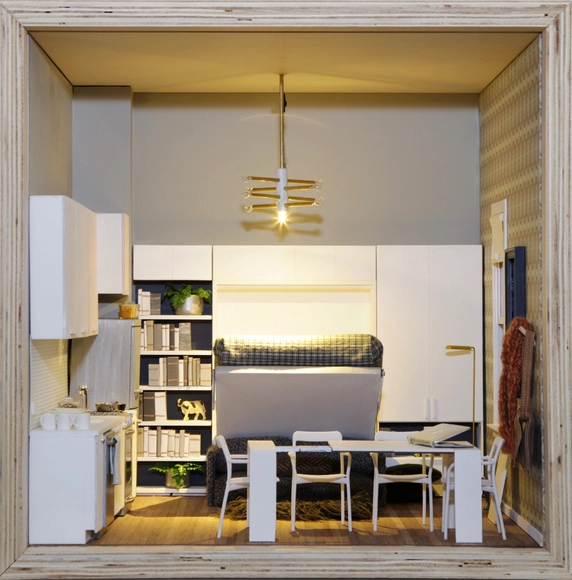
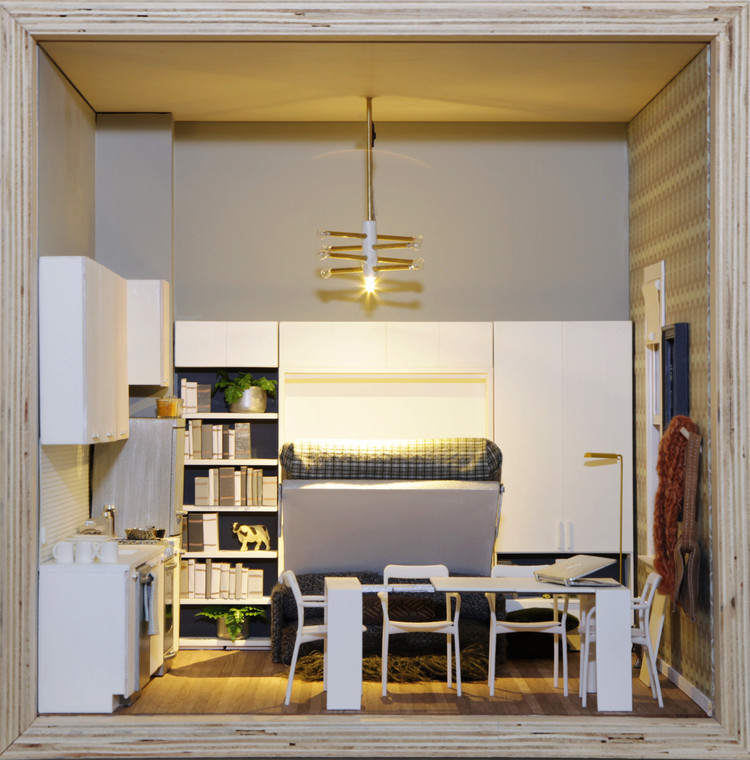
As part of a new exhibition at the National Building Museum in Washington D.C., a group of 24 American architects, designers and architects have been commissioned to create "dream homes" in the format of the contemporary dollhouse. Part of Small Stories: At Home in a Dollhouse, in which twelve historical dollhouses spanning the past 300 years from London's Victoria & Albert Museum of Childhood are being presented in the United States for the first time, these 21st Century interpretations intend to showcase a "diverse array of perspectives, demonstrating the limitless creativity of building in miniature."
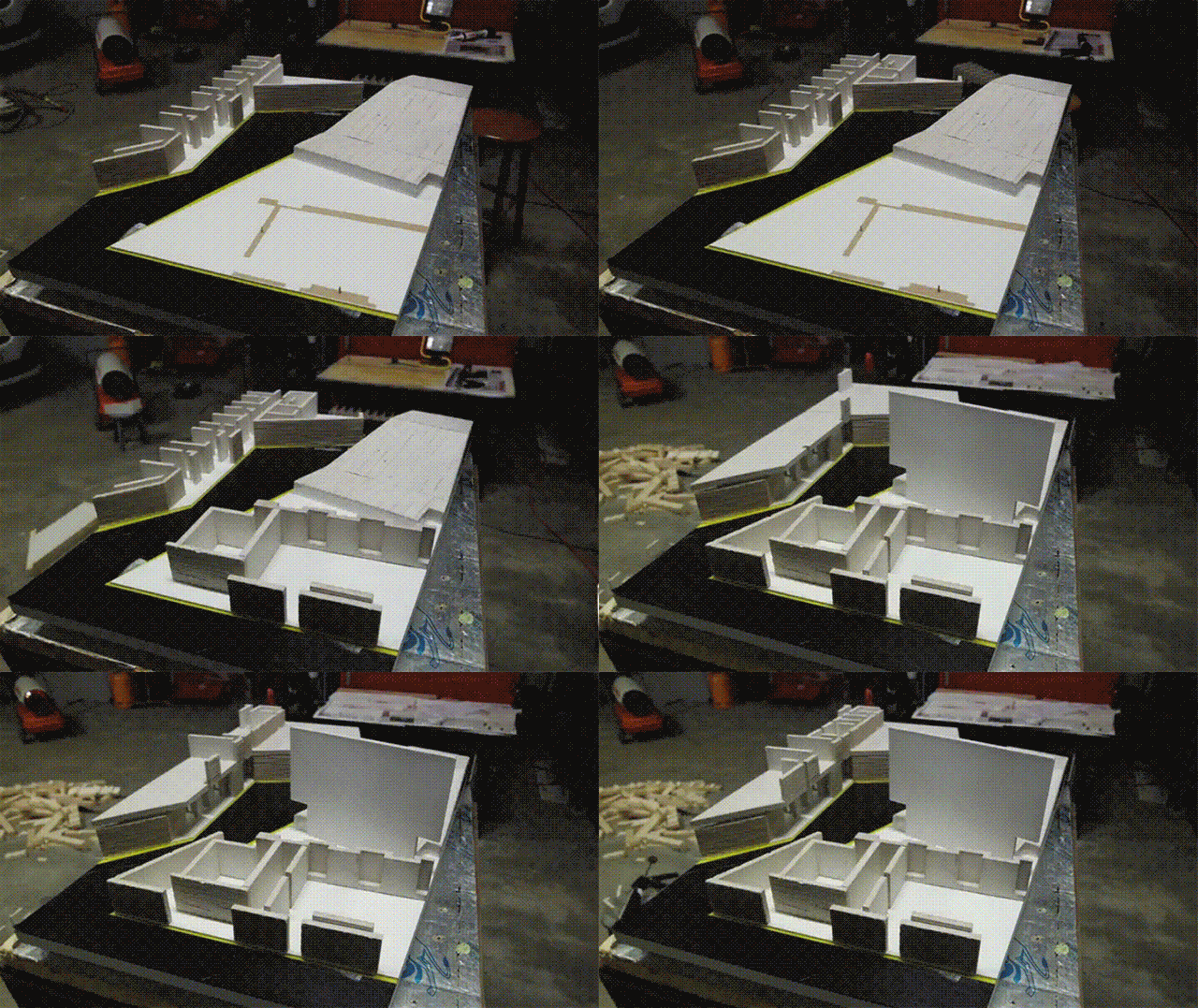
As part of the Danish contribution to the 2016 Venice BiennaleUrban Agency embarked on a challenging feat: the construction a 1:50 concrete model. The firm—based in Dublin, Copenhagen and Lyon—contributed three projects to the "Human Architectures" exhibition at this year's Danish Pavilion.
The video shows the careful, painstaking process of molding, setting and assembling the 150kg model. Urban Agency told ArchDaily,
https://www.archdaily.com/792982/this-is-how-urban-agency-made-a-150kg-concrete-modelAD Editorial Team
Following “Brutal London,” Zupagrafika has released another collection of illustrated paper cut-out models, “Paris Brut," which portrays the Brutalist architecture of Paris from the late-’50s through the 1970s. The set features buildings from the city’s arrondissements and banlieues, the latter of which became a central locality for Habitation à Loyer Modéré, a type of public-private, rent-controlled housing in France.
Paris Brut is made up of six illustrated models to assemble: Orgues de Flandre, Les Choux de Créteil, Cité Curial-Michelet, Cité des 4000, Centre National de la Danse and Plan Voisin interpretation. The whole set is eco-friendly (printed on recycled paper and cardboard), and includes a short technical note on each building’s architect, year of construction, and exact location.
To promote the launch of their new Game of Thrones notebooks, Moleskine has released a video that recreates a portion of the series’ title sequence using only paper architecture models. Made by Milan-based animation studio Dadomani, the stop motion video uses over 7,600 paper cutouts.
The video shows the fortress in King’s Landing, starting with a view of the surrounding houses before panning to the castle where its cogs and gears begin to spin. Slowly the castle folds into itself, becoming a page in the Moleskine notebook.
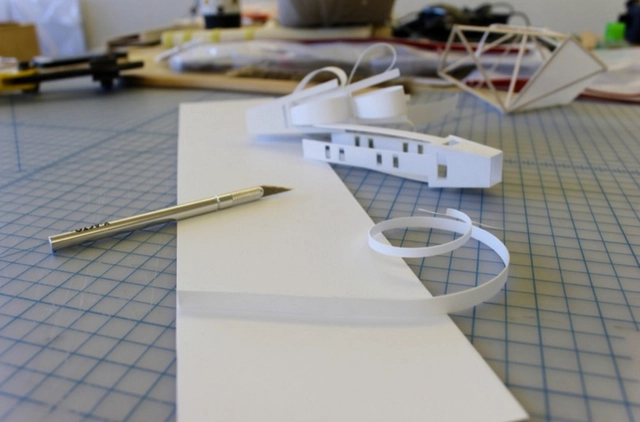
By next Fall, the architecture students of Washington University in St. Louis will no longer be allowed to use Styrene on their projects. The university's newspaper, Student Life reports that the commonly used white plastic material was deemed in 2014 by the National Research Council's National Toxicology Program as "reasonably anticipated to be a human carcinogen." Thus the Sam Fox School of Design is taking its own measures to protect their student's health. A number of other schools and cities have already banned Styrene since the NRC's ruling.
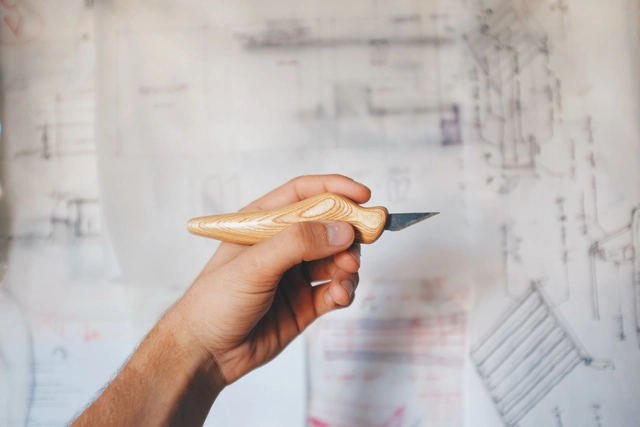
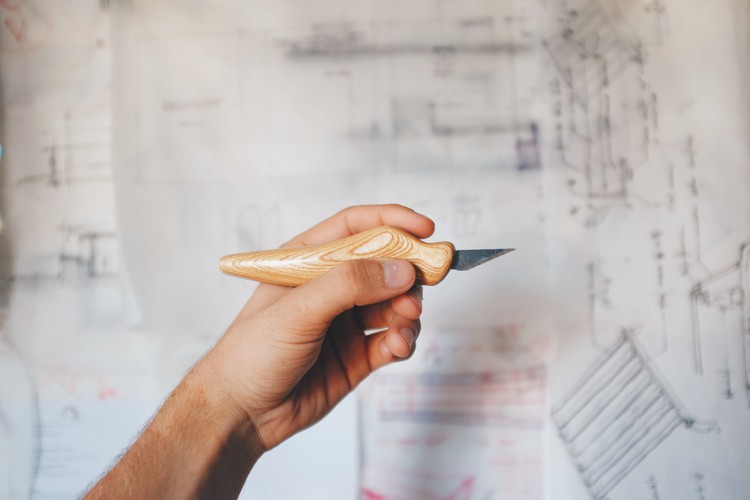
If you've been through architecture school you're probably wary of craft knives, which can puncture the skin of an non-alert, caffeinated student at a fraction of a second's notice. Even if you manage to avoid the hospital, though, these scourges of the studio still know how to hurt you: their designs are the antithesis of ergonomics, making a marathon modeling session a mighty endurance battle against hand cramps and joint pain. Aiming for a more comfortable solution, architecture graduate Sean Riley developed the Ergo Kiwi, and today is launching a Kickstarter campaign to help bring the product to market.
In addition, Riley has also meticulously cataloged his design and production process. At ArchDaily, we thought it gave a fascinating insight into not only the design of Ergo Kiwi, the but the steps involved in developing and bringing to market a convincing product. As a result, we invited him to share his story.
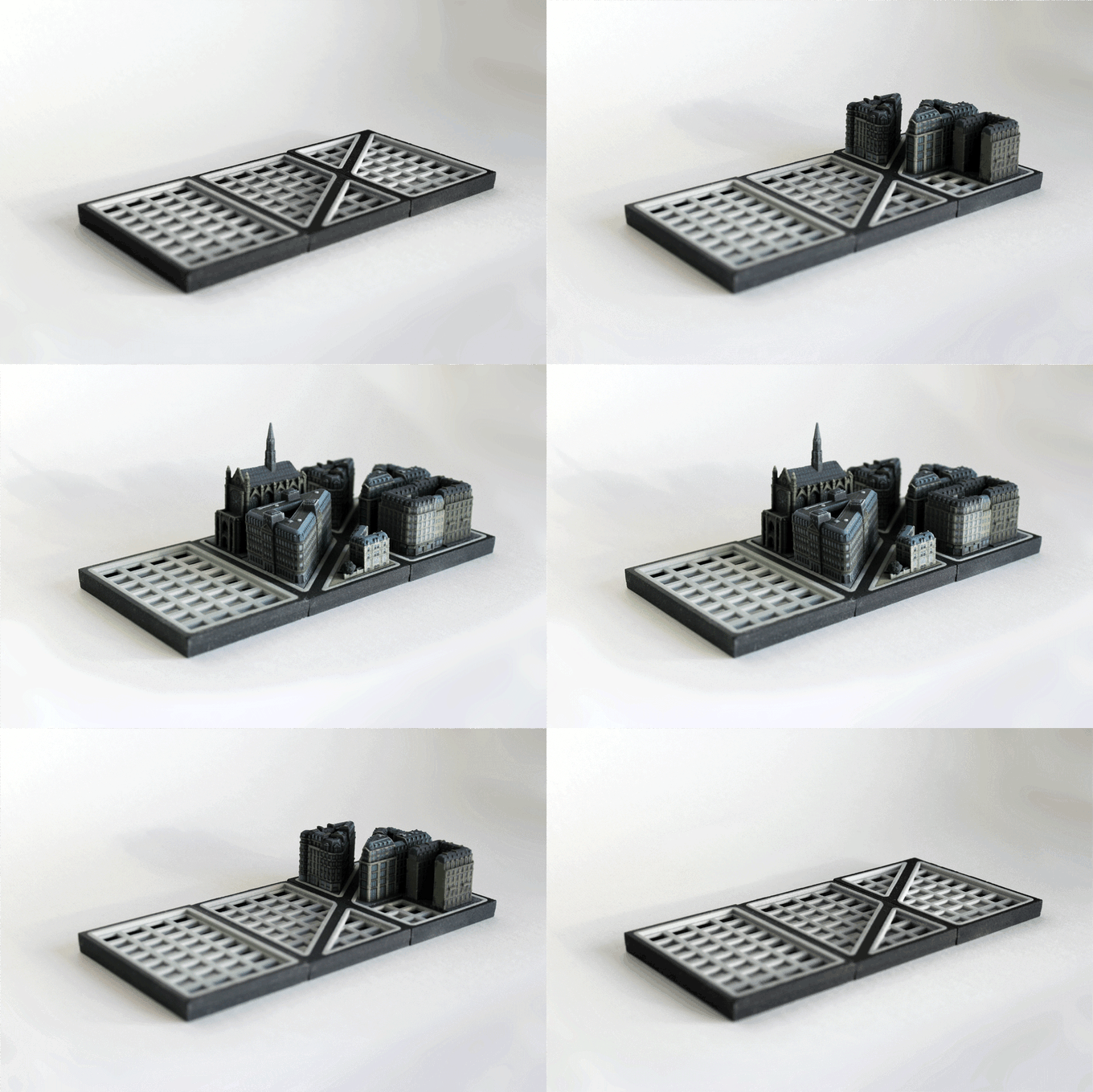
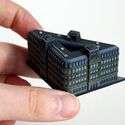
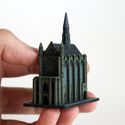
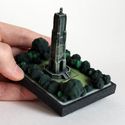
Netherlands-based Ittyblox has created yet another series of miniature 3D-printed buildings, this time featuring typical and iconic buildings and sites in Paris. Adding to their series of New York, London, and Chicago, among others, the new Parisian series follows suit as a 1:1000 scale model of customizable city blocks.
Dudoc (Dutch Urban Design Centre) Vancouver in co-operation with the Consulate General of the Netherlands is excited to present the Dutch Design Supermodels travelling exhibit that showcases the ingenuity of design and architecture from the Netherlands. View 3-D printed scale models of a century’s worth of iconic buildings & chairs designed by great Dutch architects.
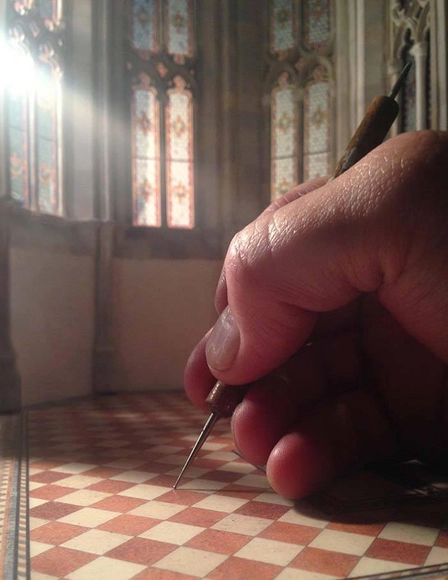
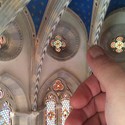
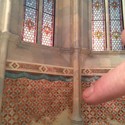
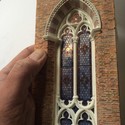
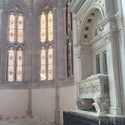
Ryan McAmis, an artist from Brooklyn, New York, is designing and building a miniature, scale model of a late GothicItalianCathedral, recreating everything from the stained glass windows to the vaulted ceiling, wall tombs and paintings. He first creates the pieces from a variety of materials, ranging from hand scribed brickwork on treated paper, to clay and wood. He then combines the materials together and creates a silicon mold, casting each piece in white plastic to be hand painted later. See more photos and read about his process after the break.
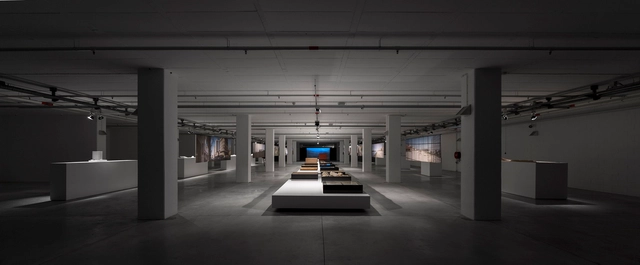
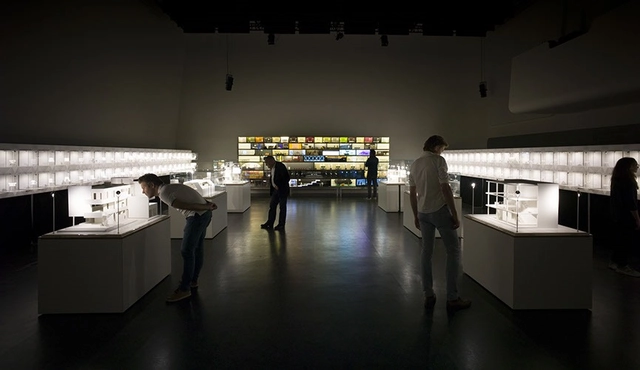
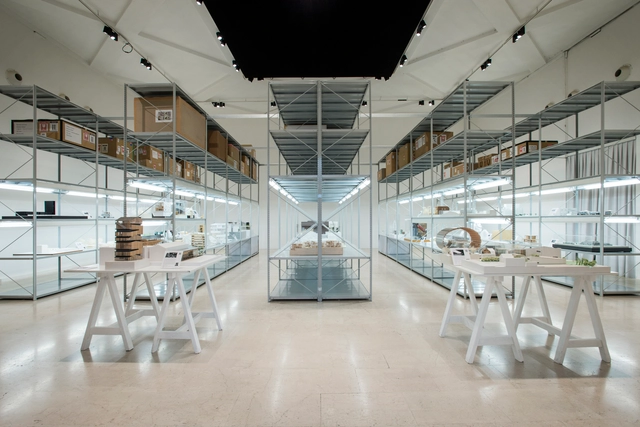
The architectonic models of 41 Japanese architects are on display at the Triennale di Milano. Using models created by a wide variety of Japanese architects – including Kengo Kuma, Tetsuo Furuichi, Shigeru Ban, Arata Isozaki, Koh Kitayama, Rike Yamamoto, Archi Depot Tokyo Exhibition explores the visions of the architects.
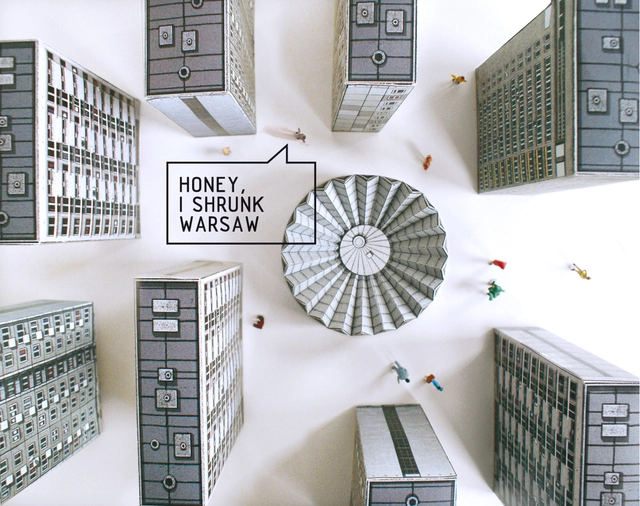
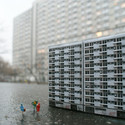
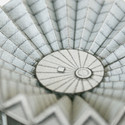
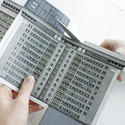
In the spirit of their popular London series, Polish studio Zupagrafika has designed another set of paper cut-out models, entitled "Eastern Block." The series highlights Warsaw'smodernist architecture, ranging from the quintessentially functional (Rotunda PKO) to regionally recognized works (Za Żelazną Bramą, Smolna 8, Mokotów) and a prefabricated block on the city's outskirts (Tarchomin).
In an article for The Observer, Rowan Moore dives into a set of newly recreated rooms in London's Soane's Museum, a gallery dedicated to Sir John Soane's collection of architectural curiosities set within his eccentric former home. The experience, according to Moore, "of an internal world of unknown boundaries" has just become more extensive. Visitors will now be afforded the opportunity to visit a series of private spaces that give "a view into Soane’s bizarre mind," following extensive restoration work led by Julian Harrap.
New London Architecture (NLA), an independent resource and forum for debate about the city's built environment, have unveiled a new, large-scale interactive model of the UK capital. Designed to provide a visual history of the city, NLA also intend for it to spark questions about its future. This model replaces an earlier one, which was revealed on the day that it was announced that London's bid to host the 2012 Olympic Games has been successful. Now, a decade later, the present projection of the city's built future has been mapped across the model, highlighting the locations of the 263 tall buildings planned or under construction. Visitors are also able to track the route and impact of new transport links, such as HS2 and Crossrail.
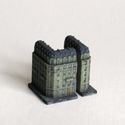
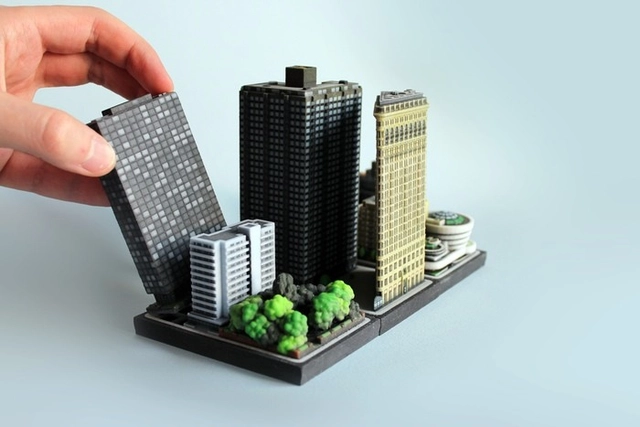
Ever wanted your very own Flatiron Building to sit on your mantelpiece? What about a Guggenheim for your desk, or a block of London apartments for your side table? Ittyblox, a Dutch company based in Den Bosch, is determined to make this dream a reality, 3D printing 1:1000 models of iconic buildings and city blocks. The models are printed in full color and designed to slot into modular baseplates, which can be arranged into complete cityscape dioramas. Buildings currently in production hail from London, Miami, New York, and Chicago, with a new building added each week.
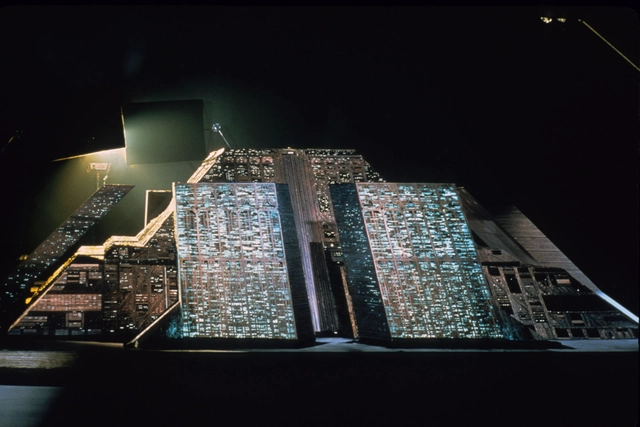
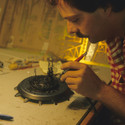
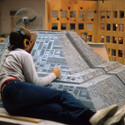
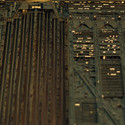
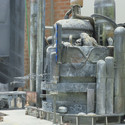
It's a well-known fact that architects, almost without exception, love the 1982 film Blade Runner. Architects also love scale models. So what could possibly be more exciting than seeing photos of the model shop of the film? Enter this Imgur album of 142 photos from behind the scenes, posted earlier this week by user minicity. After the break, check out our selection of images of the Tyrell Corporation's imposing pyramidal fortress, among other things, under construction.
“The computer can only calculate what is already conceptually inside of it; you can only find what you look for in computers. Nevertheless, you can find what you haven’t searched for with free experimentation.” - From A Conversation with Frei Otto, by Juan Maria Songel
For Frei Otto, experimentation with models and maquettes was a fundamental part of his work as an architect. In 1961, he began to conduct a series of experiments with soap bubbles (featured in the video above). His experiments centered on suspending soap film and dropping a looped string into it to form a perfect circle. By then trying to pull the string out a minimal surface was created. It was these created surfaces that Otto experimented with.
Through these types of experimentation he was able to build forms and structures that were previously believed to be impossible. “Now it can be calculated, but for more than 40 years it was impossible to calculate it. I have not waited for it to be calculated in order to build it.”