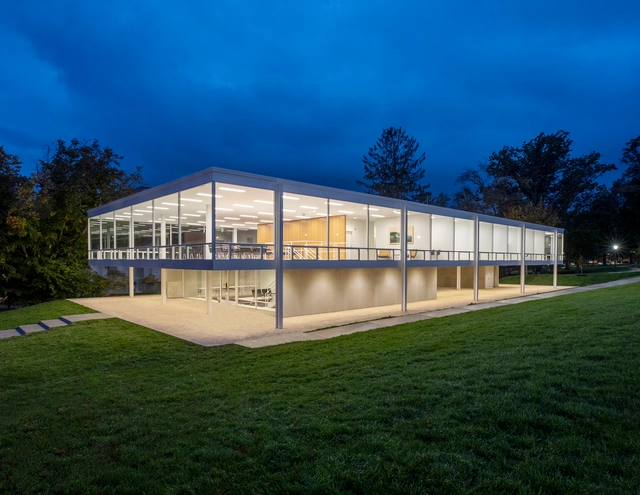
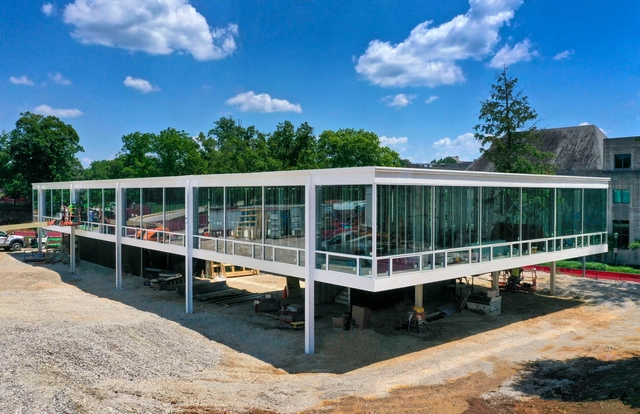
Indiana University inaugurated a new shared facility for the Eskenazi School of Art, Architecture + Design, which materializes a recently rediscovered design by Mies van der Rohe. The 1952 project intended for a fraternity house on the same IU Bloomington campus was entrusted to New York-based firm Thomas Phifer and Partners to be adapted to contemporary building codes and its current academic function while preserving the intended architectural aesthetic. The two-storey, 930 square meter building has officially opened to students and faculty.
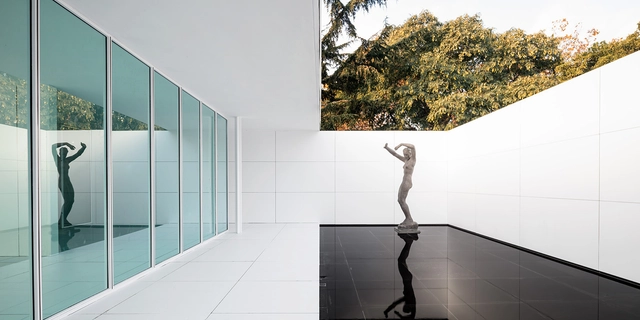
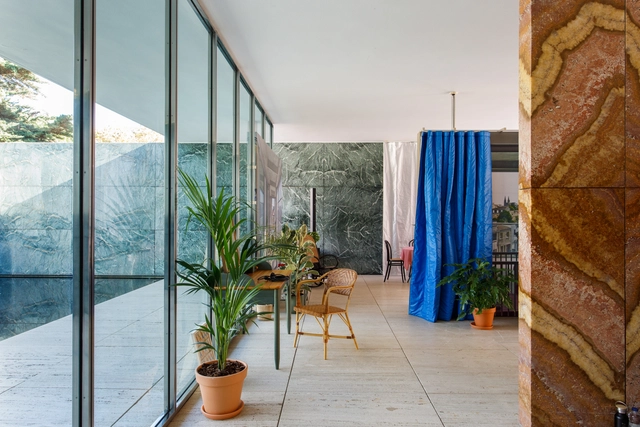
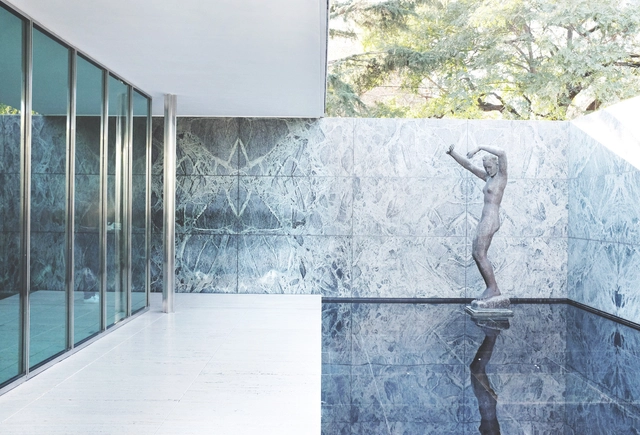
In 1929, Ludwig Mies van der Rohe and Lilly Reich design the German National Pavilion for the 1929 Barcelona International Exhibition. The official reception for the exhibition was held there, presided over by King Alfonso XIII and the German authorities. From then on, the story is well known to everyone. A symbolic work of the Modern Movement, the Pavilion has been extensively studied and interpreted, and has inspired the work of several generations of architects.
The European Commission and the Mies van der Rohe Foundation have announced the 40 shortlisted works that will compete for the 2022 European Union Prize for Contemporary Architecture – Mies van der Rohe Award. The shortlist featured projects built across 18 different European countries, with Spain, Austria, and France topping the list with 5 entries each. The winners will be announced in April 2022 and the Award ceremony will take place in May 2022.
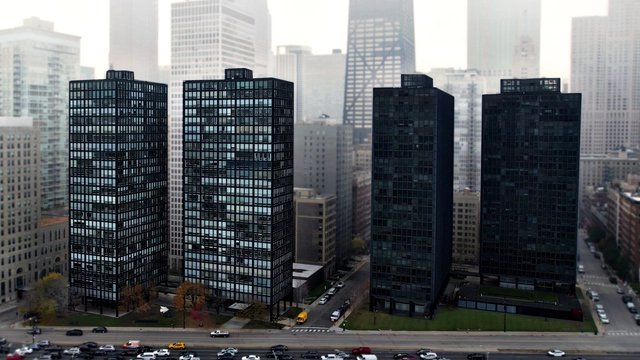
In Chicago, black or silver-colored towers designed by Mies van der Rohe are sprinkled across the city from the north to the south. They all sprang up within a relatively short period of time and constitute — in combination with some faithful homages — what’s called the Second Chicago School of Architecture. This timeline makes it seem like Mies' strategies sprang out of nowhere and like they were born already fully developed. This video takes a look at how these tower strategies evolved from smaller projects to larger ones by paying special attention to their section. Whereas open plans promise ultimate fluidity, in section, Mies' buildings present another idea entirely. In this direction, difference and discretion dominate and symmetry rules. All of this is in service of developing a close connection between the occupant and the distant horizon.
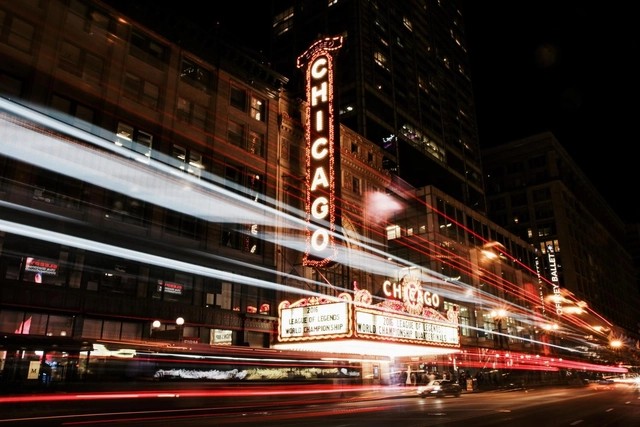
On August 12, 1833, the Town of Chicago had roughly 200 inhabitants. Four years later, in 1837, it was upgraded to The City of Chicago – an interesting fact given that there are still 19 incorporated towns in Illinois. The Great Chicago Fire of 1871 killed 300 people, destroyed about 3.3 square miles (9 km2), and left more than 100,000 residents homeless. However, by that time Chicago had become the world’s fastest-growing city and its population had risen over 300,000 inhabitants. The fire meant these ambitious citizens had to start again.
With admirable strength, the city was reborn from the ashes and some of Chicago’s best architecture was constructed immediately after. Structures like the Rookery Building (1888, Frank Lloyd Wright), the Auditorium Building (1889, Louis Sullivan) and the Monadnock Building (1893, Burnham & Root, Holabird & Roche) are a few examples of the high standards the city was aiming for.
The Second Studio (formerly The Midnight Charette) is an explicit podcast about design, architecture, and the everyday. Hosted by Architects David Lee and Marina Bourderonnet, it features different creative professionals in unscripted conversations that allow for thoughtful takes and personal discussions.
A variety of subjects are covered with honesty and humor: some episodes are interviews, while others are tips for fellow designers, reviews of buildings and other projects, or casual explorations of everyday life and design. The Second Studio is also available on iTunes, Spotify, and YouTube.
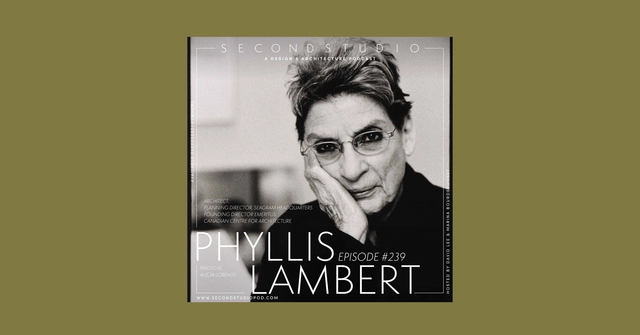
This week David and Marina are joined by Phyllis Lambert, an architect, the Planning Director of the Seagram Headquarters, and the Founding Director Emeritus of the Canadian Centre for Architecture in Montréal.
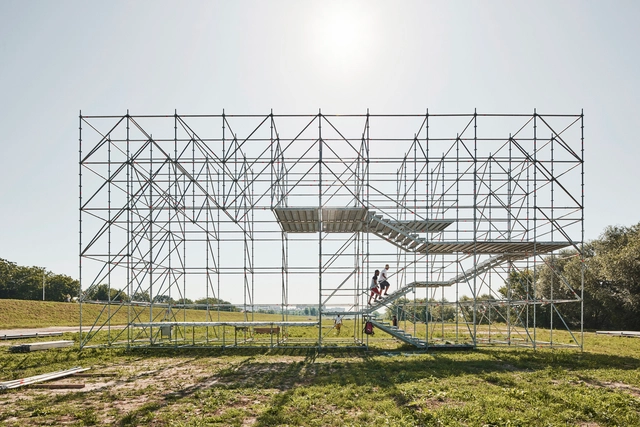
Beyond "experience tourism" and light entertainment, temporary architecture is a fertile ground for testing ideas, examining places, popularizing new concepts and technologies. Taking a wide array of forms, from disaster relief projects and utilitarian structures to design experiments, architectural statements and playful installations, transient structures showcase alternative visions for the built environment, opening up new possibilities and questioning established norms. As temporary architecture now seems at odds with sustainability imperatives, the following discusses the value of temporary architecture as a vehicle of experimentation, advancing design and engaging communities.
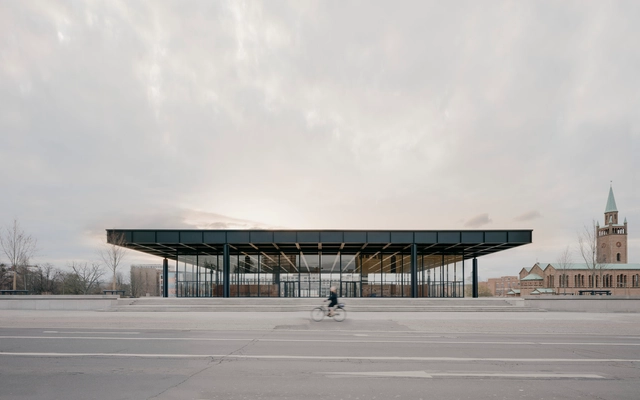
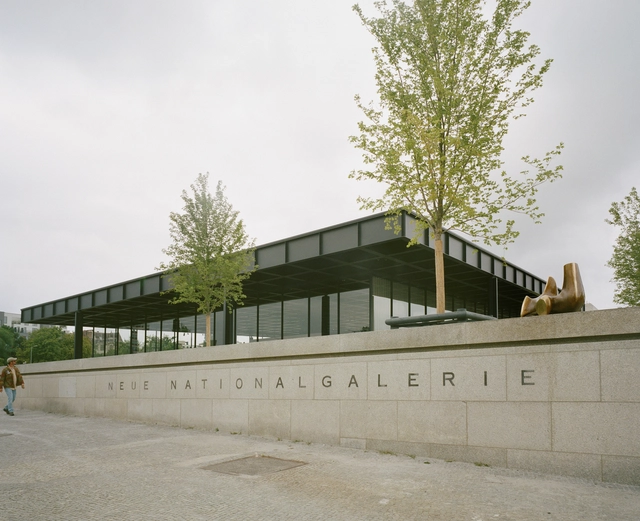
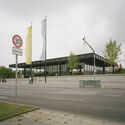
The Neue Nationalgalerie, designed by Mies van der Rohe, reopened to the public after an extensive renovation project carried out by the practice of David Chipperfield. In this video created by Mies van der Rohe House, Chipperfield shares his thoughts on the design language of Mies van der Rohe while also discussing the qualities of Neue Nationalgalerie and the future role of architectural monuments. The interview is part of the film and exhibition project Mies Goes Future, which invites artists, architects, and historians to explore the work of the renowned Modernist architect as a source of inspiration for contemporary practice.
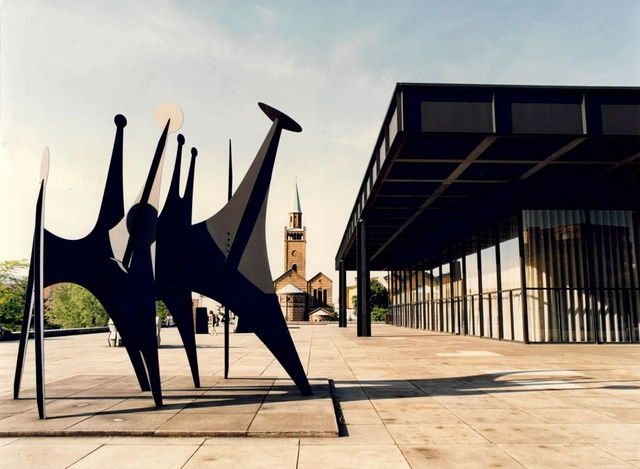
Minimal / Maximal is a solo exhibition of Alexander Calder’s opening this Sunday at the newly reopened Neue Nationalgalerie in Berlin.. Image Courtesy of Staatliche Museen zu Berlin, Nationalgalerie / Reinhard Friedrich
After being closed for six and a half years for a renovation by David Chipperfield Architects, the Berlin museum reopened Sunday, August 22.
When David Chipperfield was asked about what visitors should expect to see when he concludes the renovation of Mies van der Rohe’s Neue Nationalgalerie in Berlin, he said: “Imagine a 1965 Mercedes. It looks fine, but it’s falling apart on the inside. We want to put it in the shop, take it apart and put it back together again, so when someone turns on the switch - the engine will work.” Due to the ongoing pandemic health regulations, the 2021 re-opening saw a limited number of journalists and visitors to tour alongside Chipperfield and explore the newly-renovated architecture. Editor and photographer Gili Merin had the opportunity to photograph the project during the pre-opening event and interview the world-renowned architect.
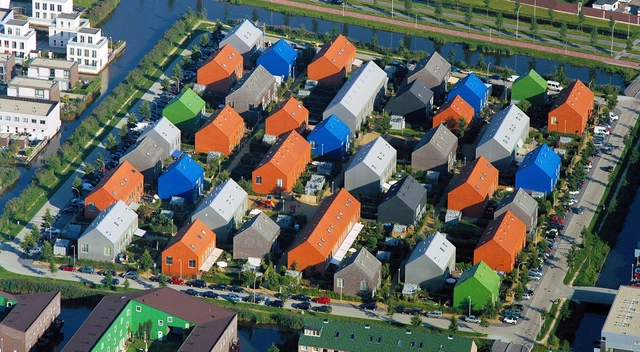
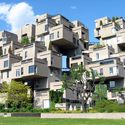
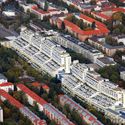
In this week's reprint, author Walter Jaegerhaus explores the U.S. housing challenge, drawing a timeline of the evolution of different architectural solutions, from around the world. Seeking to "inspire designers today to create new housing options", and hoping "that the U.S can again embrace its experimental origins and try out new ideas and methods", the article highlights examples from Europe and the Americas.
A new shared facility for Indiana University's Eskenazi School of Art, Architecture + Design, materialises a recently rediscovered design by Mies van der Rohe. The 1952 project was intended for a fraternity house on the same IU Bloomington campus where it is currently being built, and the design incorporated the same white steel frame and expansive glass panes aesthetic as the Farnsworth House, created around the same time. After being forgotten for six decades, the design resurfaced in 2013, and the two-storey building will open its doors this fall.
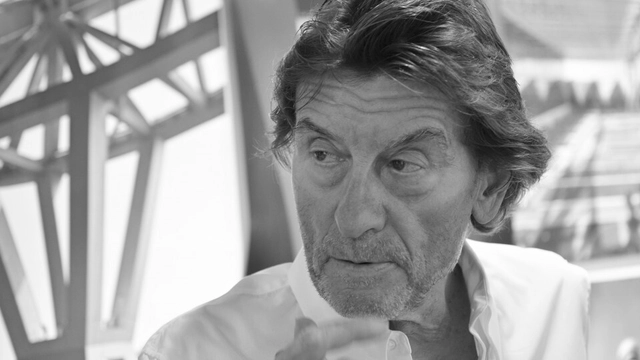
Chicago’s most prolific architect, Helmut Jahn has passed away on Saturday afternoon in a cycling accident. He was struck by two vehicles while riding his bicycle in Campton Hills, in the Chicago suburbs. The German-American designer is best known for his postmodern Thompson Center, currently under threat of demolition and United Airlines Terminal 1 at Chicago’s O’Hare International Airport.
Ludwig Mies van der Rohe (27 March 1886 – 17 August 1969) is one of the most influential architects of the 20th century, known for his role in the development of the most enduring architectural style of the era: modernism. Born in Aachen, Germany, Mies' career began in the influential studio of Peter Behrens, where Mies worked alongside two other titans of modernism, Walter Gropius and Le Corbusier. For almost a century, Mies' minimalist style has proved very popular; his famous aphorism "less is more" is still widely used, even by those who are unaware of its origins.
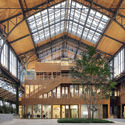
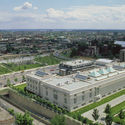
American-Brazilian photo-artist Paul Clemence has just released the first images of the completed renovation and expansion works of Martin Luther King’s Memorial Library, originally designed by Mies van der Rohe in Washington D.C. Hoping to create a modern library that focuses on people while celebrating the exchange of knowledge, ideas and culture, Dutch design practice Mecanoo was commissioned the modernization of the structure back in 2014.
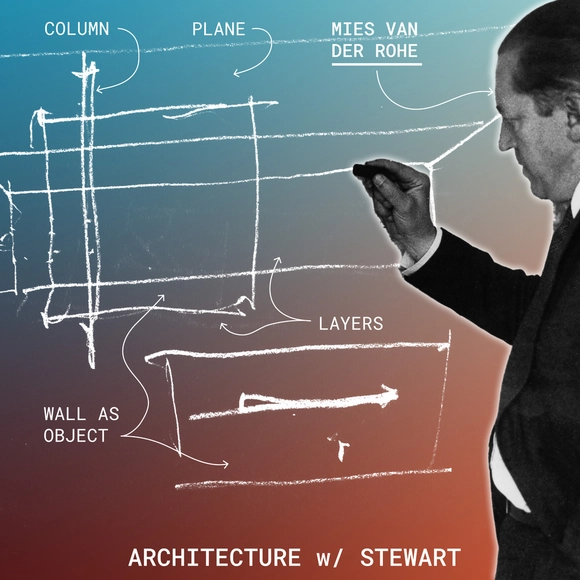
Ever wondered (or forgotten) the difference between open plans and free plans? In this video, architectural designer and professor Stewart Hicks breaks down what makes Open Plans a unique form of ‘open concept.’ It is part of a series that explores terms from real estate using contemporary, historical, and theoretical examples from architecture. In this case, the spatial strategies of Mies van der Rohe are explained, beginning with his early unbuilt houses, through the Barcelona Pavilion, to the Farnsworth House. Each one features a particular, but evolving, use of walls, columns, and roof planes that add up to what we call ‘Open Plans.’ Other videos in the series are dedicated to things like Free or Organic Plans and can help anyone sharpen their understanding of architectural concepts.



























.jpg?1612774363&format=webp&width=640&height=580)
--.jpg?1612774451 "© Paul Clemence")
.jpg?1612774430 "© Paul Clemence")
.jpg?1612774307 "© Paul Clemence")
.jpg?1612774284 "© Paul Clemence")
.jpg?1612774363)