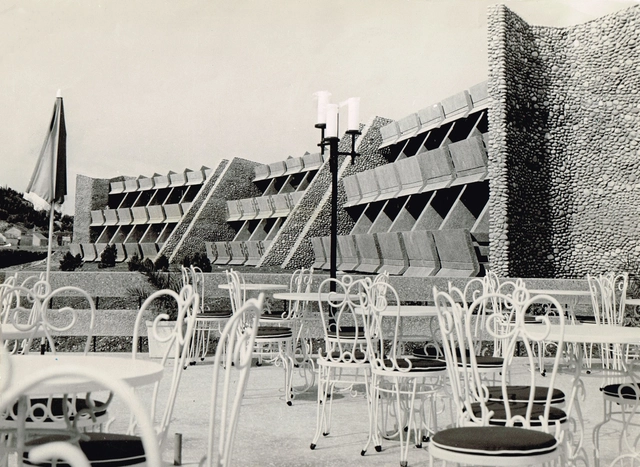
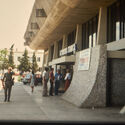
Hotel Podgorica, architect Svetlana Kana Radevic, unknown photographer, archive of Pobjeda. Image Courtesy of APSS Institute
Part of the Collateral Events of the 17th International Architecture Exhibition, the extensive built work of Yugoslav architect Svetlana Kana Radević (1937-2000) is brought to light from May 22 until November 21 at the Palazzo Palumbo Fossati. Entitled “Skirting the Center: Svetlana Kana Radević on the Periphery of Postwar Architecture”, the exhibition curated by Dijana Vucinic and Anna Kats, aims to highlight the architect’s work and expand her representation.
Dan Klyn, who teaches information architecture at the University of Michigan, is currently researching and writing a biography entitled Richard Saul Wurman’s 5 Lives. It’s an apt title, since the intellectually peripatetic Wurman has had several career incarnations: architect, author, publisher, designer, painter, sculptor, impresario (he created and thoroughly curated the early TED talks). “In a sense, I’m an amateur, a dilettante, I don’t do anything particularly well, but I see patterns between things,” he said to me in a recent interview, although his modesty here seems somewhat false: Wurman is a member of the Art Directors Club Hall of Fame; an AIA Fellow; has written, designed, and published more than 100 books; won a lifetime achievement award from the Cooper Hewitt; and is the recipient of the AIGA Gold Medal.
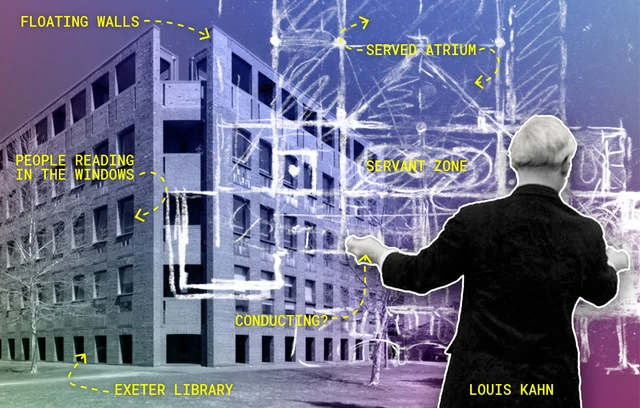
In this video, Architecture with Stewart breaks down the floor plan strategies of Louis Kahn (1901-1974) for how they treat and arrange rooms in servant/served configurations. After World War II showed us the dark underbelly of technology, the architecture that gave us “machines for living in'' seemed misguided and dehumanizing. In contrast to pre-war open and free plans, Louis Kahn considered new possibilities for rooms; believing their privacy and enclosures could work together in a ‘society of rooms.’ Beginning with a close look at the Trenton Bath House, the video includes computer animations, sketches, photographs, and historical narratives to trace the evolution of the room through buildings like the Adler House, Esherick House, and the Exeter library — a monumental room of cultural memory.
Nathaniel Kahn’s 2003 documentary, My Architect, was at its beating heart a son’s search for his father. The film, which was nominated for an Academy Award and will be re-released later this year, explored the complicated domestic life of Louis Kahn: three children, by three different partners, all of whom were kept largely in the dark about the existence of each other. But the film was as much about the work of Louis Kahn as it was about his personal life. And, as a result, it ignited a renewed interest in his buildings, both in the mainstream culture and across architectural academia.
The Architectural realm has always been torn between artistic and rational cosmos. During our architectural studies, we are rarely given one specific methodology with which we can approach a project, resulting in diverse outcomes and methods of designing. However, in order for us to discover our personal stand, we must look back at the logic and philosophy of the great pioneers who influenced architecture before us.
Le Corbusier, Mies van der Rohe, Frank Lloyd Wright, and Louis Kahn are four of the most notable architects to date. Read on to find out more about the creative process of these four leaders of the modern era, and why their projects and practices are still influential to our modern times.
The board of the Indian Institute of Management in Ahmedabad (IIMA) has announced that the dormitories, built by Louis Kahn and part of the overall campus design, will be demolished and replaced. In fact, the administration plans to “bring down at least 14 of 18 dorms which were built between 1968 and 1978" for showing "problems of leakages from the roof, dampness in walls, leakages in toilet walls, slabs, etc.”, according to the Indian Express.
There are plenty of books about the buildings of late American architect Louis I. Kahn, including those he authored. But his drawings hold a special fascination for his peers and fans, which explains why the blog Designers and Books is launching a Kickstarter to fund the reissue of one 1962 compilation of his sketches, which has been out of print for decades.
Louis Kahn (February 20th 1901 – March 17th 1974) was one of the United States' greatest 20th century architects, known for combining Modernism with the weight and dignity of ancient monuments. Though he did not arrive at his distinctive style until his early 50s, and despite his death at the age of just 73, in a span of just two decades Kahn came to be considered by many as part of the pantheon of modernist architects which included Le Corbusier and Mies van der Rohe.
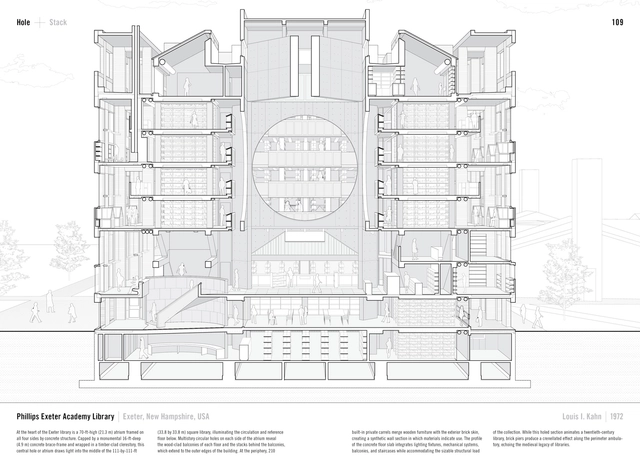
Phillips Exeter Academy Library by Louis I. Kahn (1972). Published in Manual of Section by Paul Lewis, Marc Tsurumaki, and David J. Lewis published by Princeton Architectural Press (2016). Image Courtesy of LTL Architects
For Paul Lewis, Marc Tsurumaki and David J. Lewis, the section “is often understood as a reductive drawing type, produced at the end of the design process to depict structural and material conditions in service of the construction contract.” A definition that will be familiar to most of those who have studied or worked in architecture at some point. We often think primarily of the plan, for it allows us to embrace the programmatic expectations of a project and provide a summary of the various functions required. In the modern age, digital modelling software programs offer ever more possibilities when it comes to creating complex three dimensional objects, making the section even more of an afterthought.
With theirManual of Section(2016), the three founding partners of LTL architects engage with section as an essential tool of architectural design, and let’s admit it, this reading might change your mind on the topic. For the co-authors, “thinking and designing through section requires the building of a discourse about section, recognizing it as a site of intervention.” Perhaps, indeed, we need to understand the capabilities of section drawings both to use them more efficiently and to enjoy doing so.
This article was originally published on August 27, 2017. To read the stories behind other celebrated architecture projects, visit our AD Classics section.
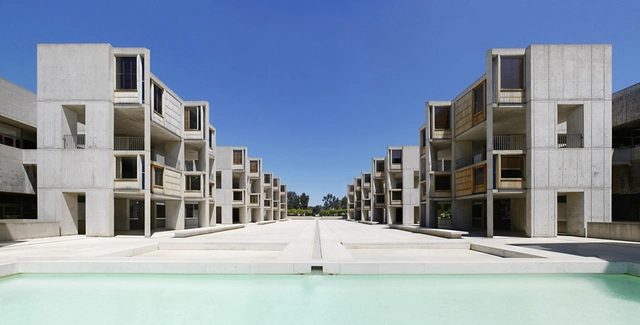
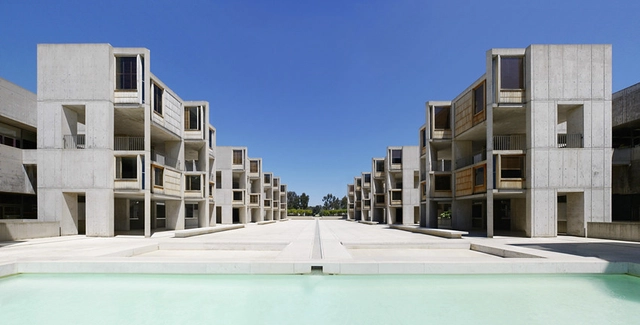
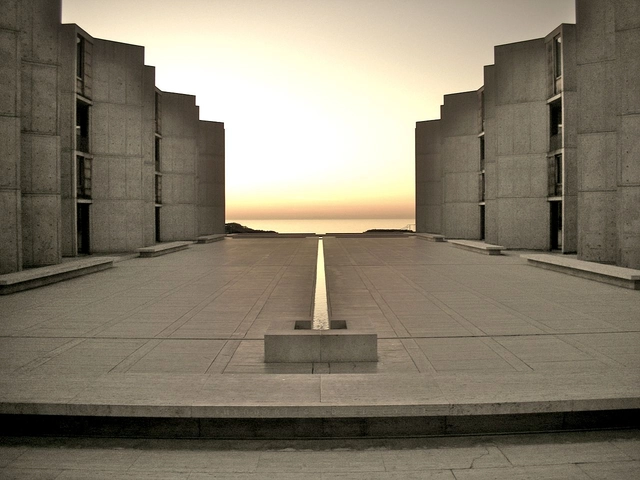
In 1959, Jonas Salk, the man who had discovered the vaccine for polio, approached Louis I. Kahn with a project. The city of San Diego, California had gifted him with a picturesque site in La Jolla along the Pacific coast, where Salk intended to found and build a biological research center. Salk, whose vaccine had already had a profound impact on the prevention of the disease, was adamant that the design for this new facility should explore the implications of the sciences for humanity. He also had a broader, if no less profound, directive for his chosen architect: to “create a facility worthy of a visit by Picasso.” The result was the Salk Institute, a facility lauded for both its functionality and its striking aesthetics – and the manner in which each supports the other.[1,2]
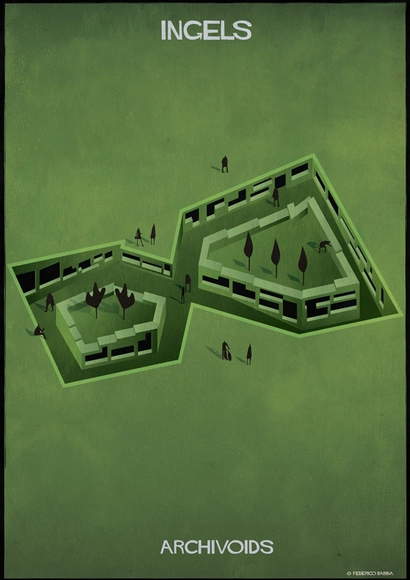
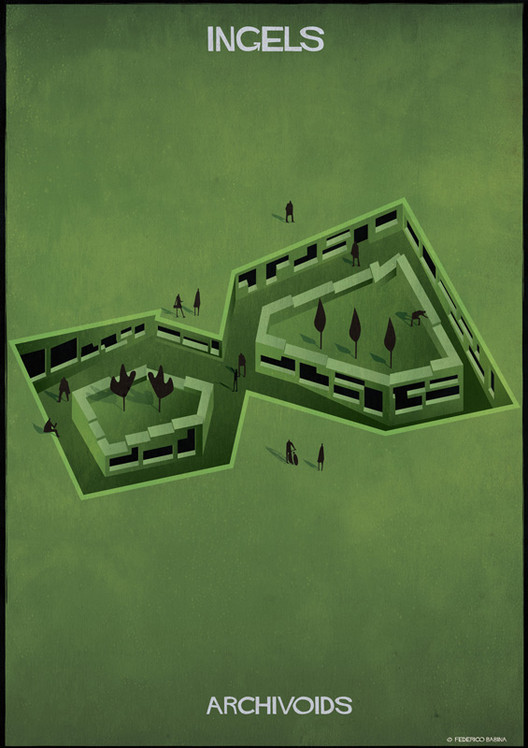
Babina’s images create an inverse point of view, a reversal of perception for an alternative reading of space, and reality itself. Making negative space his protagonist, Babina traces the “Architectural footprints” of famous architects, coupling mysterious geometries with a vibrant color scheme.
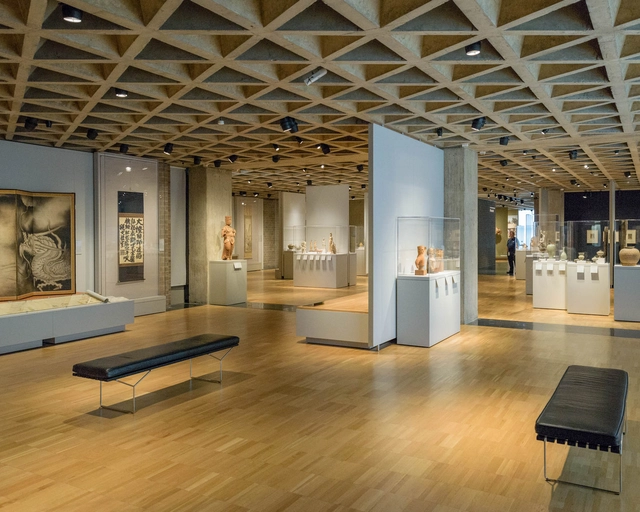
Yale University’s School of Architecture was in the midst of pedagogical upheaval when Louis Kahn joined the faculty in 1947. With skyscraper architect George Howe as dean and modernists like Kahn, Philip Johnson, and Josef Albers as lecturers, the post-war years at Yale trended away from the school’s Beaux-Arts lineage towards the avant-garde. And so, when the consolidation of the university’s art, architecture, and art history departments in 1950 demanded a new building, a modernist structure was the natural choice to concretize an instructional and stylistic departure from historicism.[1] Completed in 1953, Louis Kahn’s Yale University Art Gallery building would provide flexible gallery, classroom, and office space for the changing school; at the same time, Kahn’s first significant commission signaled a breakthrough in his own architectural career—a career now among the most celebrated of the second half of the twentieth century.
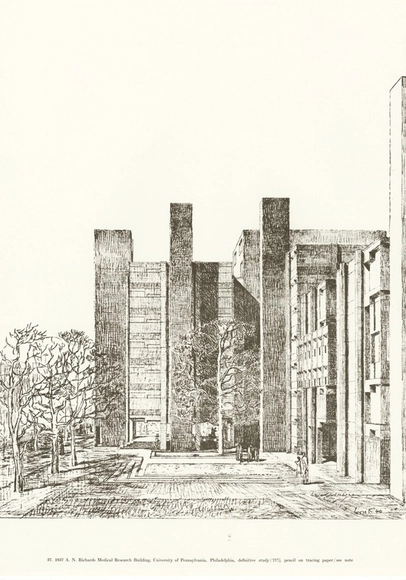
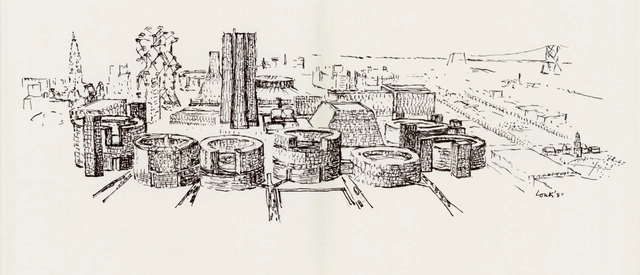
In 1961, the architect Louis I. Kahn was commissioned by the Fine Arts Foundation to design and develop a large arts complex in central Fort Wayne, Indiana. The ambitious Fine Art Center, now known as the Arts United Center, would cater to the community of 180,000 by providing space for an orchestra, theatre, school, gallery, and much more. As a Lincoln Center in miniature, the developers had hoped to update and upgrade the city through new civic architecture. However, due to budget constraints, only a fraction of the overall scheme was completed. It is one of Kahn’s lesser-known projects that spanned over a decade, and his only building in the Midwest.
Past recipients of the award have included Bjarke Ingels, Norman Foster, Peter Bohlin, Daniel Libeskind, Robert A.M. Stern, Rafael Viñoly and César Pelli.
https://www.archdaily.com/892460/david-adjaye-honored-with-2018-louis-kahn-memorial-awardNiall Patrick Walsh
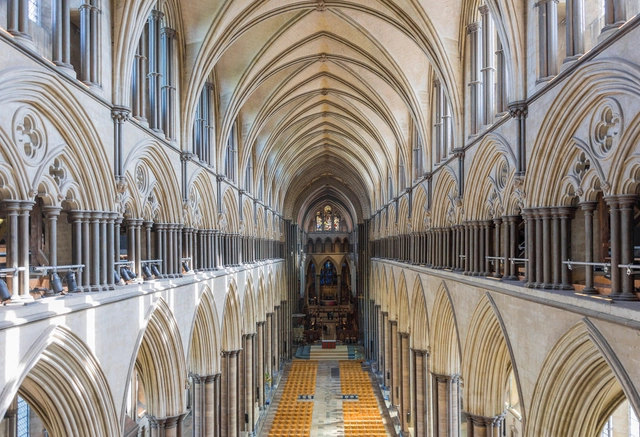
Some of the greatest architectural works throughout history have been the result of religion, driven by the need to construct spaces where humanity could be one step closer to a higher power. With more people choosing a secular lifestyle than ever before, are the effects that these buildings convey—timelessness, awe, silence and devotion, what Louis Kahn called the “immeasurable” and Le Corbusier called the “ineffable”—no longer relevant?
With the Vatican’s proposal for the 2018 Venice Biennale, described as “a sort of pilgrimage that is not only religious but also secular,” it is clear that the role of "religious" spaces is changing from the iconography of organized religion to ambiguous spaces that reflect the idea of "spirituality" as a whole.
So what does this mean? Is there still a key role for spirituality in architecture? Is it possible to create spaces for those of different faiths and those without faith at all? And what makes a space "spiritual" in the first place?
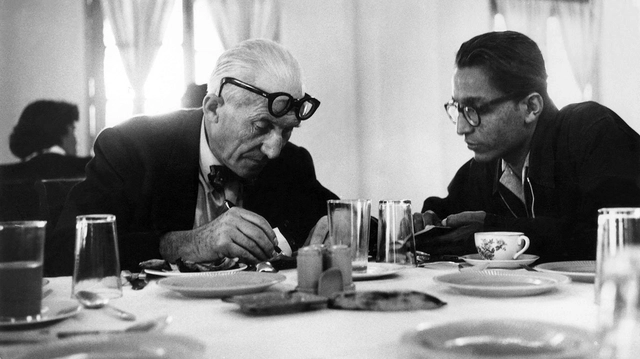
Le Corbusier and Balkrishna Doshi. Photo courtesy of Balkrishna Doshi.
B.V. Doshi, one of modern Indian architecture’s most celebrated practitioners, was born in Pune, India in 1927. Nearly 90 years later, the Pritzker Prize jury chose Doshi as the 2018 Laureate. Get to know about Doshi’s history—including his close relationship to the legendary Le Corbusier—in this list of interesting facts.
https://www.archdaily.com/890128/who-is-balkrishna-bv-doshi-12-things-to-know-about-the-2018-pritzker-laureateAD Editorial Team


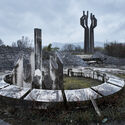
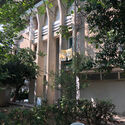


.jpg?1609838112&format=webp&width=640&height=580)
.jpg?1609149520&format=webp&width=640&height=580)

.jpg?1609149607 "Courtesy of Wikimedia Commons")
.jpg?1609149611 "© Laurian Ghinitoiu")
.jpg?1609149614 "© Laurian Ghinitoiu")
.jpg?1609149520)