1. ArchDaily
  2. Junya Ishigami + Associates

Junya Ishigami + Associates: The Latest Architecture and News

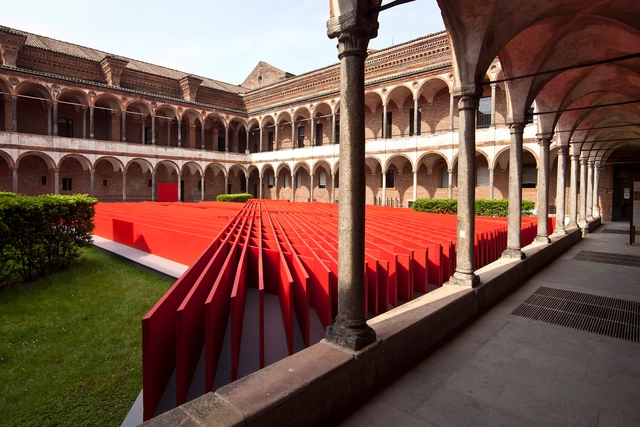
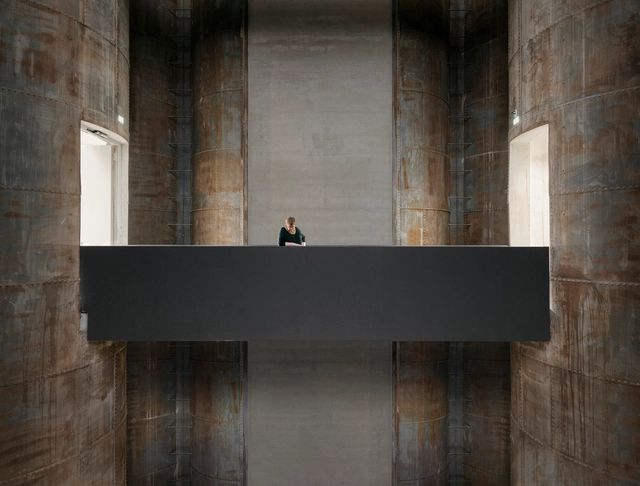
Rethinking the Flat Datum: Designing Space with Incline and Intent

Subscriber Access | 

Historically, architecture and the built environment have insisted on creating flat, hard surfaces. In earlier eras, walking without paved ground meant mud-caked shoes, uneven footing, tripping hazards, standing water after rain, and high maintenance. Hence, as we shaped cities, we prioritized a smooth, continuous, solid horizontal datum. The benefits are real: easier walking, simpler cleaning, and straightforward programming—furniture, equipment, and partitions all prefer a level base. This universal preference for building on flat ground remains the norm and, for many practical reasons, will likely continue to be.

What's less recognized is that making a truly flat surface is surprisingly difficult—and many well-executed "flat" floors aren't perfectly flat at all. They are often gently sloped, calibrated to precise gradients for drainage. While interior spaces do not always require this, many ground floors and wet areas do incorporate subtle inclines as a safeguard—whether for minor flooding or to manage water that overflows from the street or plumbing when one of the discharge systems is malfunctioning.

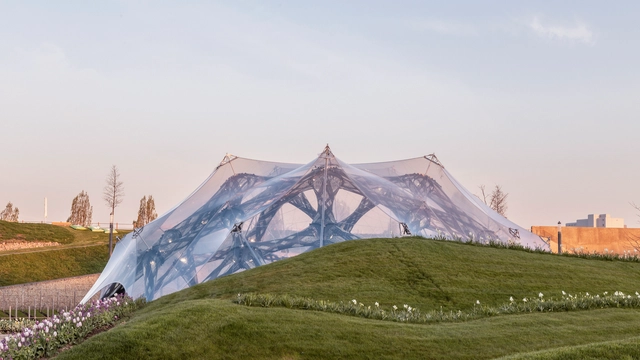
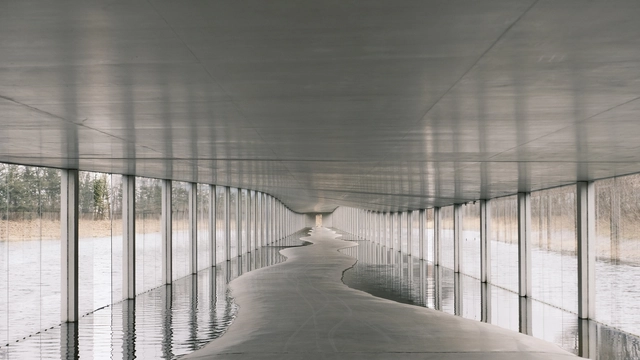
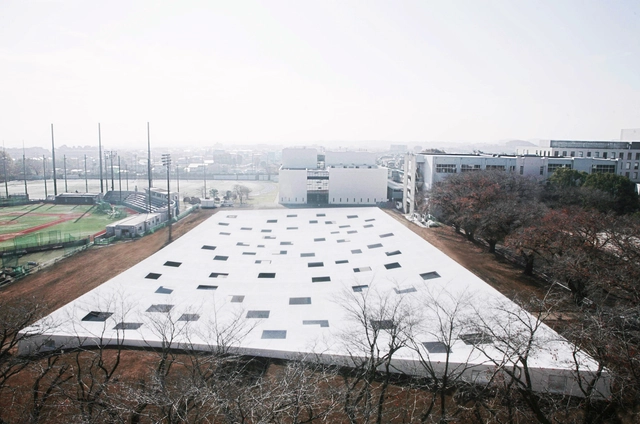
Rethinking the Flat Datum: Designing Space with Incline and Intent - Imagen 1 de 4Rethinking the Flat Datum: Designing Space with Incline and Intent - Imagen 2 de 4Rethinking the Flat Datum: Designing Space with Incline and Intent - Imagen 3 de 4Rethinking the Flat Datum: Designing Space with Incline and Intent - Imagen 4 de 4Rethinking the Flat Datum: Designing Space with Incline and Intent - More Images+ 49

Tatiana Bilbao, Alison Brooks, Michel Rojkind and Jun'ya Ishigami Among Architects Elevated to AIA Honorary Fellowship

The American Institute of Architects (AIA), a professional organization dedicated to supporting architects and advancing the field of architecture, has announced the elevation of 93 architects to its College of Fellows. This recognition is awarded to individuals who have made significant contributions to the profession and society. This year's class includes 83 AIA member-architects and 10 international architects granted Honorary Fellowship. The newly elevated Fellows will be recognized at the AIA Conference on Architecture & Design 2025 (AIA25) in Boston.

Tatiana Bilbao, Alison Brooks, Michel Rojkind and Jun'ya Ishigami Among Architects Elevated to AIA Honorary Fellowship - Image 1 of 4Tatiana Bilbao, Alison Brooks, Michel Rojkind and Jun'ya Ishigami Among Architects Elevated to AIA Honorary Fellowship - Image 2 of 4Tatiana Bilbao, Alison Brooks, Michel Rojkind and Jun'ya Ishigami Among Architects Elevated to AIA Honorary Fellowship - Image 3 of 4Tatiana Bilbao, Alison Brooks, Michel Rojkind and Jun'ya Ishigami Among Architects Elevated to AIA Honorary Fellowship - Image 4 of 4Tatiana Bilbao, Alison Brooks, Michel Rojkind and Jun'ya Ishigami Among Architects Elevated to AIA Honorary Fellowship - More Images+ 5

Among the Honorary Fellows are Tatiana Bilbao (Mexico), Alison Brooks (United Kingdom), Jun'ya Ishigami (Japan), Kain Bon Albert Chan (China), Hu Li (China), Lyndon Uykim Neri (China), Michel Rojkind (Mexico), Masaharu Rokushika (Japan), Brinda Somaya (India), and Kerstin Thompson (Australia), recognized for their contributions to the global architectural landscape.

Pioneering Change: The Obel Award Recognizes Transformative Innovations Since 2019

The Obel Award is an international prize seeking to highlight unconventional and original initiatives within the architectural profession. Supported by the Henrik Frode Obel Foundation, each annual award is centered around a specific theme. By exploring a different challenge of the built environment each year, the award remains open to a wide range of solutions and architectural innovations, honoring those contributions that have a positive impact on both people and the planet.

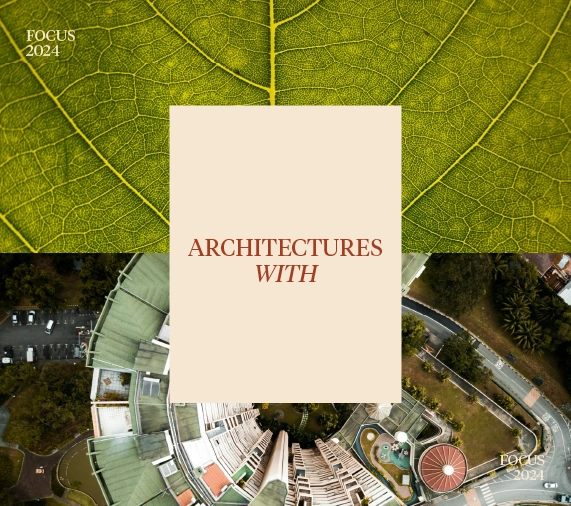
"Architectures WITH," the recently announced theme of the 2024 edition, explores participatory design, co-creation, and interdisciplinary collaboration, challenging traditional roles in architecture to foster inclusive, adaptable environments. It aims to empower all stakeholders and enhance collective intelligence in architecture.

Pioneering Change: The Obel Award Recognizes Transformative Innovations Since 2019 - Imagen 1 de 4Pioneering Change: The Obel Award Recognizes Transformative Innovations Since 2019 - Imagen 2 de 4Pioneering Change: The Obel Award Recognizes Transformative Innovations Since 2019 - Imagen 3 de 4Pioneering Change: The Obel Award Recognizes Transformative Innovations Since 2019 - Imagen 4 de 4Pioneering Change: The Obel Award Recognizes Transformative Innovations Since 2019 - More Images+ 2

The Obel Award Announces Theme for its 6th Cycle, the 2024 Edition

The Obel Award is an international prize for architectural achievement presented annually by the Henrik Frode Obel Foundation. Each year, the jury selects a specific theme and grants an award to a promising solution. For the 2024 edition, the prize that honors architectural contributions that positively impact both people and the planet will be focused on “Architecture With”.

Previous emphasis included Adaptations, Emissions, Cities, Mending, and Well-being. In 2023, the fifth cycle recognized ‘Living Breakwaters’ in New York, a green infrastructure project off the shore of Staten Island, by SCAPE Landscape Architecture and its founder Kate Orff. In 2022, the Obel was awarded to Seratech, a carbon-neutral concrete solution, in 2021, the concept of the 15-minute city received the prize for its value in creating sustainable and people-centric urban environments, and in 2020, Studio Anna Heringer was acknowledged for Anandaloy, in Bangladesh, an unconventional, multifunctional building that hosts a therapy center for people with disabilities on the ground floor and a textile studio on the top floor producing fair fashion and art. Finally, in its first edition, fixated on well-being, the Obel Award was granted to the Art Biotop Water Garden project in Tochigi, Japan, by Junya Ishigami & Associates.
The Power of Emotions: How Does Space Move Us?

"The taste of the apple lies in the contact of the fruit with the palate, not in the fruit itself," Jorge Luis Borges once said. The taste is not something inherent in itself; its experience is the result of an encounter. Similarly, emotions are not contained within architecture, but are only felt through the encounter of the body with the space, when it becomes a place. How does the environment affect how we feel? This is the question that drives the duo of artists and filmmakers Ila Bêka and Louise Lemoine in their latest endeavor, the book "The Emotional Power of Space," which will be released on May 17th in an event preceding the opening of the Venice Architecture Biennale 2023.

The 15 Winners of the 2023 ArchDaily Building of the Year Awards

After another successful selection process, with over 150,000 votes cast during the last 3 weeks, the collective intelligence of our community has helped us to highlight and recognize the best recent architecture projects. The 75 finalists, which is already a winners list, are a testament to the innovative and diverse ways in which architecture responds to the challenges of our built environment.

The scale of this award is a reflection of how important architecture is today, as the deepening complexity of our world places increasing pressure and demands upon our built environment. To deal with issues such as the climate crisis, energy scarcity, population density, social inequality, housing shortages, fast-moving urbanization, diminished local identity, and a lack of diversity, architecture needs to open itself. We are happy to see how the question posed by this award has gained global attraction. Voices from outside of the architectural profession stated: “This is what we consider good architecture”, due to its impact and symbolism, as seen on Globo or El País. Architectural recognition goes beyond its usual professional borders, and is able to motivate, rejoice and excite an ever growing number of people who understand the importance of our built environment and its impact on quality of life.

The winners are a concrete example of what society recognizes as good architecture, but also of what it demands from it. We take the responsibility to continue building on the spirit of the award, strengthening the expert’s choice and the contribution that our community makes based on their preferences and selections throughout the year, together with the voice of a wider community.

The ArchDaily Building of the Year Awards is brought to you thanks to Dornbracht, renowned for leading designs for architecture, which can be found internationally in bathrooms and kitchens.

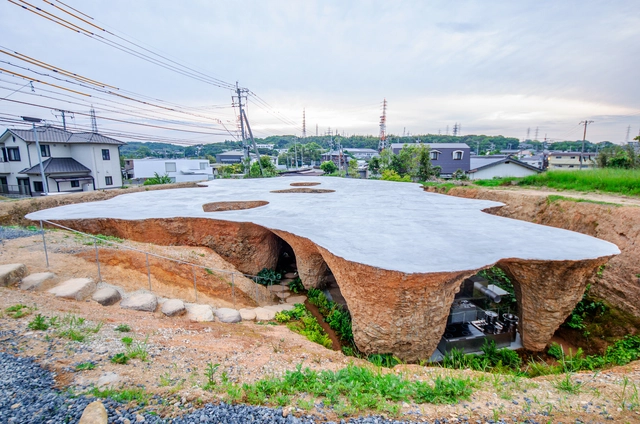
House & Restaurant / junya ishigami + associates

House & Restaurant / junya ishigami + associates - Exterior Photography, Houses, FacadeHouse & Restaurant / junya ishigami + associates - Exterior Photography, Houses, Garden, Arch, FacadeHouse & Restaurant / junya ishigami + associates - Interior Photography, Houses, Arch, TableHouse & Restaurant / junya ishigami + associates - Interior Photography, Houses, Garden, Arch, ArcadeHouse & Restaurant / junya ishigami + associates - More Images+ 49

Art Biotop Water Garden Recognized with Inaugural Obel Award

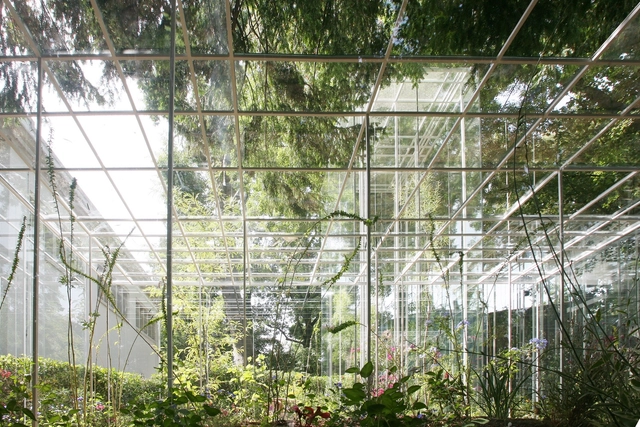
The inaugural Obel Award has been awarded to Art Biotop Water Garden by Junya Ishigami+Associates. Announced at a ceremony at the Utzon Center in Aalborg, Denmark, the award recognizes architectural achievement and is presented annually by The Henrik Frode Obel Foundation. The prize is 100,000 Euros and an artwork by leading artist Tomás Saraceno.

Art Biotop Water Garden Recognized with Inaugural Obel Award - Image 1 of 4Art Biotop Water Garden Recognized with Inaugural Obel Award - Image 2 of 4Art Biotop Water Garden Recognized with Inaugural Obel Award - Image 3 of 4Art Biotop Water Garden Recognized with Inaugural Obel Award - Image 4 of 4Art Biotop Water Garden Recognized with Inaugural Obel Award - More Images+ 3

"Architecture from Someone's Imagination is not Enough": Interview with Junya Ishigami

I think that the conversation with Junya Ishigami at his experimental (and very international) studio in Tokyo was one of the most memorable experiences of my recent trip to Japan. Junya's visions for not just of his own architecture but for the profession were wholeheartedly inspiring. He thinks that architecture today is “not free enough.” He wants to diversify it, liberate it from so many architects’ insistence on following particular building types and, in general, our narrow expectations. He wants his architecture to be soft and loose and finds inspiration in such improbable metaphors as clouds or the surface of water. “We need to introduce more varieties of architecture to better address peoples’ dreams…I want to expand architecture into the future by creating new comfortabilities,” says Ishigami, whose two recent manifesto-like exhibitions in Paris questioned the very nature and purpose of architecture. He is a visionary and essential voice in what is perhaps the most unsettled of all professions.
"Architecture from Someone's Imagination is not Enough": Interview with Junya Ishigami - Arch Daily Interviews"Architecture from Someone's Imagination is not Enough": Interview with Junya Ishigami - Arch Daily Interviews"Architecture from Someone's Imagination is not Enough": Interview with Junya Ishigami - Arch Daily Interviews"Architecture from Someone's Imagination is not Enough": Interview with Junya Ishigami - Arch Daily InterviewsArchitecture from Someone's Imagination is not Enough: Interview with Junya Ishigami - More Images+ 28

This Week in Architecture: A Little Less Conversation

Kanye West is, according to Kanye West, a reformed man. After months of making headlines over his bizarre political views, he stated on Wednesday that, “my eyes are now wide open and now realize I’ve been used to spread messages I don’t believe in. I am distancing myself from politics and completely focusing on being creative !!!”

While this most likely means a return to his music career, this statement could also indicate a renewed interest in his design projects. The rapper’s interest in architecture is more than just a passing one; he’s collaborated with noted architects such as Jacques Herzog and Rem Koolhaas and has declared on multiple occasions his desire for everything to be “architected.”

Laurian Ghinitoiu Captures Dreamlike Nature of Junya Ishigami's Work at Fondation Cartier in Paris

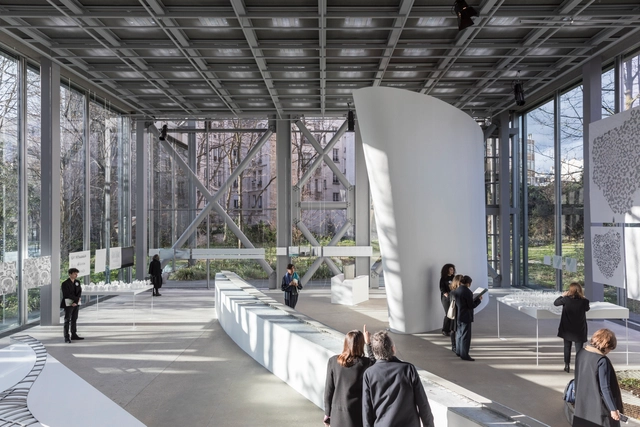
From March 30 to June 10, 2018, the Fondation Cartier pour l'art contemporain will host Junya Ishigami's exhibition, Freeing Architecture. This is the first major solo exhibition that the Fondation Cartier in Paris has devoted to an architect, and fitting that it would lend itself to an important and singular figure of Japan's young architecture scene.

Ishigami - winner of the Golden Lion award at the Venice Biennale in 2010 - has instilled this conceptual body of work with his trademark flair: calm, free fluidity, with bright tones and playful curves. The projects in the exhibition range from large scale models to films and drawings, and when placed in the context of the exhibition, they bring to life Jean Nouvel's iconic building as well.

Laurian Ghinitoiu gives us a glimpse inside the exhibition ahead of the opening day tomorrow. His photos reveal the lightness and ethereal quality of Ishigami's hand. 

Laurian Ghinitoiu Captures Dreamlike Nature of Junya Ishigami's Work at Fondation Cartier in Paris - Image 3 of 4Laurian Ghinitoiu Captures Dreamlike Nature of Junya Ishigami's Work at Fondation Cartier in Paris - Image 4 of 4Laurian Ghinitoiu Captures Dreamlike Nature of Junya Ishigami's Work at Fondation Cartier in Paris - Image 11 of 4Laurian Ghinitoiu Captures Dreamlike Nature of Junya Ishigami's Work at Fondation Cartier in Paris - Image 12 of 4Laurian Ghinitoiu Captures Dreamlike Nature of Junya Ishigami's Work at Fondation Cartier in Paris - More Images+ 15

Peter Zumthor Selected to Design Beyeler Foundation Expansion

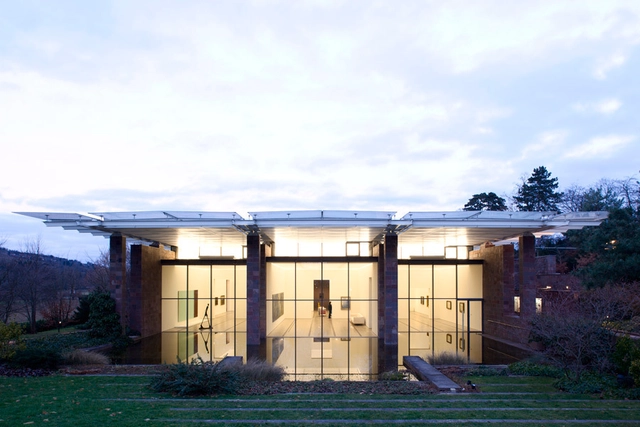
The office of Peter Zumthor has been selected to design an expansion to the Beyeler Foundation, located just outside Zumthor’s childhood home of Basel, Switzerland. The Swiss architect was chosen from a prestigious shortlist of 11 firms to add to the existing museum building, designed by Renzo Piano Building Workshop and completed in 1997.

“The sky above Basel, the city and its surroundings–those are the landscapes of my youth,” said Zumthor. “It is heart-warming to be able to design a major building here.”