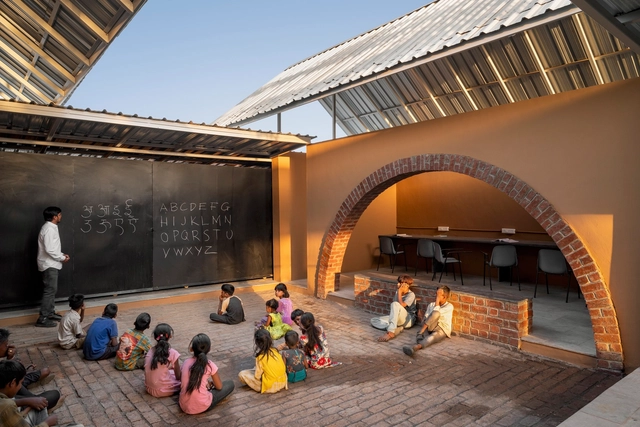
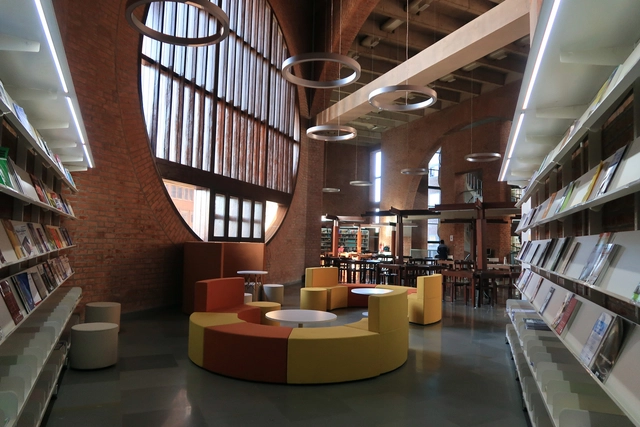
India's built environment has, in recent years, gained visibility through a growing number of transformative architectural and infrastructure projects. Cities and towns scale faster each year, despite looming concerns around climate and economic volatility. The nation has shown resilience in balancing rapid urbanization with resource constraints; this is no small feat. India's architectural practices rarely rely on novelty alone; they are built on systems that have existed for centuries. Through ArchDaily's Building for Billions, recurring stories have highlighted the social intelligence and adaptive capacity embedded in these practices, revealing an architecture that operates less as isolated form and more as infrastructure.
As the year culminates, it's once again time for the ArchDaily team of curators to reflect on the best-performing projects of 2025 and consider what readers were most interested in. Through this diverse overview, we assess the cross-continental similarities and differences in trends and construction development. This year brought us many grand cultural and public spaces by Lina Ghotmeh, BIG, Zaha Hadid Architects, DnA, and Serie Architects, who populated events like Expo Osaka and the Venice Biennale, as well as a surprising number of museums and public or landscape works in China and the rest of the Asian continent. However, while these were sought-after projects, the leading works remained, unsurprisingly, residential projects.
More specifically, the houses that were most viewed on the ArchDaily global site were concrete houses that bore considerable injections of greenery and landscape focus. They propose layouts highlighting voids and double heights, as well as inner courtyards or large openings to the exterior. While some references did suggest traditional or vernacular elements, modernist revivals were still predominant. Material trends are much more tame, with a recurrence of raw concrete use, as wood and stone were common accent elements. Still, the more interesting thing about the works this year is the efforts brought by architects in situating and setting the projects within their surroundings, bringing special attention to landscape and how projects merged with nature.
India today is a country of 1.4 billion people requiring every type of building imaginable—hospitals, colleges, housing, and more. Championing sensibility and practicality in design is Brinda Somaya, an internationally acclaimed architect, urban conservationist, and academician, recently named an honorary member of the 2025 class of Fellows of the American Institute of Architects. Her work demonstrates a careful response to cultural contexts enriched with a grounded understanding of functionality, transforming them into modern relics. A four-decade career has built her portfolio that spans architecture, master-planning, and historic preservation - a constantly unfolding legacy.
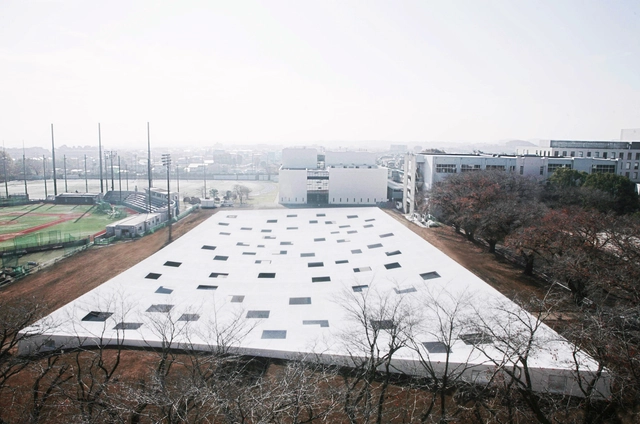
Plaza of Kanagawa Institute of Technology / junya ishigami + associates. Image Courtesy of Junya Ishigami + Associates
The American Institute of Architects (AIA), a professional organization dedicated to supporting architects and advancing the field of architecture, has announced the elevation of 93 architects to its College of Fellows. This recognition is awarded to individuals who have made significant contributions to the profession and society. This year's class includes 83 AIA member-architects and 10 international architects granted Honorary Fellowship. The newly elevated Fellows will be recognized at the AIA Conference on Architecture & Design 2025 (AIA25) in Boston.
The International Union of Architects (UIA) has announced the UIA Gold Medal and Prizes winners. The UIA Gold Medal is awarded to Brazilian architect Paulo Mendes da Rocha, president of the 27th UIA World Congress of Architects — UIA2021RIO Honour Committee. The architect will also participate in a keynote speakers session programmed for July.
Paulo Mendes da Rocha, now 92 years old, has been honored with important awards, such as the Pritzker Prize in 2006, considered to be one of the world's premier architecture prizes, and the Venice Biennale Golden Lion for Lifetime Achievement, in 2016. Mendes da Rocha was the first Brazilian to be awarded this prize.
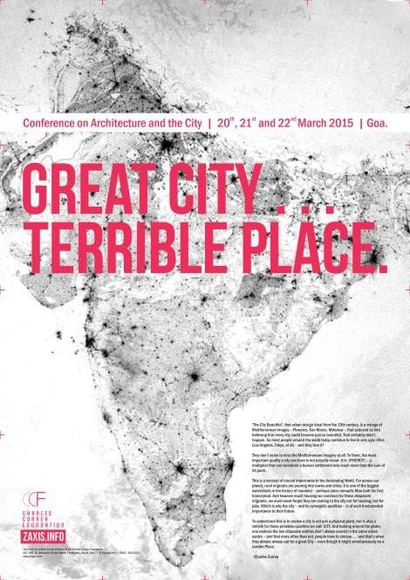
Curated by the Charles Correa Foundation, the Z Axis is an annual conference bringing together pioneers, thought leaders, influencers, professionals, and students in the fields of architecture and urban design to create an intellectual community focused on issues related to the context of India and the developing world. Fifteen speakers will gather from across the globe to explore the theme of Great City…Terrible Place, including Charles Correa, David Adjaye, Alfredo Brillembourg of Urban Think Tank, Spain's "guerrilla architect"Santiago Cirugeda, Simone Sfriso of Studio TAM Associati and more.