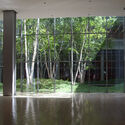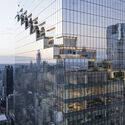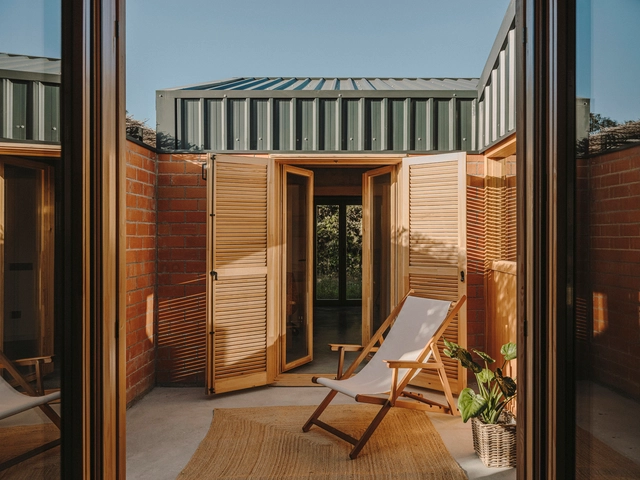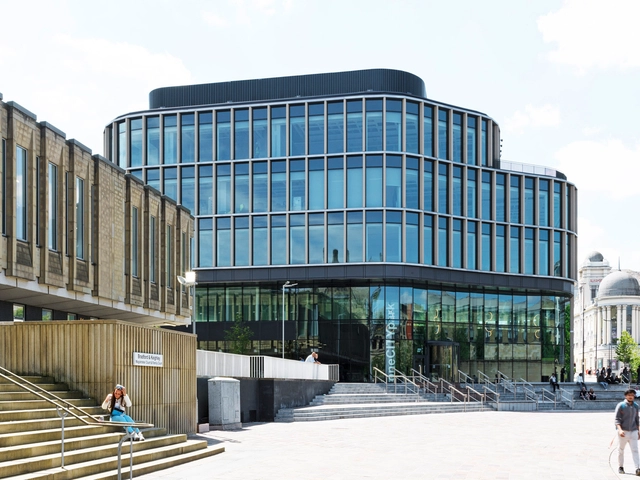
While hybrid working and flexible hours represent the most obvious ways to improve work/life balance for many, because of the missed social interactions and the lack of space or functionality at unproductive home workspaces, the majority of 16-24-year-olds are the only age group who prefer to work from the office.
According to the climatic conditions of each region and its implantation environment, exterior enclosures play a fundamental role in providing the necessary climatization and ventilation conditions to make indoor spaces habitable and comfortable. While there are various bioclimatic strategies and designs that can be applied to achieve energy efficiency, the determination of materiality, the choice of hardware, and the definition of opening and closing technologies contribute to the performance of facades, providing functionality and a high degree of adaptability to contemporary uses, among other factors.
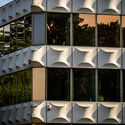
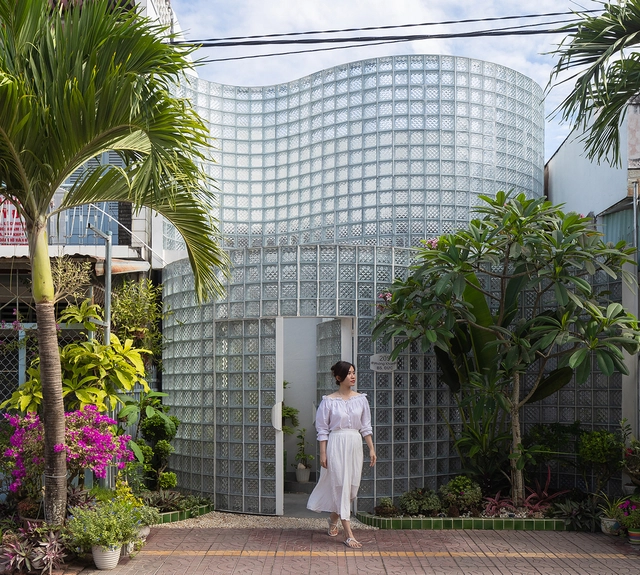
Glass brick facades have emerged as a captivating architectural trend, blending the enduring elegance of glass with the robust strength of bricks. Glass bricks can as well be more thermally resistant than conventional glazing.
These facades add a pixelated effect that plays with light and shadow, perfectly transmitting light, while maintaining privacy. The way glass bricks facades soften and blend the views of the outside can increase calmness and focus. From sleek commercial buildings to avant-garde residential projects, glass brick facades continue to push the boundaries of architectural innovation, captivating both designers and observers alike.
The manipulation and combination of materials are ongoing pursuits in architecture. This has not only broadened the possibilities for construction but also enabled the creation of distinctive shapes and aesthetics by using the same materiality. An example of this is Portland cement, an essential element in the mixture of water and aggregates that make concrete, which allows the creation of both load-bearing and decorative elements. In parallel, as a result of the exploration of innovative materials, fiber cement emerged (invented by Ludwig Hatschek) at the end of the 19th century, combining Portland cement, mineral-based materials, and cellulose fibers.
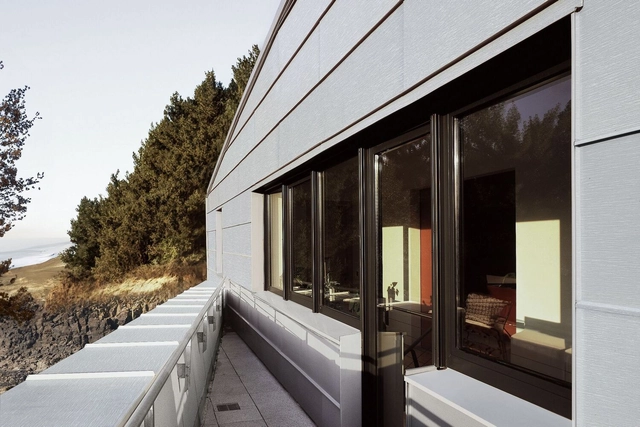
Nowadays, fiber cement —distinguished by its key technical qualities of slenderness, lightness, durability, and flexible aesthetics— has stood out in various applications associated with design, ranging from furnishings to facade systems. It is in the latter where it has adopted notable expressions due to its textures, incombustibility, rain resistance, and malleability. For this reason, we have developed a design guide that addresses the use of fiber cement, exploring the principles that should be considered when designing the facade, regarding its materiality, dimensions, layout, details, and special applications.
https://www.archdaily.com/1011851/design-guide-working-with-fiber-cement-facadesEnrique Tovar
Double skin façades: Almost a self-explanatory name for façade systems consisting of two layers, usually glass, wherein air flows through the intermediate cavity. This space (which can vary from 20 cm to a few meters) acts as insulation against extreme temperatures, winds, and sound, improving the building's thermal efficiency for both high and low temperatures. Perhaps one of the most famous examples of double-skin facades is Foster+Partners' 30 St Mary Ax Building, "The Gherkin."
The airflow through the intermediate cavity can occur naturally or be mechanically driven, and the two glass layers may include sun protection devices.
pixel application. Image Courtesy of Rieder Group / Florian Voggeneder
Nowadays, the concepts of reducing waste and upcycling have experienced a remarkable expansion in various fields of architecture, driven by the need to change the paradigm of consumption habits in both society and industry. This wave not only responds to sustainable approaches but has also demonstrated significant benefits in economic terms. Today, the transformation of various resources, from excavated earth to agro-waste and plastics, is being carried out to create new materials, thus consolidating the efficiency and feasibility of more environmentally friendly practices.
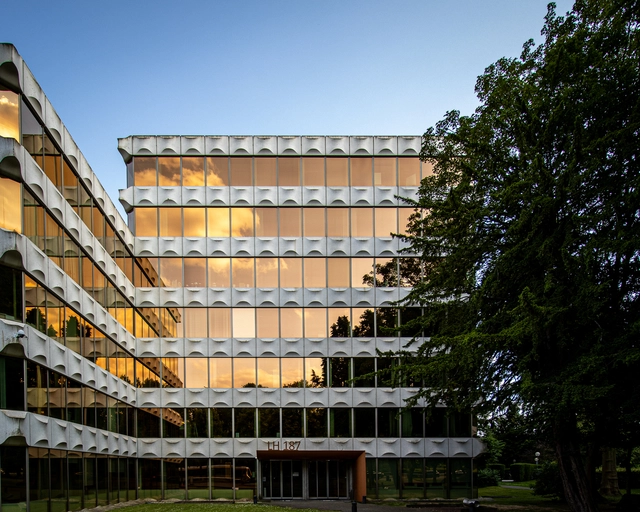
Within this context, technology and data have contributed significantly to a better understanding of materials and to exploring new processing methods. In this regard, artificial intelligence has become a valuable ally. In addition, innovations in software have made it possible to maximize the potential of what was previously considered waste. Correspondingly, Rieder has introduced a product innovation named pixel, aimed at minimizing waste in the production of facade elements constructed from glass fiber-reinforced concrete.
https://www.archdaily.com/1012597/transforming-waste-into-pixels-of-glassfiber-reinforced-concreteEnrique Tovar
A historic symbol of the industrial age, the sawtooth roof is a lasting legacy of architectural history. Although a functional invention born from necessity nearly 200 years ago, the iconic shape is enjoying a renaissance in many contemporary projects.
Made up of many long, thin roofs with irregular pitches laid alongside each other, a sawtooth roof positions its steeper edges – filled with glass panels – away from the equator. This allows large buildings to control their solar gain by omitting direct sunlight, while still allowing uniform indirect natural light to fill an entire interior area.
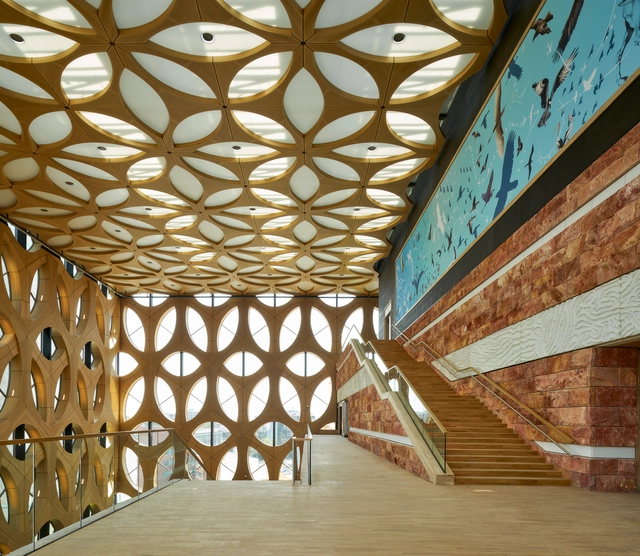
Naturalis Leiden - Naturalis Biodiversity Center, Netherlands | Fastmount™ Panel Mounting. Image Cortesia de Fastmount
Highly desirable in contemporary projects, seamless surfaces symbolize the search for a unified and uninterrupted visual experience, without any noticeable gaps or interruptions. This simple and clean aesthetic demands meticulous attention to detail, emphasizing precision in craftsmanship and execution to achieve an immaculate and flawless finish.
For a small child, understanding the concept of time and its passage is very difficult. As a result, children are often impatient when expecting something or confused when trying to remember something from the past. They live in the present, and learn the notion of time only little by little. But accepting the passage of time, and the reality of aging, is something that plagues us even as adults. The lucrative cosmetic and plastic surgery industries show how humanity seeks to control or deny the passage of time, an urge that has proved to be relentless.
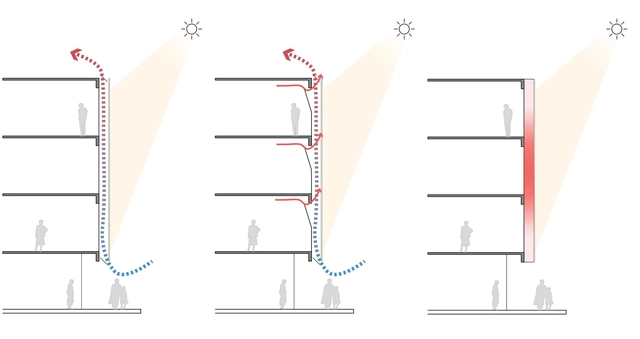
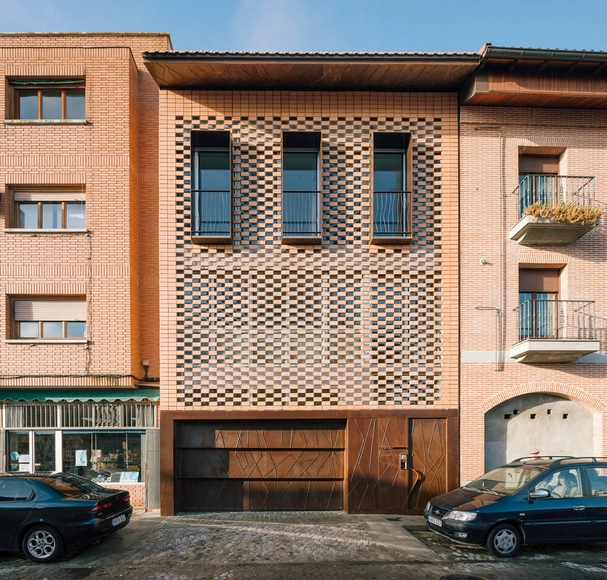
The duality of sunlight in the field of architectural design presents fascinating contrasts, especially when addressing the question of how to interact with it through the built environment and the materials that define architecture. The sun's influence in this discipline has become an essential part of the cultural heritage of some countries, as evidenced by Spanish architecture, where the interaction with sunlight manifests through elements such as lattices. These lattices are recognizable on the facades of buildings from the Middle Ages, exemplified by structures like the Alhambra, to 20th-century constructions such as Casa Gomis, considered historical monuments.
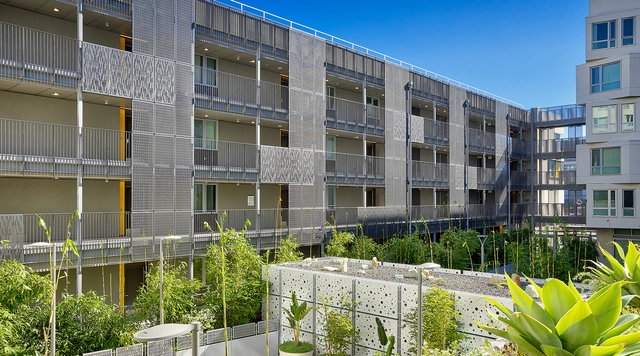
The facade, being the skin of the building, is the architectural component that is usually directly exposed to sunlight. Based on this premise, we seek to establish a dialogue between openness to the environment and the need for protection, thus creating a synergy between functionality and aesthetics. In this context, sunscreen facades have been developed through various approaches, standing out for their ability to address this design condition. For this reason, we have selected solar control solutions from Spanish brands, distinguished by their technical characteristics and materiality through various approaches.
https://www.archdaily.com/1010864/sunscreen-facades-from-ceramic-textile-systems-to-double-skin-glassEnrique Tovar
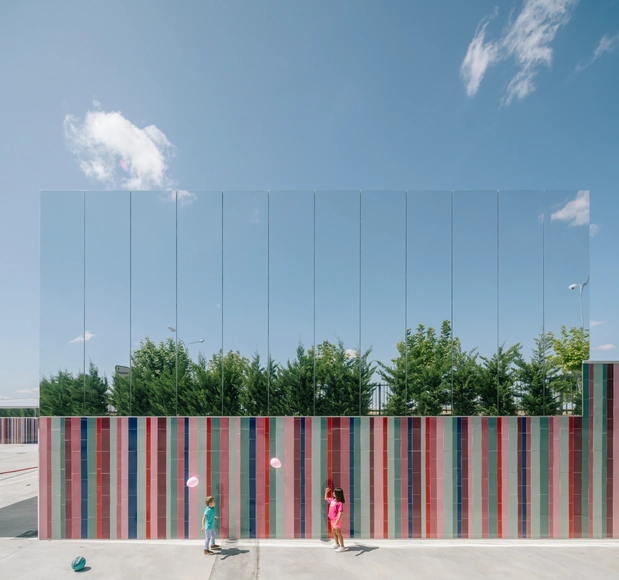
The Almost Invisible School / ABLM arquitectos. Image Cortesia de ABLM arquitectos
The referential of movement, which describes the variation in an object's position and velocity according to the observer's perspective, is one of the fundamental concepts of physics. This idea not only influences the understanding of movement in physical systems but can also be analogously applied in other areas, such as architecture, where the different perspectives of users can shape their experiences and interactions with built space. Each person brings cultural, emotional, and physical baggage, resulting in unique architectural interactions, similar to an observer's interpretation of a motion reference.
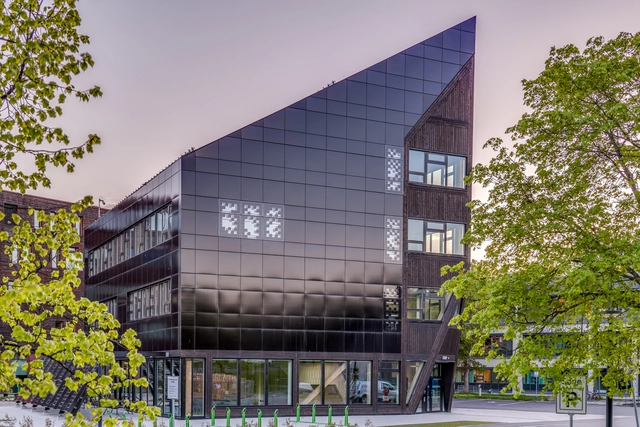
Traditionally relegated to roofs, photovoltaic (PV) panels tend to have a uniform appearance: large black or dark blue rectangular pieces of shiny glass with metal frames. Partly because dark colors better harvest sunlight to be turned into electricity, but also because silicon –the primary material used in most high-efficiency photovoltaic panels– tends to be dark in its crystalline form. Fortunately, there are now technologies to control luster, color and finish that provide aesthetic variety while maintaining high efficiency. SolarLab and other manufacturers are redefining conventional solar panels, introducing design flexibility and material qualities that allow architects to take advantage of large facade surfaces to generate renewable energy without compromising architecturally.
Shortly before the First World War, Harry Brearley (1871-1948), who had been working as a metalworker since he was 12 years old, developed the first stainless steel. Seeking to solve the problem of wear on the inner walls of British army weapons, he ended up obtaining a corrosion resistant metal alloy, and added chrome to the cast iron. The invention found applications in almost all industrial sectors including for the production of cutlery, health equipment, kitchens, automotive parts, and more, replacing traditional materials such as carbon steel, copper, and even aluminum. In civil construction, this was no different, and stainless steel was soon incorporated into buildings.
In the context of WWI and to address the massive housing shortage resulting from the conflict, the Dom-Ino modular structure, one of the most significant contributions of functionalism and designed by the Swiss designers Le Corbusier and Max Dubois, established concrete premises for a new vision of a lightweight structural model that optimizes the construction process. Thanks to the use of a reinforced concrete slab and column system, the Dom-Ino structure allowed for the flexible arrangement of elements in the floor plan and freed the facade from the limitations imposed by load-bearing walls.
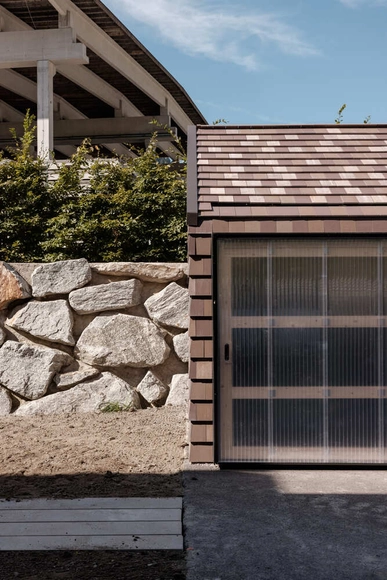
This condition prompted the creation of architectural designs that not only integrated windows as functional elements but also as compositional. Thanks to technological innovations, windows with slender framings and wider openings were achieved, as exemplified in works such as Villa Savoye and Farnsworth House. While these proposals redefined the aesthetics of architecture, the technological limitations of the time presented challenges. Nowadays, the continuous development of windows with improved technical characteristics has led to the concept of the minimalist window, which has inspired three fundamental principles derived from this concept, conceived by Vitrocsa. These principles —transparency, functional variations, and advanced mechanisms— incorporate technological innovations while simultaneously blurring spatial boundaries. Each of them plays a key role in the design of spaces and together they significantly redefine the aesthetics of buildings and interiors.
https://www.archdaily.com/1006485/redrawing-boundaries-the-three-principles-of-minimalist-windowsEnrique Tovar
Almost half of Brazil is covered in forest, producing nearly 150 million cubic meters a year. Thanks to the large country’s wide range of tree species, Brazilian designers looking for natural, locally sourced materials have a lot of wood to choose from. Unsurprisingly, wood is a common feature in both traditional and contemporary Brazilian homes, both in construction and when creating decorative surfaces.
The aesthetic beauty of wood’s grain pattern, combined with the warm, rich, and varying color palettes on offer, means that while achieving the strength and stability required for flooring and construction, wood is also a perfect material to form interior surfaces. Its natural color and aesthetic allow for a simple, minimalist form, giving spaces a timeless mid-century feel.
Bate Borisov Arena / OFIS Architects. Image Courtesy of Euramax
Building envelopes create a physical boundary or shell integrated to the outer skin of a structure, separating indoor and outdoor environments. By assembling architectural components such as walls, roofs, windows and doors, the building is enclosed to provide protection and insulation, playing a determining role in the energy efficiency, comfort, structure, and durability of the project. Through multiple styles and shapes, they are key to giving character to a building, its visual appearance and integration with the surrounding environment.
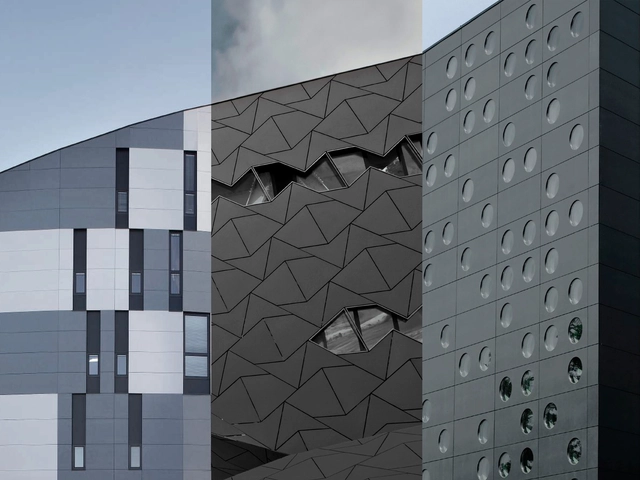
Maintaining the fundamental functions of an envelope while playing with aesthetic possibilities, Euramax’s tailor-made metal cladding solutions create unconventional, colorful envelopes for designing with innovative geometries, patterns, and configurations.
Architects and builders often opt for metal panels due to their exceptional qualities: durability, affordability, and versatility. These attributes hold immense value for construction professionals, who constantly seek cost-effective solutions. Moreover, when a product seamlessly merges desired aesthetics with optimal performance, it becomes a highly sought-after choice for a diverse range of projects.
Designed by architect Anthony Rio and his firm Agence Unité, the Château des Pères hotel project showcases the integration of innovative design and materials in the realm of hotel architecture. Taking inspiration from nature, it reimagines the traditional hotel room as a protective nest. This expansion of a historic hotel, nestled in a 12th-century mansion, features reception, restaurant, and event spaces. The new structure, reminiscent of a tree, gracefully extends with branches radiating from a central trunk. Within each bubble-like structure, guests can experience a sanctuary-like ambiance, offering both privacy and panoramic views of the surroundings, made possible by the generous ovoid windows that adorn each facade.