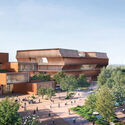
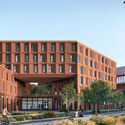
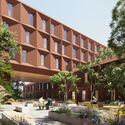
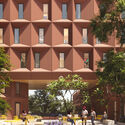
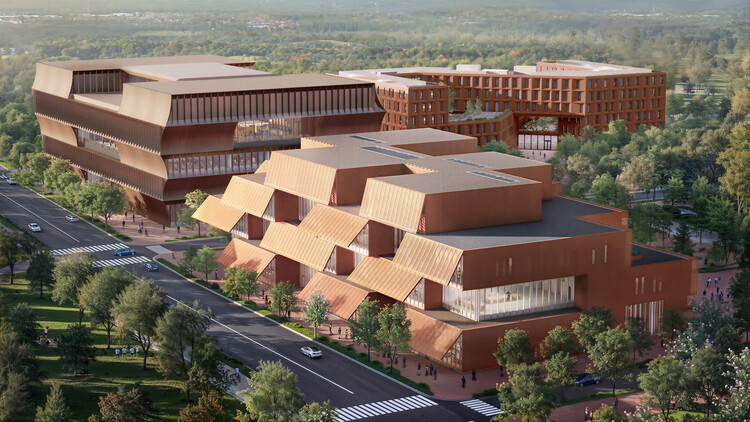
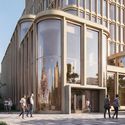
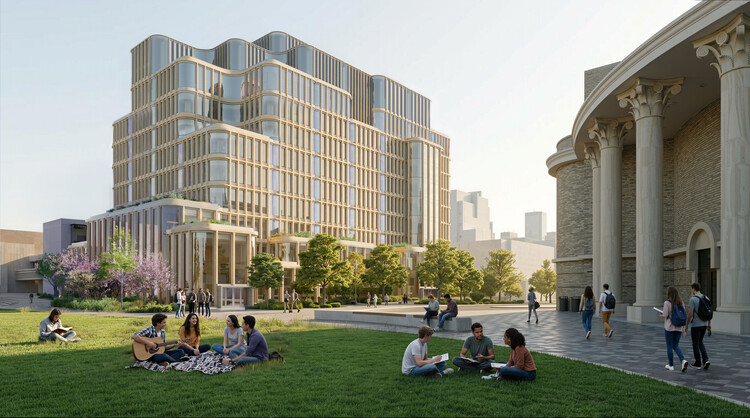
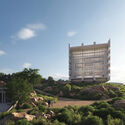
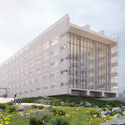
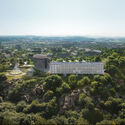
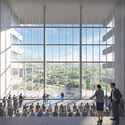
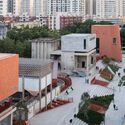
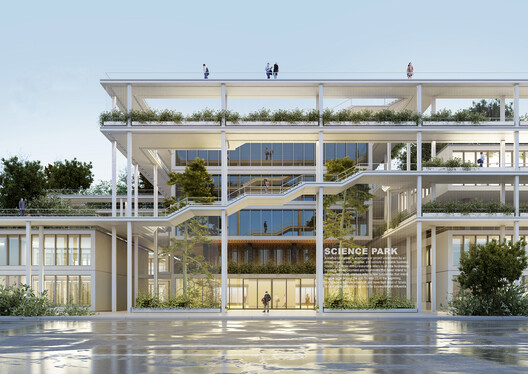
BIG–Bjarke Ingels Group was selected to design the campus of a new STEM university in Arkansas, United States, on a site located near Bentonville's downtown, formerly home to Walmart's headquarters. The project comprises three buildings occupying two city blocks and was designed in collaboration with Polk Stanley Wilcox Architects, who will serve as the Architect of Record. The campus comprises around 422,000 square feet (nearly 39,200 square meters), including green spaces, public squares, an academic building, a makerspace, and a student residence. While the project was recently unveiled, the university intends to welcome its first class of students in 2029.
The context of the ongoing war marks Ukraine's place in the international consciousness. Architecture, however, most often transcends the span of a human life and can therefore be a tool for imagining the future. The practice of architectural design, whether speculative, conceptual, or practical, serves as a means of bringing to life ways of living and interacting beyond our current realities. In this selection of conceptual projects submitted by ArchDaily readers, we see material, spatial, and symbolic strategies that seek to address contemporary contexts in the residential, educational, and commercial sectors.
As the line of conflict has been relatively static since late 2023, Ukrainian cities continue to be subject to new architectural and urban development projects. In this article, we have compiled a selection of unbuilt projects in the cities of Vinnytsia, Lviv, and Kyiv. The selection includes residential, commercial, and mixed-use architectural designs, as well as an educational complex. Two residential projects have also been designed as prototypes without a specific location, as a potential response to the loss of infrastructure and unstable conditions in the region.
Most people rarely remember a passage. They remember the classroom, the apartment, the gallery, or the plaza at the end of it. Passages are usually designed to disappear into the background, guiding movement from one destination to the next. Yet some of architecture's most memorable experiences happen while moving through a place rather than arriving at it.
Circulation is often treated as one of architecture's most practical elements. Corridors connect rooms, galleries provide access, and walkways organize movement through a building. Their purpose seems straightforward: to help people get from one point to another. Because of this, circulation spaces have long been considered secondary to the programs they serve. Attention tends to focus on destinations, while the spaces in between remain largely unnoticed.
How can the most structured elements in architecture give rise to unplanned forms of everyday life? "Spontaneous order" describes how structured systems can generate unplanned but coherent patterns of behavior. In urban discourse, it is often used to describe cities: frameworks of streets, plots, and buildings that are designed, while everyday life is not. Movement, encounters, routines, and informal uses emerge from simple spatial rules rather than explicit programming. In cities, this is visible in how sidewalks, stations, and thresholds operate. The structure is fixed, but the social order is fluid, setting conditions for behavior rather than defining it.
A similar logic can be observed in architectural micro-infrastructures such as locker systems. Like cities, lockers rely on structured frameworks that do not prescribe how life unfolds within them. A locker system is highly controlled in architectural terms: repetitive modules, strict grids, standardized dimensions, controlled access. Yet once in use, it produces spontaneous behaviors. People pause in corridors, return at irregular times, linger near locker zones, or briefly interact with others doing the same. What appears to be a strictly infrastructural storage system begins to generate informal social and spatial behavior.
Learning something new is, biologically, a transformation of the brain. With each experience, neural connections are reorganized, creating and strengthening synapses. Far more than simply accumulating information, learning is about reconfiguring internal structures, a process that can reshape individuals and societies alike. The environment in which this takes place can cultivate curiosity, adaptability, and emotional resilience, thus supporting our next generation of leaders, or suppress those qualities, leading to withdrawal and isolation.
With the rise of modern schooling during the Industrial Revolution, a standardized model emerged, defined by rows of desks, simultaneous instruction, and visual supervision. Often compared to a factory system, this model still persists in many places despite profound technological shifts. These rigid environments remain even as modern learning demands experimentation and adaptability.
Loud noises, the continuous hum of equipment, abrupt changes in light, or intense reflections often go unnoticed. For neurodivergent individuals, these stimuli can provoke significant discomfort or even intense physical and cognitive reactions. The term "neurodivergent" refers to people whose neurological functioning differs from what is considered typical, encompassing conditions such as autism, ADHD, and dyslexia, as their brain processes information differently, particularly in relation to sensory input, attention and emotional regulation.
Yet light is not only visual, it is neurological. How it enters a space, moves across surfaces, and changes over time can profoundly affect cognitive comfort. Extreme contrasts, glare, direct beam penetration, and rapid variations in brightness require constant adjustment from the visual systems and, for individuals with greater sensory sensitivity, this effort can translate into fatigue, distraction, or discomfort.
The University of Toronto has revealed the design for the Temerty Building, a new facility for health research and education at the heart of the university campus. The project was designed by MVRDV and Diamond Schmitt Architects in collaboration with Two Row Architect. It builds on a previous collaboration between the first two offices at the University of Toronto Scarborough campus, scheduled for completion in late 2026. The project was first introduced in Temerty Medicine's 2018-2023 Academic Strategic Plan and envisions a 36,000-square-metre extension to the university's Medical Sciences Building, including laboratories for higher education, classrooms, and shared spaces. Work on site is expected to begin in the second half of 2026, starting with preparatory work in July.
For DB Studios, architecture is not only about building, but about belonging. It is about creating a situated practice, one that responds to its context, its people, and its local identity, expressed through materials, color, and spatial decisions. In this sense, design becomes a way of articulating a language rooted in its context and shaped by the people it serves.
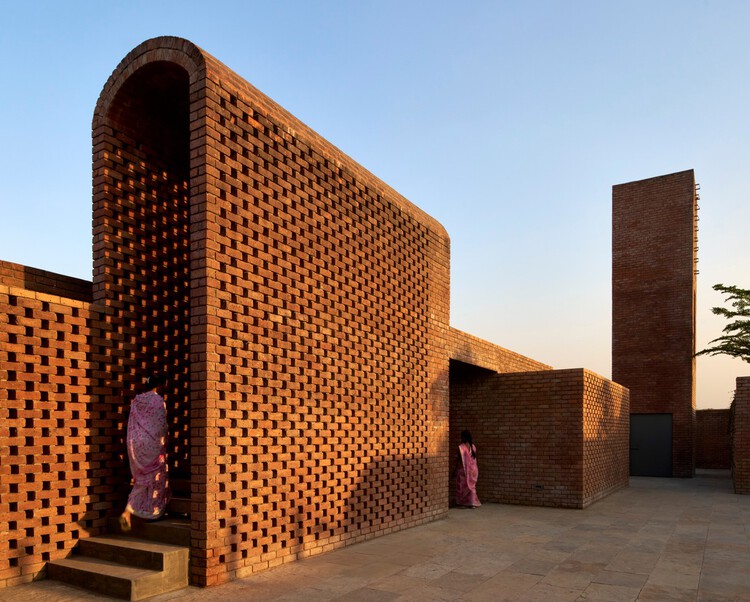
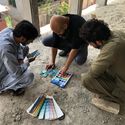
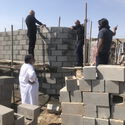
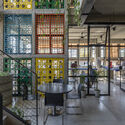
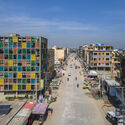
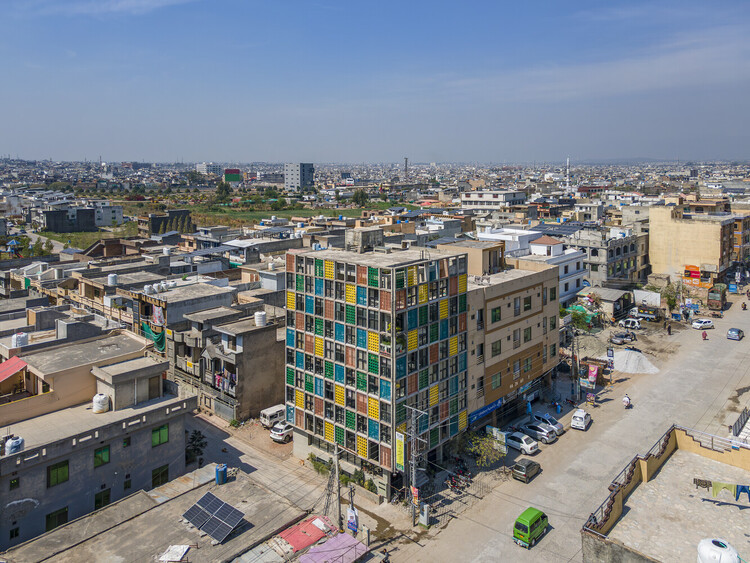
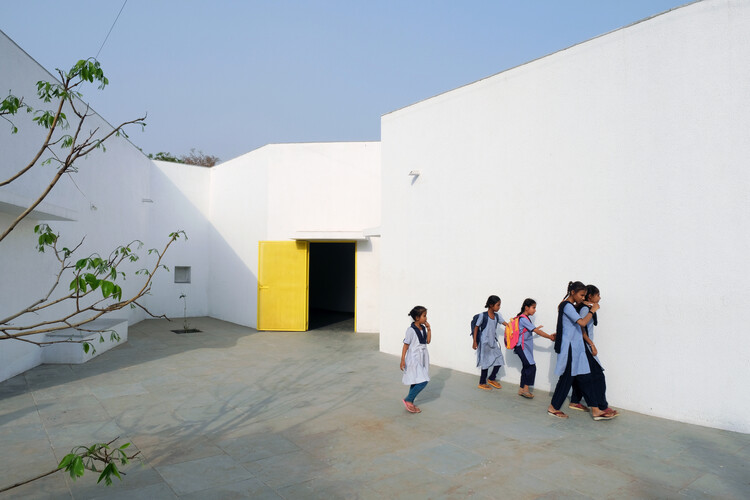
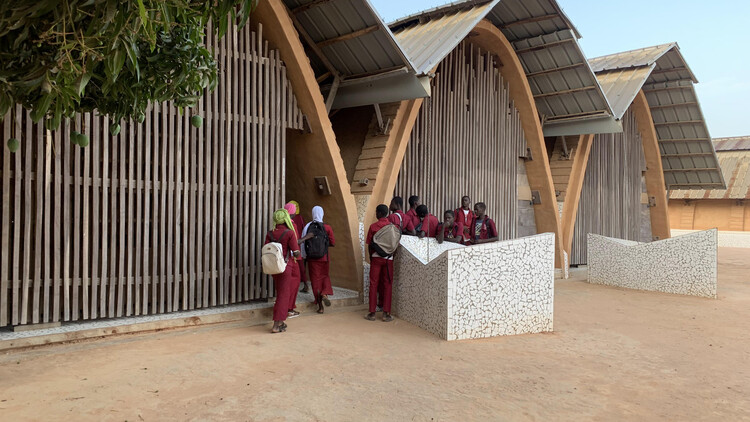
This position becomes especially evident in Vision Pakistan, a project by DB Studios recently recognized with the 2025 Aga Khan Award for Architecture. Beyond recognizing the project's architectural qualities, the award highlights a broader commitment: creating a supportive environment for underprivileged youth in which education, vocational training, and spatial design work together to foster independence and social mobility. Through its form, façade, and interior organization, the building responds closely to its context, reinforcing a sense of ownership among its users while fostering pride in the surrounding community and among emerging local practitioners.
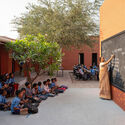
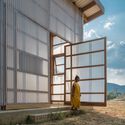
Founded in 2015 in Ahmedabad by Anand Sonecha, SEAlab is a practice shaped by a slow, contemplative engagement with place, proportion, and participation. Recognized as one of the winners of the ArchDaily 2025 Next Practices Awards, the studio builds with simple materials and local techniques, pursuing environments that are experienced as much as they are seen. This ethos became particularly tangible in Gandhinagar, where the School for Blind and Visually Impaired Children did not begin as a purpose-built institution. The school had been operating from an existing primary school building, with classrooms stacked above dormitories and twelve children sharing a single room. Space was limited, and so were growth opportunities. The new academic building was required to expand capacity, improve living conditions, and support greater student independence.
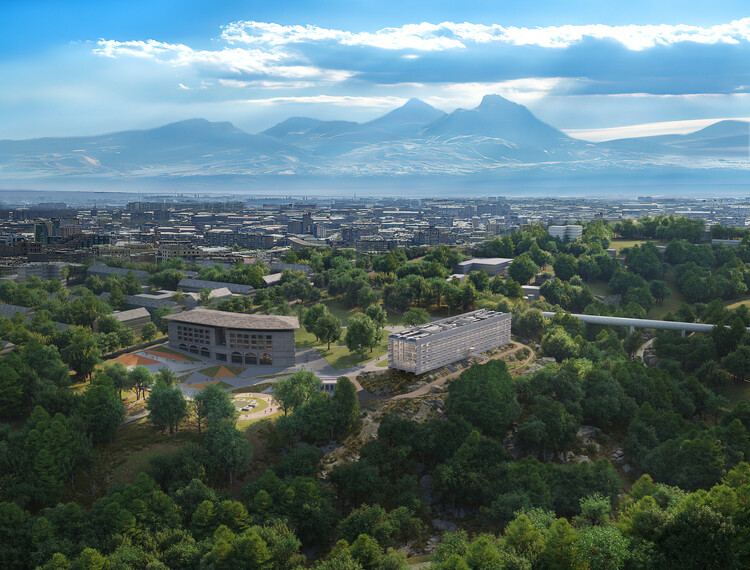
MVRDVhas started construction on the EU TUMO Convergence Center, a new educational and research facility in Yerevan, Armenia. Located in Tumanyan Park, the five-story building will expand TUMO's campus, providing spaces for free technology and creative education for teenagers and adults, alongside research and co-working areas for technology and design companies. Positioned on a hilly outcrop above the Hrazdan River Gorge, the project responds to the surrounding topography while establishing visual connections with the city, the gorge, and Mount Ararat. Construction officially commenced on 24 February, with local and international representatives in attendance.
Architecture is often evaluated through finished forms, yet some practices operate in a different register, one where design unfolds through relationships, time, and use rather than through a single outcome. For CatalyticAction, participation is not a parallel social activity, but the means through which spaces are conceived, constructed, and sustained over time.
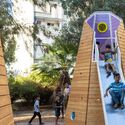
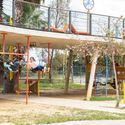
Based between Beirut and London, the practice has worked across the Middle East and Europe, developing public spaces, schools, playgrounds, and everyday urban infrastructures through long-term collaboration with local communities. Grounded in participatory research and collective decision-making, this approach was recognized through ArchDaily's 2025 Next Practices Awards, highlighting a mode of practice where architecture is understood as a shared, evolving process rather than a fixed object. In this context, architectural value is measured through continuity, use, and collective ownership, rather than through form alone.
Does design guide usage, or does usage guide design? Students struggle to maintain focus, employees flinch under harsh lighting, and occupants withdraw from rigid spaces, often in response to environmental conditions that only become visible once a space is occupied. Light falling across a room, the resonance of sound, the texture of surfaces, or the rhythm of circulation can support focus, calm, or inspire creativity, but each can also inadvertently heighten stress and distraction. Architects and designers are exploring and questioning: how are design decisions informed, and whose knowledge is considered essential in shaping space?
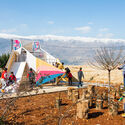
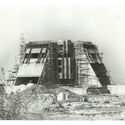
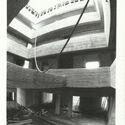
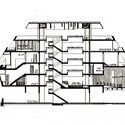
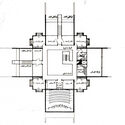
As Syria is emerging from over a decade of conflict at the time of writing, it is an opportunity to rediscover its architectural gems. Just to the north of the country's principal port city of Latakia is a Modernist creation that is the Center for Marine Research. Its pyramidal structure is situated on a prominent headland surrounded by sea on three sides. To the east is a bay with hotels and beaches while to the north and west is the open Mediterranean Sea reaching Turkey and Cyprus beyond. Despite its importance both as a research institution and as a piece of architecture, it lies abandoned and isolated today.
For over 125 years, Tarkett has been manufacturing linoleum flooring based on its original 1898 formulation. Trusted by architects worldwide, this natural floor covering is a benchmark in sustainability, durability, and timeless design. Today, Tarkett Linoleum is not only known for its heritage but also for its innovative application in modern architecture — particularly in the education sector. Learn more about the impact of Lino Materiale by Tarkett on today's spaces.
Aristotle is credited with the proverb "One swallow does not make a summer." In nature, the arrival of these migratory birds often announces the change of seasons, a universal symbol of renewal and hope. Yet it is only when many take flight that the true warmth of summer begins. The same can happen in architecture: an isolated project, however exemplary, rarely changes a reality on its own. When, however, a work teaches, inspires, and can be replicated, it becomes the harbinger of something greater.
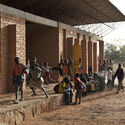
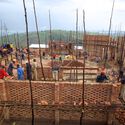
Initiatives that combine simple technologies, local materials, and participatory processes show how building can also be an act of learning. Structures and bricks shape places of mutual teaching, where architects and residents share knowledge and build together, multiplying skills and strengthening bonds. These projects point to the possibility of a collective summer, a future in which knowledge spreads as widely as the walls that shelter it.
Shenzhen is China's first Special Economic Zone(SEZ), serving as a window for China's Reform and Opening-up and an emerging immigrant city. It has evolved into an influential, modern, and international metropolis, creating the world-renowned "Shenzhen Speed" and earning the reputation of the "City of Design." Architectural design stands as the most intuitive expression of Shenzhen's spirit of integration and innovation. Over the past decade (2015-2025), the development of urban architecture in Shenzhen has closely integrated with its open and inclusive urban character, ecological advantages of being nestled between mountains and the sea, and the local spirit of blending traditional culture with innovative technology, showcasing Shenzhen's unique charm and robust vitality across multiple dimensions.
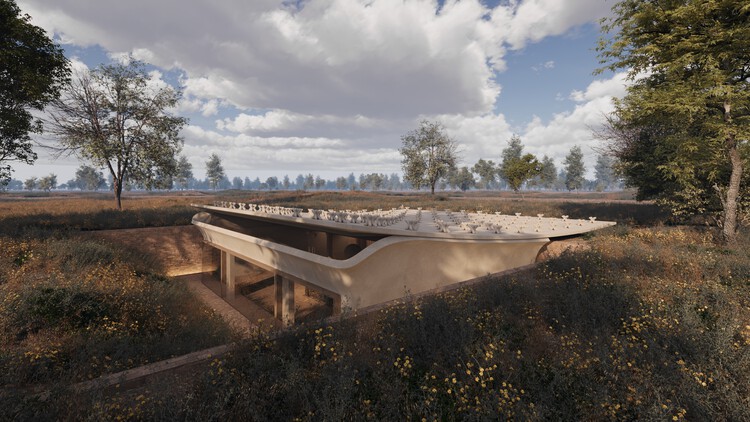
In today's world, learning is no longer confined to classrooms or defined by formal education alone, it happens everywhere, in many forms. From music halls and sensory libraries to neurodiversity training centers and public schools reimagined, the spaces that support learning are becoming just as varied as the ways we learn. This selection of unbuilt educational projects submitted by the ArchDaily community reflects that shift, exploring how architecture can embrace difference, nurture curiosity, and create environments that support a broad spectrum of cognitive, emotional, and social needs.
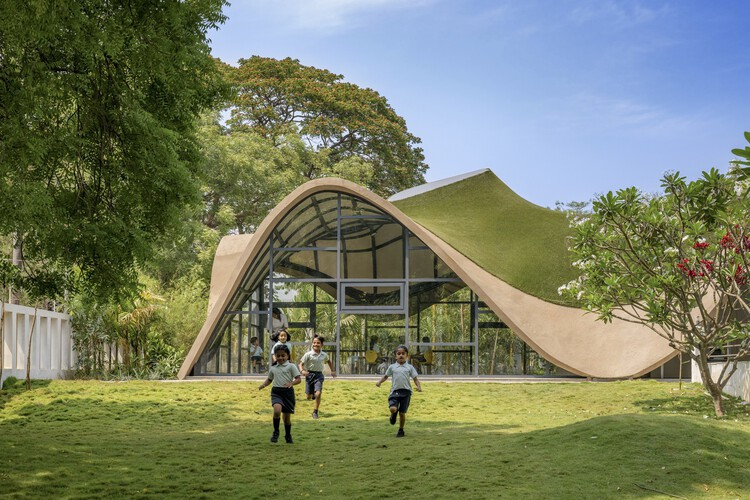
Kindergarten architecture has long stood apart as a realm where design and imagination converge. Unlike most building typologies, these spaces are conceived not only to shelter and function but to shape the earliest experiences of curiosity, play, and social interaction. Throughout history, the design of kindergartens has evolved alongside pedagogical shifts, moving from modest, utilitarian beginnings to highly intentional environments that stimulate both learning and wonder. In this context, architecture becomes more than a backdrop — it becomes a silent educator, capable of nurturing emotional, cognitive, and physical development.