In 1994, after the death of its main investor and a national banking crisis that left Venezuela's economy stagnated, the construction of Caracas' Centro Financiero Confinanzas - known popularly as the Tower of David - was paralyzed, leaving the building completely abandoned and on 70 percent complete.
Neglected for more than a decade, the 45-story, 190-meter-tall skyscraper became the makeshift home for a community of more than 800 families, becoming the world's tallest "vertically organized favela," with basic services to the 22nd floor and including even barber shops, kindergartens and dentists.
"An alternately factual documentary presented by nameless hosts Reggie Watts and Carolina Ravassa Brasilia takes viewers on a whirlwind tour of the famed capital of Brazil. In topics ranging from architecture, religious ceremonial practices, and spiritual conscious alignment, Reggie and Carolina traverse some of the world's most impossibly futuristic human landscapes, extolling earnest advice about the culture, practices, and habits of the Brasilienese people. With a synthesizer soundtrack from the late 60/early 70s, Brasilia exposes the unknown truths of this exotic utopian city nestled in the cradle of South America." - Film description courtesy of Reggie Watts via Indiewire.
Videos
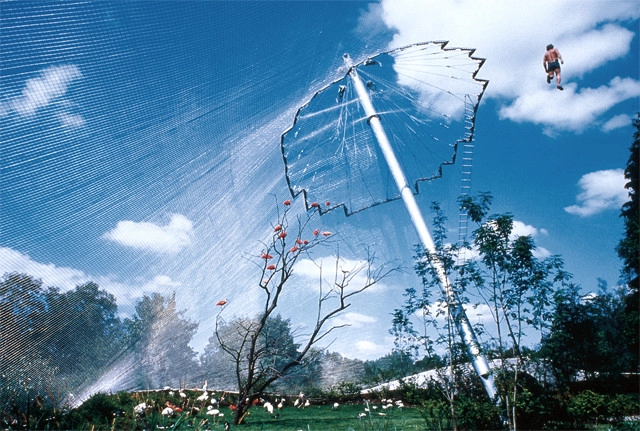
Aviary at the Munich Zoo. Image Courtesy of Atelier Frei Otto Warmbronn
“Frei Otto: Spanning the Future,” a documentary profiling the internationally renowned architect and engineer Frei Otto, has been in production since 2012. Otto, who was named the 2015 Pritzker Prize laureate on Tuesday evening (following his death on Monday night), first gained international recognition half a century ago as a pioneer in designing tensile structures using metal frames and lightweight membranes.
"I cannot, in whole conscience, recommend architecture as a profession for girls. I know some women who have done well at it, but the obstacles are so great that it takes an exceptional girl to make a go of it. If she insisted on becoming an architect, I would try to dissuade her. If then, she was still determined, I would give her my blessing–she could be that exceptional one." – Pietro Belluschi, FAIA from the 1955 New York Life Insurance Company brochure, “Should You Be an Architect?”
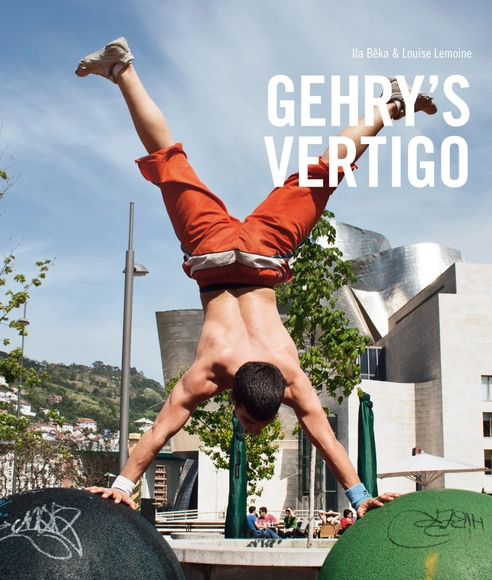
Selected as one of Metropolis Magazine's Game Changers for 2015, Ila Bêka and Louise Lemoine are altering the face of architectural criticism thanks to one simple premise: you don't need to be an expert to have an opinion on the buildings you live with every day. In the following profile, originally published by Metropolis as "Game Changers 2015: Ila Bêka and Louise Lemoine," Veronique Vienne uncovers what it takes to instil such a simple idea with both subtle poignancy and razor-sharp wit.
If walls could talk, what stories would they tell, not only about our intimate selves but also about our cultural assumptions, our social interactions, and the values we cherish most? Short of getting the inside story directly from walls, filmmakers Ila Bêka, 45, and Louise Lemoine, 33, strike up conversations with that other silent cast: the people who sweep the rooms, wash the windows, fix the leaks, and change the light bulbs.
“Our goal is to democratize the highbrow language of architectural criticism,” says Bêka, an architect and filmmaker trained in Italy and France. “Free speech on the topic of architecture is not the exclusive property of experts.”
Few remember the name Sérgio Bernardes. A prominent Brazilian architect in the 1960s, Bernardes was a contemporary of Oscar Niemeyer, renowned for his elegant upper-class houses, as well as his fondness for car-racing and womanizing. In the latter half of his career, Bernardes turned away from the decadence of high society, devoting himself to solving the world’s problems through his progressive strain of architecture. This devotion led him to partner with the Brazilian dictatorship, believing that he could reform the government from within. The result was a series of unsuccessful projects that left him unpopular and eventually ignored by the public. Now, a documentary about the rise and fall of this once-iconic architect has premiered this week in London. Titled Bernardes, and directed by Paulo de Barros and Gustavo Gama Rodrigues, the film explores the series of events that led Bernardes to anonymity.
Now, after 130 private screenings in 26 countries, you can watch the official world premiere of Archiculture here on ArchDaily. The 25-minute documentary captures a rare glimpse into studio-based design education, trailing five architecture students throughout their final thesis semester at Brooklyn’s Pratt Institute.
In 2011, China had more people living in urban areas than rural areas for the first time in its history, and recent government statistics show that around 300 villages disappear per day in China. Yet in the face of rapid urbanization, a “back to land movement” is now also emerging. A new mini-documentary by Sun Yunfan and Leah Thompson, Down to the Countryside, looks at urban residents who, fed up with city life, are looking to revitalize the countryside, while preserving local tradition. The documentary follows Ou Ning, an artist and curator, who moved from Beijing to the village of Bishan, in Anhui province, in 2013. Ning considers himself part of China’s “new rural reconstruction movement,” and the documentary shows his quest to develop the rural economy and bring arts and culture to the countryside.
In December of last year, we brought you news of Tomas Koolhaas' kickstarter campaign to fund a documentary about his father, Rem Koolhaas. Well, not only was Koolhaas' REM documentary fully funded, three generous backers offered up $500 each in return for one question to be answered directly by Rem Koolhaas himself. The video above is the result of those questions, in which Koolhaas responds to questions on urbanism in the developed country of the Netherlands compared to still-developing India, as well as a question about how his early work in film-making and scriptwriting influenced his architectural career.
Watch the video above and read on after the break for a synopsis of Koolhaas' answers
When we evaluate the work of architects and other designers, we often treat it as if the design was created in a vacuum. It's easy to forget that the vast majority of designs emerge from a collaboration between the designer and their client, and when it comes to the design's success the input of the client can often be as important as the work of the designer. This creative relationship can be a difficult one to navigate, yet it is usually held together by a single document: the brief.
Released today, this half-hour documentary by director Tom Bassett entitled Brieflytakes a long hard look at the brief, with architects Frank Gehry and David Rockwell, industrial designer Yves Béhar, illustrator and author Maira Kalman, marketing executive John C Jay and creative executive John Boiler all pitching in their experience with creative briefs, and recounting stories where, for better or for worse, the brief had a major effect on their work.
As summer draws to an end and we enter into the last quarter of 2014, we decided to round-up a selection of the most useful articles we've published over the past three years. Ranging from The 40 Architecture Documentaries to Watch in 2014 to The 10 Most Overlooked Women in Architectural History, we've also brought together app guides, career tips, and city guides. Alongside links to open-source CAD files and cut-out people, we've also featured book recommendations, study tips, and links to our complete coverage of some of the world's major architectural events and prizes. Delve into our collection and discover what our readers have found most useful!
How can the city be reinvented to save the world? Chinese business magnate Zhang Yue and Finnish professor Eero Paloheimo are two men with very contrasting answers to this loaded question. Zhang Yue's answer puts trust in pre-fabricated, high-density vertical development, whereas Paloheimo envisions a built-from-scratch, clean-tech sprawling utopia. Their grand ideas, met with both skepticism and excitement, are documented in a new film by Anna-Karin Grönroos. To watch the trailer and learn more about the bold proposals, continue after the break.
Twenty years ago, one of the world’s most unusual and unexpected pieces of architecture was razed to the ground: Hong Kong’s Kowloon Walled City, the most densely populated area on earth. Squalid, dark, and labyrinthine, the informal city was not only a hotbed for organized crime, but also a vibrant community of commerce and hope. Now, the Wall Street Journal has released this short documentary, bringing the city back to life and revealing why it holds a special place in world culture today.
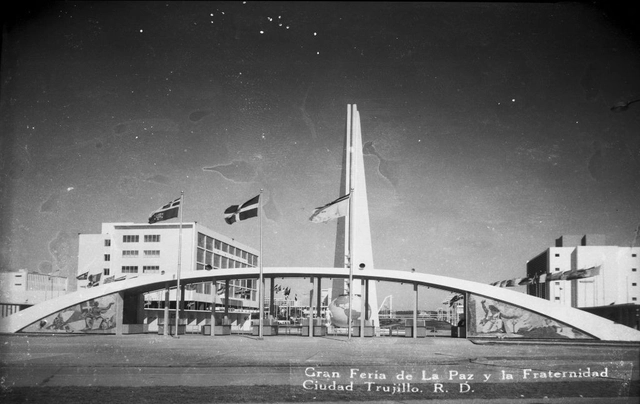
Alysa Nahmias and Benjamin Murray’s Unfinished Spaces has been awarded the 2014 Society of Architectural Historian’s (SAH) Award for Film and Video, an award presented annually to the “most distinguished work of film on the history of the built environment.” Initially released in 2011, the critically acclaimed documentary reveals the turbulent past of Fidel Castro’s Cuba and tells the story of his utopian dream to construct the Cuban National Arts Schools. You can learn more about the film here, and the school’s history, here.
If You Build It is a documentary following the story of high school students in Windsor, a small and downtrodden rural town in Bertie County, North Carolina. In this setting, architects Emily Pilloton and Matt Miller started Project H, an educational initiative designed to not only improve the education of these disadvantaged young people, but also to reach out to the wider community and make real change.
Read on for more about Project H and the If You Build It documentary
In an hour long documentary for PBS, Geoffrey Baer tours the USA in search of the ten buildings that "changed America." From a state capitol designed by Thomas Jefferson to resemble a Roman temple to Henry Ford's factory that first saw the Model T enter production, the film explores the "shocking, funny, and even sad stories of how these buildings were created." Investigating places of worship, shopping malls, concert halls and skyscrapers this film is tipped as "a journey inside the imaginations of the daring architects who set out to change the way we live, work, and play."
Los Angeles-based cinematographer Tomas Koolhaas is nearing completion of his highly anticipated film, REM. The feature length documentary, which focuses on the work of Tomas’ famed father, Rem Koolhaas, is the first architectural film to “comprehensively explore the human conditions in and around Rem Koolhaas' buildings from a ground level perspective.” Rather than lifeless still shots and long-winded, intellectual discourse, REM exposes the one thing that gives each building function and purpose: how it is used by people.
So far, REM has been funded entirely by grants. However, in order for Tomas to collect the necessary funds to complete post-production, he has turned to you by launching a Kickstarter campaign.
Watch REM's official trailer above, which follows a parkour expert as he moves through the Casa De Musica in Porto, and follow us after the break for Tomas’ exclusive interview with Kanye West, who comments on his work with OMA at the 2012 Cannes film festival.