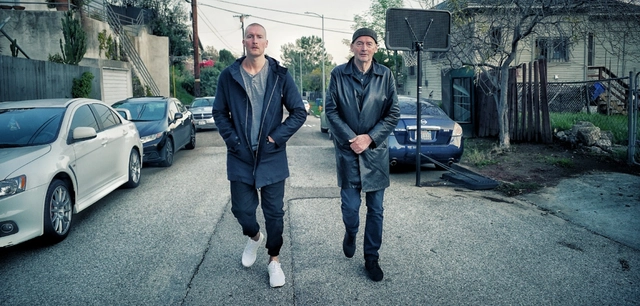
ArchDaily had the chance to catch Rem Koolhaas and his son, Tomas Koolhaas, together, when they met for a weekend in Los Angeles. In their first ever interview together, following the release of “REM” online, we spoke with the pair about the documentary that was four years in the making. The film had Tomas following his father from the desert to the ocean to the 2014 Venice Biennale, as well as inside several OMA projects around the world, like the Seattle Central Library in America and Maison à Bordeaux in France.
The pair reveal what their father-son relationship is like, how the profession of architecture and filmmaking inform each other, and shine a light on the challenges of filming a well-known family member. Work aside, what came across the most strongly throughout the conversation was the respect they had for each other’s craft, and their gratitude for the chance to work so intimately as father and son.
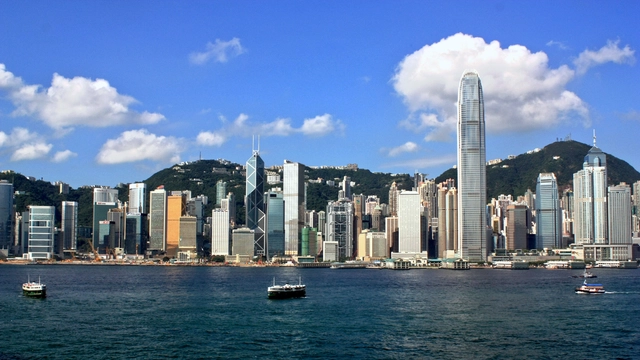
Hong Kong is a unique city. With its unlikely history as a British Colony, its position as a global hub city, and its spectacular geography, the dense, lively streets of Hong Kong feature a variety of urban phenomena that can't be found anywhere else in the world. In this series of video essays, New Office Works probes the urban character of Hong Kong with stunning depth, uncovering histories and explanations that bring new intrigue to an urban fabric that is, both literally and figuratively, already heavily layered.
The title of the series, Middle Man, references Hong Kong's status as a city that mediates between east and west, calling back to the "compradors" that helped the city to grow in the 19th century by translating for traders—middlemen in the most literal sense. Rooted in this history, the urban environment is not one built on grand schemes or overarching ideals, says New Office Works: "The combination of a growing population and limited land has cultivated an instant-fix mentality. There is neither time nor space for architectural ideologies, only pure pragmatism."
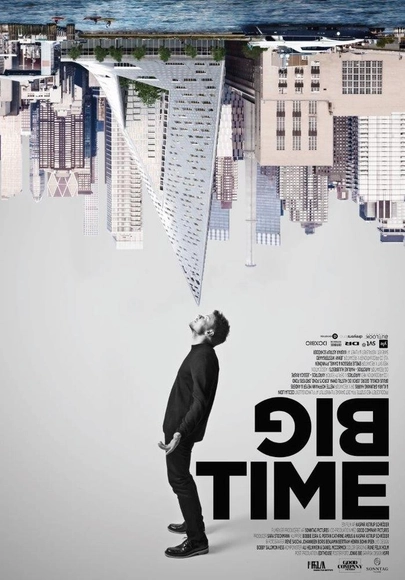
What if the one thing that makes BIG "BIG" was suddenly stripped away right at the apex of its potential? That's the question posed by the trailer for Kaspar Astrup Schrøder’s documentary BIG TIME, which ominously illustrated a possible problem with Bjarke Ingels’ health.
Schrøder's documentary highlights the intense journey of Bjarke Ingels, the founder of Bjarke Ingels Group, through the past few years of his life. This unique insight into what exactly it's like to be an architect on top of the world ultimately poses a question that needs to be answered by anyone seeking to reshape the world through design. How do you handle the responsibility of forming the future you want to live in?
Balkrishna Doshi, despite his vast number of completed projects, is a little-known name in the Western world. Directed by Premjit Ramachandran, the documentary "Doshi" allows the viewer to appreciate the vision of this important Indian architect, probing his thoughts while getting to know a number of his projects. Filmed in a frank style of conversation, the documentary reveals an original and creative human being who, even in old age, remains passionate about architecture as well as life and learning.
The film becomes a roundtable with Doshi, his alumni, his contemporaries and even family members, all within the context of his architecture. The camera follows its protagonist through spaces designed by him, while he narrates, recalls and explains his processes of creation. It also reveals how he makes his philosophy an intrinsic part of his own life.
https://www.archdaily.com/890243/doshi-documentary-explores-pritzker-prize-winning-career-modern-indian-architectAD Editorial Team
Following the evolution of architecture in Tuscany, this documentary maps out the decline of the region in the shadow of Brunelleschi and Alberti. From the 14th century onwards, Italy underwent a cultural rebirth that changed the entire world, bearing the architectural mastery of the Renaissance. However now, there appears to be a detachment within modern architecture and little work for the many architects who are being forced to emigrate.
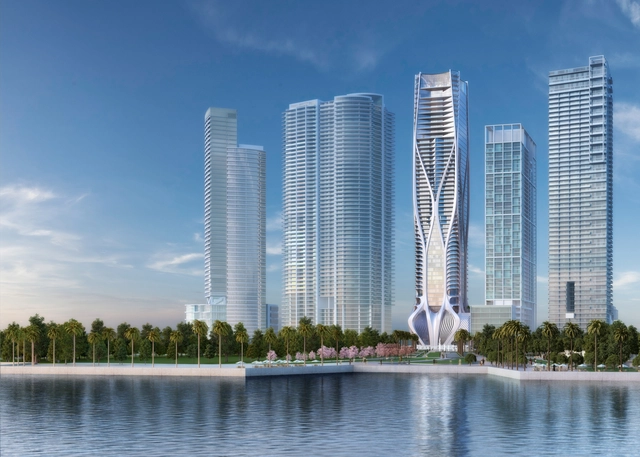
The building was the subject of the season premier of "Impossible Builds," which profiles "the creation of some of the world’s most ambitious, complex and technologically advanced construction projects."
Described by the show as "one of the most complex skyscrapers ever to make it off the drawing board," the 62-story tower features a unique glass fiber reinforced concrete exoskeleton – a system never before seen at this scale.
The show is now available to watch in its entirety online. Check it out below!
In the midst of the tall, rectilinear skyscrapers which make up downtown Chicago appears a short, sloped glass curtain wall, topped by a protruding truncated cylinder structure: Helmut Jahn’s Thompson Center. Opened in 1985, the building was to be home for a variety of agencies of the State of Illinois, and its design was a play off of the traditional American statehouse, updated with glass walls symbolizing government transparency and an immense atrium evoking the atrium spaces found in most United States’ statehouses. The interior spaces, however, stirred further contention with the public. Unconventional red, blue, and white paints coat the interior elements—a design choice many believed to be provocative and even jarring.
Videos
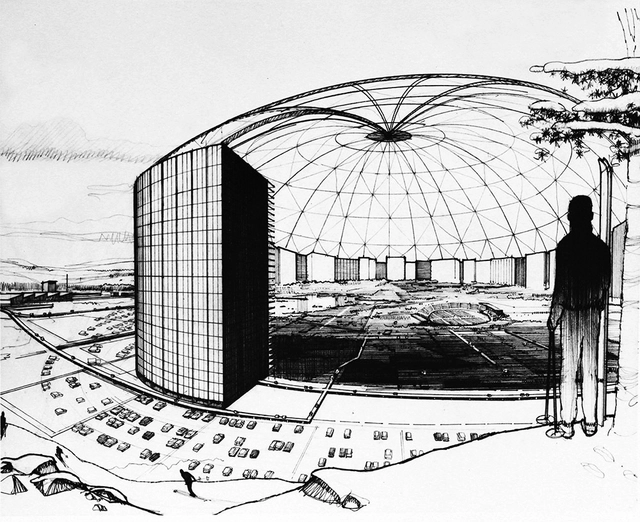
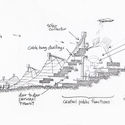
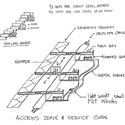
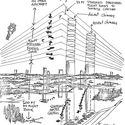
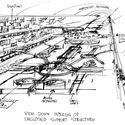
Conceptual drawing of MXC’s primary domed enclosure, proposed to be a mile wide in early discussions, but eventually scaled back. Image Courtesy of The Experimental City Documentary
The Minnesota Experimental City (MXC)—a utopian plan for the city of the future that was decades ahead of its time, and yet is surprisingly little-known—was the brainchild of the urban planner and technocrat Athelstan Spilhaus. Spilhaus was a man who saw science as the solution to the problems of the world, and became a public figure presenting his ideas of utopia in everyday life through his comic strip "Our New Age." During the mid-1960s, he conceived an ambitious plan to condense his ideas into a prototype for future cities that would be both noiseless and fumeless, accommodating America's growing population and their by-products.
A new documentary,The Experimental City, explores the development, and ultimately, failure of the MXC's vision for future settlements. Using retro film clips, it takes us back in time to a period where Spilhaus' predictions of computers that can fit into your home and remote banking appeared more of a fantasy than reality. The film is directed by Chad Freidrichs (known also for his 2011 film The Pruitt-Igoe Myth) and was premiered at the Chicago Film Festival, in conjunction with the Chicago Architecture Biennial. Several further screenings will be taking place across the country, including at DOC NYC on November 16th.
In this film produced by Vice, Eyal Weizman—director of London-based research agency Forensic Architecture—explains how his team have developed methods of investigating bombings in areas of conflict across the globe. Using cellphone footage, examining floor plans, and utilising road maps, Weizman brings together scientists, journalists, and graphic designers in order "to analyze destroyed buildings for evidence of human rights abuses."
https://www.archdaily.com/877388/watch-eyal-weizman-explain-forensic-architectures-pioneering-investigatory-methodsAD Editorial Team
With construction now well underway on One Thousand Museum in Miami, one of Zaha Hadid's largest projects to be completed posthumously, Curbed has reported that the 62-story tower will be the subject of an upcoming Discovery/PBS documentary covering the creation of complex structures from around the world. Titled “Impossible Builds,” the program will highlight the building’s unique glass fiber reinforced concrete exoskeleton.
There is something unsettling about this trailer – something uncomfortable. On the surface it’s as optimistic as any other film about Bjarke Ingels, the architectural protege and principal of BIG, of which there have been many. He is incandescently youthful, remarkably young when tallied to the level of his repute and success, and perhaps the last of the world-building, world conquering 'media darlings' of the 20th and 21st Centuries. He is, many would argue, an unstoppable force.
https://www.archdaily.com/868779/watch-the-cryptic-trailer-for-new-bjarke-ingels-documentary-big-timeAD Editorial Team
IFC has announced the release of their latest documentary, Citizen Jane: Battle for the City, which will dive into “the enduring legacies of one of the most prominent figures of modern urban planning, Jane Jacobs, and talks about her David-Goliath fight to save NYC.”
Humor is a very rare quality in architecture, most architects are too serious -Andreas Ruby, director of the Swiss Architecture Museum S AM, Basel
Since its founding in 1996, Slovenia architecture firm Sadar+Vuga has grown to become one of their country’s most influential architectural forces, with a range of projects covering interior design, to stadiums, to city master plans. In a new documentary by director Damjan Kozole, the firm’s history is being archived for the first time.
On February 10 2017, Netflix will launch a new documentary series—Abstract: The Art of Design—which will present "the most creative designers" from various fields in the design word, with the aim of demonstrating how design influences all aspects of our lives. One of the eight protagonists in the spotlight will be Danish architect Bjarke Ingels, of BIG, who will present his vision of architecture alongside professionals in interior design, graphic design, automotive design, illustration, and set design.
Check out the series feature designers after the break:
Update: following the screening period The Infinite Happiness is no longer available to watch on ArchDaily. The full collection of Bêka and Lemoine's films can be viewed on demand, here.
For two days only—between Friday, December 2 and Sunday, December 4—you can watch The InfiniteHappiness, part of Ila Bêka and Louise Lemoine'sLiving Architectures series, exclusively on ArchDaily. The film, shot entirely in Copenhagen's "8 House" designed by BIG, follows a group of residents (and passers-by) as they experience life in a contemporary housing block widely considered to embody new models of living.
https://www.archdaily.com/800425/watch-beka-and-lemoines-the-infinite-happiness-nil-a-documentary-film-on-bigs-8-houseAD Editorial Team
Update: Unfortunately this free online viewing was only intended for a limited time and National Geographic has now removed the video. If you didn't catch the documentary in time, you can still watch it on DVD. In place of the full documentary, we have now included the trailer above.
As a group, architects are without question among the most enthusiastic supporters of sustainable initiatives around. It should therefore be welcome news to many architects that National Geographic has released its latest documentary on climate change, Before the Flood, for free on Youtube, Facebook, Twitter—pretty much everywhere.
Presented by Hollywood superstar and recently-appointed UN Climate Ambassador Leonardo DiCaprio, the documentary is perhaps the most ambitious film about climate change since Al Gore's 2006 An Inconvenient Truth. Throughout the course of the 90-minute film, DiCaprio travels the globe to see the damage wrought by the early signs of irreversible climate change, from melting glaciers, to dying coral reefs, to flooding cities. Speaking to world leaders including Barack Obama and The Pope, as well as a whole host of climate scientists, DiCaprio's aim is not so much to convince viewers of the existence of climate change, as with An Inconvenient Truth, but instead to investigate just how far down the wrong path we've traveled, and whether there is any hope for humanity to save itself.