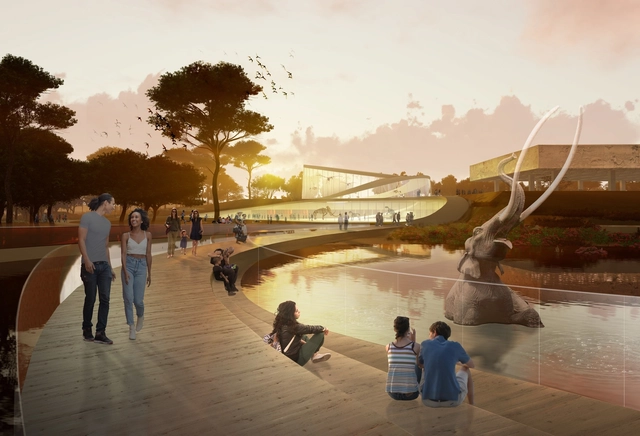
The Natural History Museums of Los Angeles County (NHMLAC) have unveiled three new concepts for a master plan of the La Brea Tar Pits. The proposals were designed to improve the entire 12-acre site, which has not been renovated or considered comprehensively since it opened more than forty years ago. The three proposals were made by Dorte Mandrup, Diller Scofidio + Renfro and WEISS/MANFREDI. The concepts aim to create a more integrated experience of the museum and the landscape in Hancock Park.
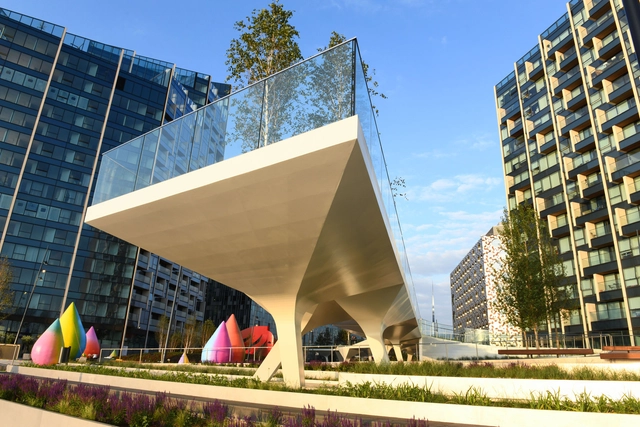
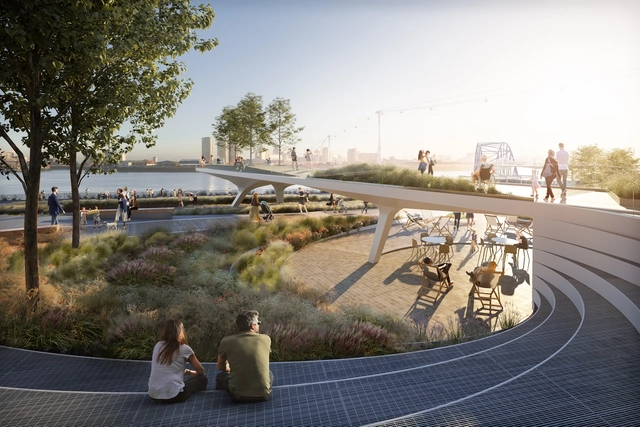
The initial phase of London’s first linear culture park has opened to the public along the Thames. Designed by Diller Scofidio + Renfro and Neiheiser Argyros, the project is sited on the Greenwich Peninsula as a new outdoor destination for the city. Called The Tide, the park offers free-to-view public art by emerging and world-renowned artists and includes a landscaped route for running, walking and meditation that is freely accessible to all.
The inaugural SAH Change Agent Award will be presented to the partners of the New York architecture firm Diller, Scofidio + Renfro: Elizabeth Diller, Ricardo Scofidio, Charles Renfro and Benjamin Gilmartin, at a reception at the Century Club in midtown Manhattan.
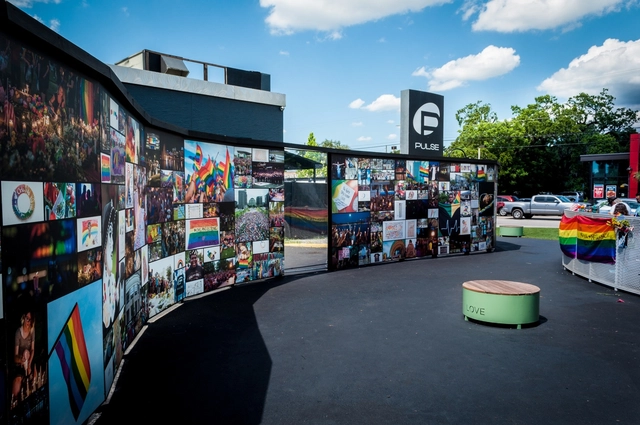
The shortlist has been announced for the design of the National Pulse Memorial & Museum in Orlando, Florida, honoring the 49 people killed during the Pulse nightclub shooting on June 12th, 2016. Established by Dovetail Design Strategists for the onePULSE Foundation, the open, two-stage international competition seeks to honor those killed while also supporting the families, survivors, and first responders.
https://www.archdaily.com/918366/high-profile-architects-shortlisted-for-pulse-nightclub-shooting-memorialNiall Patrick Walsh
Designed by Diller Scofidio + Renfro, the new linear park running along the river Thames is opening its doors on Greenwich Peninsula, London, this July. In collaboration with Neiheiser Argyros, the New York-based office has created the next culture and leisure destination in the UK's capital, offering an evolving collection of free-to-view public art by emerging and world-renowned artists along a landscaped route for running, walking and meditation. The 5 kilometers-long landscape features 9 meters-high elevated walkways flowing through trees and giant sculptures.
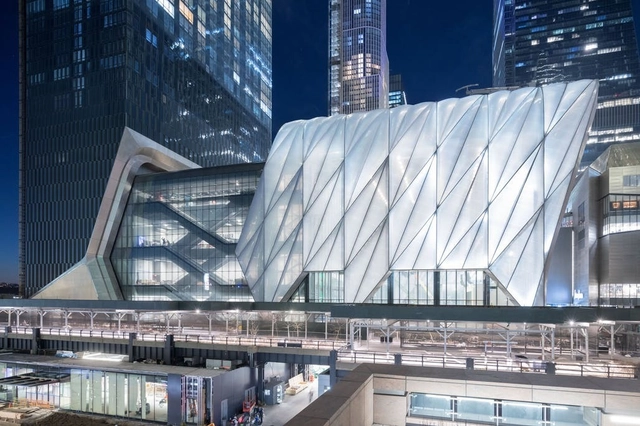
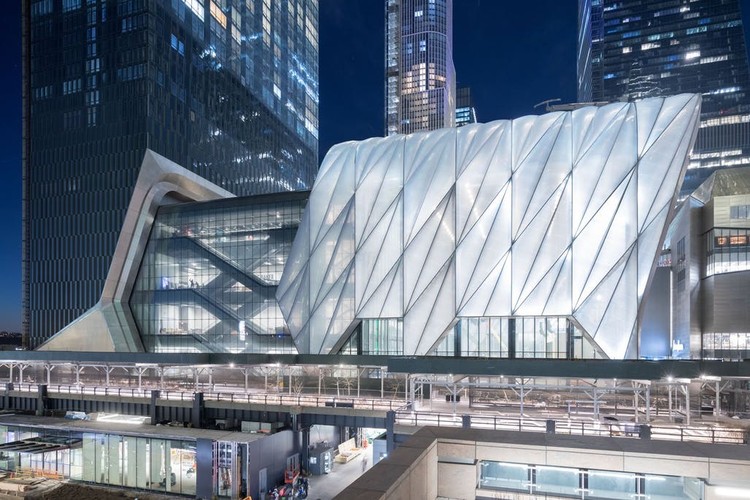
Diller Scofidio + Renfro and Rockwell Group's iconic Shed has opened after more than a decade in the making in New York City. The building features a 120-foot telescopic shell in Hudson Yards that can extend out from the base building when needed for larger performances. Clad in ethylene tetrafluoroethylene (ETFE) “pillows,” the project is connected to the High Line on 30th Street to bring performances and art to the city's newest neighborhood,
New York City’s Hudson Yards has opened its doors to the public, and the reviews are flooding in. Built on Midtown Manhattan’s West Side, the project is New York’s largest development to date and the largest private real estate venture in American history, covering almost 14 acres of land with residential towers, offices, plazas, shopping centers, and restaurants. A host of architecture firms have shaped the development, including BIG, SOM, Diller Scofidio + Renfro, Rockwell Group, and many others.
Read on to find out how critics have responded to Hudson Yards so far.
Hungarian Museum of Transport. Image Courtesy of Diller Scofidio + Renfro
Architecture and design practice Diller Scofidio + Renfro have been selected to design the Hungarian Museum of Transport in Budapest. As the new home for one of the oldest transport museums in Europe, the project will be sited in a former railway yard. The project uses the idea of ground transportation as a central organizing principle, highlighting the central role of the ground in urban planning and infrastructure. The design de-familiarizes ground by excavating, lifting, and cutting to produce unexpected environments.
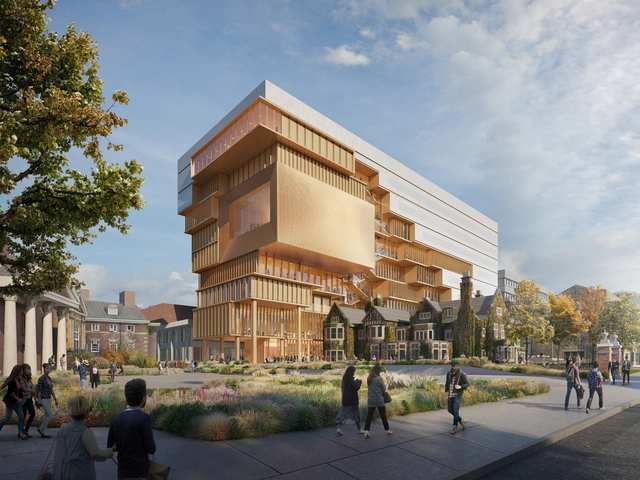
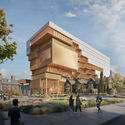
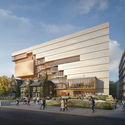
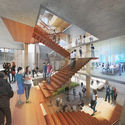
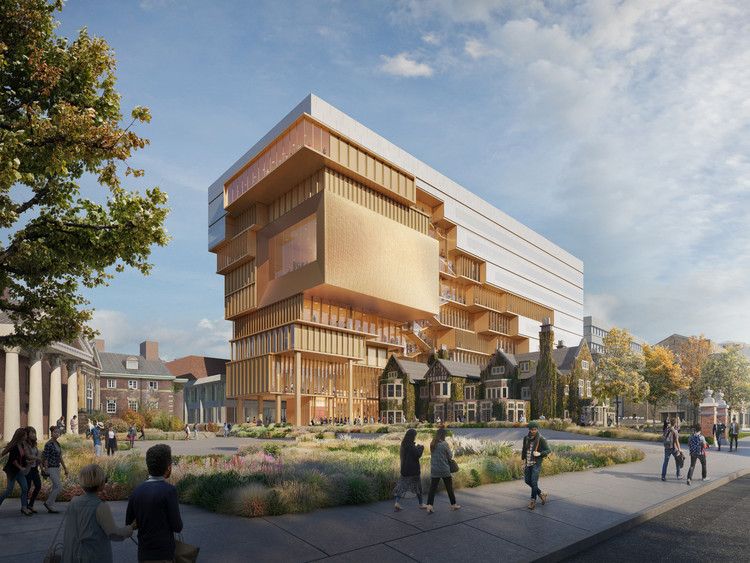
Diller Scofidio + Renfro have revealed the design for 90 Queen’s Park, a new education and cultural building for the University of Toronto in Canada. The project will combine a range of classrooms and public spaces to house the University of Toronto's School of Cities for its urban-focused research, educational and outreach initiatives. The nine-story building will become a new gateway to the campus with views across the Toronto skyline.
There’s something striking about the command center of America’s largest private real estate development, Hudson Yards, in that it’s actually pretty boring. The room—technically known as the Energy Control Center, or ECC for short—contains two long desks crammed with desktop computers, a few TV monitors plastered to the wall, and a corkboard lined with employee badges. The ceiling is paneled; the lighting, fluorescent. However, New York’s Hudson Yards was once billed as the country’s first “quantified community”: A network of sensors would collect data on air quality, noise levels, temperature, and pedestrian traffic. This would create a feedback loop for the developers, helping them monitor and improve quality of life. So where is the NASA-like mission control? Data collection and advanced infrastructure will still drive parts of Hudson Yards’ operations, but not (yet) as first advertised.
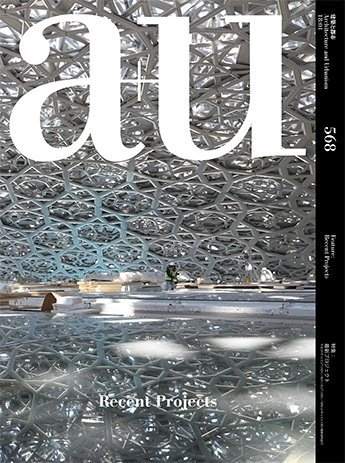
This edition of a+u introduces the 23 recent works of architecture and technology that emerged from their relationship with the urban structure or the development history. In this issue, we focus our attention on the process of conceiving and realizing the projects driven by various motivations and tactics. We invite readers to look beyond the confinement of a single building and examine the works on their possibilities to be in use for a long time.
For those in the northern hemisphere, the last full week in January last week kicks off with Blue Monday - the day claimed to be the most depressing of the year. Weather is bleak, sunsets are early, resolutions are broken, and there’s only the vaguest glimpse of a holiday on the horizon. It’s perhaps this miserable context that is making the field seem extra productive, with a spate of new projects, toppings out and, completions announced this week.
The week of 21 January 2019 in review, after the break:
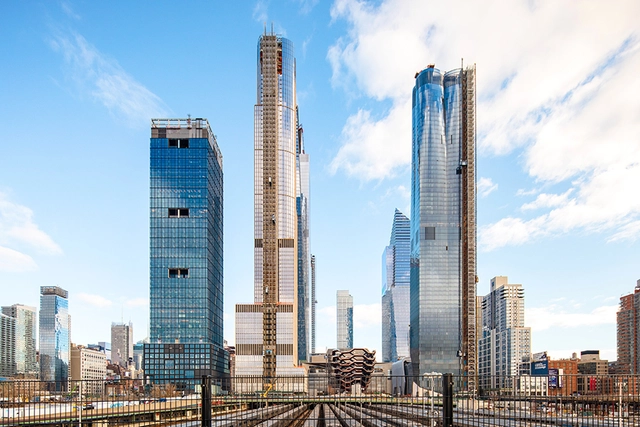
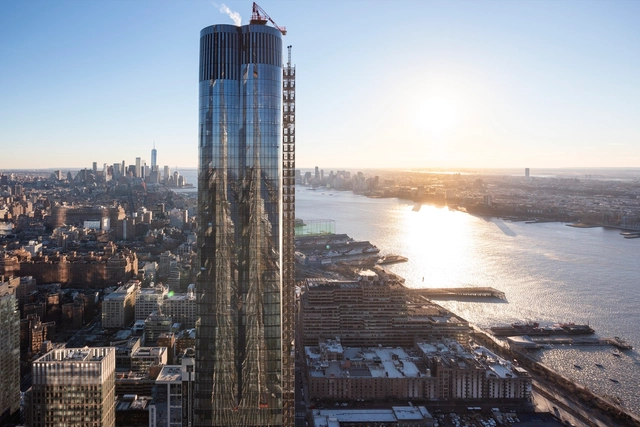
Construction has completed on Diller Scofidio + Renfro (Lead Architect) and Rockwell Group's (Lead Interior Architect) 15 Hudson Yards, an 88-story skyscraper marking the first residential project in the Manhattan masterplan. The scheme is now open with 60% of residential units already sold, totaling over $800 million in sales.
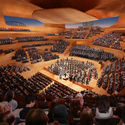
Concept Design: Centre for Music. Image Courtesy of Diller Scofidio + Renfro
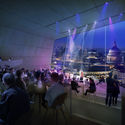
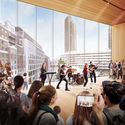
Diller Scofidio + Renfro have revealed the design for the new London Centre for Music. Made for The Barbican, London Symphony Orchestra and Guildhall School of Music & Drama, the first concept designs were released as part of a progress update on plan for the new proposed building. Made to be a world class center for music in London, the design would create an iconic new gateway to the City of London’s emerging Culture Mile.
The Spur & The Plinth. Image Courtesy of James Corner Field Operations and Diller Scofidio + Renfro
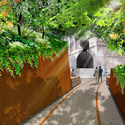
Next year New York's iconic High Line will open a new public space for art designed by James Corner Field Operations and Diller Scofidio + Renfro, with artwork by Simone Leigh. The public space will be the newest section of the elevated park dedicated to a rotating series of contemporary art commissions. The first art project in the space will be Brick House, a sixteen-foot-tall bronze bust of a black woman by Brooklyn’s Simone Leigh.
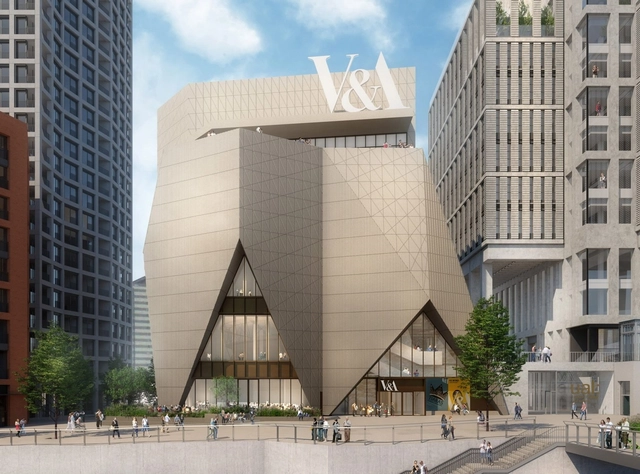
V&A East Museum. Image Courtesy of O'Donnell + Tuomey
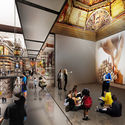
London's V&A has revealed new images and information about V&A East, a museum by O'Donnell + Tuomey and research center by Diller Scofidio + Renfro. Sited within London's Queen Elizabeth Olympic Park, the projects will be built at the Here East complex and Stratford Waterfront. The V&A have stated that the museum will include two galleries to showcase the collections, while the research center aims to be a new model for collection storage and public display.
Architecture is a profession deeply dependent on the visual. It’s imagined, sold, critiqued and consumed almost entirely on the strength (or lack thereof) of drawings. We pick and prod at images presented at angles we’ll never be able to see, admiring the architectonic qualities of elements we’ll never actually experience.
https://www.archdaily.com/904318/this-week-in-architecture-more-than-visualKatherine Allen
What comes to mind when you encounter the term “sensory design”? Chances are it is an image: a rain room, a funky eating utensil, a conspicuously textured chair. But the way things actually feel, smell, even taste, is much harder to capture. This difficulty points to how deeply ingrained the tyranny of vision is. Might the other senses be the keys to unlocking broader empirical truths? Does the ocular-centric bias of art, architecture, and design actually preclude a deeper collective experience?