To talk about architecture and construction without ever mentioning cost overruns is not an easy thing to do. These kind of unforeseen problems happen in the majority of projects, as the dynamics of architecture and construction are extremely complex and often present challenges that aren't 100% controllable. Over the years, project management consultants have been integrating cost management into their services, making an effort to fill this market gap with a proper solution. Still, most of this work is performed by consultants with a financial background and little knowledge of architecture and construction solutions and processes.
With this increased attention to budgetary issues, the cost performance of projects has been steadily improving, but usually at the expense of the project’s aesthetic concept and final quality. Would it be possible to put architects in control of this kind of management? After all, they’re the ones with the conceptual sensibility and the technical knowledge necessary to perform this work in a truly integrated way.
Twenty-four teams from Washington, DC-based architecture and design firms participated in CanstructionDC 2015 at the National Building Museum, building transportation-themed sculptures out of canned food. At the end of the display, the sculptures will be dismantled and the food will be donated to local hunger relief organizations. Watch the sculptures come together, including a Mayflower bean soup ship and a full-scale smart car, in the timelapse video above. Learn more on the National Building Museum website.
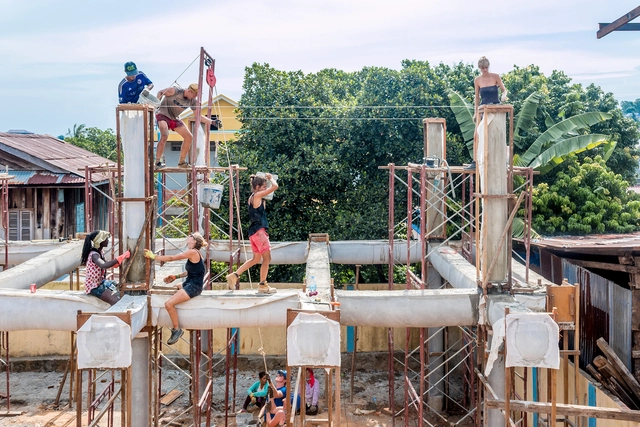
Using an innovative method of casting concrete in lightweight fabric molds, the architects of Orkidstudio -- along with StructureMode -- teamed up with a group of Khmer women in Sihanoukville, Cambodia to rebuild a community centre in the city’s urban heart.
The construction technique was developed and tested by engineers from StructureMode using a combination of physical testing and computer analysis software, Oasys GSA Suite, to predict the stretch of a particular fabric when concrete is poured inside. Through three-dimensional sketches the seamstresses and building teamcould understand the construction sequence of the form, completing the entire project in just eight weeks.
MTC : March 22–24, 2016 · Portland, OR - Expert speakers from around the world will address how to advance cross-laminated timber and mass timber industry in North America, & how to increase wood in low- to mid-rise and tall buildings.
A lineup of expert speakers from around the world will address how we can advance cross-laminated timber and the mass timber industry in North America, and how we can increase the use of wood in low- to mid-rise and tall buildings.
Explore current opportunities and obstacles for cross-laminated timber, nail-laminated timber, glulam panels, laminated veneer lumber, and other mass timber construction in North America and how to execute projects today.
BIG’s first foray into North America, the West 57th Street (W57) Building in New York is approaching completion. After initial releases of renderings, and photographs taken two months after topping out, a new video has surfaced, exhibiting the gradual realization of the firm’s vision. This 32-story tower with 709 apartment units combines a courtyard block and a skyscraper, affectionately dubbed a “courtscraper” by its designer. Reacting to an unorthodox, thin plot of land, the building generates its geometry from a combination of providing natural light, views to the Hudson River and maximizing living space for residents. From one angle, its almost pyramidal structure is clear, and from another, it appears to be glass spire. See the most recent developments in this new video.
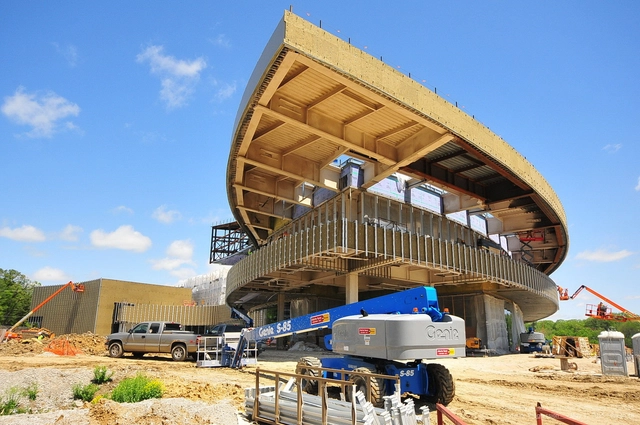
Hancher Under Construction. Image Courtesy of Pelli Clarke Pelli Architects
US firm Pelli Clarke Pelli Architects is renowned for their iconic and sustainable designs, having won numerous awards, including the AIA’sFirm Award. They currently have several projects under construction, ranging from a transit center in San Francisco to an office and retail tower in Seville, Spain. Read on after the break for an overview of three of their current projects, all in various states of completion.
A new study shows that timber buildings can be up to 10-15% cheaper to construct than traditional designs in several different building types. The study, “Commercial Building Costing Case Studies – Traditional Design versus Timber Project,” was led by Andrew Dunn, chief executive of the Timber Development Association (TDA) in Australia. Part of a seminar series touring Australia, the report contains detailed designs of four building types in both timber and conventional construction, with a quantity surveyor comparing cost estimates between them. See how timber compared to conventional methods after the break.
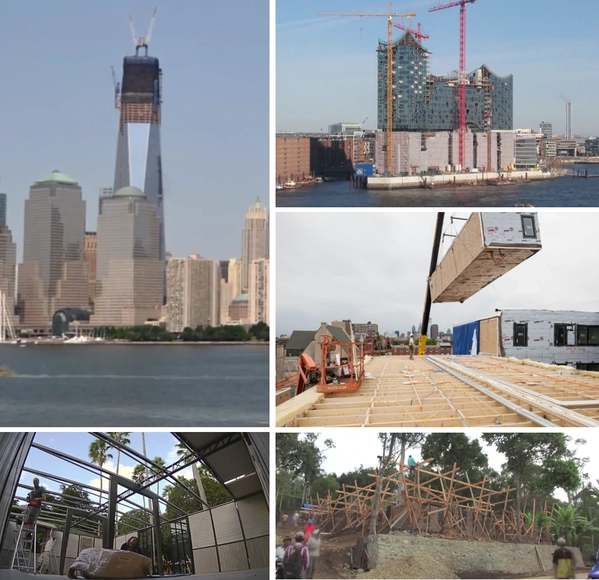
Designers are trained to consider the context for a finished building, but often neglect to consider the construction phase. When architecture is primarily judged based on the impacts it has on their surroundings once they are built, what can be learned from the process of building? The time-lapse is a method that can help architects to do just that, as it can capture years of complex development in a matter of minutes. This can uncover patterns of impact on social and economic levels, as months to years are played back over several minutes.
What is shown by time-lapse videos, though, can be as disturbing as it is interesting; when uncovered, the construction process is a revealing process, and the ramifications in regard to energy consumption can be as monumental as the buildings themselves. The time-lapse allows the viewer to get a better understanding of the types and amounts of materials being put into the construction of buildings, and the impact construction has on its immediate surroundings. By comparing time-lapse videos of different projects, what insight can we gain about how the physically generative process of architecture affects people and place?
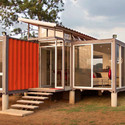
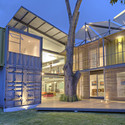
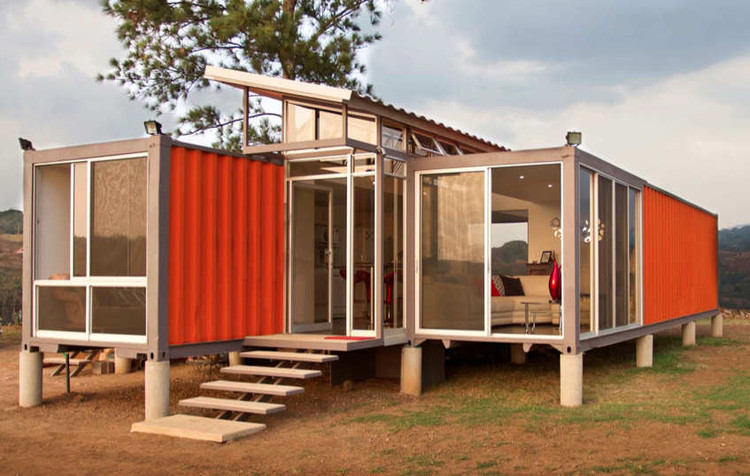
One of the more niche trends in sustainable design of the past few years has been the re-use of shipping containers in order to create the structure of a building. Due to their convenient size, shipping containers are well-suited for use in houses and their appeal lies in their apparent simplicity: you get a room delivered in one piece, and you can stack them together to make multiple rooms or join them up to make larger rooms.
But of course, things are never so simple, and using shipping containers to make a house is still fraught with challenges - particularly as the idea is still relatively new, so there are few people with the expertise required to build one without a hitch. That's why the folks over at Container Home Plans reached out to 23 experts from around the world - designers and owners who have overcome the challenges to build their own container houses - to ask them what they wish they'd known before taking on this challenge. Check out their 11 top tips after the break.
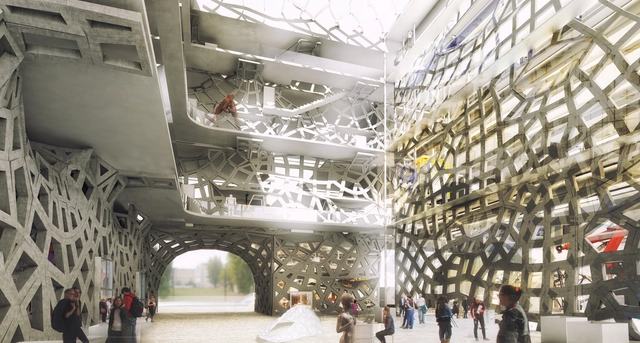
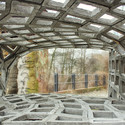
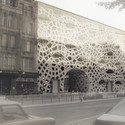
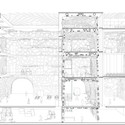
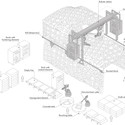
When one hears the term masonry architecture, digital fabrication and automated construction processes are probably not the first ideas to come to mind. By its very nature, the architecture produced with stone masonry is often heavy, massive, and incorporates less natural light than alternative methods. However, with their research proposal for "Smart Masonry," ZAarchitects are proposing to change masonry buildings as we know them and open opportunities for digital fabrication techniques in stone and other previously antiquated materials. Read on after the break to get a glimpse of what these new masonry buildings could look like and learn more about the process behind their construction.
With a recently released animation entitled “We Start the Future of Construction,” Coop Himmelb(l)au announced their intention to take digital fabrication to a radical new scale, demonstrating how technology is impacting almost every aspect of the architectural profession. The advent of building information modeling and other modeling software has transformed how architects and engineers navigate the construction process, allowing us to achieve increasingly complex forms that can be modeled with the aid of CNC machining and 3D Printing, but still there remains a wide gap between the technologies available to architects and those employed by builders. When it comes to a building’s actual construction we have been limited by the great costs associated with non-standard components and labor - but now, the automated practices that transformed manufacturing industries could revolutionize how we make buildings.
Last week, ArchDaily sat down with co-founder, Design Principal and CEO of Coop Himmelb(l)au, Wolf D. Prix for his thoughts on the future of construction and the role of the architect in an increasingly technological practice. Read on after the break to find out how robots could impact architectural design, construction, and the future of the profession.
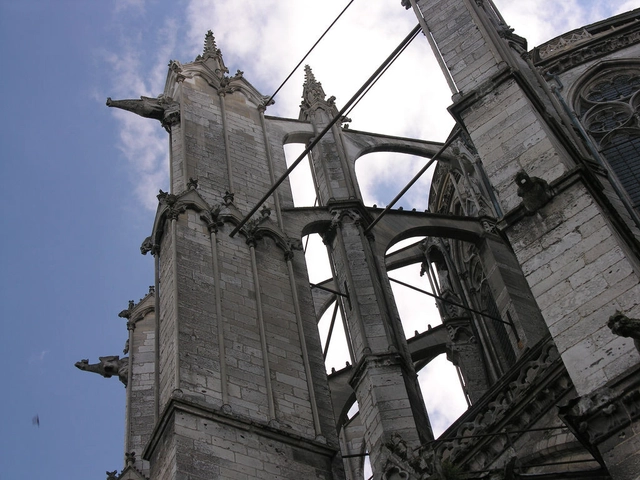
The Gothic cathedrals of the middle ages have long been respected as sites of significant architectural and structural experimentation. Hoping to reach ever closer to God, the master masons of the period took increasingly daring structural risks, resulting in some remarkably durably buildings that are not only timeless spaces for worship but miraculous feats of engineering. However, according to new research by a team of French archaeologists and scientists, we still haven't been giving these historic builders enough credit.
Though iron components feature in many Gothic buildings, often forming structural ties to stabilize tall stone buttresses, it was previously assumed that these were later additions to shore up precarious structures. However, thanks to a highly sophisticated carbon dating technique, the team consisting of the Laboratoire archéomatériaux et prévision de l'altération, the Laboratoire de mesure du carbone 14 and "Histoire des pouvoirs, savoirs et sociétés" of Université Paris 8 have shown that iron fixtures were an integral part of cathedral construction techniques from as early as the late 12th Century - meaning that many buildings from the period were essentially hybrid structural systems.
London is the world’s most expensive city to build in, but the reasons may surprise you. The city is well known for its high cost of living despite being far less crowded than cities such as Tokyo and New York. In fact, commercial real estate in London’s West End costs nearly twice as much as similarly sized spaces on New York’s Madison Avenue.
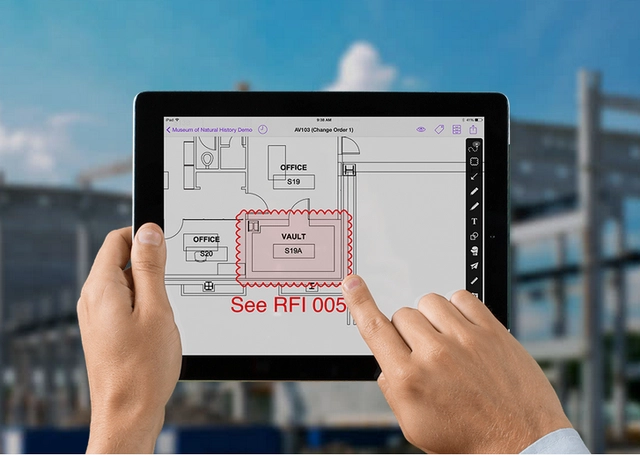
CurrentSet, one of a number of cloud-baseddigital apps for managing construction drawings on the go, seeks to foster collaboration among architects, project managers and on-site professionals. Uniquely, the app is offered free of charge before allowing users to add features as and when they require them.
PlanGrid, touted as "the fastest blueprint viewer" available, is one of the most mature apps for viewing, amending and discussing construction drawings on a collaborative cloud-based platform. This week they launched PlanGrid for Education, allowing students full and uninhibited access to every feature of the app free of charge. According to the company, they currently have "40,000 blueprints being uploaded to PlanGrid daily and over 9 million blueprints stored digitally", making the platform one of the fastest growing in its market.
Wood is the ultimate material - it's renewable, sequesters carbon and more importantly, it's buildable. Nevertheless wood is rarely used in tall, vertical construction. Now reThink wood has come out with their Tall Wood Survey (available in full on their website), which surveyed over 50 wood experts to explore three main areas in which wood is usually questioned: financing, insurance and performance. But beyond discussing the pros and cons of wood, the survey also highlights 10 projects that show how wood products are being used in ways you never thought existed. See all ten innovative projects, after the break.
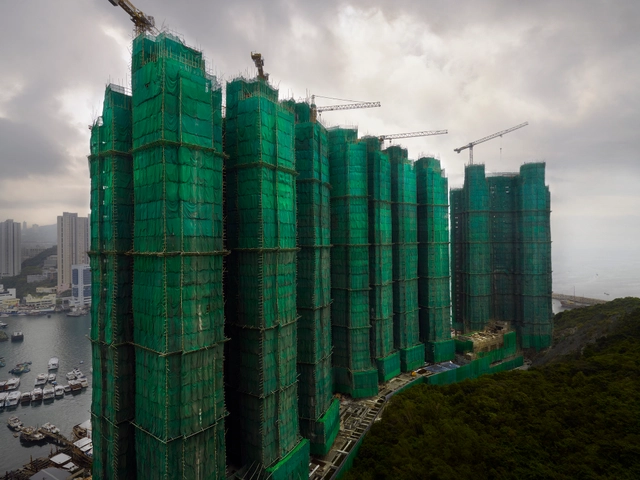
In 1994, a routine construction technique that has been practiced in Hong Kong for over 100 years caught the attention of photographer Peter Steinhauer - and led him to put almost a decade of work into capturing this unique urban phenomenon. The bamboo scaffolding and fabric wrappings he photographs serve the simple purpose of catching construction debris, but at a glance they look more like works by Christo and Jeanne Claude, the artists that have made their name wrapping buildings like the Reichstag in Berlin.
The resulting photos showcase the colossal towers of Hong Kong wrapped in brightly-colored fabric; their usually varied facades are made monolithic, like a plastic massing model rendered full-size. Steinhauer named his photo series "Cocoons" due to the effect they create over time: the buildings metamorphose under cover and emerge transformed.