

-
Architects: Those Architects
- Area: 880 m²
- Year: 2016
-
Professionals: Siebert Millwork Inc, Knudsen Construction Inc



As part of a masterplan along the Chicago River, the River Beech Tower is a residential high-rise which, if built, would be taller than any existing timber building. The collaborative team behind River Beech consists of architects Perkins+Will, engineers Thornton Tomasetti and the University of Cambridge. Currently a conceptual academic and professional undertaking, the team state that it could potentially be realized by the time of the masterplan’s final phases.

The Chicago Architecture Biennial (CAB) has announced that Sharon Johnston and Mark Lee, of the Los Angeles-based firm Johnston Marklee, have been named Artistic Directors for the 2017 event. Following a successful inaugural run in 2015, the second edition of the biennial will take place from September 16 - December 31, 2017.
Speaking exclusively to ArchDaily, Artistic Directors Sharon Johnston and Mark Lee said:
We are thrilled with the invitation to be the Artistic Directors for the second edition of the largest exhibition of contemporary architecture in North America. To have a global platform to address current ideas and showcase the talent in the field of architecture in a city with such an extraordinary architectural pedigree is a once in a lifetime opportunity.
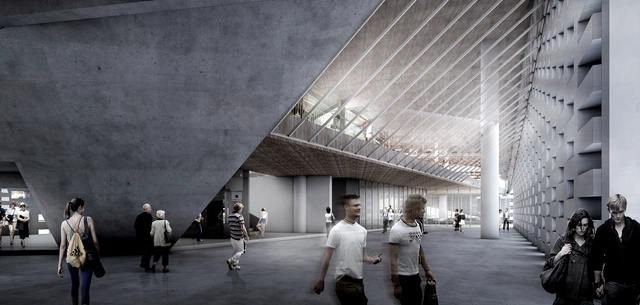
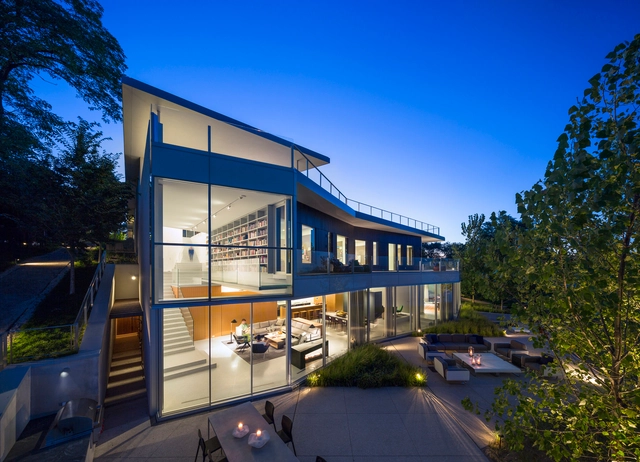
Just as the competition to design the official Obama Presidential Library in Chicago was heating up, Arcbazar orchestrated a simultaneous, open-call for ideas competition asking “What sort of Presidential Library would the people design?." Raynaldo Theodore Design Studio (RTDS) led by Raynaldo Theodore, Ryan Ridge, and Kalvin Widjaja responded with a proposal that focuses on Obama's peaceful and inclusive spirit to create a place of welcome and community. Dubbed The V-House, their design is comprised of a series of indoor/outdoor sequences which reference Obama's life and significant points in its Chicago context.
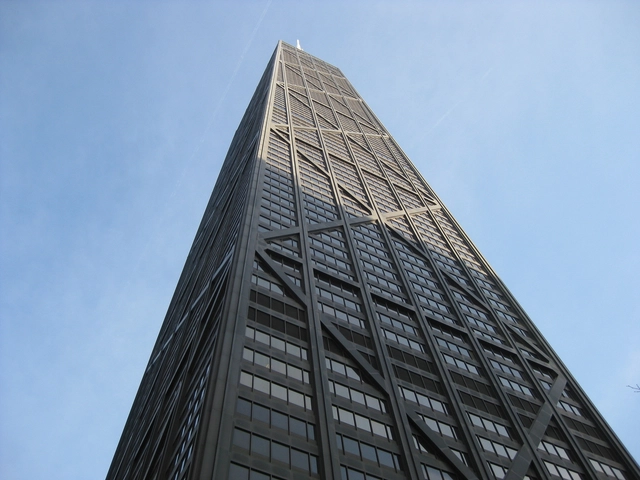
When it comes to skyscraper architects, the first name that comes to mind is often Skidmore, Owings & Merrill. No firm has completed more supertall buildings than SOM, and to this day, they remain a leader in the field, designing both the western hemisphere’s and the world’s tallest buildings in One World Trade Center and the Burj Khalifa. Yet, arguably, the height of their powers came in the 1970s, directly following a lull in skyscraper construction that allowed the Empire State Building to retain the status of world’s tallest building for nearly 40 years.
It was then that Falzur Khan, a SOM architect and structural engineer, came up with the structural innovation that revolutionized the skyscraper industry, leaving lasting impacts on the construction methods of supertall buildings today.
Drawing from a recent story published by Mental Floss on the designer, we’ve come up with a list of facts about his life and role in the world of architecture.
Continue reading for the 8 things you should know about Falzur Khan.
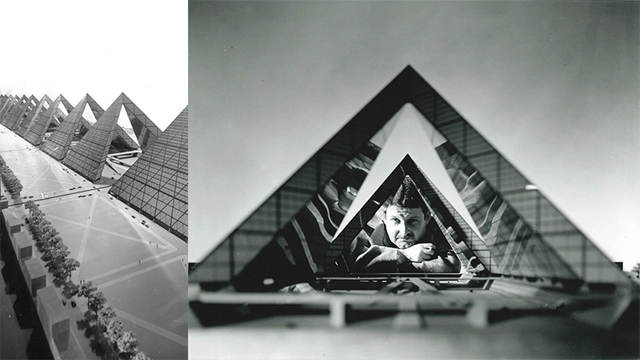
This article was originally published on Autodesk's Redshift publication as "Inside My Design Mind: Salt-of-the-Earth Lessons From Architect Stanley Tigerman."
It’s no secret Stanley Tigerman has made a few enemies in his career. Chicago’s pugnacious 85-year-old architecture star and elder statesman, who received a lifetime achievement award from the American Institute of Architects in October, is known perhaps as much for his brand of gloves-off honesty as his buildings. In a 2013 interview with Chicago magazine, he summed up the redesign of the city’s Ludwig Mies van der Rohe–designed IBM tower as “shit.”
But there’s a socially minded, nurturing side of Tigerman—designer of the Illinois Holocaust Museum and Pacific Garden Mission—that is sometimes lost in the offhand bravado of his public-facing comments. As a member of the Chicago Seven (which protested the predominance of modernism) and a provocateur who has organized seminal forums about architecture’s future, Tigerman is more than just tough talk.
Here, the architect, educator, and curator reveals a generous and expansive mind, praising the uncompromising will of his role model Ludwig Mies van der Rohe and explaining where he finds and nourishes inspiration. He speaks fondly of architecture’s next generation, to whom he offers this advice: Go slow. Don’t copy. Stand firm. Work hard.

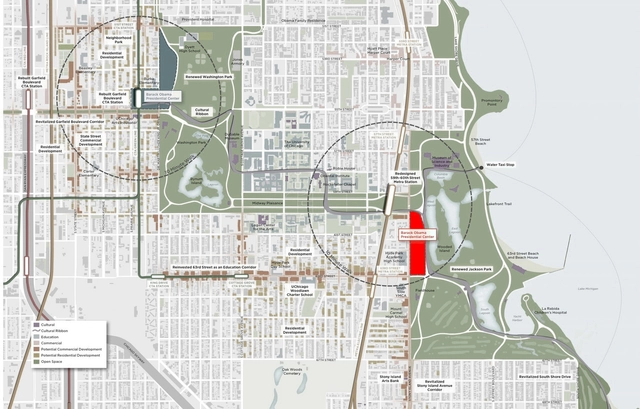
President Barack Obama and first lady Michelle Obama have selected Chicago's historic Jackson Park as the site of the Obama Presidential Library, the Chicago Tribune has reported. The park is located in Chicago’s South Side, the first lady’s childhood home and where Obama was first elected to office. Located at the eastern edge of the University of Chicago campus, Jackson Park beat out nearby Washington Park for the honor of becoming the library’s home. The design commission was awarded to Tod Williams Billie Tsien Architects earlier this month.
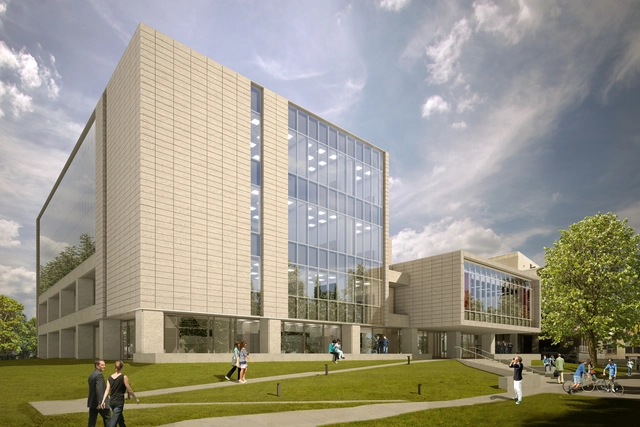
Perkins Eastman has released plans for a two-story expansion and redesign of the SOM-designed Laboratory for Astrophysics and Space Research at the University of Chicago campus in Chicago, Illinois. Construction on the 63,500 square foot building has just begun, and once completed, will serve as the renewed home of the University’s Department of Physics. The addition and renovation will create a new physics hub on campus that will allow students of different sub-disciplines to collaborate under the same roof for the first time.
UPDATE: We've added the video produced for the proposal! (via Brooklyn Digital Foundry)
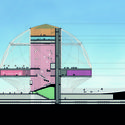
Following the news last week that the Lucas Museum of Narrative Art will abandon plans for their Chicago location, OMA has released images of their proposal for the museum, which had been beaten out in the original competition by MAD Architects' Volcano-like entry. OMA’s design attempts to preserve as much of the lakefront park space as possible, lifting the majority of gallery and educational spaces into the air and capping them with a sky garden enclosed within an ETFE envelope. The plan would have offered up to 8 times more public space than the footprint it occupies.
The Obama Foundation has selected Tod Williams Billie Tsien Architects (TWBTA) with partner Interactive Design Architects (IDEA) to lead the design of the Obama Presidential Center for Chicago's South Side. Chosen from a shortlist including Diller Scofidio + Renfro, John Ronan Architects, Renzo Piano Building Workshop, SHoP Architects, Snøhetta and Adjaye Associates, TWBTA stood out for their “commitment to explore the best ways of creating an innovative center for action that inspires communities and individuals to take on our biggest challenges.”


The Lucas Museum has been looking for a home in all the wrong places. Following months of fiery debate over the future of the museum’s proposed lakefront location, George Lucas announced that he is abandoning plans to build the project in Chicago and will instead return to looking for a site in California. This is the second failed location for the museum, after being rejected by San Francisco’s Presidio Trust in early 2014.
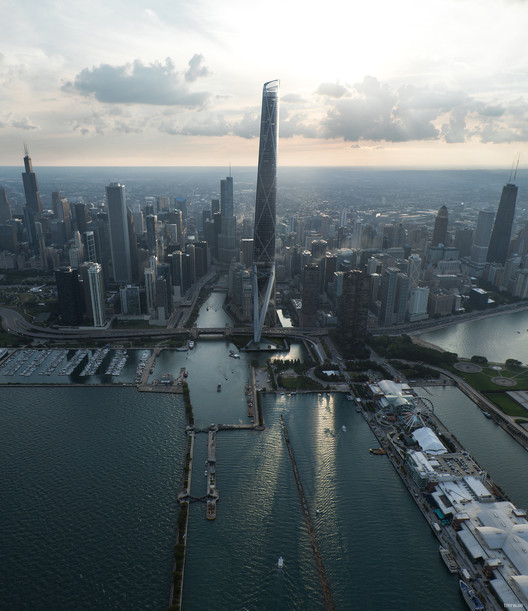
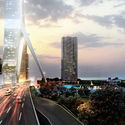
Gensler’s “Gateway Tower” is a 2000-foot (610 meter) conceptual proposal for the Chicago Spire site. The project is the winning entry for a company-wide internal competition to generate a new megatall structure for the 2.2 acre plot at 400 N. Lake Shore Drive. The mixed-use proposal throws out the residential luxury model that drove Santiago Calatrava’s design, with a concept inspired by tourism and public engagement. Gateway Tower’s volume is still largely devoted to residential functions, but now condos and apartments are coupled with a hotel and public attractions that connect to the riverwalk, lakefront, and city. The building would include four unique experiences including riverfront public access at DuSable Park, a Funicular ride of pods ascending the building’s structural “leg” over Lake Shore Drive, a Skylobby with hotel and retail amenities, and a Skydeck with a restaurant and sky-garden at the building’s pinnacle.
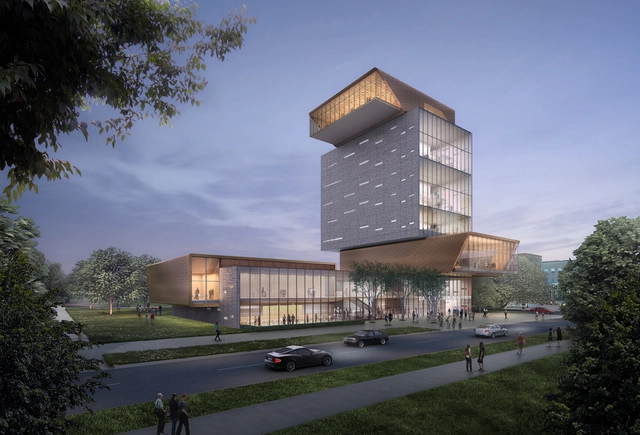
Diller Scofidio + Renfro (DS+R) has unveiled its design for the David M. Rubenstein Forum at the southeast corner of Woodlawn Avenue and 60th Street on the University of Chicago's campus. The 90,000 square foot (8,500 square meter) facility has been devised as a place of intellectual, institutional, and educational exchange, fulfilling a variety of campus needs for meeting spaces. A collection of block-like volumes, the building’s two-story base is anchored by a narrow 165-foot (50 meter) tower, with the exterior materials and structure reflecting the programmatic divisions within.
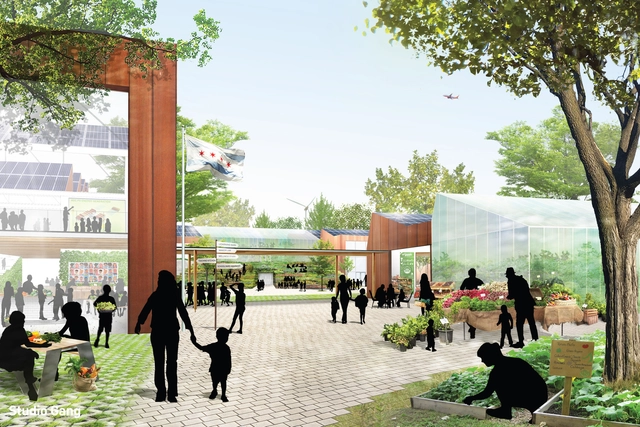
Studio Gang has designed a new home for the Academy for Global Citizenship (AGC), a Chicago Public Charter School in the Garfield Ridge neighborhood. Established eight years ago with the operating philosophy that a more sustainable world begins at school, the proposed campus is an urban farm and educational institution wrapped into one.


.jpg?1471951511 "Courtesy of Raynaldo Theodore Design Studio")