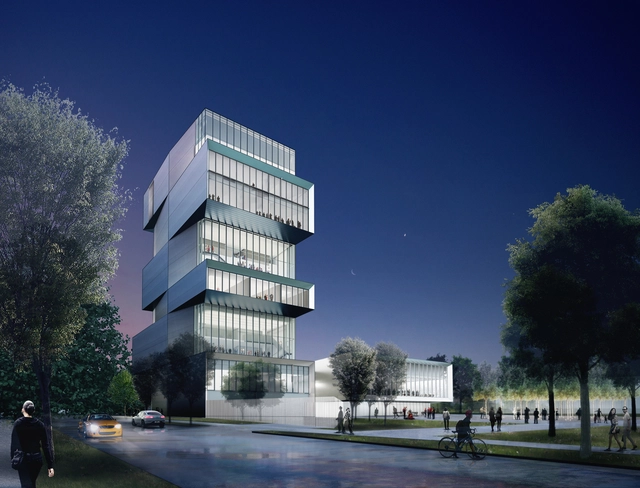
The University of Chicago has unveiled new renderings of its planned David M. Rubenstein Forum that show major changes to the buildings’ form and relationship to the site. Designed by Diller Scofidio + Renfro, the new scheme shows a more homogeneous structure featuring a uniform zinc and glass facade that will help to better signify the distinct “neighborhoods” located within the 8-story tower.
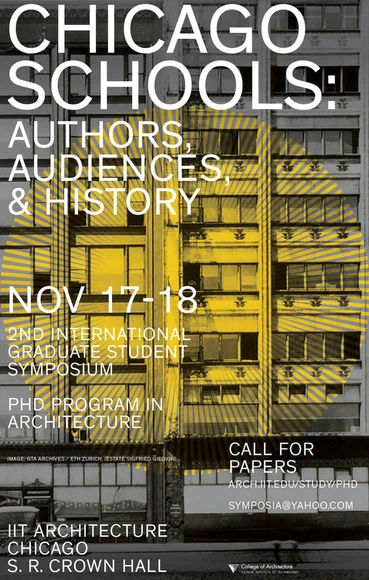
“Chicago Schools” is an international peer-reviewed graduate student symposium that explores the interplay between the individual and collective in the process of making history. The symposium, hosted by the IIT College of Architecture PhD Program in partnership with the Chicago Architecture Biennial, will engage with and enhance the dialogue around the Biennial theme, “Make New History,” by highlighting graduate student contributions in architecture, design, humanities, and architectural and urban history. Papers may revisit past and present Chicago Schools - from Henry van Brunt’s "School" and William James’ "Chicago School of Thought" to Sigfried Giedion’s "Chicago School of Architecture,” and beyond - as well as the emergence of new historiographic and architectural traditions within a global context.
Last year I had the opportunity to visit Studio Gang, one of the most prestigious and inspiring firms around led by architect Jeanne Gang. I was able to talk with her team about the workspace, some of her projects, about the future of architecture, the role of women in the profession and even about the inspirations behind the United States Embassy in Brasilia.
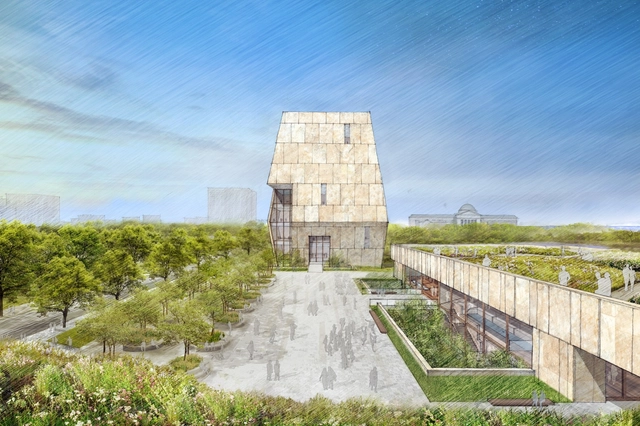
View of the Obama Presidential Center plaza. Image Courtesy of Obama Foundation
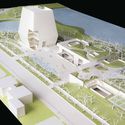
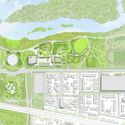
The Obama Foundation today unveiled the design of former President Barack Obama’s Presidential Center, reports The Chicago Tribune. Designed by Todd Williams Billie Tsien Architects, the center’s design comprises three buildings. At the north of the site, the tallest building will contain the center’s museum, while buildings to the south will house a library, auditorium, and restaurant, arranged around a public garden.
https://www.archdaily.com/870527/obama-foundation-unveils-twbta-designed-obama-presidential-centerAD Editorial Team
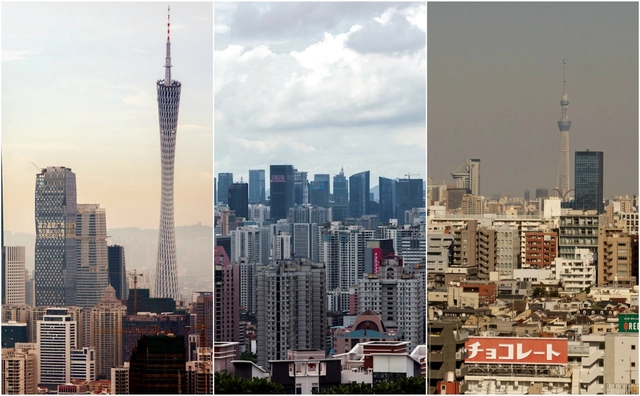
There’s a lot that the presence of skyscrapers can say about a city. They can be indicators of anything from wealth to modernization to density, or a combination of all three, depending on where you look. This potential to observe trends in a city through the height of its buildings makes data on those buildings valuable to a multitude of industries, so companies like Emporis conduct and distribute research on topics like the newest, tallest, and most expensive buildings in the world. Keep reading to find out about the ten tall cities that are home to the largest number of skyscrapers—as defined by Emporis' definition of a building that is 100 meters or more.
Adrenaline junkies rejoice: the Willis Tower has announced plans for $20 million dollars of improvements to their popular glass-bottom SkyDeck observation attractions. Among the additions will be a series of new all-glass protrusions from the building, as well as a chance to rappel down a glass shaft suspended from the building’s 103rd floor.
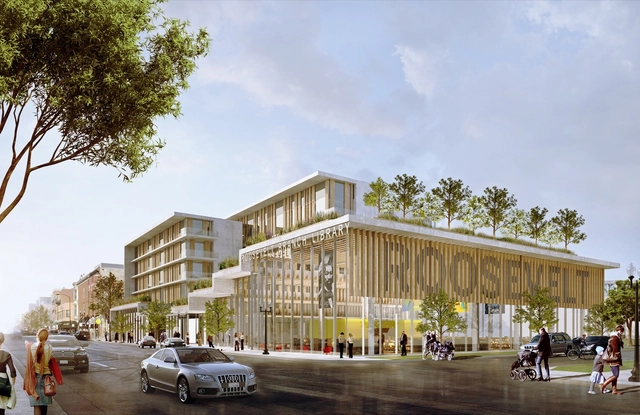
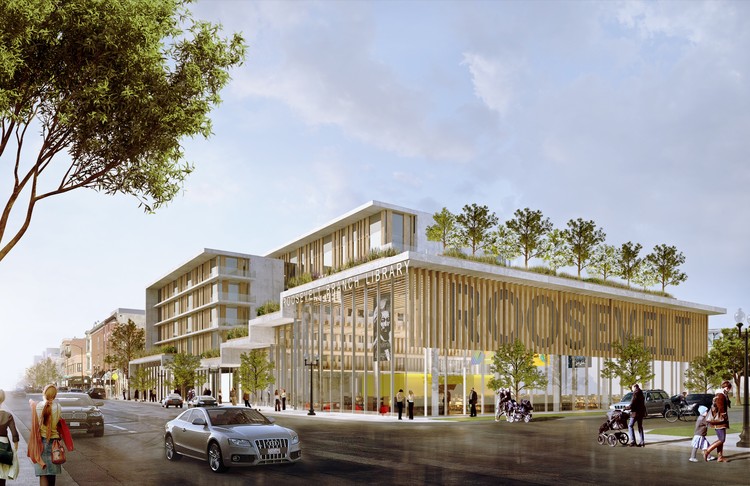
Initial renderings for the Roosevelt Branch, designed by SOM. Image Courtesy of The Chicago Housing Authority
The City of Chicago and the Chicago Housing Authority have announced the selection of Skidmore, Owings & Merrill (SOM), Perkins + Will and John Ronan Architects to lead in the design of three new “co-located” affordable housing and library developments in the Chicago neighborhoods of Little Italy, West Ridge, and Irving Park.
Selected from a shortlist of nine firms, the three Chicago-based teams were chosen for their “innovative ideas that will ensure that each community will have a design that best reflects its needs.” The practices will work intimately with their respective communities to develop their designs.
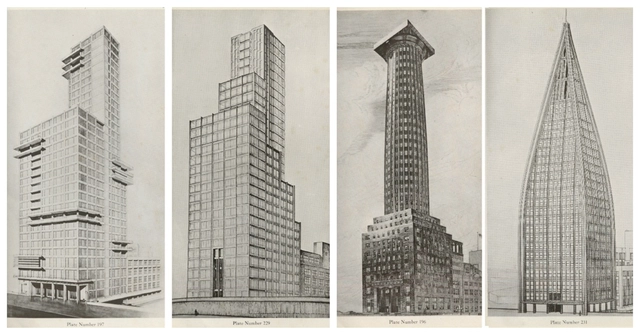
Designs for the Chicago Tribune Tower by (left to right) Walter Gropius and Adolf Meyer; Max Taut; Adolf Loos; and Bruno Taut, Walter Gunther, and Kurz Schutz. Image via skyscraper.org
The Chicago Architecture Biennial has announced the first exhibit that will on display during the event’s second edition from September 16 to January 7, 2018 – a contemporary reboot of one of architecture’s most well-known competitions, the Chicago Tribune tower design contest. Sixteen young architects from around the world will contribute new versions of the iconic skyscraper that will be displayed as a series of 16-foot-tall architectural models in the Chicago Cultural Center, the Biennial’s main venue.
Vision Zero is an initiative that started in Sweden in 1997 when the country began implementing a series of road safety measures to reach their goal of zero deaths from traffic accidents. As a result, the country managed to reduce the number of deaths to 3 people per 100 thousand inhabitants.
Since then the plan has been adopted by different cities and has inspired the creation of various organizations that are looking to make our streets a safer places. One of them being the Vision Zero Network that brings together traffic engineers, health professionals, local leaders, and policy makers.
One of the United States’ most recognizable skyscrapers, the Willis Tower (formerly the Sears Tower), is set to receive a $500 million renovation designed by the Chicago office of Gensler. Announced by Chicago mayor Rahm Emanuel with real estate holders Blackstone and Equity Office, the project will transform and reinvigorate the 43-year-old building, which held the title of world’s tallest building for nearly a quarter century.
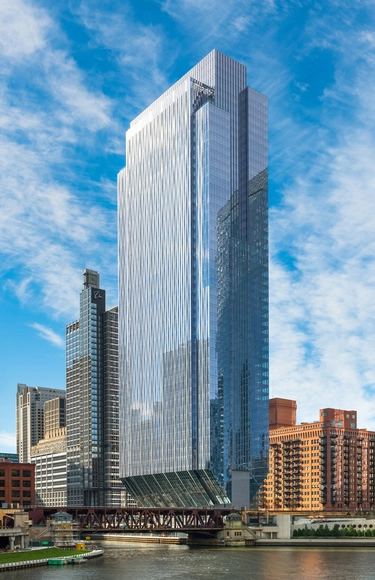
Chicago may be about to receive a new supertall skyscraper in the heart of the Loop – but it would require the demolition of one of the city’s most polarizing buildings, the James R. Thompson Center, designed by Chicago architect Helmut Jahn.
Owned by the state, the postmodernist Thompson Center and its colorful glass atrium have been the subject of both criticism and adoration since its opening in 1985. But wear on the building throughout the years has led to an estimated maintenance bill of $326 million, prompting the state government to find ways to rid itself of the potentially crippling costs.
A Chicago-based artist and community developer, Gates is the founder of the Rebuild Foundation, which focuses on improving the quality of urban life by planning and designing active and engaged communities. “Under Gates’ leadership, the Rebuild Foundation currently manages projects in the Greater Grand Crossing neighborhood of Chicago. Program sites include the Stony Island Arts Bank, the Black Cinema House, the Dorchester Art + Housing Collaborative, Archive House, and Listening House.”
Jeanne Gang, the founder of Studio Gang Architects, has made a name for herself as a designer who can design both show-stopping skyscrapers and sensitive small-scale buildings. From her breakout 2009 Aqua Tower project, to the hypothetical “Polis Station” proposal presented at last year's Chicago Architecture Biennial, Gang has established herself as perhaps Chicago's leading architect.
Gang is also included as part of Vladimir Belogolovsky's ongoing City of Ideas exhibition tour, representing Chicago among 9 other significant architects, each from a different global city. With the exhibition currently in Gang's home city at the Chicago Design Museum until February 25th, here as part of his City of Ideas column on ArchDaily Belogolovsky presents a shortened version of the interview featured in the exhibition.
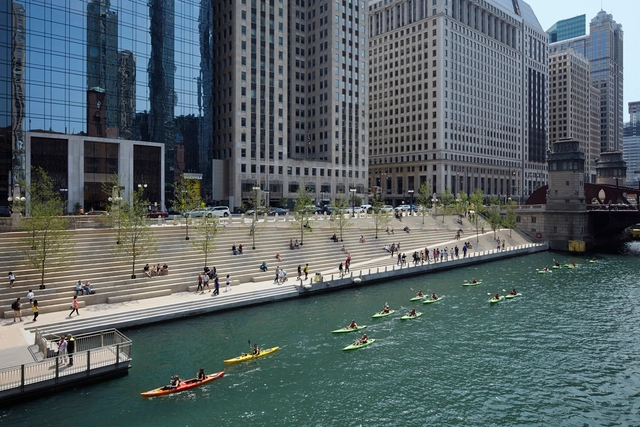
The third and final phase of the ChicagoRiverwalk is officially open to the public. Designed by Sasaki and Ross Barney Architects, the 1.5 mile long promenade revitalizes an underutilized industrial area into an active public space featuring restaurants, cultural activities and amenities while reconnecting the Chicago River to the urban fabric of the city.









.jpg?1490378892&format=webp&width=640&height=580)










_Hedrich_Blessing_015.jpg?1478169991&format=webp&width=640&height=580)
_Hedrich_Blessing.jpg?1478166602 "Aqua Tower, Chicago, 2009. Image © Hedrich Blessing. Photographer Steve Hall")
_Iwan_Baan_01.jpg?1478167148 "Arcus Center for Social Justice Leadership, Kalamazoo, Michigan, 2014. Image © Iwan Baan")
_Hedrich_Blessing_012.jpg?1478167596 "Writers Theater, Glencoe, Illinois, 2016. Image © Hedrich Blessing. Photographer Steve Hall")
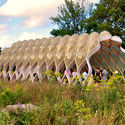
_Hedrich_Blessing_012.jpg?1478166992 "WMS Boathouse at Clark Park, Chicago, 2013. Image © Hedrich Blessing. Photographer Steve Hall")
_Hedrich_Blessing_015.jpg?1478169991)