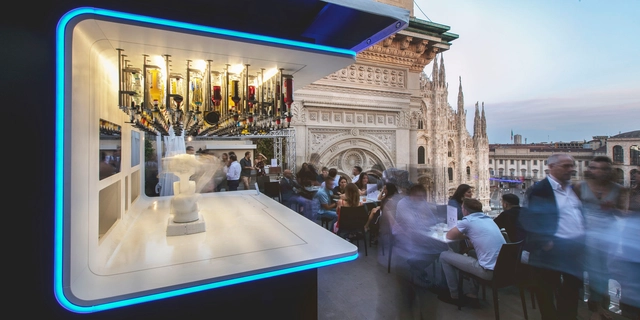
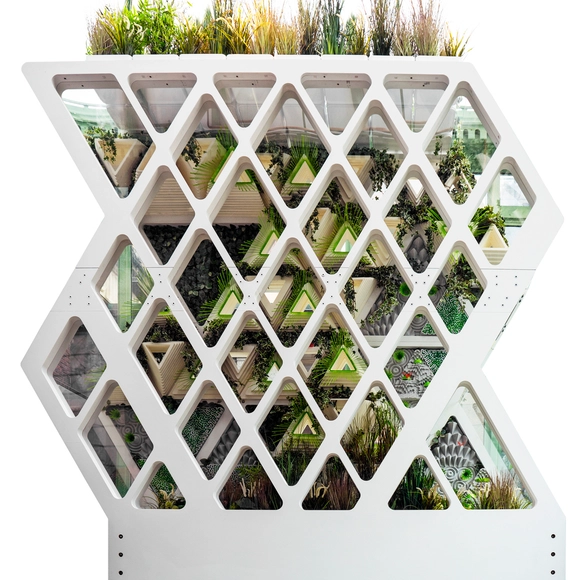
Bar producer Makr Shakr has unveiled new rooftop robotic bars in Milan and London. Founded by MIT professor Carlo Ratti, the company's new projects are made to engage with the city and explore the potential of technology. In Milan, the project is the city's first robotic bar, while the London bar is on display at the Barbican as part of its AI: More than Human exhibition. Makr Shakr's bars aim to combine barman roots with food tech around the future of human-machine collaboration.
What happens when the sensor-imbued city acquires the ability to see – almost as if it had eyes? Ahead of the 2019 Shenzhen Biennale of Urbanism\Architecture (UABB), titled "Urban Interactions," ArchDaily is working with the curators of the "Eyes of the City" section at the Biennial to stimulate a discussion on how new technologies – and Artificial Intelligence in particular – might impact architecture and urban life. Hereyou can read the “Eyes of the City” curatorial statement by Carlo Ratti, the Politecnico di Torino and SCUT.
What happens when the sensor-imbued city acquires the ability to see – almost as if it had eyes? Ahead of the 2019 Shenzhen Biennale of Urbanism\Architecture (UABB), titled "Urban Interactions," ArchDaily is working with the curators of the "Eyes of the City" section at the Biennial to stimulate a discussion on how new technologies – and Artificial Intelligence in particular – might impact architecture and urban life. Hereyou can read the “Eyes of the City” curatorial statement by Carlo Ratti, the Politecnico di Torino and SCUT.
https://www.archdaily.com/920698/whose-eyes-on-the-street-liu-jian-for-the-shenzhen-biennale-uabb-2019Jian Liu
What happens when the sensor-imbued city acquires the ability to see – almost as if it had eyes? Ahead of the 2019 Shenzhen Biennale of Urbanism\Architecture (UABB), titled "Urban Interactions," ArchDaily is working with the curators of the "Eyes of the City" section at the Biennial to stimulate a discussion on how new technologies – and Artificial Intelligence in particular – might impact architecture and urban life. Hereyou can read the “Eyes of the City” curatorial statement by Carlo Ratti, the Politecnico di Torino and SCUT.
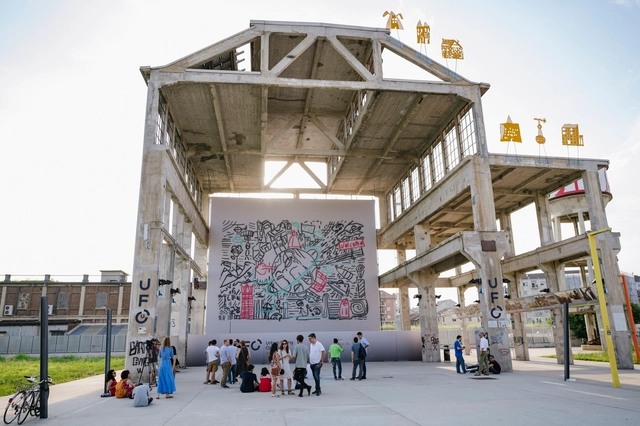
Carlo Ratti Associati has unveiled the world’s first crowdsourced graffiti, designed by thousands of people and painted by a swarm of drones in the city of Torino, Italy. The UFO-Urban Flying Opera project was created by four UAVs flying simultaneously over two consecutive days. Each drone carried a tank of sustainable spray paint and sketched the individual designs on the canvas. The final painting was divided into three layers: a grey one to set the story, magenta one to represent Torino’s communities, and a light blue one to visually wrap the story.
https://www.archdaily.com/920311/carlo-ratti-associati-unveils-worlds-first-crowdsourced-graffitiNiall Patrick Walsh
What happens when the sensor-imbued city acquires the ability to see – almost as if it had eyes? Ahead of the 2019 Shenzhen Biennale of Urbanism\Architecture (UABB), titled "Urban Interactions," ArchDaily is working with the curators of the "Eyes of the City" section at the Biennial to stimulate a discussion on how new technologies – and Artificial Intelligence in particular – might impact architecture and urban life. Hereyou can read the “Eyes of the City” curatorial statement by Carlo Ratti, the Politecnico di Torino and SCUT.
First, let me declare my unambiguous aversion to the envisioned future in which “any room, street or shop in our city can recognize you, and autonomously respond to your presence.” Despite this, can I see any positive potentials in pervasive systems of urban surveillance and response?
What happens when the sensor-imbued city acquires the ability to see – almost as if it had eyes? Ahead of the 2019 Shenzhen Biennale of Urbanism\Architecture (UABB), titled "Urban Interactions," ArchDaily is working with the curators of the "Eyes of the City" section at the Biennial to stimulate a discussion on how new technologies – and Artificial Intelligence in particular – might impact architecture and urban life. Hereyou can read the “Eyes of the City” curatorial statement by Carlo Ratti, the Politecnico di Torino and SCUT.
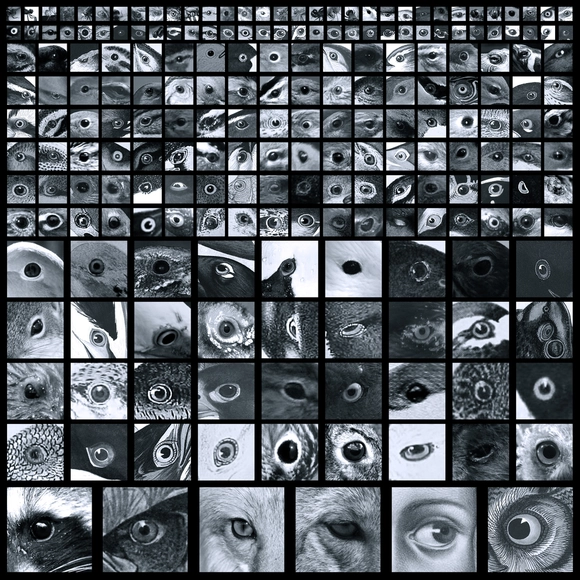
The eyes of the more than 250 animal species who have been observed at Studio Gang’s Nature Boardwalk at Lincoln Park Zoo in Chicago. Image by Studio Gang
What happens when the sensor-imbued city acquires the ability to see – almost as if it had eyes? Ahead of the 2019 Shenzhen Biennale of Urbanism\Architecture (UABB), titled "Urban Interactions," ArchDaily is working with the curators of the "Eyes of the City" section at the Biennial to stimulate a discussion on how new technologies – and Artificial Intelligence in particular – might impact architecture and urban life. Hereyou can read the “Eyes of the City” curatorial statement by Carlo Ratti, the Politecnico di Torino and SCUT.
“We all live in an ecosystem; we just don’t know it. When it comes to urban areas, people have an ecological blind spot.” — Seth Magle, Director, Lincoln Park Zoo Urban Wildlife Institute, Chicago.
The advance of AI technologies can make it feel as if we know everything about our cities—as if all city dwellers are counted and accounted for, our urban existence fully monitored, mapped, and predicted.
https://www.archdaily.com/918968/eyes-of-the-city-seeing-and-designing-beyond-the-human-jeanne-gang-for-the-shenzhen-biennale-uabb-2019Studio Gang
What happens when the sensor-imbued city acquires the ability to see – almost as if it had eyes? Ahead of the 2019 Shenzhen Biennale of Urbanism\Architecture (UABB), titled "Urban Interactions," ArchDaily is working with the curators of the "Eyes of the City" section at the Biennial to stimulate a discussion on how new technologies – and Artificial Intelligence in particular – might impact architecture and urban life. Hereyou can read the “Eyes of the City” curatorial statement by Carlo Ratti, the Politecnico di Torino and SCUT. If you are interested in taking part in the exhibition at UABB 2019, submit your proposal to the “Eyes of the City” Open Call by May 31st, 2019: www.eyesofthecity.net
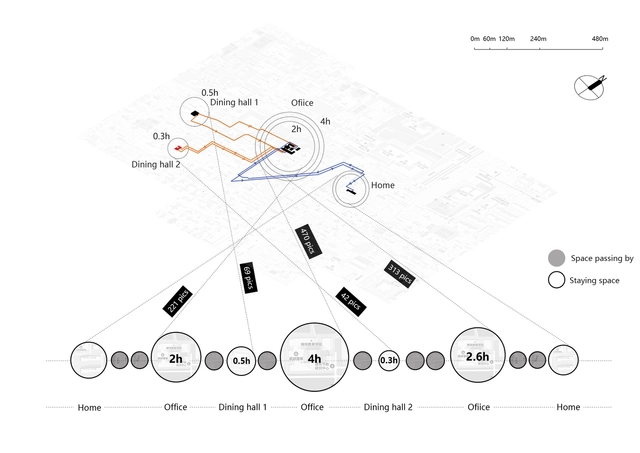
We live in a world full of electric products, and we have been influenced by them deeply, especially by those with digital screens, like cell phones, computers and TVs. We use computers for work and social media like Twitter and WeChat to connect with others, we use Mobike for short-distance commutes, Dianping to navigate us to a good lunch and then Alipay to pay the bill. At the end of a long day, we usually spend the rest of our time watching TV or playing online games in order to finally relax. These electric products bring convenience to our life, but at the same time, they are kidnapping it. The overuse of them immerses us in a virtual world and pushes people farther apart. We are losing face-to-face communication and ignoring the enjoyment of real life. Currently, people are spending more time on their mobile phones than ever before. According to a report published by Aier in 2018, the average screen time in China is 6 hours per day, and the average person uses their cellphone 108 times. This mobile-dependency is leaving our lives increasingly fragmented.
https://www.archdaily.com/918601/a-happily-tracked-day-ying-long-for-the-shenzhen-biennale-uabb-2019Ying Long
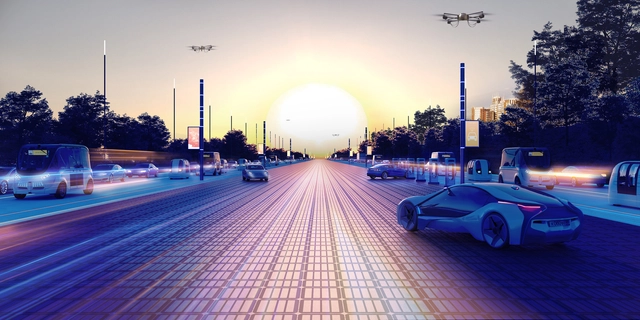
Carlo Ratti Associati has unveiled their vision for the urban highways of Paris in 2050. Reinventing the city’s infamous Boulevard Périphérique ring road, the firm’s “New Deal” explores the potential for urban highways to be flexible spaces for living, playing and farming.
What happens when the sensor-imbued city acquires the ability to see – almost as if it had eyes? Ahead of the 2019 Shenzhen Biennale of Urbanism\Architecture (UABB), titled "Urban Interactions," ArchDaily is working with the curators of the "Eyes of the City" section at the Biennial to stimulate a discussion on how new technologies – and Artificial Intelligence in particular – might impact architecture and urban life. Hereyou can read the “Eyes of the City” curatorial statement by Carlo Ratti, the Politecnico di Torino and SCUT. If you are interested in taking part in the exhibition at UABB 2019, submit your proposal to the “Eyes of the City” Open Call by May 31st, 2019: www.eyesofthecity.net
https://www.archdaily.com/918077/why-robotic-construction-philip-f-yuan-for-the-shenzhen-biennale-uabb-2019Philip F. Yuan
What happens when the sensor-imbued city acquires the ability to see – almost as if it had eyes? Ahead of the 2019 Shenzhen Biennale of Urbanism\Architecture (UABB), titled "Urban Interactions," ArchDaily is working with the curators of the "Eyes of the City" section at the Biennial to stimulate a discussion on how new technologies – and Artificial Intelligence in particular – might impact architecture and urban life. Hereyou can read the “Eyes of the City” curatorial statement by Carlo Ratti, the Politecnico di Torino and SCUT. If you are interested in taking part in the exhibition at UABB 2019, submit your proposal to the “Eyes of the City” Open Call by May 31st, 2019: www.eyesofthecity.net
https://www.archdaily.com/917724/the-monarch-sanctuary-mitchell-joachim-for-the-shenzhen-biennale-uabb-2019Mitchell Joachim
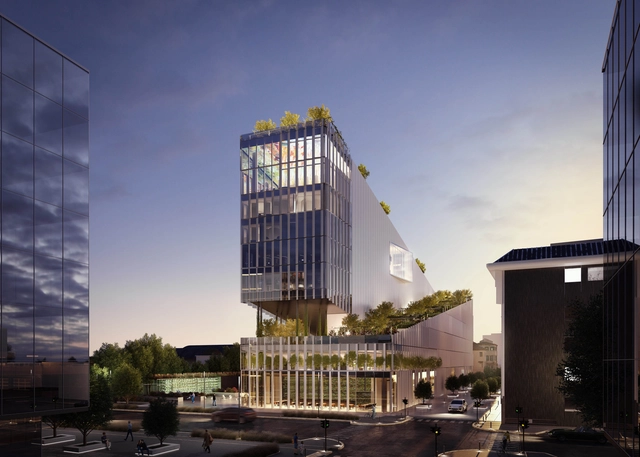
Carlo Ratti Associati has won an international competition for Reinventing Cities, with the design of a new research center placed under a 200-meter-long (650-foot-long) vineyard. Situated close to Milan’s Fondazione Prada, the VITAE project will connect the street level to the roof via a seamless footpath, and will contain a new office building and center for scientific research.
https://www.archdaily.com/917726/carlo-ratti-places-650-foot-long-urban-vineyard-in-central-milanNiall Patrick Walsh
What happens when the sensor-imbued city acquires the ability to see – almost as if it had eyes? Ahead of the 2019 Shenzhen Biennale of Urbanism\Architecture (UABB), titled "Urban Interactions," ArchDaily is working with the curators of the "Eyes of the City" section at the Biennial to stimulate a discussion on how new technologies – and Artificial Intelligence in particular – might impact architecture and urban life. Hereyou can read the “Eyes of the City” curatorial statement by Carlo Ratti, the Politecnico di Torino and SCUT. If you are interested in taking part in the exhibition at UABB 2019, submit your proposal to the “Eyes of the City” Open Call by May 31st, 2019: www.eyesofthecity.net
https://www.archdaily.com/917723/seoul-city-machine-liam-young-for-the-shenzhen-biennale-uabb-2019Liam Young
Netherlandish Proverbs, by Pieter Bruegel the Elder, 1559, a photographic reproduction by Google Cultural Institute
What happens when the sensor-imbued city acquires the ability to see – almost as if it had eyes? Ahead of the 2019 Shenzhen Biennale of Urbanism\Architecture (UABB), titled "Urban Interactions," ArchDaily is working with the curators of the "Eyes of the City" section at the Biennial to stimulate a discussion on how new technologies – and Artificial Intelligence in particular – might impact architecture and urban life. Hereyou can read the “Eyes of the City” curatorial statement by Carlo Ratti, the Politecnico di Torino and SCUT. If you are interested in taking part in the exhibition at UABB 2019, submit your proposal to the “Eyes of the City” Open Call by May 31st, 2019: www.eyesofthecity.net
Without the city, modernity could never have been invented. What we are in the midst of discovering now is whether modernity can survive in a city transformed by the digital revolution. The village may offer security and community, but what it does not allow its inhabitants is the possibility of being different, a phenomenon that is as true now as it was during the witch-burning era.
Videos
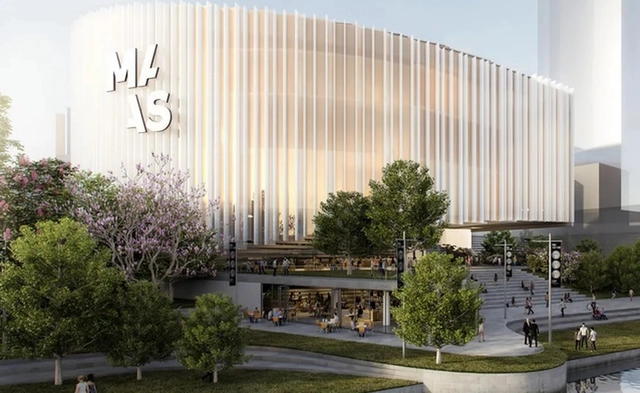
MAAS Project. Image Courtesy of NSW Government
Six design teams have been shortlisted in the competition for the landmark new Powerhouse Precinct at Parramatta, Sydney. The Powerhouse Precinct is the largest cultural infrastructure project in Australia. The competition is focused on a 24-hour museum that will showcase Museum of Applied Arts and Sciences (MAAS) collection. The project aims to transform one of Australia’s oldest cultural institutions, setting an international benchmark in cultural precinct design.
What happens when the sensor-imbued city acquires the ability to see – almost as if it had eyes? Ahead of the 2019 Shenzhen Biennale of Urbanism\Architecture (UABB), titled "Urban Interactions". ArchDaily is working with the curators of the "Eyes of the City" section at UABB 2019 to set up a discussion on how new technologies - and Artificial Intelligence in particular - might impact architecture and urban life. Hereyou can read the “Eyes of the City” curatorial statement by Carlo Ratti, Politecnico di Torino, and SCUT. If you are interested in taking part in the exhibition at UABB 2019, submit your proposal to the “Eyes of the City” open call until May 31st, 2019: www.eyesofthecity.net
Urban development has intensified the development of a national landscape of energy production – a territory that could be called the ‘extraction infrastructure web’. This landscape exists out of sight; obfuscated by a complex distribution of corporate, government and environmental databases. The city benefits from the energy network, while averting its gaze from the social and environmental consequences of the flow of energy from the territories of extraction to the metropolis.
What happens when the sensor-imbued city acquires the ability to see – almost as if it had eyes? Ahead of the 2019 Shenzhen Biennale of Urbanism\Architecture (UABB), ArchDaily is working with the curators of the "Eyes of the City" section at UABB 2019 to set up a discussion on how new technologies - and Artificial Intelligence in particular - might impact architecture and urban life. Here you can read the “Eyes of the City” curatorial statement by Carlo Ratti, Politecnico di Torino, and SCUT. If you are interested in taking part in the exhibition at UABB 2019, submit your proposal to the “Eyes of the City” open call until May 31st, 2019: www.eyesofthecity.net
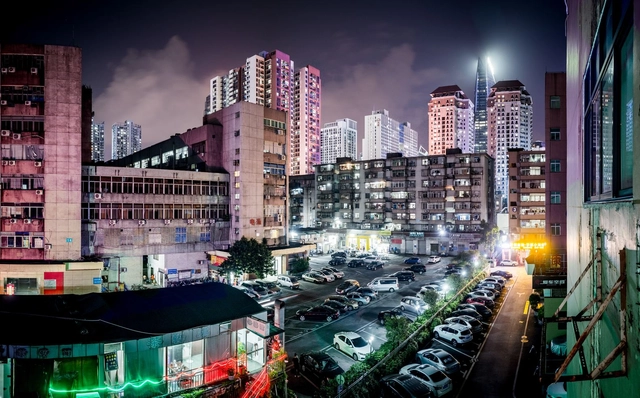
Comparisons, transpositions and metaphors can be misleading if one does not unpack carefully their point of departure. The notion that the digital age introduces us to a new regime of "eyes on the street", an expression famously coined by Jane Jacobs, requires understanding exactly what the author of The Death and Life of Great American Cities implied when she used it. For Jane Jacobs, the active presence of city dwellers in the street, their unconscious or conscious monitoring of what was going on in their immediate surroundings was the best way to ensure public safety. "The public peace — the sidewalk and the street peace— of cities is not kept primarily by the police, necessary as police are. It is kept primarily by an intricate, almost unconscious, network of voluntary controls and standards among the people themselves, and enforced by the people themselves," wrote Jane Jacobs.


.jpg?1564082996 "The View. Image © Krishanti")
.jpg?1564082938 "The View. Image Courtesy of TownHouse Duomo, © Marco Beck Peccoz")


.jpg?1562247588&format=webp&width=640&height=580)




.jpg?1556705336&format=webp&width=640&height=580)