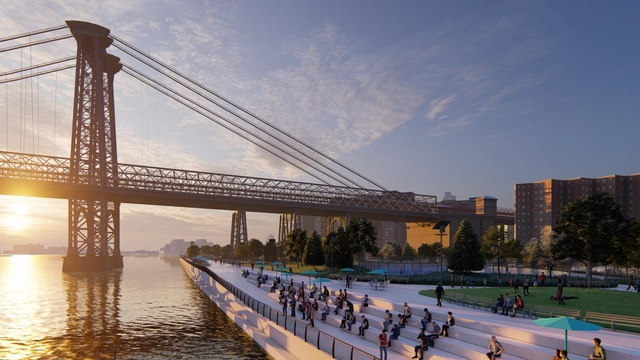
In 2012, Hurricane Sandy struck the eastern coastline of the United States and caused a level of flooding and destruction that was unprecedented for a major, densely populated city like New York. Storm surges brought a terrifying amount of water to the city streets, tunnels and subways; the National Ocean Service reported a 9.4-foot surge over Battery Park. Essential infrastructure was damaged in many areas, homes were flooded and people were trapped.
Highlighting and promoting architecture and design that impacts the educational field, the Design that Educates Awards revealed its list of winners for 2020. A collaboration between Laka Foundation and Solarlux GmbH, this year’s competition theme was inspired by the “Educating Buildings” research paper of Dr. Peter Kuczia.
BIG has just released images of No 1 Quayside, its latest office building in Newcastle. Designed in collaboration with local studio Xsite Architecture, the project’s curvature is directly inspired by the bridges over the River Tyne and the sloping neighboring hills.
Copenhagen-based architect Bjarke Ingels is not one to shy away from big ideas. Founder of the aptly named BIG (Bjarke Ingels Group), he eschews cohesive style in favor of flexible urban environments — something he believes is vital in a constantly changing world. In a new video produced for the Time Space Existence video series by PLANE -- SITE, Ingels unpacks his approach to design, incorporating humor, surprise and sustainability.
Open More Doors is a section by ArchDaily and the MINI Clubman that takes you behind the scenes of the world’s most innovative offices through exciting video interviews and an exclusive photo gallery featuring each studio’s workspace.
In this installment of the series, we talked with Kai-Uwe Bergmann, a partner at Bjarke Ingels Group (BIG). Despite the size and fame of the firm – BIG has around 500 employees and maintains offices in Copenhagen, New York, Barcelona, and London – he emphasized camaraderie and connection as the most defining characteristics of the company. These traits are doubly emphasized in the open, nonhierarchical layouts of their offices.
https://www.archdaily.com/932400/open-more-doors-bjarke-ingels-groupLilly Cao
Bjarke Ingels is one of the most well-known architects of our time. During a conversation in Copenhagen between Ingels and Sky-Frame, he discussed his point of view, creating reality, immense courage and the secret behind his unwavering pragmatism.
BIG unveiled its latest intervention, the Toyota Woven City, the company's first venture in Japan. Nestled at the foothills of Mt. Fuji, the project, in collaboration with Toyota Motor Corporation, is the world’s first urban incubator pushing forward the development and progress of mobility.
Bjarke Ingels Group and WXY architecture + urban design, in collaboration with the Downtown Brooklyn Partnership, imagined a new future for Downtown Brooklyn. The proposal introduces a greener, safer approach for a pedestrian-friendly neighborhood.
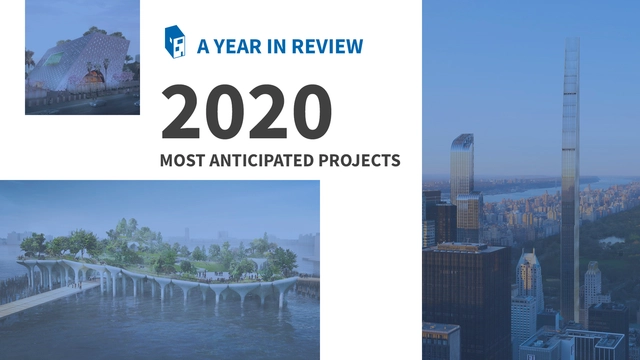
As 2019 winds down, we're taking a look ahead to the projects we're most looking forward to in 2020. With a mix of cultural and commercial programs, the designs are located across five continents, with many under construction for multiple years. Designed across a wide range of scales, they represent a mix of interconnected landscapes, museums, and the world's newest skyscrapers.
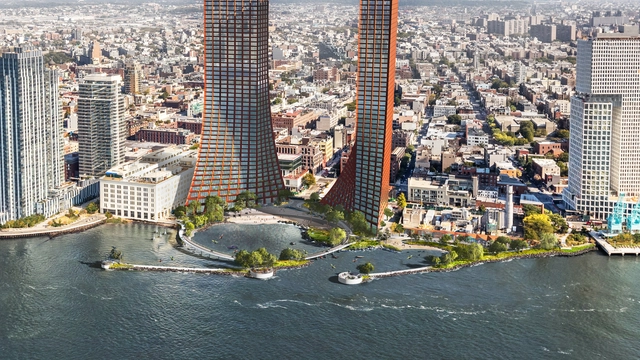
Two Trees Management Company, a New York-based real estate development firm, has presented a master plan for the Northern Brooklyn waterfront, a new approach to urban resiliency. Designed by BIG and Field Operations, the project puts in place a mixed-use development and a resilient park.
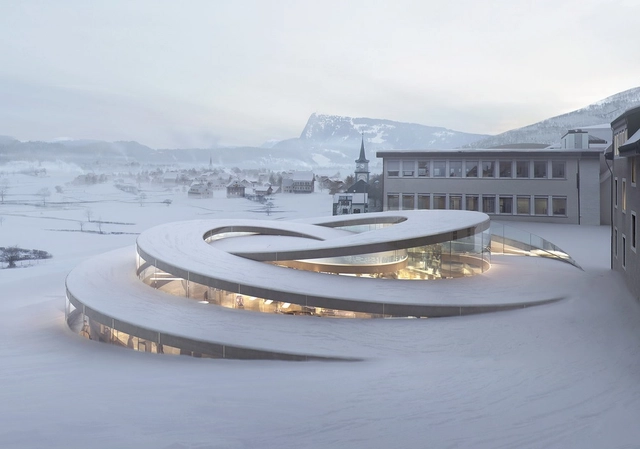
The new museum by BIG for Swiss luxury watchmaker Audemars Piguet is set to open to the public next May. As featured in WSJ. Magazine, the project was designed as an extension to their headquarters in Le Brassus, near Le Chenit. Conceived as a spiraling glass pavilion in the landscape, the design will take visitors on a narrative journey through the company's 139-year history.
The Portico - CityLife Milan. Image Courtesy of lucianR
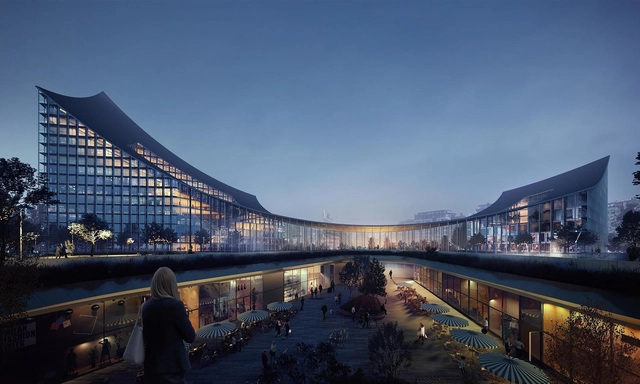
Bjarke Ingels Group have unveiled their design for The Portico, a 53,500-square-meter development on the last two remaining plots of the CityLife masterplan in Milan, Italy. CityLife presented the proposal with two individual buildings connected by a 140m long hanging roof structure to form a generous urban-scale entrance to the city.
Bjarke Ingels Group has been working on the Mars Science City project after the United Arab Emirates announced the initiative in 2017. The $140 Million USD (AED 500 million) research city aims to serve as a “viable and realistic model” for the simulation of human occupation of the martian landscape. The project is designed with a team of Emirati scientists, engineers and designers from the Mohammed bin Rashid Space Center.
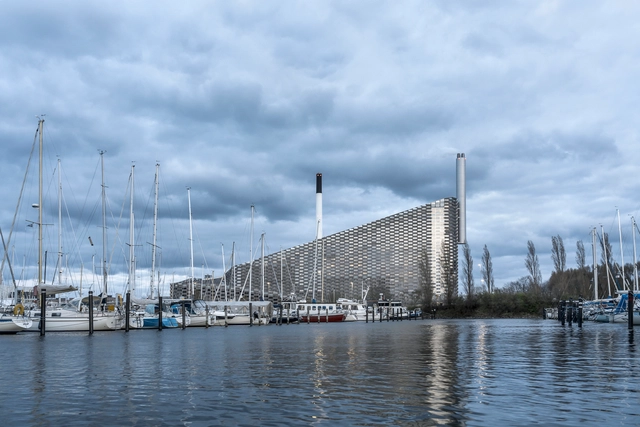
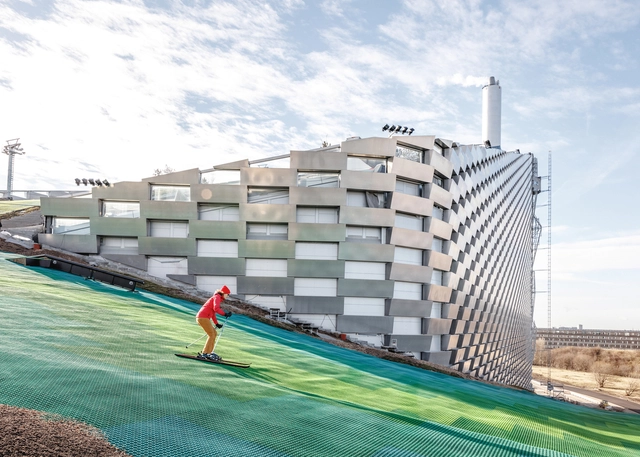
Nearly a decade in the making, the landmark CopenHill waste-to-energy plant first imagined by Bjarke Ingels Group has finally opened in Copenhagen. ArchDaily initially covered BIG's project in January 2011, and the waste-to-energy plant would later include hedonistic ideas of the world’s first steam ring generator and crowdfunding through Kickstarter. Today, the project has fulfilled many of its promises, and CopenHill stands as a modern architectural zeitgeist reflecting BIG's own evolution.
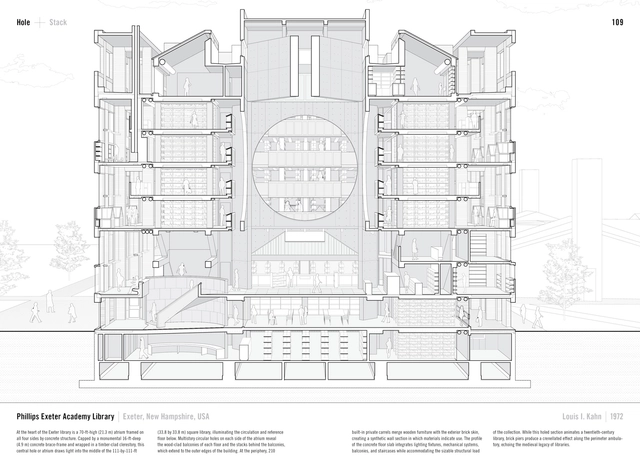
Phillips Exeter Academy Library by Louis I. Kahn (1972). Published in Manual of Section by Paul Lewis, Marc Tsurumaki, and David J. Lewis published by Princeton Architectural Press (2016). Image Courtesy of LTL Architects
For Paul Lewis, Marc Tsurumaki and David J. Lewis, the section “is often understood as a reductive drawing type, produced at the end of the design process to depict structural and material conditions in service of the construction contract.” A definition that will be familiar to most of those who have studied or worked in architecture at some point. We often think primarily of the plan, for it allows us to embrace the programmatic expectations of a project and provide a summary of the various functions required. In the modern age, digital modelling software programs offer ever more possibilities when it comes to creating complex three dimensional objects, making the section even more of an afterthought.
With theirManual of Section(2016), the three founding partners of LTL architects engage with section as an essential tool of architectural design, and let’s admit it, this reading might change your mind on the topic. For the co-authors, “thinking and designing through section requires the building of a discourse about section, recognizing it as a site of intervention.” Perhaps, indeed, we need to understand the capabilities of section drawings both to use them more efficiently and to enjoy doing so.
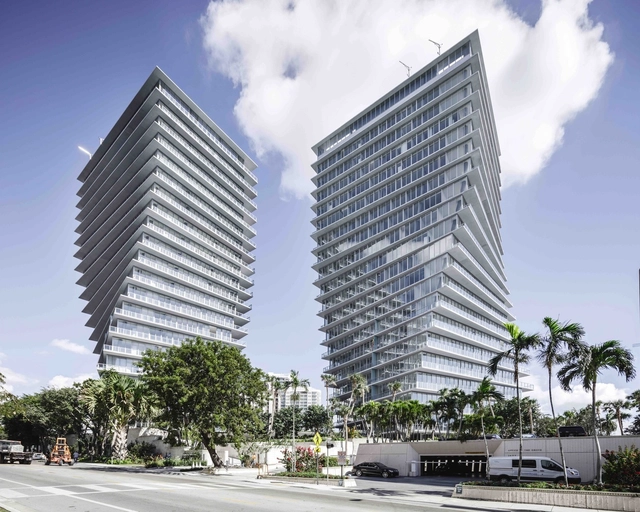
In the last decade, Miami has progressively transformed into a mecca of architecture and design. While the city’s tropical persona is most often associated with Art Deco, Miami offers a wide range of architectural styles from Mediterranean Revival to Miami Modern and everything in between. Over the years, the city has welcomed a some of the world’s leading talent including Pritzker Prize winners like “Queen of the Curves” Zaha Hadid, French visionary Jean Nouvel, Swiss duo Herzog & de Meuron, Frank Gehry and more – who have all left a lasting impression on Miami through their work. Whether visiting Miami Beach’s Art Deco district or the quaint, village-like Coconut Grove neighborhood, visitors can discover an array of awe-inspiring architecture no matter where their travels take them.
Bjarke Ingels Group has launched an exhibition at the Danish Architecture Center, reflecting on the firm’s extensive history in design. “Formgiving – An Architectural Future History from Big Bang to Singularity” explores how the world around us has taken shape with 71 BIG projects.
Bjarke Ingels has featured in a new documentary about BIG’s Amager Bakke waste-to-energy plant in Copenhagen. Known for its iconic ski slope, the hybrid plant produces district heating for 60,000 households annually from waste generated in Copenhagen, and electricity for 30,000 houses.
https://www.archdaily.com/919415/bjarke-ingels-reflects-on-his-waste-energy-ski-slope-plant-in-copenhagenNiall Patrick Walsh
.jpg?1584441338&format=webp&width=640&height=580)




_9372.jpg?1579675860&format=webp&width=640&height=580)
_9441.jpg?1579675926 "© Laurian Ghinitoiu")
_9439.jpg?1579675907 "© Laurian Ghinitoiu")
_9550.jpg?1579676083 "© Laurian Ghinitoiu")
_9372.jpg?1579675860 "© Laurian Ghinitoiu")
_9372.jpg?1579675860)





























_HI_RES_(5)_copy.jpg?1565259186 "© Robin Hill. ImagePark Grove / OMA | Shohei Shigematsu")


.jpg?1565259275 "Courtesy of Herzog & de Meuron. Image1111 Lincoln Road / Herzog & de Meuron")

.jpg?1562581239&format=webp&width=640&height=580)
.jpg?1562581175 "© Rasmus Hjortshøj - COAST")
.jpg?1562581122 "© Rasmus Hjortshøj - COAST")
.jpg?1562581191 "© Rasmus Hjortshøj - COAST")
.jpg?1562581141 "© Rasmus Hjortshøj - COAST")
.jpg?1562581239)