1. ArchDaily
  2. Articles

Articles: The Latest Architecture and News

Tegucigalpa’s Modernist Revolution: Metroplan and the Shift in the Urban Identity of 1970s Honduras

Subscriber Access | 

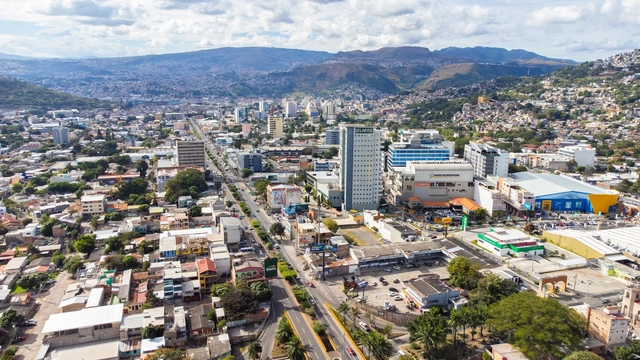
In 1975, Honduras was under a military regime that had been in power for over a decade, led at the time by General Juan Alberto Melgar Castro. During this period, Tegucigalpa underwent several big and unprecedented changes. The influx of people from various parts of the country due to rural migration transformed the city from a compact urban area into an expanding metropolis. This unexpected growth prompted the government to implement a municipal development and planning scheme, a project that would define the city's future and the evolution of its old town. This article was developed with the collaboration of the Honduran architect Lisandro Calderón, who specializes in Urban Planning and is currently a professor at the Central American Technological University (UNITEC), located in Tegucigalpa, Honduras.


Tegucigalpa’s Modernist Revolution: Metroplan and the Shift in the Urban Identity of 1970s Honduras  - Imagem 1 de 4Tegucigalpa’s Modernist Revolution: Metroplan and the Shift in the Urban Identity of 1970s Honduras  - Imagem 2 de 4Tegucigalpa’s Modernist Revolution: Metroplan and the Shift in the Urban Identity of 1970s Honduras  - Imagem 3 de 4Tegucigalpa’s Modernist Revolution: Metroplan and the Shift in the Urban Identity of 1970s Honduras  - Imagem 4 de 4Tegucigalpa’s Modernist Revolution: Metroplan and the Shift in the Urban Identity of 1970s Honduras  - More Images+ 12

Light as an Active Participant in Space: Robert Wilson’s Minimalist Approach to Stage Lighting

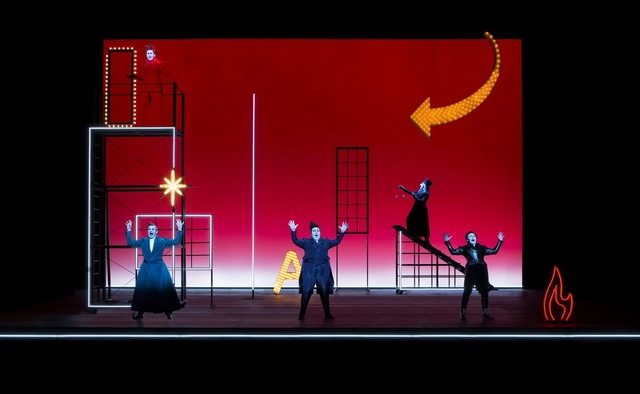
Robert Wilson embodies the roles of director, set designer, scenographer, lighting designer, and architect in a single figure. Internationally celebrated as a pioneer of stage lighting and honored with numerous prestigious awards, including the Golden Lion of the Venice Biennale and the Praemium Imperiale, Wilson, now in his eighties, continues to travel the world, staging remarkable productions. His use of light and color is marked by precision and minimalism, creating scenes that skillfully oscillate between stillness and drama. During rehearsals at the Düsseldorf Schauspielhaus, he elaborates on the interplay between stage and architecture, his creative process, and the profound impact of light on darkness.

Light as an Active Participant in Space: Robert Wilson’s Minimalist Approach to Stage Lighting - Image 1 of 4Light as an Active Participant in Space: Robert Wilson’s Minimalist Approach to Stage Lighting - Image 2 of 4Light as an Active Participant in Space: Robert Wilson’s Minimalist Approach to Stage Lighting - Image 3 of 4Light as an Active Participant in Space: Robert Wilson’s Minimalist Approach to Stage Lighting - Image 4 of 4Light as an Active Participant in Space: Robert Wilson’s Minimalist Approach to Stage Lighting - More Images+ 15

Storytelling for Interiors: From Murals and Wallpapers to Digital Screens

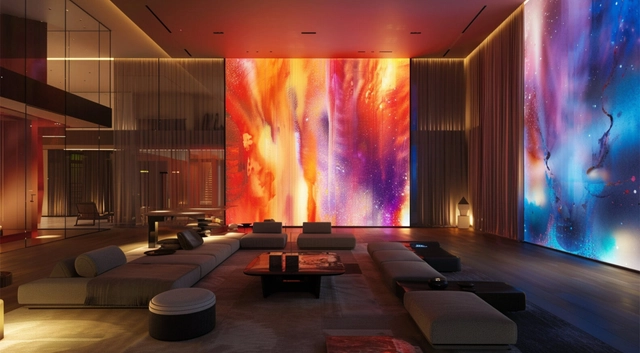
Walls have long been more than mere structural elements; they are canvases that narrate stories, reflecting desires for nature, spirituality, or the pursuit of tranquility and stimulation. With advancements in addressable LED pixels, walls have evolved into immersive digital surfaces capable of displaying any image in large format, adapting to the needs of the moment.

However, while universities continue to train architects and interior designers to create static buildings, the art of meaningful storytelling through digital screens—especially those with dynamics—remains largely unexplored in academic curricula.

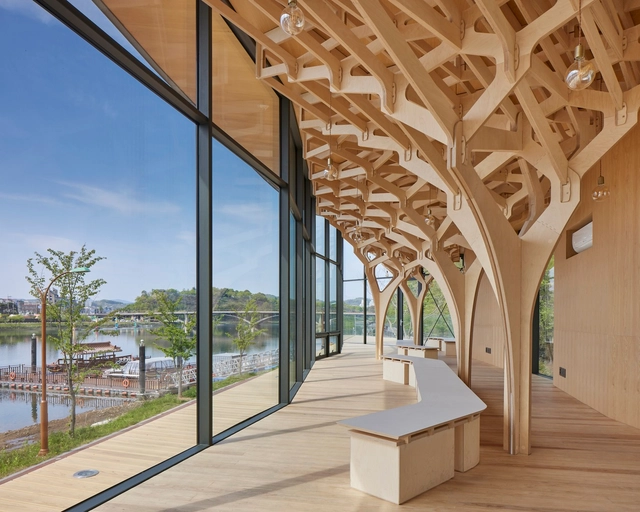
When Old Meets New: JK-AR's Reinvention of the Traditional East Asian Bracket System through Digital Carpentry

By imagining an alternative reality and rediscovering his cultural background, architect Jae Kyung Kim of JK-AR established his identity as an architect when creating his practice, selected as one of ArchDaily’s New Practices 2023. After studying and working in South Korea and the US, he’d noticed an absence of traditional Asian architecture, which had peaked his interest. He began to thoroughly look at a possibility where the traditional timber buildings of East Asia had still been relevant and continued to evolve.

When Old Meets New: JK-AR's Reinvention of the Traditional East Asian Bracket System through Digital Carpentry - Image 1 of 4When Old Meets New: JK-AR's Reinvention of the Traditional East Asian Bracket System through Digital Carpentry - Image 2 of 4When Old Meets New: JK-AR's Reinvention of the Traditional East Asian Bracket System through Digital Carpentry - Image 3 of 4When Old Meets New: JK-AR's Reinvention of the Traditional East Asian Bracket System through Digital Carpentry - Image 4 of 4When Old Meets New: JK-AR's Reinvention of the Traditional East Asian Bracket System through Digital Carpentry - More Images+ 22

6 Successful City Park Projects That Are Hotspots for Biodiversity

Subscriber Access | 

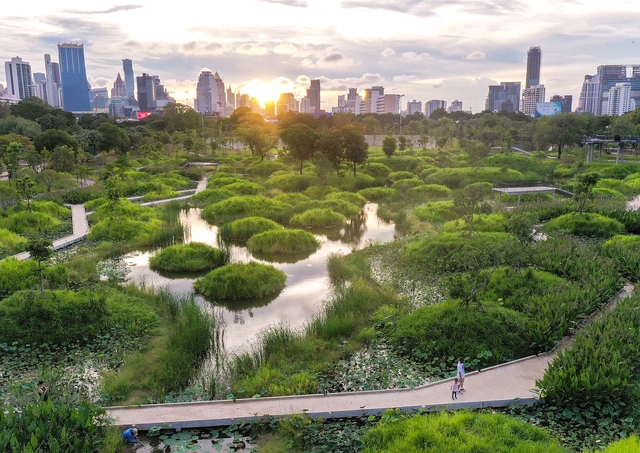
Modernity and globalization have significantly reduced geographical distances, transformed social interactions, and accelerated the flow of information across nations, which has, in a sense, made the world more accessible to people everywhere. However, it's important to note that when we say "everyone," we refer to a vast and diverse population. Modernity and globalization had an impact on noticeable inequalities in both social and technological realms, as more advanced and privileged nations have established benchmarks and norms for leisure, culture, and consumption. As a result, certain cultures have established a dominant influence, promoting the notion that there is a "correct" way to live and build cities. This unchecked pursuit of development comes at a significant cost to the Earth's ecosystems and biomes.

6 Successful City Park Projects That Are Hotspots for Biodiversity - Image 1 of 46 Successful City Park Projects That Are Hotspots for Biodiversity - Image 2 of 46 Successful City Park Projects That Are Hotspots for Biodiversity - Image 3 of 46 Successful City Park Projects That Are Hotspots for Biodiversity - Image 4 of 46 Successful City Park Projects That Are Hotspots for Biodiversity - More Images+ 4

The American-Inspired Russian Architecture

The American-Inspired Russian Architecture - Films & Architecture
Boris Iofan’s winning proposal for Palace of the Soviets. Image Courtesy of Arkadi Mordvinov, Vyacheslav K. Oltarzhevsky/Tchoban Foundation

From the famous Kitchen Debate between Nikita Khrushchev and Richard Nixon to the popularity of Henry Ford within the USSR, the hundreds of factories designed by Detroit engineer Albert Kahn for Soviet Russia, and skyscrapers erected in Moscow, the Cold War had a peculiar side to it, that is the Russian fascination with American culture and technology.

Are We Air Conditioning our Planet to Death?

This article was originally published on Common Edge.

This summer the federal government released an astonishing statistic: 87% of American homes are now equipped with air conditioning. Since the world is getting undeniably warmer, I suppose this isn’t all that surprising, but keep in mind that robust number of mechanically cooled homes include residences in some fairly temperate climates. So my question is a simple one: When did air conditioning in the U.S. became a requirement, rather than an add-on? 

Are We Air Conditioning our Planet to Death? - Image 1 of 4

Ian McHarg's Legacy Spurs "Design With Nature Now" Initiative 50 Years Later

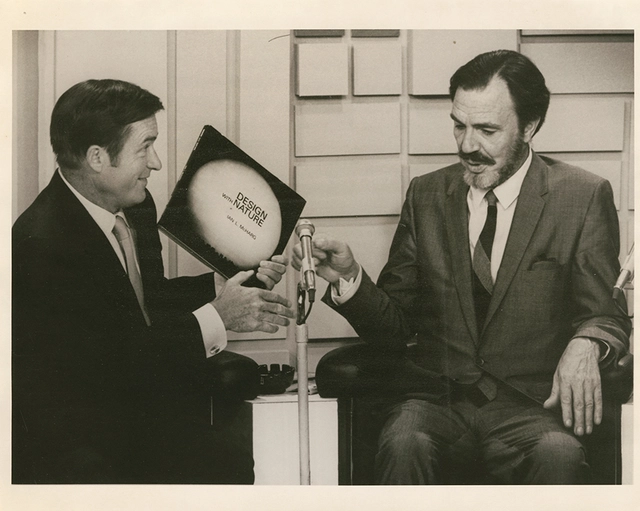
Fifty years have passed since the publication of influential landscape architect Ian McHarg’s book, Design With Nature in 1969. Throughout the United States, an environmental movement was taking place, into the center of which McHarg’s book was thrust. The 1970s and ‘80s were a time of much landmark legislation surrounding ecological concerns, and McHarg argued that landscape architecture alone was able to integrate all the disparate fields involved.

Material Artistry Meets Modern Forms with SO-IL

As a firm which has already won major awards, worked on culturally significant projects on a large scale, and generally achieved substantial success and recognition in just over 10 years, SO-IL seem to straddle a line between being an “emerging” and an “established” practice. Florian Idenburg and Jing Liu founded SO-IL (Solid Objectives-Idenburg Liu) in 2008 and have since gained a reputation for modern, clean-lined designs, but often with a unique material twist.

Material Artistry Meets Modern Forms with SO-IL - Image 1 of 4Material Artistry Meets Modern Forms with SO-IL - Image 2 of 4Material Artistry Meets Modern Forms with SO-IL - Image 3 of 4Material Artistry Meets Modern Forms with SO-IL - Image 4 of 4Material Artistry Meets Modern Forms with SO-IL - More Images

Why Technology Isn’t The Answer for Making Cities Smarter

Innovation and technology are often presented as inextricably linked ideas. Yet, when it comes to solving today’s urban problems, technology does not always represent the best way forward.

Innovation instead should come from a thorough understanding of the city’s functions and processes, including its municipal government and other local organizations. Technology can help, yes, but cannot be used as a panacea.

"Reverse Zoo" LABIOMISTA Opening in 2019 Features Mario Botta Building

The public will soon have the opportunity to experience the vulnerability and awe of briefly inhabiting an animal domain at the “Reverse Zoo,” LABIOMISTA. Translating to “mixture of life,” the 60-acre project is spearheaded by Belgian artist Koen Vanmechelen and is set to open in 2019.

Laser-Cut Mini Architecture Masterworks As Wall Hooks

Indian design and fabrication studio, MuseLAB creates customized furniture and products. Their 2017 creations include to-scale miniature architectural wall hooks. These functional household items were inspired by the works of Oscar Niemeyer, Le Corbusier, Charles Correa, Michael Graves, and others.

Talking With Thom

Despite what you may think, Thom Mayne isn't the "bad boy" of architecture - at least, not according to Thom Mayne. He sees himself more as a skilled negotiator than a starchitect (a phrase he hates) - after all, he reasons, how else would he have completed so many buildings? In this interview, originally published on Metropolis Magazine's Point of View blog as "Q&A: Thom Mayne," Andrew Caruso and Mayne discuss Morphosis, SCI-ARC, the early days of his career, and his architectural ethos.

Andrew Caruso: Your professional career began in the discipline of planning. What led to the shift toward architecture and your eventual partnership with Jim Stafford?

Thom Mayne: I started working at the Pasadena redevelopment agency doing low cost housing, and that’s where I met Jim [Stafford]. Coming out of USC, I had no background about Mies, Khan or Corbusier, for example. USC was very strong in being anti-historical, looking forward instead of backward. I was essentially naive.

Jim was a year ahead of me at USC and had part of the older regime at the school. When I met him at the planning agency, he started introducing me to history. I got fascinated by [Paul] Rudolph; and then it just took off. Jim guided me through this thought process, reestablishing me in the tradition of architecture.

Honoring Architecture's Digital Pioneers

Many would consider Greg Lynn the leader of computer-aided design in architecture - but Lynn himself begs to differ. He and the Canadian Centre for Architecture recently collaborated on "Archaeology of the Digital," the first in a series of exhibitions that will showcase the work of the earliest adopters of digital techniques in architecture. The exhibit, which opened on May 7, focuses on work by Frank Gehry, Peter Eisenman, Chuck Hoberman, and Shoei Yoh. In this interview, originally published in Metropolis Magazine as "Computer Control," Avinash Rajagopal speaks with Greg Lynn about some of the projects and the inspiration behind the exhibit itself.