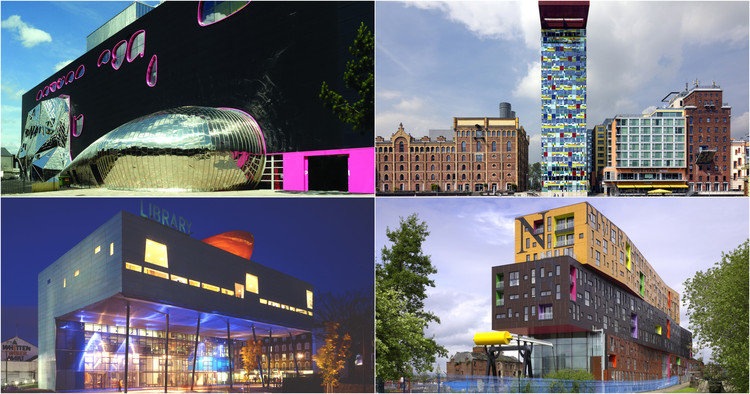
The late British architect Will Alsop was noted for his exuberant and irreverent attitude that took material form in his expressive, painterly portfolio of educational, civic, and residential works. At the ripe age of 23, he was awarded second place in the 1971 Centre Georges Pompidou. From there, he went on to work for the ever humorous Cedric Price before establishing his practice with John Lyall, and eventually many others, in the early 1980s. With a career spanning almost fifty years, here are ten iconic works from an architect who never missed an opportunity to play.
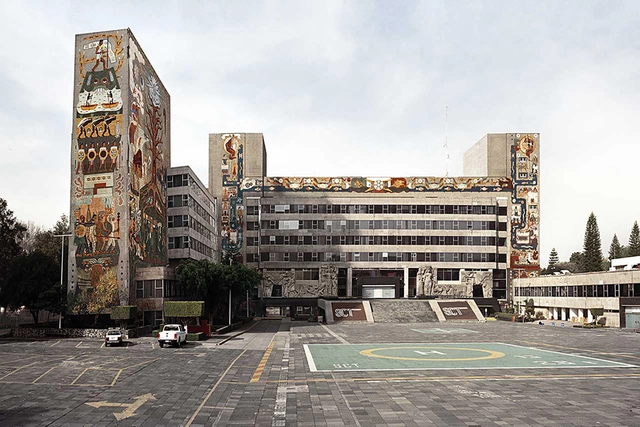
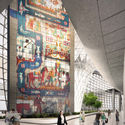
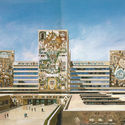
Centro SCOP in Mexico City was shuttered after a series of devastating earthquakes. A new exhibition proposes rehousing its historically significant murals. Image Courtesy of Pablo López Luz/ Archivo Diseño y Arquitectura
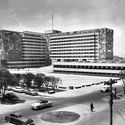
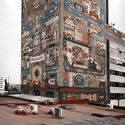
It’s a slate-gray day in Mexico City’s Colonia Narvarte neighborhood and mounting gusts signal imminent rain. Centro SCOP, a sprawling bureaucratic complex, rises sharply against this bleak backdrop. The building is a masterful, if not intimidating, example of Mexican Modernism, an H-shaped assemblage of muscular concrete volumes designed by architect Carlos Lazo, covered in an acre-and-a-half of vibrant mosaic murals.
At its peak, the building accommodated more than 3,000 workers for the Secretariat of Communications and Transportation (SCT). Today, save a security guard in its gatehouse, it is empty.
In their latest video from the Time-Space-Existence series, PLANE—SITE features acclaimed conceptual artist Lawrence Weiner and his ideas regarding the relationship between people and material objects, language as a gesture, and making art accessible to the public. Lawrence Weiner is known for his typographical art applied onto elements of the built environment, and he describes how architecture itself can become an alternative space to present art.
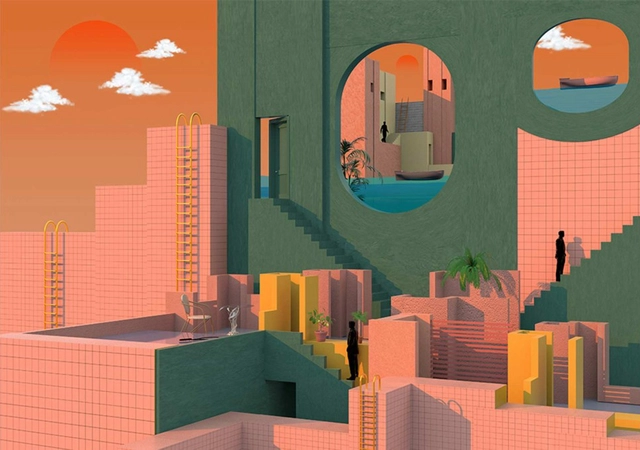
It is rare to find artists who can instigate critical reflection on architecture by combining references such as 'The Red Wall' (La Muralla Roja) by Ricardo Boffil, with the complex illustrations of Giovanni Battista Piranesi and pop culture icons. But Tishk Barzanji, a London artist, is one who does.
Through his digital illustrations, he explores elements of modern architecture from a filtered view by using references that create a dreamlike and surreal universe, producing compositions that express an austere and somewhat disturbing atmosphere.
In 1961, the architect Louis I. Kahn was commissioned by the Fine Arts Foundation to design and develop a large arts complex in central Fort Wayne, Indiana. The ambitious Fine Art Center, now known as the Arts United Center, would cater to the community of 180,000 by providing space for an orchestra, theatre, school, gallery, and much more. As a Lincoln Center in miniature, the developers had hoped to update and upgrade the city through new civic architecture. However, due to budget constraints, only a fraction of the overall scheme was completed. It is one of Kahn’s lesser-known projects that spanned over a decade, and his only building in the Midwest.
Art, in general, is made to be seen or experienced by another, an interlocutor, who, in turn, establishes various relationships with the art work. However, this is not the case of the Bataan Chapel, built by the Swiss artist Not Vital in the Philippines.
Ravaged by constant winds, the art work rises on a hill in rural Bagac, a town of just under 30,000 inhabitants located about 50 kilometers west of Manilla. The remote location of the building makes access difficult and the journey becomes a sort of pilgrimage — part of its grace lies precisely in its inaccessibility.
Throughout the spring and summer of 2018, seventeen US cities will host “Hip Hop Architecture Camps,” an initiative founded by the Urban Arts Collective seeking to address the lack of diversity in America’s architectural community. As reported by CNET, the architecture camps will be sponsored by Autodesk, makers of the architectural software AutoCAD.
Hip Hop Architecture Camps are geared towards students between the ages of 10 and 17, introducing students to architecture and urban planning by analyzing the structure and rhythm of rap music. By demonstrating a connection between music and architecture, the organizers hope to ignite a design flair in young students, helping to create a future where local communities have a stronger input into how urban areas are shaped or altered.
https://www.archdaily.com/892088/hip-hop-architecture-camps-use-rap-music-to-inspire-a-diverse-generation-of-future-architectsNiall Patrick Walsh
Videos
Courtesy of Gary di Silvio and Giacomo Mangia
Carlo Ratti Associati (CRA) has unveiled Scribit, a “writing robot” which draws images and text on any wall surface, turning office, living, and bathroom walls into a blank canvas for artistic expression. Using in-built engines, Scribit can draw, cancel, and re-draw new content an infinite number of times, allowing users to print different images, messages, or feeds every day.
Scribit is always connected to the internet, allowing users to download, upload or source any online content. Operating in real time, Scribit immediately reproduces any data sent to it by the user, be it a restaurant posting the day’s menu, a financial firm posting stock market updates in its lobby, or an art enthusiast projecting their own content on the living room wall.
In the 1920s, Dutch-born artist Piet Mondrian began painting his iconic black grids populated with shifting planes of primary colors. By moving beyond references to the world around him, his simplified language of lines and rectangles known as Neo Plasticism explored the dynamics of movement through color and form alone. Though his red, yellow and blue color-blocked canvases were important elements of the De Stijl movement in the early 1900s, almost a century later Mondrian’s abstractions still inspire architects across the globe.
But, what is it about these spatial explorations that have captivated artists and designers for so long?
via Wikipedia User: HalloweenHJB Licensed Under CC BY-SA 3.0
Even in the age of instant information, museums enthrall us. Lining the tourist guidebooks of cities across the world, art museums are a must-see destination for visitors and locals alike. However, as our methods of communication and archiving change, driven by science and innovation, historic institutions such as art museums must keep up.
In cities around the world, art museums are redefining themselves to respond to the contemporary, experimental demands of the 21st-century. In Buenos Aires, the architecture of art museums showcases a diverse catalog of form, materiality and atmosphere, blending the instant, flexible demands of the modern age with a historic role of archiving some of humanity's most evocative works.
Below, we paint a picture of Buenos Aires' diverse art museums, showcasing the changing nature of exhibition architecture in one of the world’s most energetic cities.
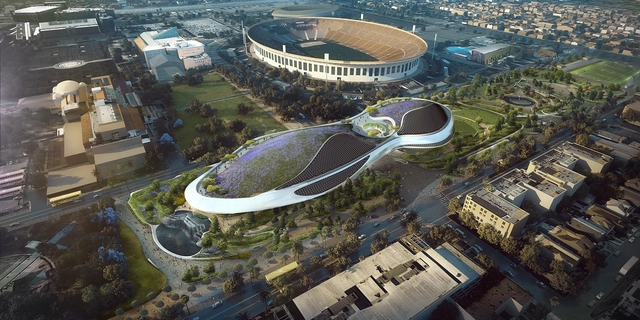
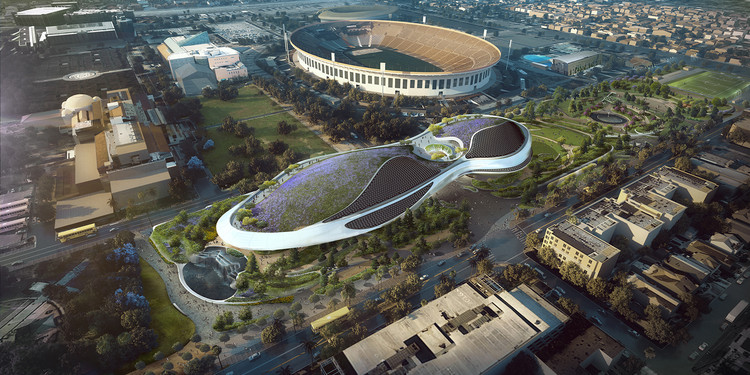
The Lucas Museum of Narrative Art, designed by MAD Architects, has broken ground in Los Angeles, California. Founded by “Star Wars” creator George Lucas, and standing at the gateway to the city’s Exposition Park, the scheme is envisioned as a “futuristic spaceship” landing on the site’s natural environment.
The building’s interior has been designed as an expansive, open cave, flooded with natural light from skylights above. At least $400 million worth of art will be housed in the museum, including over 10,000 paintings, illustrations and movie memorabilia. The first floor and roof will be designated as public areas for visitors to exercise, relax, and “directly experience nature in the urban environment."
https://www.archdaily.com/890808/new-images-of-mads-spaceship-lucas-museum-released-as-construction-breaks-ground-in-los-angelesNiall Patrick Walsh
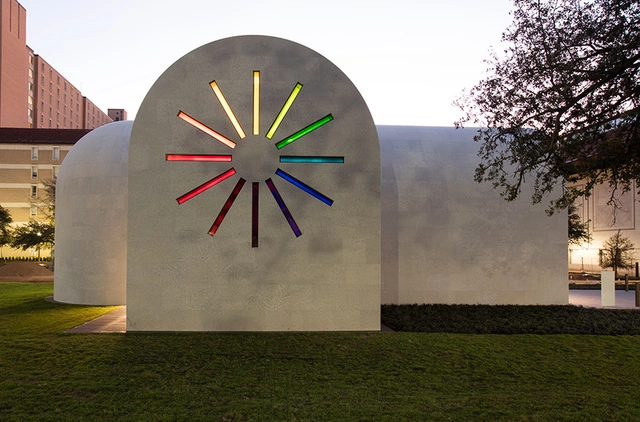
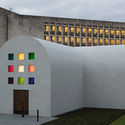
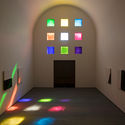
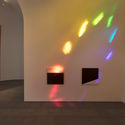
Ellsworth Kelly died in December 2015 at the age of 92, less than a year after he announced a gift of one of his most lasting creative contributions: plans for the artist’s only building, which had been sitting in his New York studio since 1986.
Titled Austin, this 2,715-square-foot work on the grounds of the Blanton Museum of Art on the University of Texas at Austin campus would be his final—and perhaps greatest—effort, an immersive space whose artistic value matches that of the marble panels and sculpture within. Unlike the Rothko Chapel in Houston, in Austin the artist and architect are one, says Carter E. Foster, the Blanton’s deputy director for curatorial affairs.
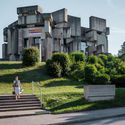
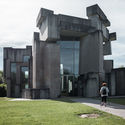
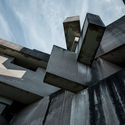
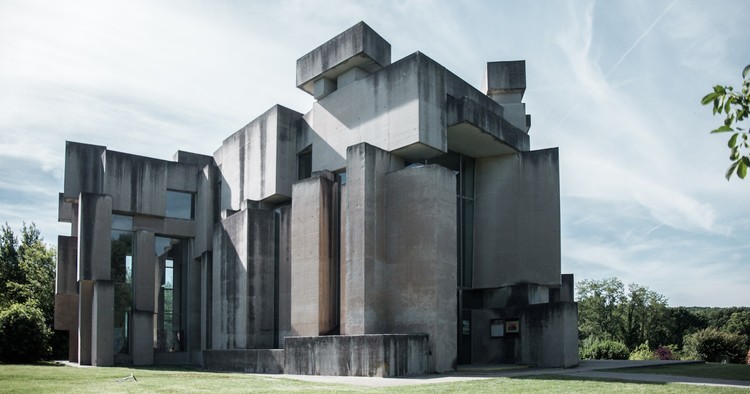
Located on a hill in Mauer, on the outskirts of Vienna, the Wotruba Church was the culmination of sculptor Fritz Wotruba’s life (the project’s architect, Fritz G. Mayr, is often forgotten). Constructed in the mid-1970s, Mayr completed the project one year after Wotruba’s death, enlarging the artist’s clay model to create a functional walk-in concrete sculpture. As can be seen in these images by Denis Esakov, the result is a chaotic brutalist ensemble that toys with the boundaries between art and architecture.
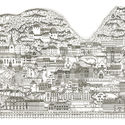
Trained in Architecture, Urban Design, and Theory, Alina Sonea illustrates the complex and often paradoxical nature of the cities we inhabit. The Feldkirch-based artist and architect has, since 2013, completed a series of detailed illustrations that employ graphic yet delicate black lines to render dense images of fantastical metropolises.
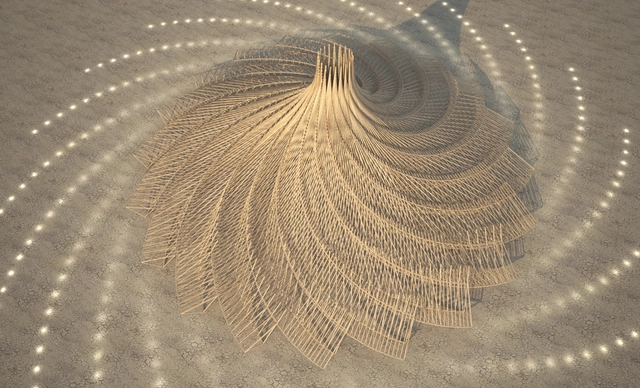
Designed using 3D parametric software, the pavilion is formed from 20 timber trusses that spiral in toward a central point the reaches toward the sky. Starting on the ground, the triangular trusses span large enough distances to create a series of spiraling paths toward the center of the structure, where a giant 3D-printed mandala will be displayed. The spaces in between the truss members will also be large enough to serve as alcoves.
The clever Italian artist, Federico Babina is at it again, and this time he's taking us around the world in 21 animated illustrations. Hear the ringing of Big Ben, sirens in New York, seagulls of Amsterdam, and Havana drums as you find yourself adding to your travel bucket list. You'll have to watch this animation more than once to catch all of the details Babina captures about an entire city culture in one illustration. Or view each illustration individually below.
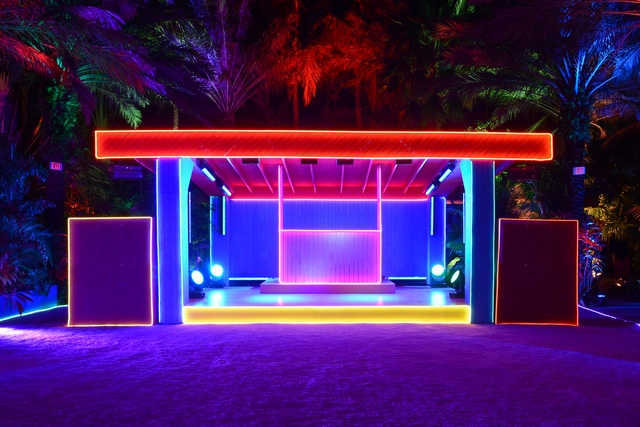
The Prada Double Club Miami / (c) Casey Kelbaugh. Image Courtesy of Fondazione Prada
As part of Art Basel in Miami Beach, a modern and contemporary art fair that highlights galleries and the newest developments in the visual arts, Carsten Höller created an installation piece for the Fondazione Prada. The installation, “The Prada Double Club Miami” is only open for a few days as part of Art Basel and is a fully-functioning nightclub.







.jpg?1520689109&format=webp&width=640&height=580)