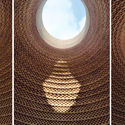
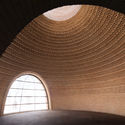
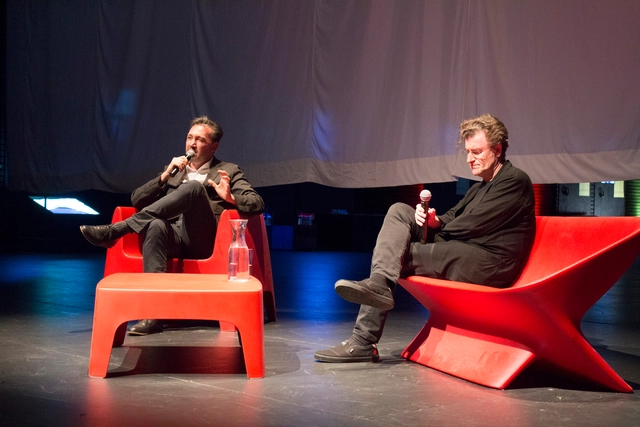
This article is based on a lecture given by Chilean artist and architect Alfredo Jaar at the 20th Architecture and Urbanism Biennale in Valparaiso, Chile, on October 26, 2017.
It's June of 1980. Alfredo Jaar, a recent dropout of the University of Chile's architecture program, walks through the center of Santiago carrying two large signs. He grabs a spot in the shade next to a kiosk and intercepts passers-by to ask them his questions. In the midst of a military dictatorship, Jaar wants the people to vote, but not for the constitutional plebiscite or in the democratic elections. He doesn't even have paper or pencil for them to vote with. There's no line to mark on. His campaign centers on a mint--white and round--like a casino raffle ball.
Jaar's questions are loaded ones. "Are you happy?" (¿Es usted feliz?) he asks. "How many people in Chile do you think are happy?" "How many people in the world?"
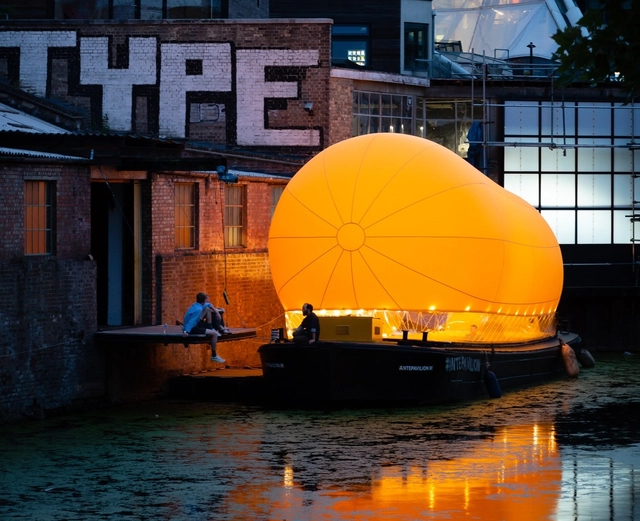
Architecture is defined by its permanence. While the discipline's most celebrated works are often those that were built to last, there's inherent beauty and value in an architecture of impermanence. Moving beyond conventional buildings and considering environmental and social impacts, temporary structures hold the potential to push the boundaries of architecture and the categorization of art.
Bodybuilding, SO – IL and Ana Prvački, L’air pour l’air, Chicago, 2017. Photograph by Laurian Ghinitoiu
Six months after the release of the namesake book during the latest installment of the biennial, PERFORMA has launched Bodybuilding, which features thirty-five architecture studios who engage with performativity.
Is architecture a period or a comma? Are built forms hermetic bodies or catalysts for action? PERFORMA curator Charles Aubin and architect Carlos Mínguez Carrascor, published Bodybuilding: Architecture and Performance, during the most recent installment of the PERFORMA 19 biennial in New York City last November. Noticing a lack of a comprehensive, multigenerational survey on the subject, the duo’s interest in investigating the ways architects engage with performance goes as far back as a symposium they co-organized at the Performa 17 Hub in 2017. The book, which features essays by Mabel O. Wilson and Bryony Roberts, Lluís Alexandre Casanovas Blanco, and Victoria Bugge Øye, seeded the fundamental approaches now deeply rooted in the online exhibition: the impact of movement on systematic urbanization, the body’s relationship to buildings and monuments, and architecture’s role in action, be it physical or sociopolitical.
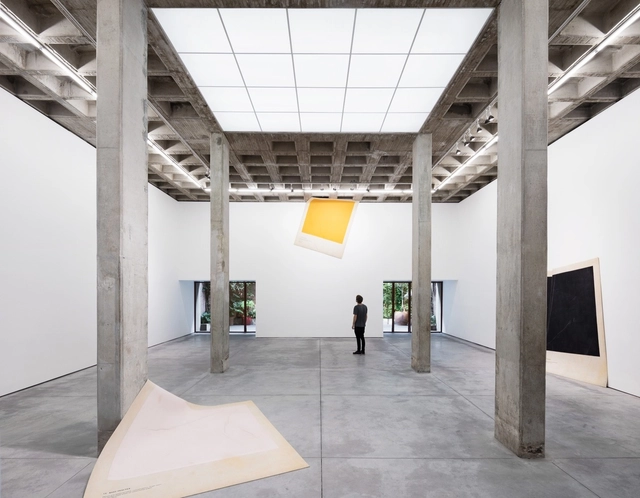
Overall, when designing exhibition spaces, certain aspects contribute to an effective display of the pieces: diffuse lighting, spatial distribution, and high ceilings are some of them. The combination of these features with rooms that are able to transform themselves (using elements that can be perforated, repainted, and adapted according to each exhibition), is common in many art galleries, expressing the dialogue between art and architecture.
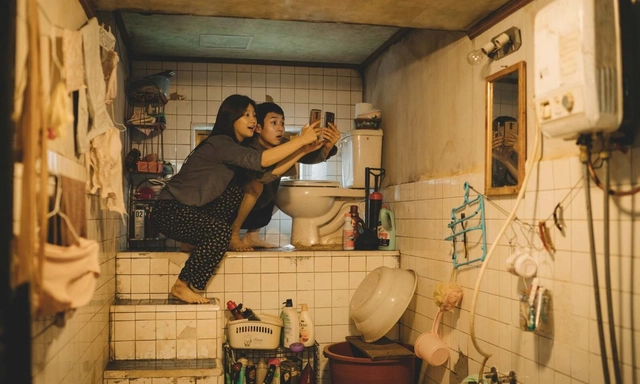
The recent success of Parasite, the award winning film directed by South Korean director Bong Joon Ho, has created a conversation around the emphasis of architecture and interior spaces in movies. This particular film does an excellent job of blurring the boundaries between the two disciplinary fields, to the point where the architecture is not just the background of the set, but it has been placed at the forefront of the storyline, and takes on the leading role in many scenes.
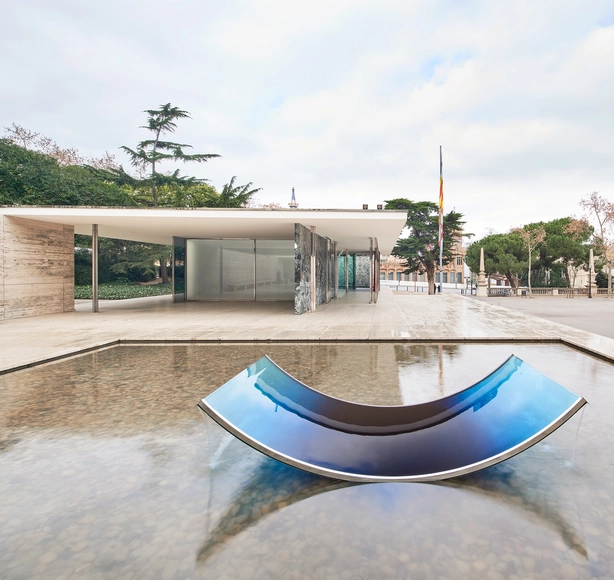
Mies van der Rohe Foundation together with Side Gallery presented "No Fear of Glass", an artistic intervention in the Mies van der Rohe Pavilion in Barcelona, Spain, developed by designer Sabine Marcelis.
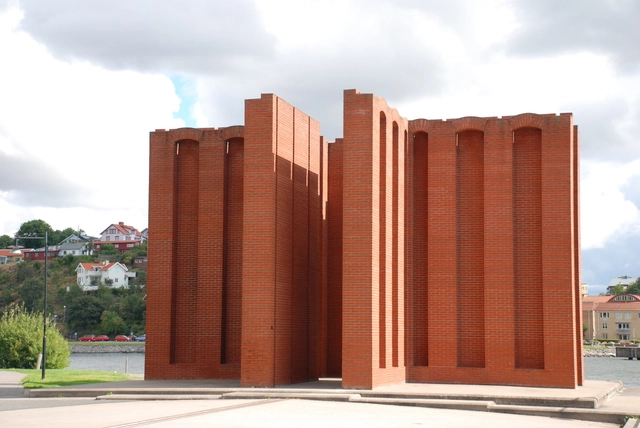
The interview Per Kirkeby: "We Build Upon Ruins" published on Louisiana Channel not only showcases the colorful canvases of the Danish painter, sculptor, filmmaker, and writer, but also his own reflections on the importance of surroundings that "give us so much baggage." It's this very idea that Kirkeby brings to his brick sculpture displays, where something simple and sometimes useful puts aside inaccessible conceptualism to pay homage to the surroundings rather than the sculptures themselves.
The Bulgarian artist Christo will wrap the famous Arc de Triomphe in Paris with recyclable blue fabric in his next work. The work, which will open on April 9 and last for two weeks, coincides with the artist's large exhibition at the Center Pompidou, which brings together works done in partnership with his late wife, Jeanne-Claude, during the period in which they lived in Paris.
Architecture can be understood through many prisms but is often seen solely as the response to material demands - housing, leisure, commerce, etc. But perhaps no space is more emotionally and symbolically loaded than that of sacred spaces. Designing spaces for worship (religious or otherwise) can be one of the most creative and liberating tasks of this profession. These spaces transcend the terrestrial plane of mere material to become part of a universe of subjectivity and faith.
We present below a series of illustrations of such spaces by André Chiote, featuring famed architectural works by designers such as Gottfried Bohm, Oscar Niemeyer, and Peter Zumthor.
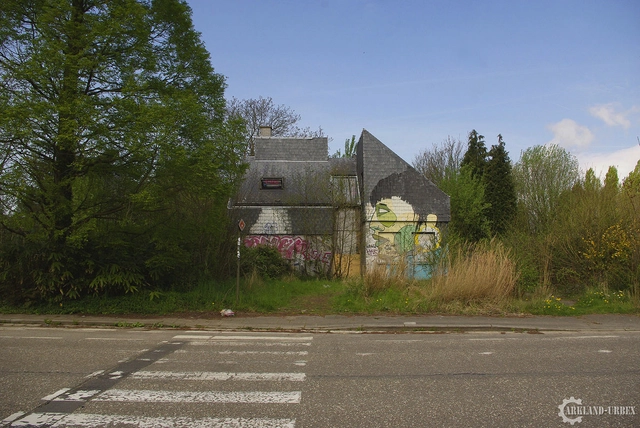
Street art has long surpassed mere trend to become an integral part of cities' cultural identities. What was once considered vandalism is now not only accepted but encouraged. The works of once-prosecuted artists such as Banksy and Shepard Fairey are now collector's items; murals can cost anywhere from $1,000 to $20,000 or more. Through their works, artists may even have the power to save cities.
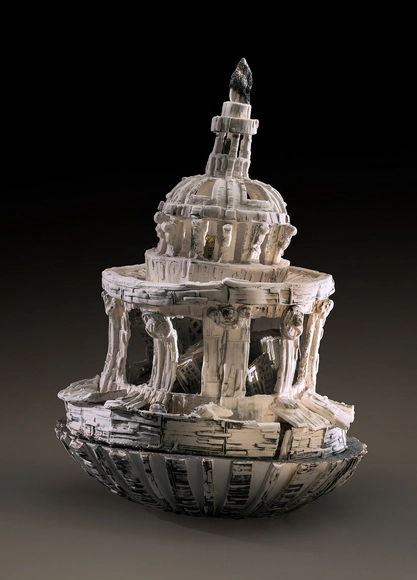
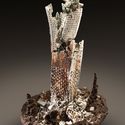
Sculptor and jewelry designer, Cydney Ross explores the architectural passage of time through unconventional ceramics and mixed media. By over-firing, freezing, and thawing her materials, she simulates the swaying, slumping, and even collapsing of structure.
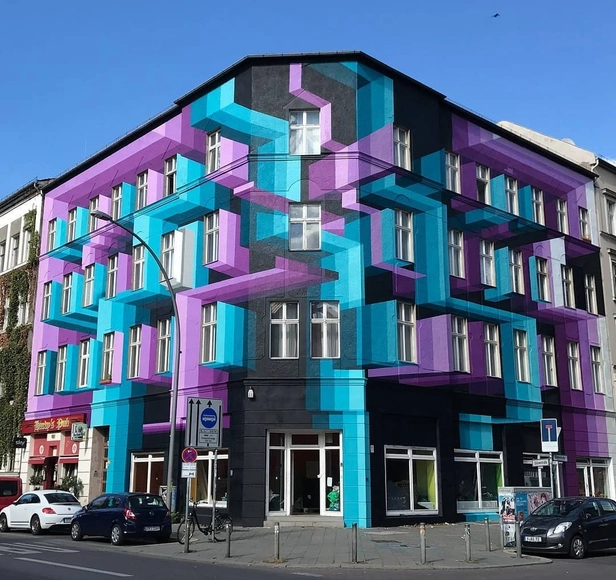
Artist David Louf, aka Mr. June, has earned a reputation for creating striking urban art, most recently using three-dimensional murals that play off architectural elements. As Colossal reports, within the last year Mr. June's geometric abstractions have become increasingly architectural as they aim to challenge viewer’s perceptions. Producing work since 1985, Mr. June recently completed a 130-foot diameter dome in North Carolina and a 3D mural for Urban Nation in Berlin.
In a world of 3D, HD, 4K, and CGI, architectural representation in the film, television, and gaming industries are becoming ever-more realistic, ever-more dazzling, and ever-more expensive. But strip away the special effects, and the beautifully-crafted architectural forms of fictional worlds such as Game of Thrones, Harry Potter, and Marvel are no less impressive.
To demonstrate this, Angie’s List has produced a set of elemental, greyscale, pen-and-paper illustrations of some of the entertainment industry’s most iconic fictional worlds, celebrating style, form, materiality, and shadow. From the sleek futurism of Star Wars and Marvel to the vernacular fortresses of Game of Thrones and Skyrim, the “Fictional Architecture” series captures the finer details of our favorite fictional universes.
https://www.archdaily.com/900390/your-favourite-fictional-universes-in-pen-and-paperNiall Patrick Walsh
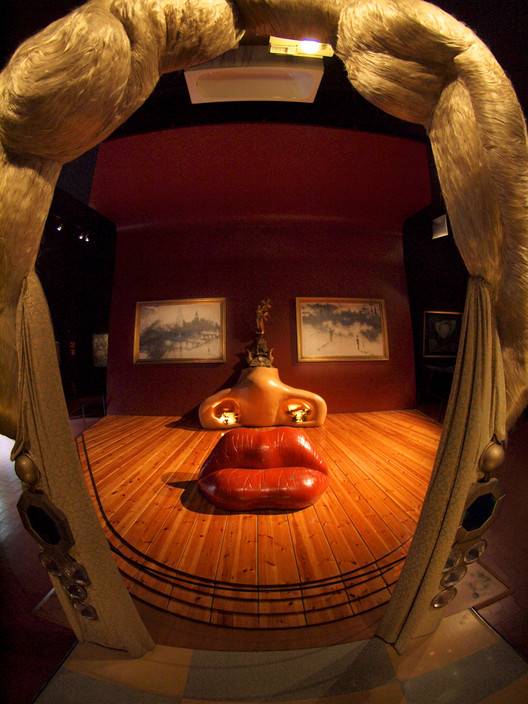
In 1924 writer André Breton penned the Surrealist Manifesto, which called to destabilize the divides between dreams and reality, between objectivity and subjectivity. For many architects who had been—and continue to be—interested in the fundamental role of the built environment, Breton’s surrealist thinking provided a rich resource to examine the role architecture plays in forming reality. Since then, from Salvador Dali and Frederick Kiesler to Frank Gehry, Surrealism has profoundly shaped architecture in the 20th century.

















.jpg?1554393919&format=webp&width=640&height=580)