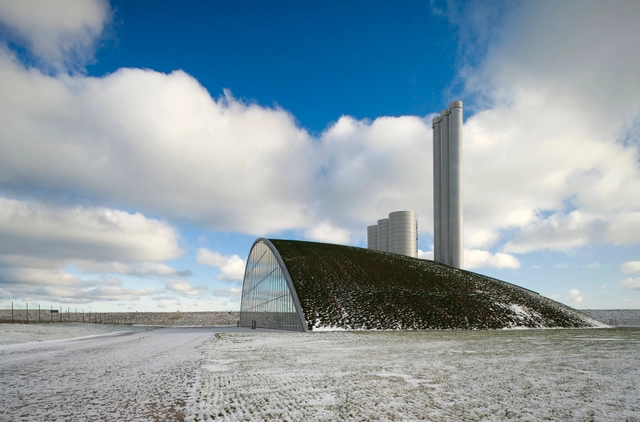
Kastrup Peak Load Power Pant. Image Courtesy of Gottlieb Paludan Architects
The 2015 Nykredit Architecture Prize has been awarded to Gottlieb Paludan Architects (GPA) for their contribution to the design of public utility and industrial buildings. Founded by the Nykredit Foundation, the 500,000-DKK prize has become Scandinavia’s foremost architectural award, with past winners including Jørn Utzon, Bjarke Ingels and CEBRA.
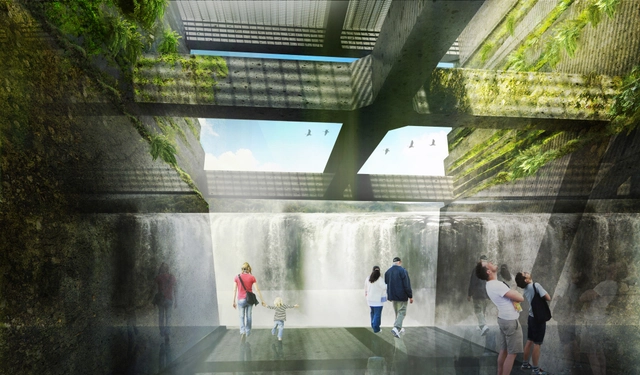
For the first time in 100 years, Oregon’s Willamette Falls will open to the public, with a Riverwalk proposed by Mayer/Reed, Snøhetta and DIALOG. The second largest waterfall in the US, Willamette Falls has a diverse history, and the proposed design seeks to celebrate and amplify the power of the falls, weaving the pedestrian through its rich cultural and geological history.
The final destination of many west-bound pioneers on the Oregon Trail during the 1800s, the falls also served as a gathering spot and source of fish for Native Americans. During the 19th and 20th century, it was an industrial powerhouse, accommodating woolen, lumber, flour and paper mills, and a brick making operation. Yet after the bankruptcy of the Blue Heron Paper Mill, the site has been inhospitable to the public, haunted by empty industrial buildings.
"It’s really easy to build a building. From the very beginning to the realization; it’s very easy! You just give it an interesting form and you get approved. But the real issues are how to make it user-friendly and to enhance the quality of the life of the people trying to escape the influence of the “system”. That’s the challenge. In my experience […] I’ve learned that for architects, both Chinese and foreign, the use of form to create an object is easy but how to do the right thing is very challenging." - Zhang Bin, Shanghai, Sept 2013
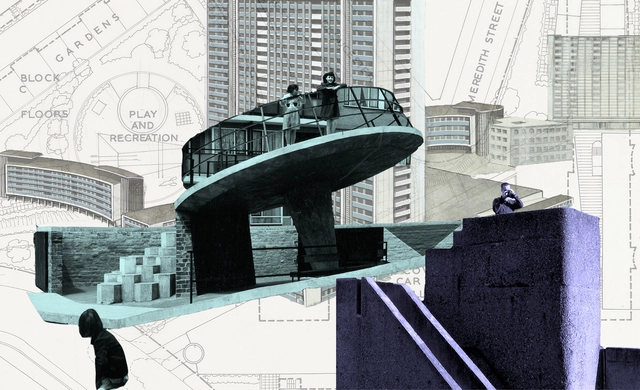
Starting June 10, the RIBA will present The Brutalist Playground - an exhibition that is part sculpture, part architectural installation, which invites people of all ages to come and play, the Brutalist way. Occupying the entire Architecture Gallery, the immersive landscape is a new commission by Turner Prize nominated design and architecture collective Assemble and artist Simon Terrill. It explores the abstract concrete playgrounds that were designed as part of Brutalist housing estates in the mid-twentieth century, but which no longer exist. They became playgrounds unsuitable for play.
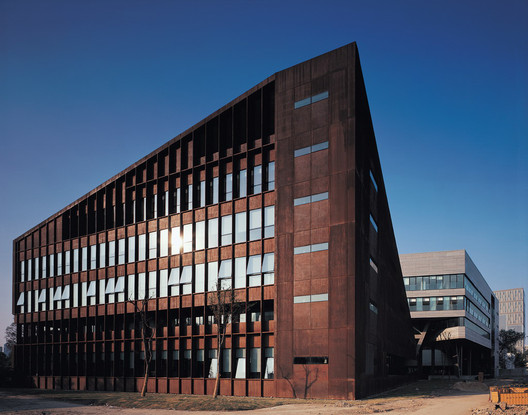
“Every couple of years a new manifesto appears, but how long can it last? We need more people doing instead of talking. [At Amateur Architecture Studio] we spend an enormous amount of time experimenting, trying to resurrect the craftsmanship that is almost lost. We use a method that is passed on, hand-to-hand, to re-establish tradition instead of talking about abstract but empty concepts.” - Lu Wenyu, Hangzhou, 2013
Pier Alessio Rizzardi:“A house instead of a building” is a really famous phrase of Amateur Architecture Studio. What is the meaning behind this concept?
Lu Wenyu: Once, Wang Shu said: “we only make houses, we don’t make architecture.” The house and architecture here have their own meanings. Making a house means making it for the people, making it more tranquil, or closer to nature, more humanized. Instead, architecture is an abstract concept, so many designs nowadays are actually architecture. So this sentence, from almost 20 years ago, “making houses, not architecture”, is about not making that abstract concept, but to make something really concrete and tangible, something that you can touch or that is made with your own hands… so when you see this house, you feel differently.
“We use two aspects to express architecture: Qing [emotion], Jing [pattern]. Jing is the architectural pattern that we apply, to certify the living and working style, to consider what our architecture can bring. Another thing is the relationship between architecture and the site, the city and nature. Ancient Chinese dwellings are usually enclosed by walls, creating an introverted space. This is the second aspect Qing, more related to traditional customs, aesthetics, and our attitude towards the environment and nature. The enclosed space originates from our interpretation of Qing. What we have captured about the ancient spirit of aesthetics is a kind of uncertainty, a kind of blurry and ambiguous feeling.” - Chen Yifeng, Shanghai, 2013
“If we look at architecture from a cultural point of view, we see we are in a special moment where we are trying to figure out our identity. I think we are too focused on how to transform old Chinese architecture into contemporary architecture; but in no way can you transform it, you can see it with your own eyes. For instance you cannot transform a Roman building into today’s buildings! Sometimes you have to forget about history to create contemporary and unique architecture.” - Zhu Pei, Beijing, 2013
“If you don’t know or really didn’t study the local culture, do universal design. That’ll keep the quality. If you want to do something that you don’t know, there is a big chance that it’s going to fail and have a bad impact on the city and the people here. Do it in your own way. If you do something good and beautiful back home, you should do exactly the same type and put it here. That’s also a good contribution because you show good architecture quality… Do something universal!” - Liu Xiaodu, Shenzhen, 2013
Founded in 1999, Urbanus is led by its trio of partners Meng Yan, Wang Hui and Liu Xiaodu, all of whom studied first in China and then abroad in the USA before returning to their native country at the very beginning of its construction boom. In this interview Liu Xiaodu discusses the changing realities of Chinese architecture education, the beginnings of their firm and the positive side to the “chaos” of the country's current urban expansion.
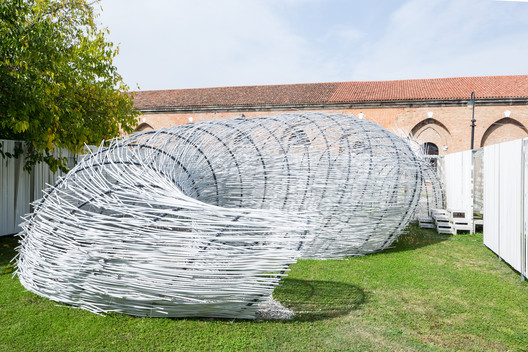
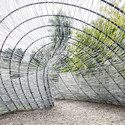
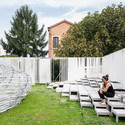
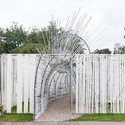
Casting complex shadows and engulfing visitors in a series of maze-like spaces, the Parasite Pavilion was constructed as part of the Synergy & Symbiosis event at the 2014 Venice Biennale, which showcased the best of the UABB Shenzhen and Hong Kong Biennale from 2005 to 2014. Based on the Bug Dome pavilion, a similar experiment from Hong Kong 2009, constructed by Weak! Architects as an icon of "illegal architecture," this new pavilion is the product of an intensive five day workshop, with the cooperation of architects and students from Europe, Australia, and China. Read on after the break to learn more about the Pavilion and Workshop.
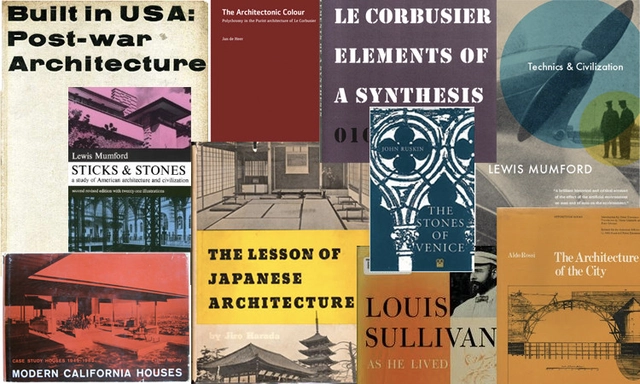
If you don't have access to an architecture library (and even if you do), sifting through shelves can take hours. Buying books can be even more painful — for your wallet, at least. Instead, why not browse this list of 25 books that are all free and easily accessible online? Some are well-known classics of architecture literature, but we hope you find a few surprises as well.
Chinese architecture firm Penda, known for their ecologically sensitive designs, has redesigned the tent in a bold new way for the AIM "Legend Of The Tent" Competition. Their proposal, ”One With The Birds," is a flexible and sustainable structure that integrates sleeping pods into the forest canopy. Inspired by Native American Tipis, which are moveable and reusable, the structure, made from bamboo sticks latched together with rope, leaves no impact on the site nor causes any harm to the bamboo itself.
A mock-up of the project will soon be installed as a temporary hotel. According to the architects, “after the temporary hotel is deconstructed, the materials can be reused as scaffolding on a construction site or reused as another temporary hotel on a different location.”
Learn more about this remarkable structure, after the break.




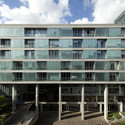

_Arch_Press_Archive_RIBA_Library_Photographs_Collection.jpg?1432159232 "Park Hill Estate, Sheffield - 1962. Image © Arch Press Archive RIBA Library Photographs Collection")


_John_Maltby__RIBA_Library_Photographs_Collection_(1).jpg?1432159169 "Churchill Gardens - 1956. Image © John Maltby RIBA Library Photographs Collection")

.jpg?1431461903)
.jpg?1431461996 "Ningbo Historic Museum. Image © Evan Chakroff")
.jpg?1431461914 "Zhongshan Road. Image © Evan Chakroff")
.jpg?1431461954 "CIPEA Villa, Nanjing. Image © Evan Chakroff")
.jpg?1431462140 "Hangzhou Xiangshan Campus. Image © Evan Chakroff")
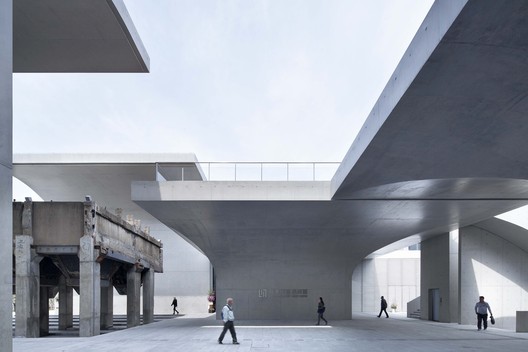













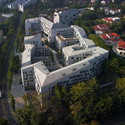

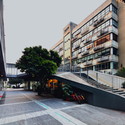
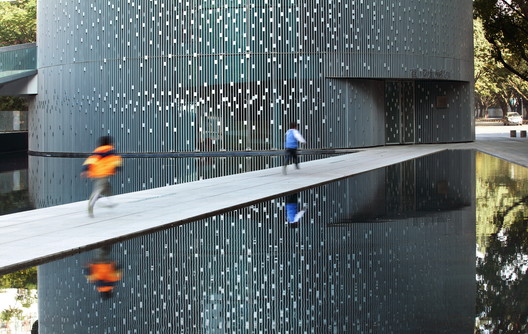
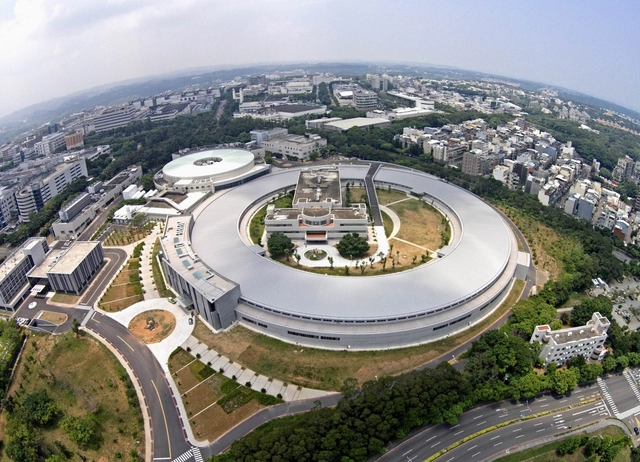
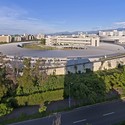
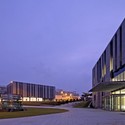
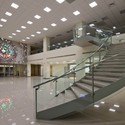
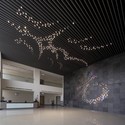




.jpg?1405333033 "Courtesy of Penda")
.jpg?1405333025 "Courtesy of Penda")
.jpg?1405333019 "Courtesy of Penda")
.jpg?1405332988 "Courtesy of Penda")
.jpg?1405333012)


