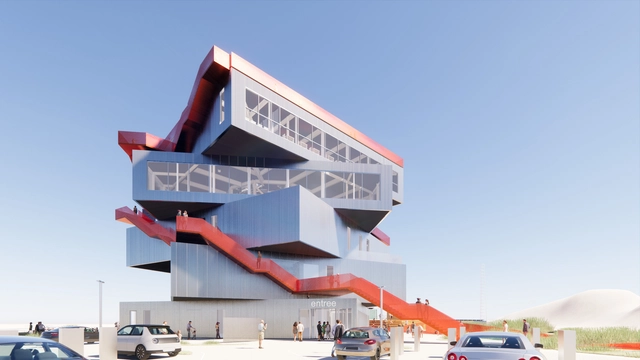
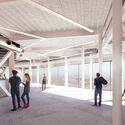
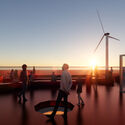
MVRDV has revealed the design of an exhibition and visitor centre for the Port of Rotterdam, which would tell the story of Europe’s largest port. Scheduled to open in 2024, The Harbour Experience Centre features a stack of five rotated exhibition spaces framing views of the surroundings, and outdoor staircases wrapped around the structure provide visitors with a route up the various terraces and to the rooftop. The project is the successor of FutureLand, a temporary information centre from 2009, whose success prompted the creation of a permanent exhibition.
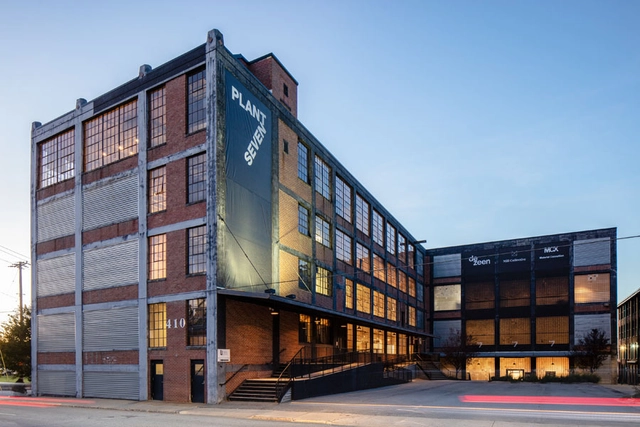
Plant 7 at Congdon Yards, an adaptive reuse project in High Point, North Carolina. Image Courtesy of Keith Isaas
Adaptive reuse or the process of transforming an older building by reusing the structure and changing its original purpose, has gained relevance over the years especially because it allows a complete optimization of the performance of the existing built environment. In a piece, originally published on Metropolis, author Elissaveta Brandon explores how "architects and developers are transforming the staples of the South—located throughout a 120-mile region from Winston-Salem to Fayetteville—into infrastructure fit for today". Transforming historic mills into design hubs, and mixed-use complexes, the article highlights 3 examples from North Carolina.
https://www.archdaily.com/963472/three-adaptive-reuse-projects-in-north-carolina-reinvent-historic-millsElissaveta M. Brandon
Studio Gang and The Community Builders have won the City of Chicago’s C40 Reinventing Cities, a competition that seeks to “transform underutilized sites or buildings into beacons of sustainability and resilience and act as a showcase for future zero-carbon urban developments”. The winning proposal will create 207 residences for the downtown workforce earning as little as minimum wage, revitalize Pritzker Park, and add community spaces and amenities to the Chicago Loop.
MVRDV has revealed the design of "De Oosterlingen", a series of seven sustainable residential buildings on Amsterdam’s Oostenburg Island. The proposed buildings are distributed in a 'barcode' composition, forming an apparent unified design but with an animated skyline and unique characteristics such as varying roof shapes and façades of wood, glass, recycled brick, and bio-based composite.
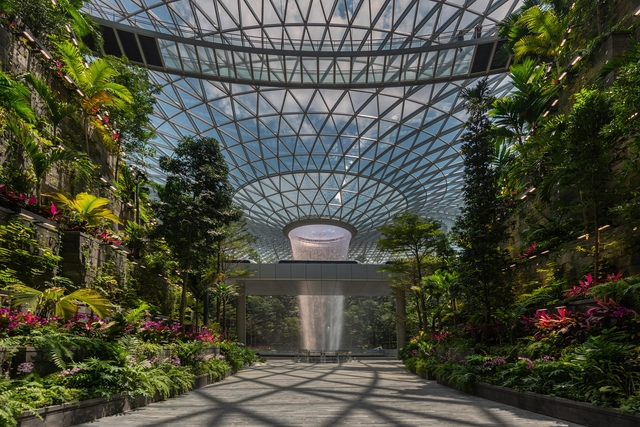
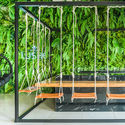
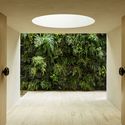
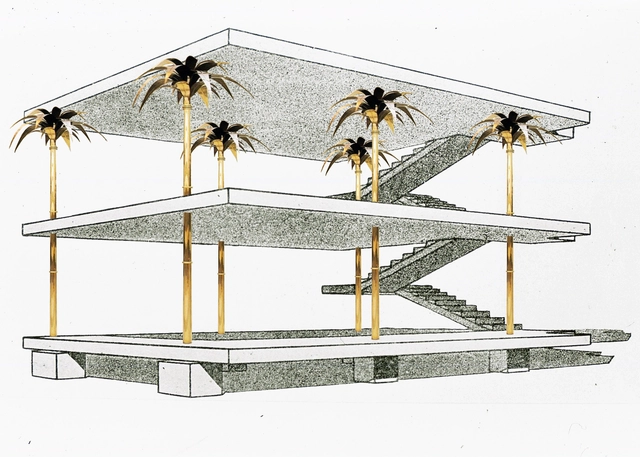
Humans possess an innate tendency to seek connections with nature, regardless of the physical or geographical conditions in which we find ourselves. As we become increasingly detached from the wilderness, we develop means and strategies to bring nature back into our daily lives, even if only for a few moments.
There are many ways of domesticating nature, as seen throughout the history of mankind, through fascinating structures that challenge technical limitations, such as vertical indoor gardens.
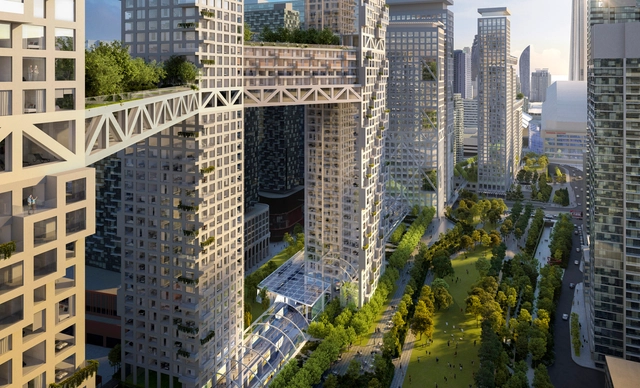
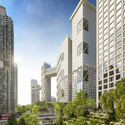
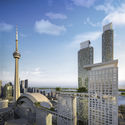
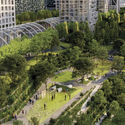
Safdie Architects have released the images of 'ORCA Toronto', a mixed-use urban development with an integrated park in the heart of downtown Toronto. The project covers 6.5 hectares (65,000 sqm) west of the CN Tower, 4.5 hectares (45,000 sqm) of which are dedicated to the publicly-accessible urban park, while 2 hectares (20,000 sqm) are for residential, commercial, retail, and transit facilities. The proposed project reconnects the downtown area to the city’s waterfront, promising to become a vital hub that animates the underutilized parts of the city.
Architecture can be many things, also queer. Alongside many other transgressing words that carry different meanings and perspectives, this term triggers new insights into society and questions how we create architecture and urban planning projects, including their programs and activities. If there is any statement about how architecture should be done, if there is any conviction about what it represents, we wish here to avoid knowing what it is and be able to question its traditions to broaden the profession, its meanings, and social representation.
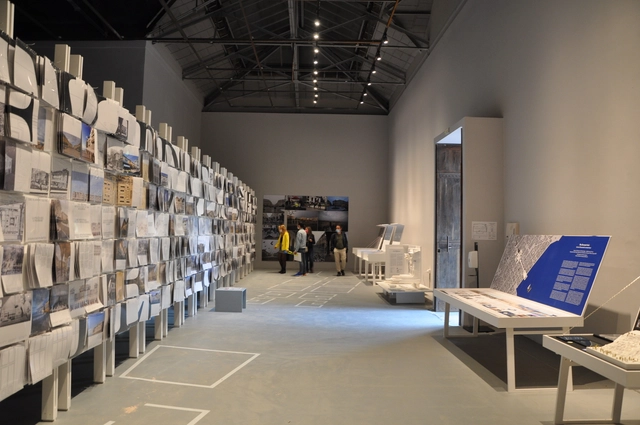
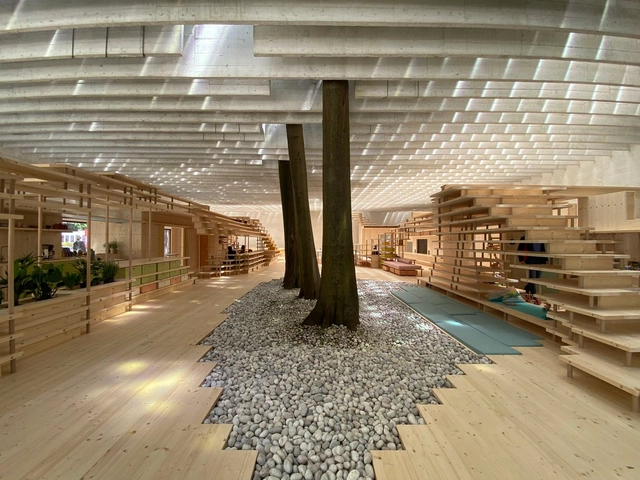
Over the past couple of weeks, we have seen how countries have responded to “How will we live together” in 115 different ways. Some studied the environment and how to sustain it, while others explored how they can create a safe space for refugees and citizens to coexist. In this roundup, we are concluding the list of national pavilions displayed at the 17th International Architecture Exhibition – La Biennale di Venezia, and highlighting how they answered curator Hashim Sarkis' question.
The 2021 edition of La Biennale di Venezia also includes 112 participants in competition from 46 countries, with 60 national participants in the Giardini, at the Arsenale, and in the historic city center of Venice, Italy. Moreover, the international exhibition welcomes three countries, being part of the most important architectural biennale of the world for the first time: Grenada, Iraq, and Uzbekistan.
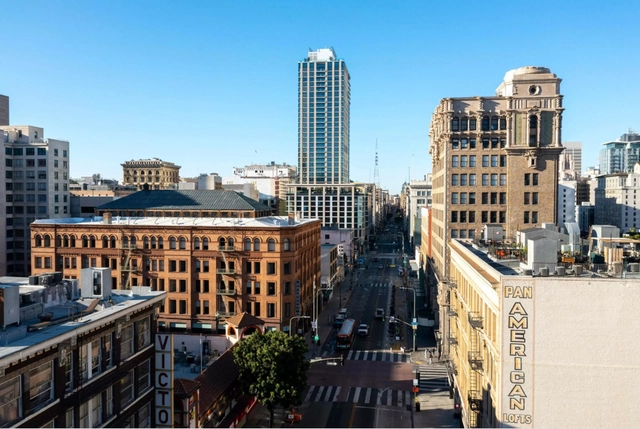
Perla on Broadway is the first new high-rise to be constructed in Los Angeles’s Broadway Theater District. Designed by CallisonRTKL, the tower will be the first addition within the district in over a century. Matt Hickman explores the latest addition to Downtown L.A.'s skyline in a piece originally published in The Architect's Newspaper.
Responding to “How will we live together” in 115 different ways, the 2021 Venice Architecture Biennale welcomed, physically, the large public, on May 22nd, 2021. Opening up furthermore to the world, the timeless yet context-sensitive theme engendered a collective imaginary, highlighting a world that would rather come together than stay apart. Building an architectural narrative of the present that reflects on a resilient future, the interrogation, first asked in 2019, gained more relevance with the pandemic that paused the world for a while. With a lot of optimism and love for the craft, the architectural exhibition opened its doors to a longing public and revealed recurring qualities in the showcased interventions.
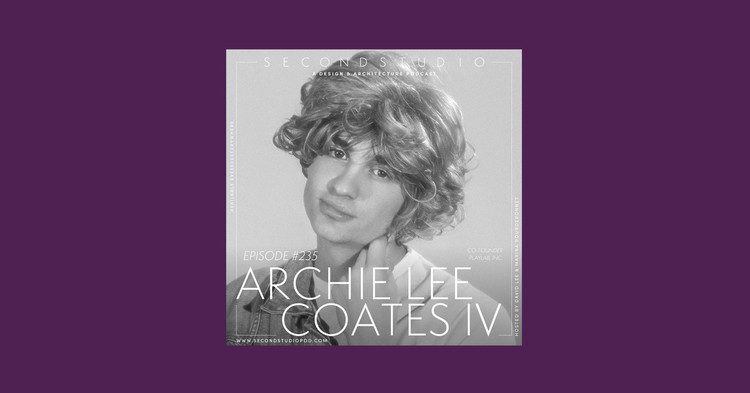
The Second Studio (formerly The Midnight Charette) is an explicit podcast about design, architecture, and the everyday. Hosted by Architects David Lee and Marina Bourderonnet, it features different creative professionals in unscripted conversations that allow for thoughtful takes and personal discussions.
A variety of subjects are covered with honesty and humor: some episodes are interviews, while others are tips for fellow designers, reviews of buildings and other projects, or casual explorations of everyday life and design. The Second Studio is also available on iTunes, Spotify, and YouTube.
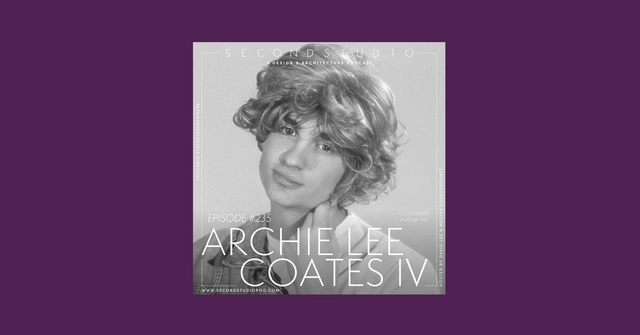
This week David and Marina are joined by Archie Lee Coates IV, a Co-Founder of the extremely multi-disciplinary design studio PLAYLAB. Archie discusses the evolution and future of PLAYLAB, naïveté in design and art, social equity in design practices and design, believing in humanity, design office as permeable amoeba, working with Virgil Abloh for the Louis Vuitton Show, and more.
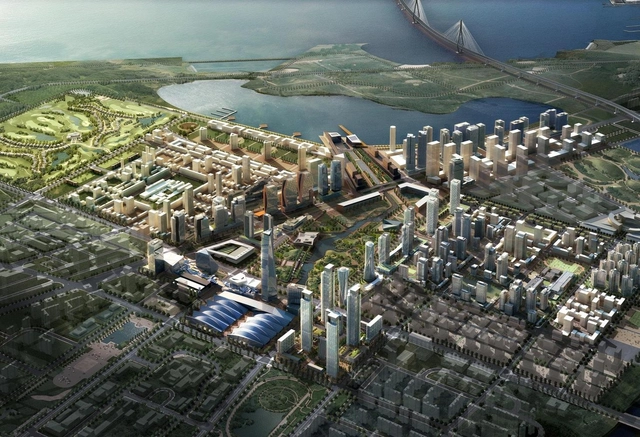
What does it take to build a smart city from nothing? Or maybe the better question is, what does it take to build a smart city from nothing and make it successful? For over a decade, architects and urban planners worked hand in hand to create Songdo, a brand new business district that sought to represent South Korean advancements in technology and infrastructure. Songdo was once a model for how we would live in cities of the future- but now, the reality of what this smart city quickly became has us rethinking how the combination of technology and community might have gone wrong.
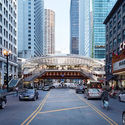
Skidmore, Owings & Merrill (SOM) and TranSystems are redesigning one of Chicago busiest and oldest elevated rail networks. The Chicago State/Lake Station's new design offers improved accessibility, safety, and comfort to all passengers, and respects the surrounding historic fabric of the downtown area. The proposed design includes wider platforms, a hovering glass canopy, a new fly-over connection bridge, elevators, and street level enhancements.
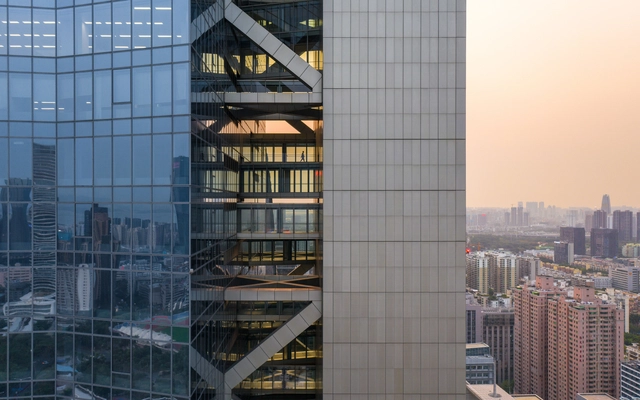
With its Shenzen project, design firm Morphosis reimagines the skyscraper typology, maximizing the flexibility of the floor plan through a detached-core scheme that shifts circulation, services and amenities to the building's exterior. Using a pioneering structural system, the project's spatial configuration diversifies the interiors' functional possibilities while reshaping the circulation routes within the building, with glass sky-bridges and large-scale steel braces knitting the core to the tower's main body. Completed in 2018 with a gradual opening that continues into 2021, the 359.8-metre tower is currently the tallest detached-core building in the world.
The Federal Secretary of Culture and the National Institute of Fine Arts and Literature (INBAL) present the exhibit, titled Desplazamientos (Displacements), which will represent Mexico in the 17th International Exhibition of Architecture-The Biennale of Venice, taking place from May 22 to November 21, 2021 in the Venetian Arsenal. The exhibition aims to redefine the way that Mexico participates in this distinguished space, one of architecture's global stages and a platform for countries to share their cultural heritage. The Mexican pavilion, titled Displacements, is the result of a dialogue between the representatives of the 12 chosen projects and the the curatorial team as a part of the process to transform the pre-established theme of the Venice Biennale and to formulate a dialogue through spatial, artistic, and constructive demonstration.
https://www.archdaily.com/962748/focusing-on-architecture-as-process-rather-than-an-abstract-object-interview-with-elena-tudela-curator-of-the-mexican-pavilion-at-the-2021-venice-biennaleArchDaily Team
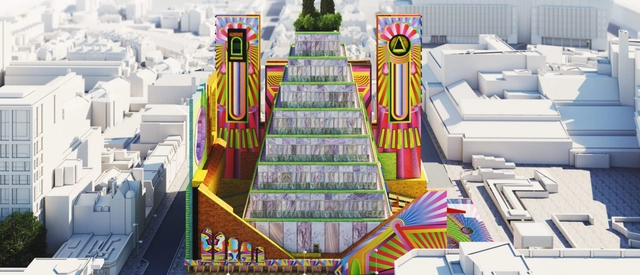
Stefan Fuchs & Raphael Dillhof interview Adam Nathaniel Furman and discuss the role and importance of facades in today's urban fabric, "in the context of a broader range of social, economic, and political issues". Part of a more in-depth study examining the role of facades in the 21st century, this discussion also raises the question of why buildings always embody the values of their creators.
https://www.archdaily.com/963168/adam-nathaniel-furman-buildings-always-embody-the-values-of-their-creatorsRaphael Dillhof, Stefan Fuchs






AestheticaStudio_VanBurenSt.jpg?1623834247&format=webp&width=640&height=580)
AestheticaStudio_Aerial.jpg?1623834275 "© Aesthetica Studio")
AestheticaStudio_ViewFromCTA.jpg?1623830118 "© Aesthetica Studio")
AestheticaStudio_NeighborHub.jpg?1623833511 "© Aesthetica Studio")
AestheticaStudio_1.jpg?1623829482 "© Aesthetica Studio")
AestheticaStudio_VanBurenSt.jpg?1623834247)
.jpg?1623754842&format=webp&width=640&height=580)

.jpg?1623754916 "© Proloog")
.jpg?1623754848 "© Proloog")

.jpg?1623754842)









.jpg?1622015464&format=webp&width=640&height=580)
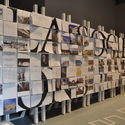
.jpg?1622029620 "Argentina: La casa infinita by Gerardo Caballero. Image © Laurian Ghinitoiu")
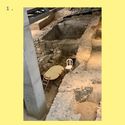
.jpg?1622015439 "Germany: 2038. The New Serenity by 2038. Image © Laurian Ghinitoiu")
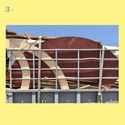
.jpg?1622015472 "Mexico: Desplazamientos / Displacements by Isadora Hastings, Mauricio Rocha, Elena Tudela. Image © Laurian Ghinitoiu")
.jpg?1622015529 "Spain: Uncertainty by Domingo Jacobo González Galván, Sofía Piñero Rivero, Andrzej Gwizdala, Fernando Herrera Pérez. Image © Laurian Ghinitoiu")
.jpg?1622015464)



.jpg?1623397042&format=webp&width=640&height=580)
.jpg?1623397062 "Courtesy of Skidmore Owings & Merrill")
.jpg?1623397056 "Courtesy of Skidmore Owings & Merrill")
.jpg?1623397051 "Courtesy of Skidmore Owings & Merrill")
.jpg?1623397042)