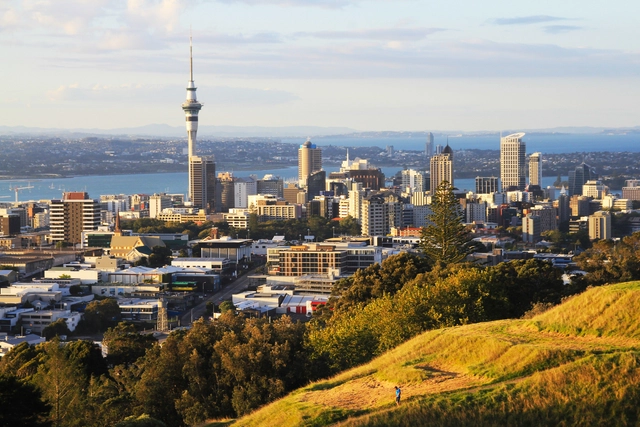
Auckland in New Zealand has topped the ranking in the 2021 EIU's annual world's most liveable city survey. Classifying 140 cities across five categories including stability, healthcare, culture and environment, education, and infrastructure, this year’s edition of the review has been highly affected by the global pandemic. Australia, Japan, and New Zealand took leading positions, while European and Canadian cities fell down the ranking.
As part of the Dogpatch mixed-use waterfront development, Foster + Partner'sPower Station extension has finally broken ground. The master plan will create multiple new residential, commercial, and recreational spaces, honoring its industrial past and reconnecting the community with the San Francisco Bay waterfront. The architecture firm's 2-building proposal provides the neighborhood with an ideal urban framework to help create a vibrant, healthy, and inclusive community.
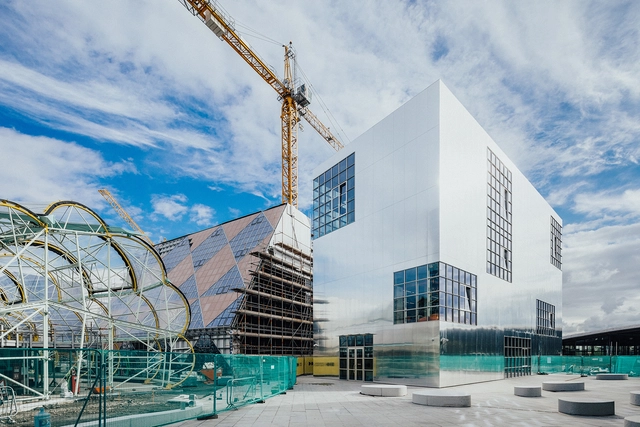
Barcelona-based studio Barozzi Veiga has completed its first UK project, which will house Ravensbourne University’s Institute for Creativity and Technology. The building, whose interiors are designed by Brinkworth, is also the first to be completed within the Design District, London’s new purpose-built creative hub at the heart of the Greenwich Peninsula. Featuring a polished aluminium-clad façade that reflects the neighbouring buildings, the design engages with the surrounding context, while also referencing the area’s industrial past.
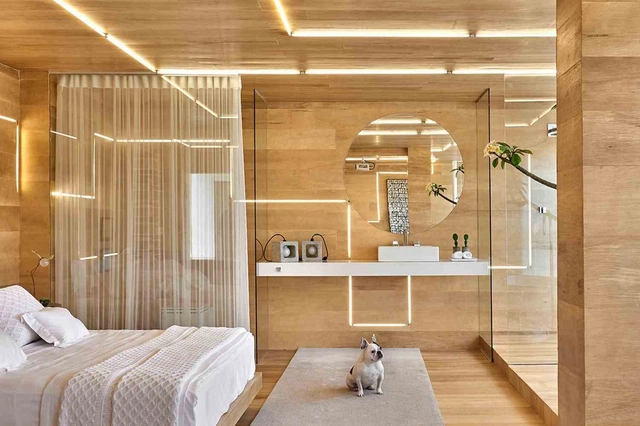
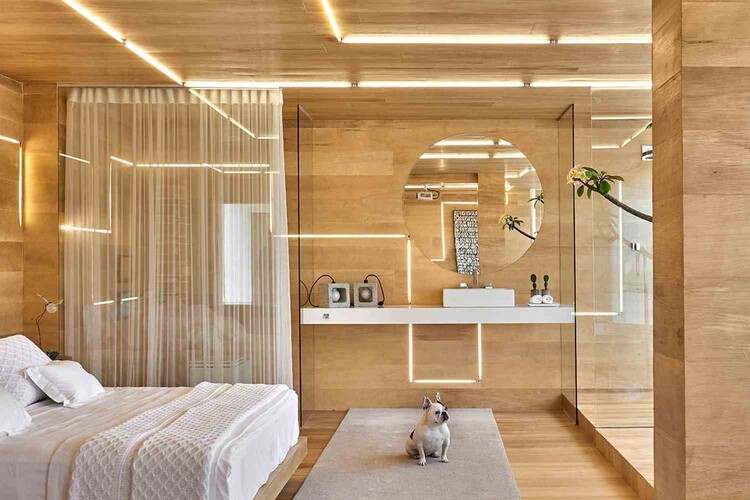
Natural or artificial, lighting is one of the most important elements in architecture, directly affecting our perception of spaces. It is capable of defining volumes, enhancing colors, textures, and therefore, contributing to the overall relationship between dimension, proportion, and contrasts. One of the many challenges of architecture is to shape spaces based on light and shade, and sometimes natural light is not enough, requiring additional light sources to be installed and controlled.
In this week's piece by Metropolis, author Kelly Beamon explores in her original article "the patriotism associated with pitched roofs and shares how architects are reimagining this staple of suburban house styles". According to its definition, a gable roof is a classic roof shape, usually in cold or temperate climates, consisting of two roof sections sloping in opposite directions and placed such that the highest, horizontal edges meet to form the roof ridge. Emblematic of the US, this article discusses its return to the urban fabric.
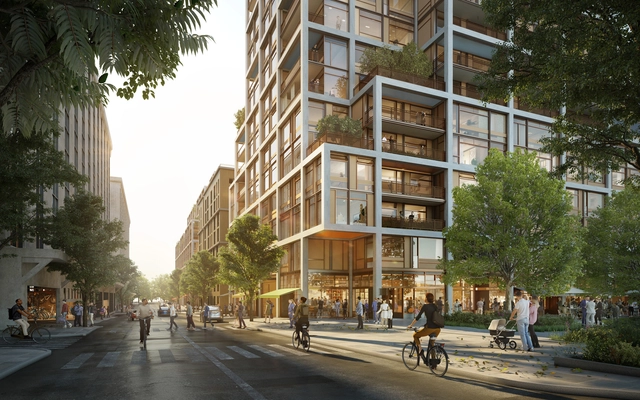
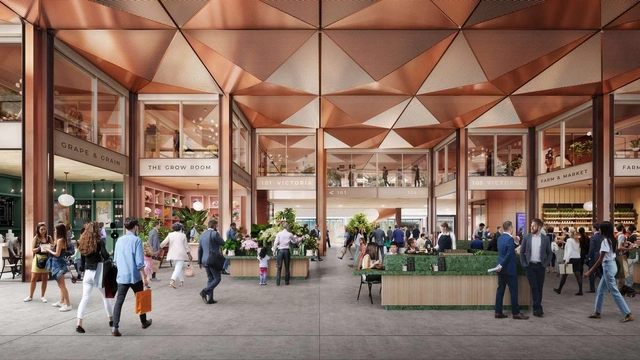
Located in the heart of Westminster, a short distance away from the Buckingham Palace, Henning Larsen are building a community hub that reimagines traditional office and commercial spaces. 105 Victoria Street will be the architecture firm's first ever project in London, providing visitors with an urban plaza that enables an active and social working environment both indoors and outdoors. The project is being developed by BentallGreenOak and is designed in collaboration with Adamson Associates Architects and KPF.
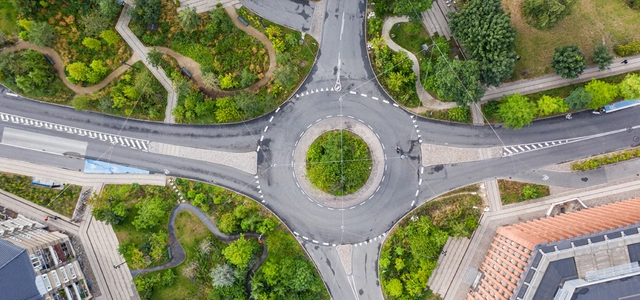
For this month, The Dirt and author Jared Green share with us a study about urban heat islands, exploring new approaches that have been designed to both reduce urban temperatures and help communities adapt to a hotter world, In three cities: New York City, Copenhagen, and Abu Dhabi.
https://www.archdaily.com/962913/urban-heat-islands-are-increasingly-dangerous-but-planners-and-designers-have-solutionsJared Green
A circular economy is an economic system aimed at eliminating waste and the continual use of resources. Looking beyond the current take-make-waste extractive industrial model, a circular economy aims to redefine growth, focusing on positive society-wide benefits. It entails gradually decoupling economic activity from the consumption of finite resources and designing waste out of the system. Underpinned by a transition to renewable energy sources, the circular model builds economic, natural, and social capital.
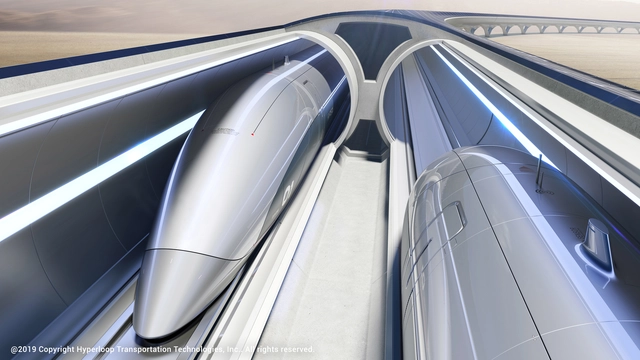
Zaha Hadid Architects is collaborating with Hyperloop Italia to co-design the next phase of works of the transport vehicles, marking a turning point for the future of transportation. The collaboration aims to merge transformative architecture, engineering, and urban planning with the most efficient and sustainable transport network to improve accessibility, connectivity, and well-being in cities.
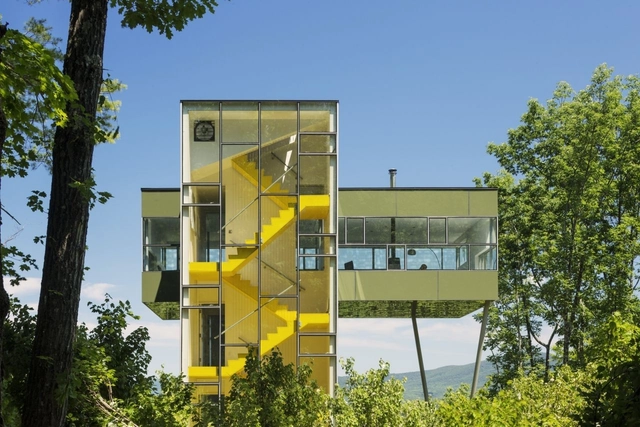
Tower House, Photo credit: Paul Warchol. Image Courtesy of GLUCK+
Architecture is inherently tied to building and construction. When these processes are aligned, great structures take shape. For architecture, construction and development firm GLUCK+, design and building go hand-in-hand. From designer and builder to owner and developer, the practice has taken on diverse roles to bring innovative projects to life. Looking to the future, Principal Thomas Gluck explores how the firm is creating work in New York City and across the United States.
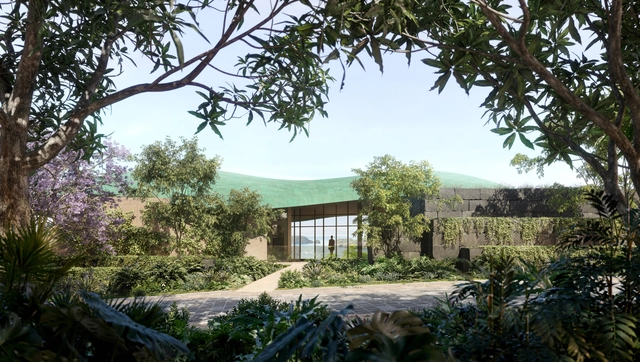
Vladimir Belogolovsky speaks with Antoine Predock about the soon-to-be-built Bahías, a community of 13 houses in Costa Rica, inspired by a vision of manmade foliage.
Architecture and automation are two concepts that in the modern era of design and technological advancements go hand in hand- or do they? On one end, there’s a slight fear that “robots will replace designers”, making the profession more automated, and less creative. On the other, technology has made the practice of architecture more efficient in terms of process and cost. How far will technology take us, and will your job ever be lost to technology? The short answer is, probably not.
To answer the Biennale's question of "How Will We Live Together", curators of the national pavilions explored what the future would look like in an architectural, cultural, and environmental context. Many saw the future as an entirely virtual environment whereas other highlighted the cruciality of physical coexistence with neighbors. ArchDaily met with Ippolito Pestellini Laparelli, curator of the Russian Pavilion, to discuss how the idea of the pavilion came together throughout the year as a virtual platform for interdisciplinary creative thinkers, the role of cultural institutions across physical and digital spaces, and how digitalization is always part of the conversation.
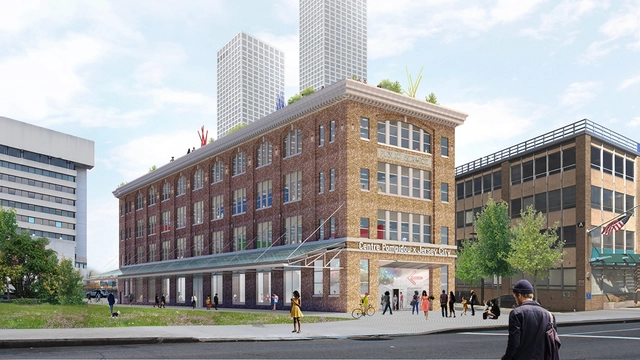
Three years after OMA was selected by the Jersey City Redevelopment Agency (JCRA) to design a new museum in Journal Square, the city’s downtown hub, it was revealed this morning that the building would be home to none other than the Pompidou Center’s first North American satellite: The Centre Pompidou × Jersey City.
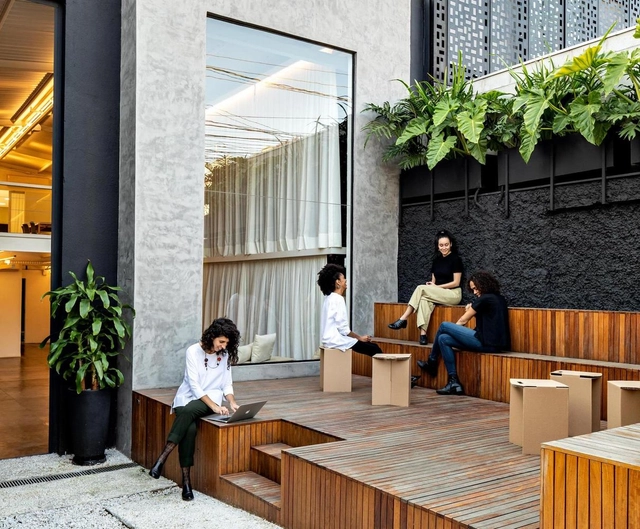
The Coronavirus pandemic demanded new needs and significant changes in our lives: in relationships, at work, in consumption habits, in increasing inequality. Indeed, the theme of workspaces came up in a historical moment when people saw their own freedoms limited for the first time in the postmodern era.
Most people were forced to work from home, and since the beginning of quarantine, reflection on the future of workspaces has become inevitable. Some interesting data show that the Coronavirus only boosted a practice that had been consolidating for years in some countries. According to the Global Workplace Analytics e FlexJobs, between 2005 and 2015, the number of professionals in the United States who do at least 50% of their work from home or elsewhere outside their offices grew by 115%, and today that number reaches 4.7 million, 3.4% of the strength of the job.
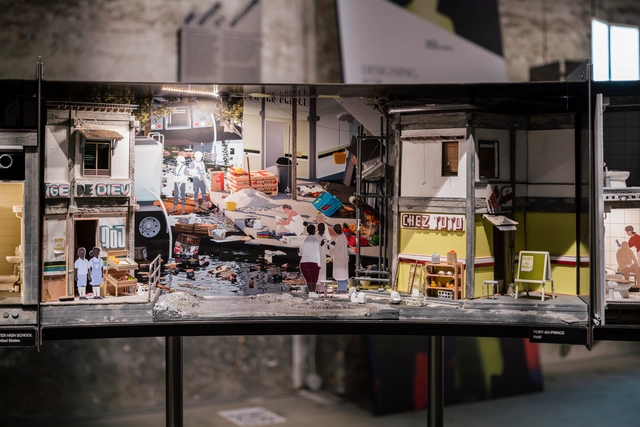
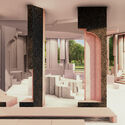
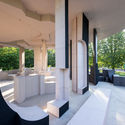
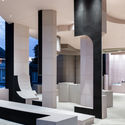
"When we enter the restroom, we are never alone. Instead, we are entangled in a network of bodies, infrastructures, ecosystems, cultural norms, and regulations". Although restrooms are often overlooked facilities that cater to the needs of individuals, they are, however, spaces where gender, religion, race, hygiene, health, and the economy are defined and expressed. For the 17th International Architecture Exhibition at La Biennale di Venezia, Matilde Cassani, Ignacio G. Galán, Iván L. Munuera, and Joel Sanders designed two pavilions that exhibit how restrooms are political architectures, serving as battlegrounds for the world's disputes.
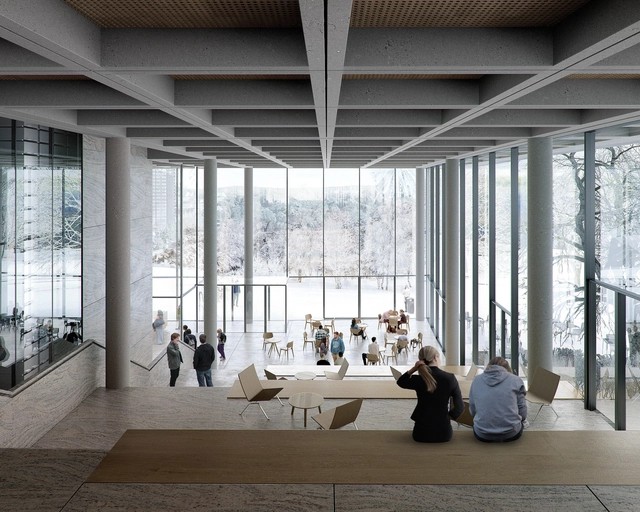
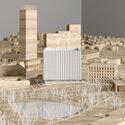
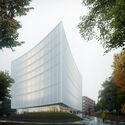
Cobe’s winning design for the new library of the University of Gothenburg proposes a light, clean volume, whose slightly curved facades are a nod to the pages of an open book. The Danish architecture studio translates the concept of knowledge as the heart of a library into the interior spatial configuration of the project, while the architectural image evokes the idea of a lighthouse. Featuring a transparent and open ground floor, the new repository of knowledge creates a strong connection with the surrounding park, becoming a mediator between the city and the university.




















.jpg?1620086762&format=webp&width=640&height=580)