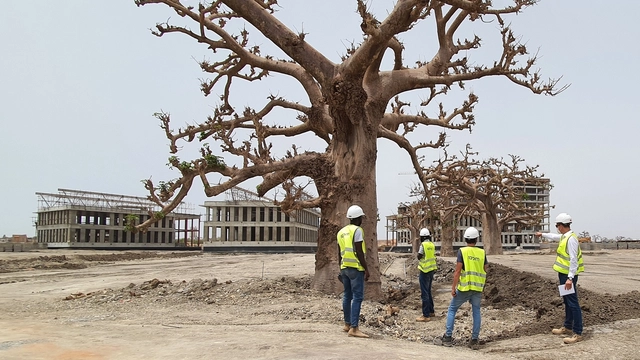
As Africa's cities grow, architects and urban planners in charge of development must face the challenges brought on by a lack of infrastructure.


As Africa's cities grow, architects and urban planners in charge of development must face the challenges brought on by a lack of infrastructure.
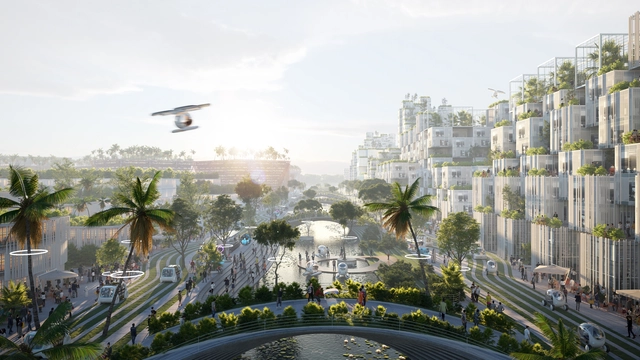
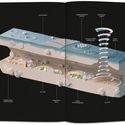
If we ever wonder what the future could look like, all we have to do is take a look into our past, and observe how far we have come since thousands, a hundred, or even ten years ago. Life was radically different back then and it will be just as different in the future. And since we are well aware that the future merely resembles the present, we have the possibility to shape our future the way we want to. TASCHEN's latest BIG book installment Formgiving. An Architectural Future History explores the past, present, and future, drawing a timeline of the built environment from taking shape to giving form.
.jpg?1625498401&format=webp&width=640&height=580)
Herzog & de Meuron's rehabilitation of Porta Volta took up themes of Milanese urbanism and architecture, which has defined the city's urban fabric throughout the years. The project's design was developed after an intensive historical analysis of the site - a site which dates back to the 16th century and holds remains of when the Romans defined the city's boundaries. Architectural photographer Bahaa Ghoussainy captured Herzog & de Meuron's Lombardian-inspired structure, highlighting its modernized nod to historic architecture.
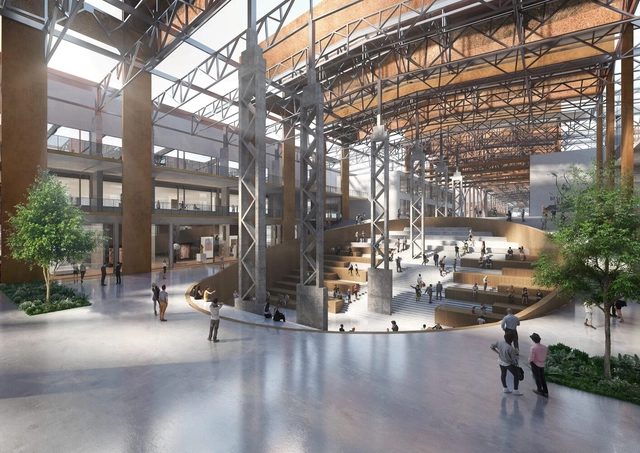
Gmp has won a competition to redesign a disused stainless steel factory that would accommodate the Shanghai Academy of Fine Arts. In tune with China's newfound interest in adaptive reuse, the project retains the core structure of the 860-meter long industrial building, as well as its ventilation towers. At the same time, it redesigns the façade and accentuates the central axis through a mix of social spaces. The design is part of a larger redevelopment plan to transform the former industrial site into an art district.
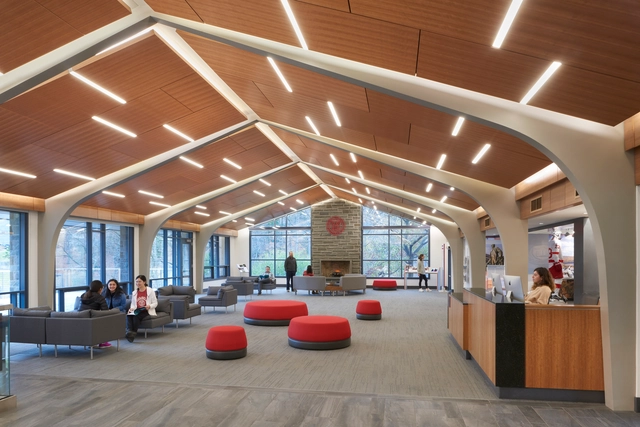
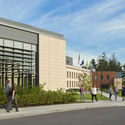
JMZ Architects is a firm realizing both long-term visions and local spatial needs. With a background in planning and architecture, they are a Women-owned business creating campuses and new structures alike. Practicing from a single office of 23 employees in Glens Falls, New York, they have focused exclusively on architecture and planning for higher education institutions, primarily public colleges, and universities, and state higher education systems.
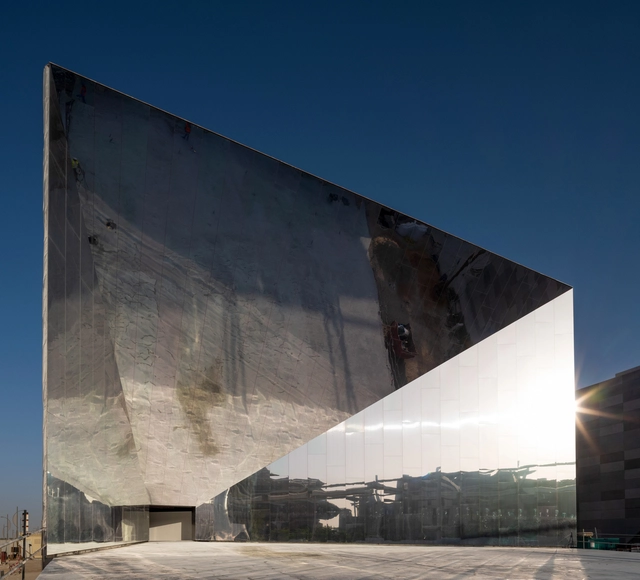
Titled "Reflections", the Swiss Pavilion at the 2020 Dubai Expo showcases Switzerland's unique duality of scenic landscapes and technology, as part of the Opportunity district of the expo. Designed by OOS Architekten, along with Bellprat Partner for the scenography, and Lorenz Eugster for the landscape, the creative team behind Reflections created a bold architectural statement with the pavilion's facade and immersed visitors in an exploration of Switzerland's scenic landscapes and state-of-the-art innovations.
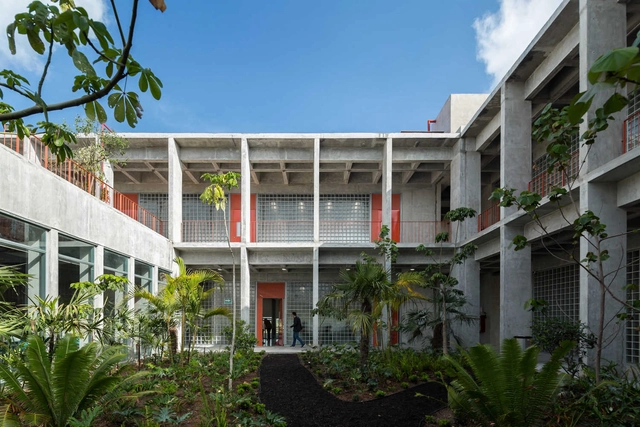
Aguascalientes is a small state in the heart of Mexico, located 480 km northeast of Mexico City and nestled between the states of Zacatecas and Jalisco. With just 5618 km² of territory, it is Mexico's third smallest state. It's capital and most populated city is Aguascalientes, or "hot waters" in English, is named for the numerous hot springs found throughout the area.
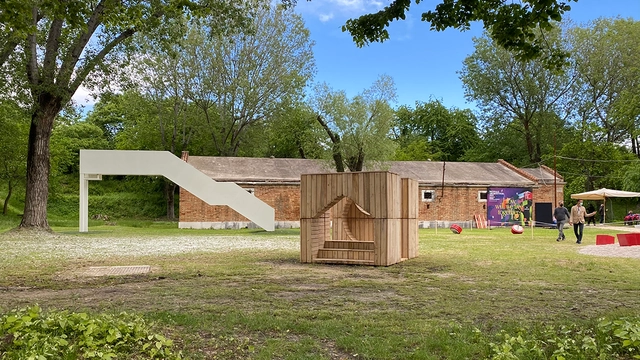
Basel-based HHF Architects have been invited to exhibit at the 17th International Architecture Exhibition - La Biennale di Venezia as part of the "How Will We Play Together?" exhibition. Titled "The Playful Eight", the 8-piece installation extends the biennale's brief to adults, and gives visitors "unsolicited elements that offer the possibility to escape control and productivity in order to play together".
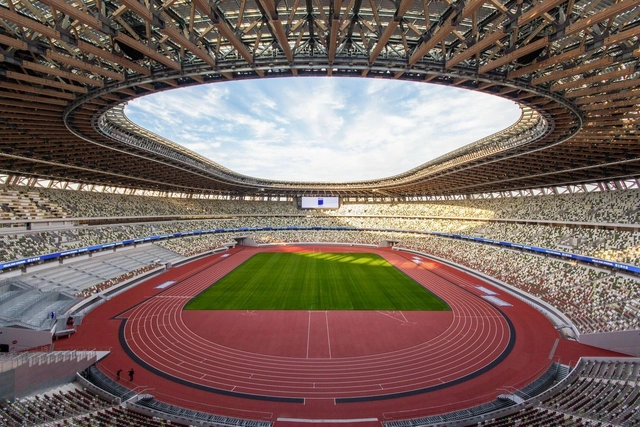
Since their inception in 1896, modern-day Olympics have been regarded by hosting cities as an opportunity to project to the world a specific image of themselves, to subsidize large infrastructure projects, or to rapidly unfold redevelopment schemes. Past the frequently discussed eye-catching stadiums, there is a complex story of Olympic urbanism, which encompasses the large scale developments catalyzed by the event. Exploring the urban and architectural legacy of the Games, the success stories, the white elephants, and the administrative agendas, the following discusses what the Olympics leave behind in the hosting cities.

"Deck parks are increasingly in vogue in the Southwest’s downtown cores but aren’t a good fit for El Paso," writes Sito Negron. Recently a lot of cities around the world have been rethinking urban spaces dedicated to transportation, introducing public areas over highways while expanding the vehicular realm. In this week's reprint from the Architect's Newspaper, the author explores the limits of this trend and questions its implementation in some cases.

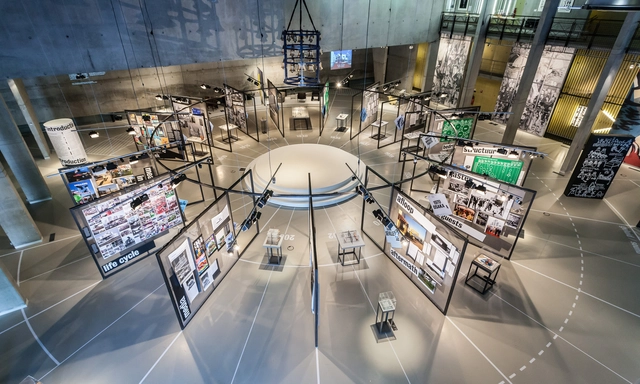
Among the most renowned and well-established offices in the world, OMA - Office for Metropolitan Architecture, founded in the 1970s by Rem Koolhaas, Elia Zenghelis, Madelon Vriesendorp, and Zoe Zenghelis, is definitely part of the pantheon of the most famous. Curiously, although it receives large commissions and has already built several emblematic works in different countries, the office is often associated with an approach that is less focused on architectural design, going beyond the strict limits of the disciplinary field and encompassing other areas of practice.
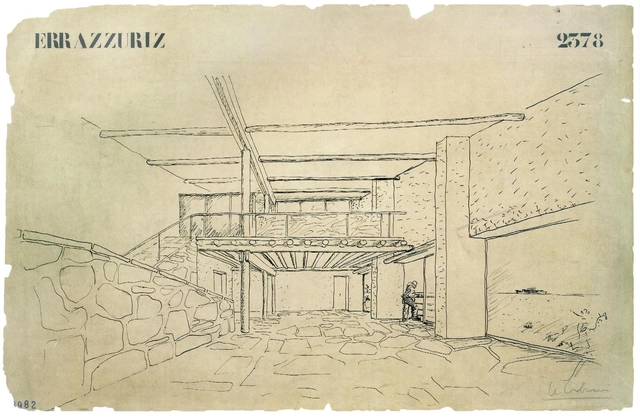
Sometimes architecture’s most influential designs remain unbuilt. Their mark on the world is larger than the physical footprint of the building despite it never breaking ground. This is the case for the Errazuriz House designed in 1930 by Le Corbusier for a Chilean diplomat to Argentina. The house was intended for the mountains of Zapallar Chile overlooking the Pacific Ocean. Its primary design feature, the uneven butterfly roof, was intended to reference the peaks and ridges of its surrounding terrain. This is the first instance of a butterfly roof, which would become a staple of post-war houses in California, built by the thousands. This video explores the Errazuriz house, its history, its design, and takes us on a virtual walkthrough of its digital reconstruction.
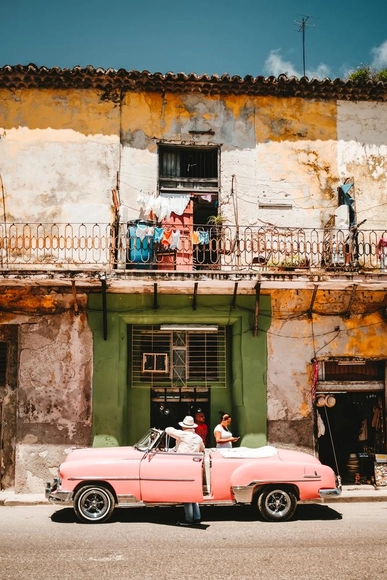
The average age of a home in Cuba is just over 75 years old, and three of them collapse every day. Cuba’s housing crisis is perhaps one of the most unique examples of urban inequity in the world. While the island nation’s extensive history of waves of foreign influence has largely shaped their government, and in turn their public policies and urban planning strategies, they yet have been able to stabilize their long-standing housing crisis- forcing thousands of Cubans to live in derelict homes or public shelters. Now, many questions are being raised about how they will build new housing, repair the existing structures, and revise laws that allow Cubans to have more autonomy in the homeownership process.
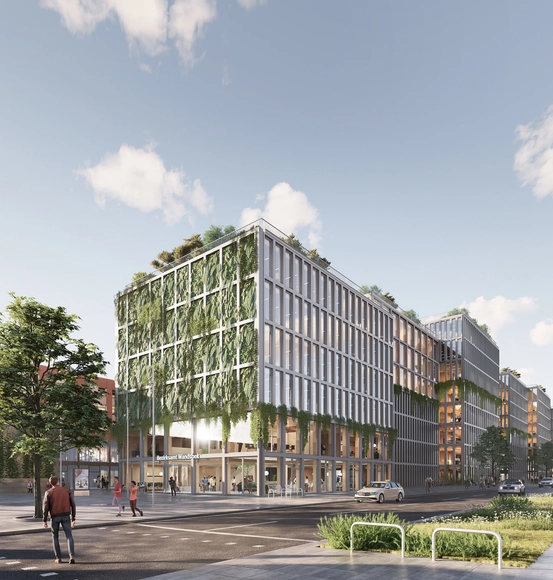
Danish design studio ADEPT has won a competition to design one of Germany’s largest fully-wooden construction buildings in the Wandsbek district of Hamburg, Germany. The building, which counts almost 34,000 sqm, is expected to open in 2026 and will house public administration facilities.
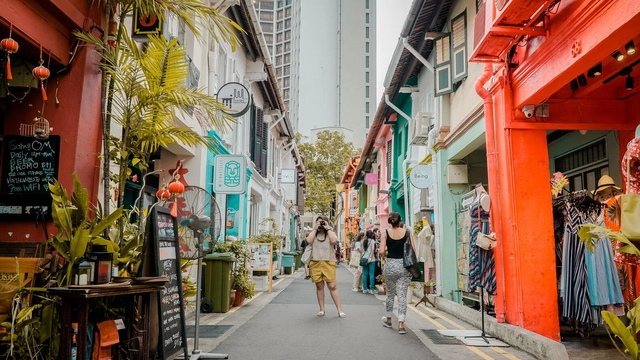
Time Out, an online platform for urban culture that looks for the most vibrant locations around the globe, has recently ranked the 30 coolest streets in the world. The website, which usually focuses on cities as a whole, having already ranked the coolest neighborhoods, is now taking a more local approach due to the Covid-19 pandemic.

Jacinta Leong is a Production Designer who enjoys the creative and collaborative process of designing environments for narratives. Her work on several movies looks ahead into the future - especially in relation to technology in society. She was recently the Production Designer on the film 2067; Art Director on Alien: Covenant, Mad Max: Fury Road, and Pacific Rim: Uprising; Assistant Art Director on Star Wars Episode II-III; and Set Designer in The Matrix, among others.
We've talked with Leong to get to know her thoughts on the connection between films and architecture. The following interview explores her beginnings and inspirations, as well as her work process in the era of digital tools.
This article was originally published on Common Edge.
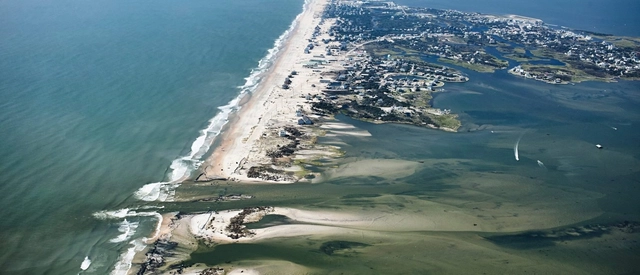
In this week's reprint, Martin C. Pedersen talks with John Englander, author of Moving to Higher Ground: Rising Sea Level and the Path Forward, about the “unstoppable” sea-level rise. The article explores the importance of planning for this challenge right away. In fact, "we have some time, but not all the time in the world" states John Englander.

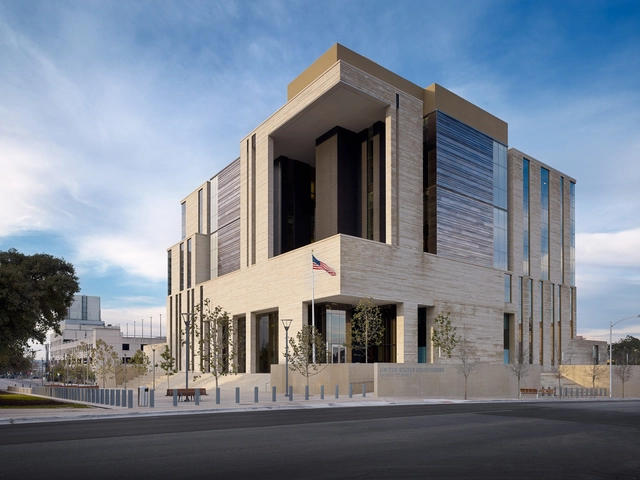
The Southwest United States is known for civic and monumental designs. These projects establish iconic, contemporary expressions that move beyond vernacular traditions. Located on sites throughout Texas, New Mexico, and Arizona, they are designed with modern aesthetics and new ideas. Novel spatial experiences and formal approaches are being explored by both local and international architects. Standing in contrast to the intimate, discreet spaces found within southwest residential architecture, these buildings are prominent landmarks and nodes within their respective cities.



.jpg?1625498227 "© Bahaa Ghoussainy")
.jpg?1625499426 "© Bahaa Ghoussainy")
.jpg?1625498239 "© Bahaa Ghoussainy")
.jpg?1625498318 "© Bahaa Ghoussainy")
.jpg?1625498401)







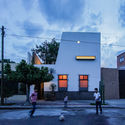
.jpg?1623351121 "Leona House/ Colectivo Arrabal. Image © Paulina Ojeda")
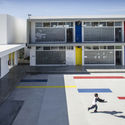


_OMA.jpg?1558539068 "Knoll Celebrates Bauhaus. © OMA / Photography by Fred Ernst")