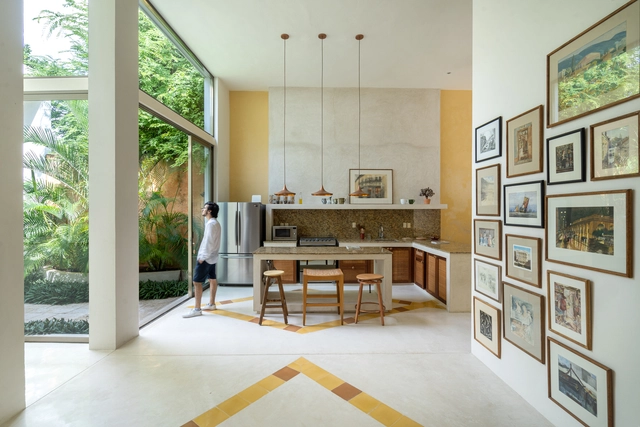
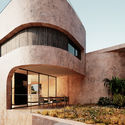
In the history of architecture the concept of beauty has always been linked to different factors that represent, mainly, the values of society in a given period. The zeitgeist is certainly crucial to these definitions, so something that was once considered beautiful in the past is likely to be given another connotation nowadays. In this sense, aesthetic preferences in architecture seem to be linked to symbolic references implicit in the construction itself and in its relation with the world. They are preferences that express convictions, ideologies and positions, as well as moral, religious, political feelings and, of course, class status symbols.
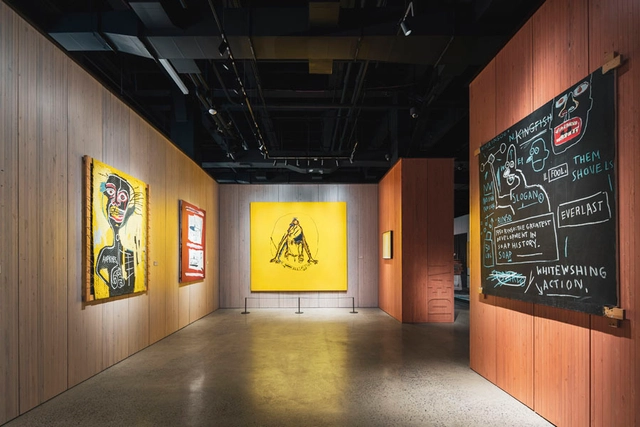
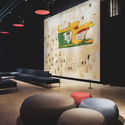
Immense fame, especially when left behind by a deceased artist, may lead to a hierarchal understanding of their legacy—leading one aspect to overshadow other crucial dimensions of their life and oeuvre. Brooklyn-born Jean-Michel Basquiat’s meteoric recognition as an artist and a cultural influence throughout the 1980s led to his energetic mind-map-like paintings being acquired widely by museums and private collections alike, in addition to being mass-marketed in a variety of products, such as fast-fashion clothing and New York-related souvenir items. Basquiat: King Pleasure, a new exhibition organized by Jean-Michel’s sisters, Lisane Basquiat and Jeanine Heriveaux, breaks down the myth surrounding the late artist’s legendary rise from the gritty streets of 1980s New York to a rarely-achieved artistic success.
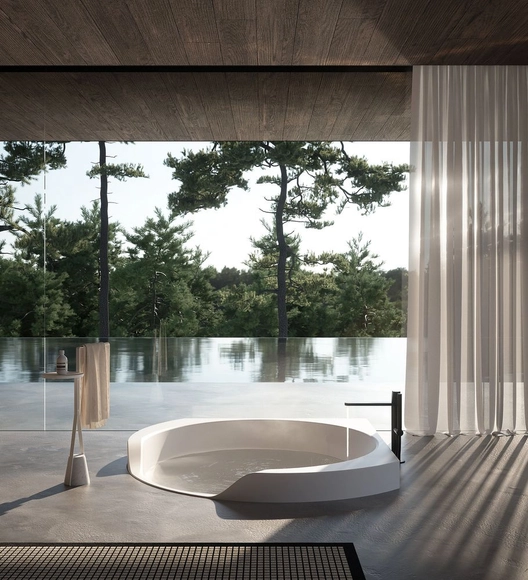
Throughout the years, bathrooms have been viewed as purely functional spaces strictly programmed for hygiene and privacy. Becoming smaller and more practical, the utilitarian, space-saving shower stall has often been considered the norm, pushing the bathtub into obsolescence or as an additional luxury for those with extra space (and money). Recently, however, as lifestyle changes driven by the pandemic have placed wellness as a top priority, the notion of the bathroom as a sanctuary has really taken hold. Contemporary bathrooms have thus been reimagined, shifting towards open spaces of relaxation, comfort and recuperation. And tubs – with their inherent meditative nature – have returned to the spotlight.
Only a few days left until the annual inauguration of Milan Design Week 2022, one of the biggest international design events which features the Fuorisalone and Salone del Mobile. From the 7th till the 12th of June 2022, the streets of Milan will be hosting an array of architectural interventions and exhibitions curated by local and international designers as part of the Fuorisalone. And at the Fiera Milano | Rho, Salone del Mobile 2022, the awaited furniture and interior design event of the year, will be celebrating its 60th anniversary with themes and projects that reflect on “inclusive” design, fostering "autonomy, comfort, movement, usability, interaction and safety for all".
French architect Renée Gailhoustet has been awarded the 2022 Royal Academy Architecture Award for her pioneering work designing public housing and neighborhoods in and around Paris. The award is given annually by London's Royal Academy to individuals or practices whose idea or body of work has positively contributed to the public.
Located amidst the vegetation, almost invisible to those who see it from the street, a jewel of modern Brazilian architecture is hidden in the São Paulo neighborhood of Jardim América. Casa Zalszupin, designed in 1960 by the Polish architect based in Brazil, Jorge Zalszupin, combines traces of local modernism with influences that the architect brought with him from Europe, notably Scandinavian architecture. In a recent photo series, Paul Clemence sought to capture through this house, "the architect's and designer's essence".
It’s an essential architectural element, one we tend to immediately take note of when we look at buildings new to us – the roof. The roofs that shelter the buildings we see in our cities today are diverse in their typology. Flat roofs are a common sight in the city centers of urban metropolises, hip roofs are a popular choice for dwellings around the world, and the gable roof is arguably the most common of all, a roof type popular in stylized depictions of what a standard house looks like.
We are still at the dawn of the Metaverse, the next wave of the Internet. The current “mainstream” Metaverse platforms serve as experimental containers to host the wildest dreams of virtual worlds where we are supposed to unleash the imagination. However, from a spatial design perspective, they have so far been lame and ordinary. Without the constraints in the physical world, how do we draft the urban blueprints in the metaverse? I believe metaverse planners can find inspiration from Italo Calvino’s Invisible Cities, in which he revealed a poetic and mathematical approach to “urban planning” in the imaginary worlds.
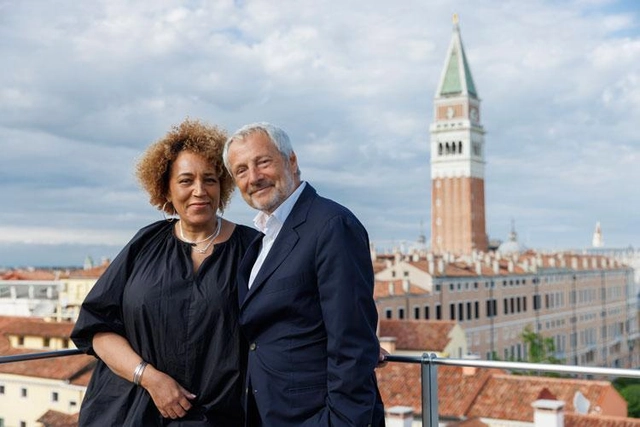
The President of La Biennale di Venezia, Roberto Cicutto, and the Curator of the 18th International Architecture Exhibition, Lesley Lokko by Jacopo Salvi. Image Courtesy of La Biennale di Venezia
Running from May 20th to November 26th, 2023 in the Giardini, at the Arsenale, and at various sites around Venice, the 18th International Architecture Exhibition will be titled: The Laboratory of the Future. Announced today by the President of La Biennale di Venezia, Roberto Cicutto, and the Curator of the exhibition, Lesley Lokko, the theme and title of this edition will consider the African continent as the protagonist of the future. “There is one place on this planet where all these questions of equity, race, hope, and fear converge and coalesce. Africa. At an anthropological level, we are all African. And what happens in Africa happens to us all”, explains Lokko.
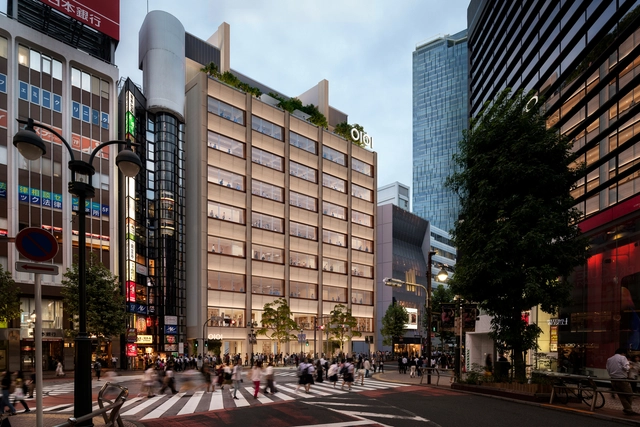
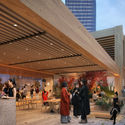
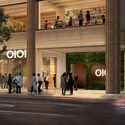
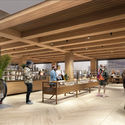
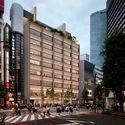
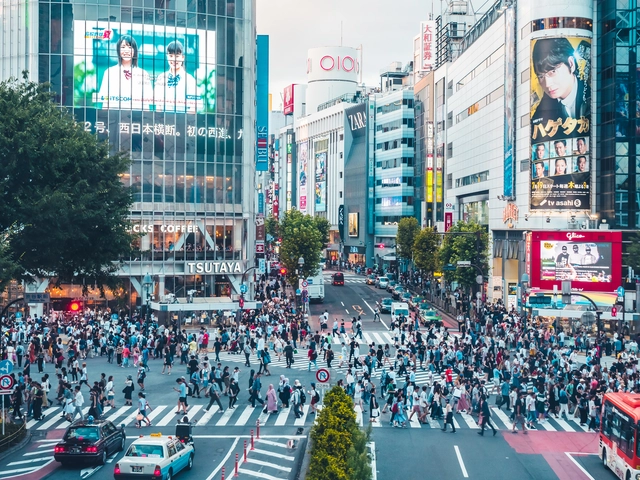
Foster + Partners has unveiled its latest commercial project on the world-famous Shibuya Crossing, in Tokyo, Japan. Dubbed the Shibuya Marui Department Store, the nine-storey retail development is set to become a new space for sustainable lifestyle brands, adopting the highest standards of sustainability and core principles of environmental responsibility and wellbeing. The timber structure's design and material selection will significantly reduce the embodied carbon of the building, while simultaneously creating a warm and open experience for visitors.
MVRDV has revealed the design for its first project in South America. The Hills is a residential project located on the Guayas riverfront in Guayaquil, Ecuador, comprised of six residential towers displayed atop a mixed-use plinth, creating the image of a valley. The towers range in height from 92 to 143 meters, raising taller the further away they are from the riverfront. The whole composition is inspired by the local landscape that merges the natural and the urban environment.
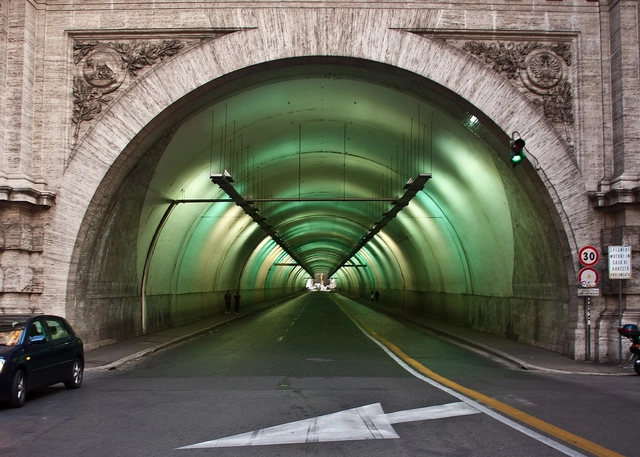
Umberto I Tunnel in Rome. Photo: Andrés Nieto Porras from Palma de Mallorca, España, CC BY-SA 2.0 , via Wikimedia Commons
Smart buildings are more and more on the agenda. For their elaboration, some materials have been developed to meet specific objectives during their use without the need to be operated by any person or equipment. Self-maintenance, cleaning the air, working with the comfort of space, energy efficiency, are just some of the benefits that can be achieved by adopting them.
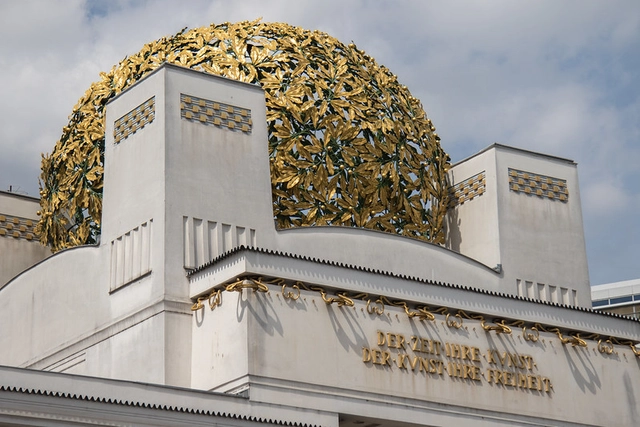
All architecture movements throughout history spur from shifts in society that demand a new style that better reflects the way that technology has advanced the practice and how people express their political, religious, and moral beliefs and practices. While some shifts occur over a period of several years, others are experienced as a sudden revolt. The Vienna Secession was undoubtedly the latter. At the end of the 19th century, a group of artists and architects aimed to explore what art should be as it pertained to filtering global influences in a way that could introduce new modernism.
Half of the world’s population now lives in cities, according to UN-Habitat’s latest reports. While this number is set to increase to two-thirds by 2050, urban challenges are growing exponentially, making it more crucial than ever, to transform our cities. Annually, the world population review assesses the growth of cities and the number of residents living in metropolitan areas, to understand global evolution trends. In 2022, the list of the top 20 most populated countries remained similar to the 2021 edition, with a slight change in numbers and positions. Tokyo kept its status as the world’s largest city, with 37 million inhabitants, while Delhi and Shanghai, followed in second and third positions.
Comparing the results to the 2021 edition, the only decrease that can be seen in the top 20, involves both Japanese cities, Tokyo and Osaka. The rest of the list had, on average, a growth of 1.8% in the total of people residing in metropolitan areas. In fact, African cities Kinshasa in the Democratic Republic of Congo and Lagos in Nigeria gathered the highest rates, with respectively a 4.39% and a 3.54% increase in residents in 1 year. The largest city in the American continent is still Sao Paulo in Brazil, followed closely by Mexico City and Buenos Aires in Argentina, further down the table. In Europe, Istanbul is the most populous, with more than 14.5 million residents.
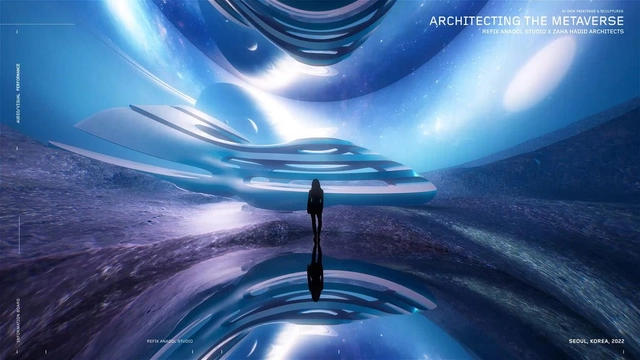
ZHA_RAS_Architecting the Metaverse. Image Courtesy of ZHA
Dongdaemun Design Plaza (DDP) has collaborated with Zaha Hadid Architects (ZHA) for the 'Meta-Horizons: The Future Now' exhibition in Seoul, Korea. Designed by ZHA to promote the instigation and exchange of new ideas and to showcase innovative technologies and media, the inaugural exhibition of DDP’s new Design Museum explores ZHA’s work across multiple fields, from digital technology to artificial intelligence and virtual reality, featuring the firm's recent designs, process, and research that incorporates immersive technologies and new fabrication techniques. The exhibition will be on display from 26 May - 18 September 2022.
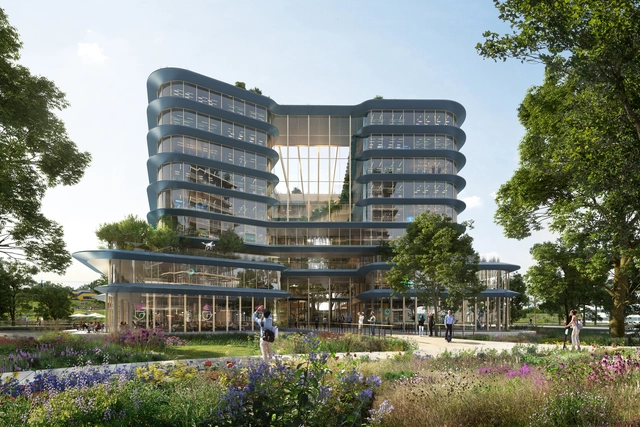
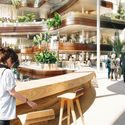
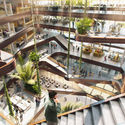
Powerhouse Company has revealed the design of the new IBMHeadquarters in Amsterdam, Netherlands. The architects drew inspiration from the client’s ethos to create a building that functions as a vertical city, with a large atrium conceived as the central social space and multi-tenant offices as neighborhood units. The 35,000 square meter building will house startups and scaleups in addition to the various amenities like fitness areas, restaurants, and lecture halls.
Over the years, interior design has evolved according to the needs that arise, but above all, according to the experiences it seeks to evoke in the user. Over the last two years, we have witnessed a radical change and a special interest in this subject because the pandemic forced us to pay specific attention to the configuration of the places we inhabit. This brought about much more holistic designs that seek to address the wellbeing of the user, combining colours, sensory experiences, technology and natural elements that promote health.
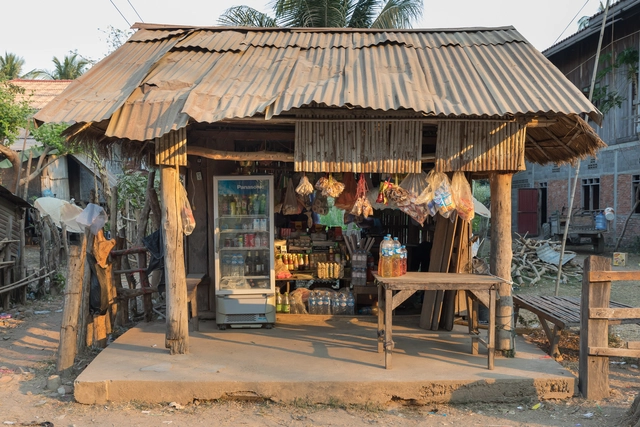
This week’s curated selection of Best Unbuilt Architecture highlights residential projects submitted by the ArchDaily community. From a small community-dwelling in Ghana to a villa tucked under a hillside in Portugal, this roundup of unbuilt projects explores how architects react to various site topographies, cultures, and material availability when designing spaces that provide more than shelter to their users. The article also includes projects from India, Iran, Ireland, Latvia, Georgia, and Saudi Arabia.






.jpg?1654151626 "© Ivane Katamashvili")






.jpg?1654020023&format=webp&width=640&height=580)
.jpg?1654020013 "Aubervilliers by Renée Gailhoustet . Image © Marc Pataut")
.jpg?1654020163 "Le Liegat Ivry sur Seine by Renée Gailhoustet. Image © Valerie Sadoun")
.jpg?1654020006 "Aubervilliers by Renée Gailhoustet . Image © Marc Pataut")

.jpg?1654020023)


.jpg?1653990029 "Khayelitsha Township - Cape Town. Image © Olga Ernst under the Creative Commons Attribution-Share Alike 4.0 International license.")













.jpg?1653955037&format=webp&width=640&height=580)

.jpg?1653955060 "Courtesy of MVRDV")


.jpg?1653955037)




.jpg?1653902387 "ZHA_RAS_Architecting the Metaverse Render. Image Courtesy of RAS")
.jpg?1653902366 "ZHA_RAS_Architecting the Metaverse Render. Image Courtesy of RAS")

.jpg?1653901572 "ZHA_RAS_Architecting the Metaverse. Image © Kyungsub Shin")