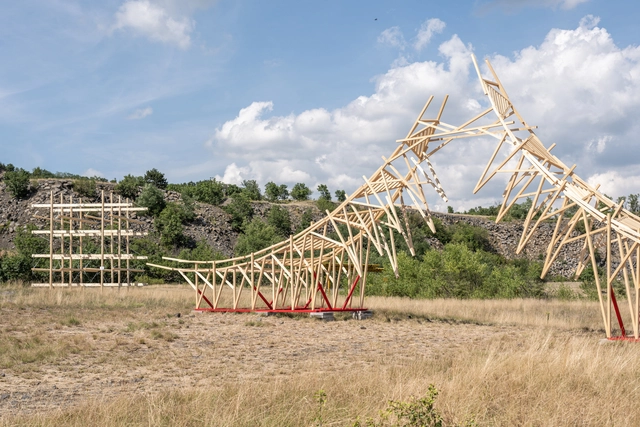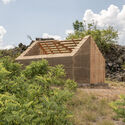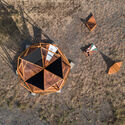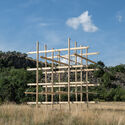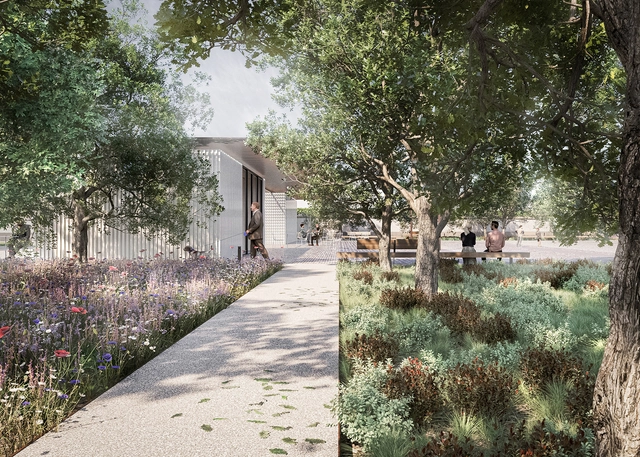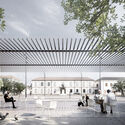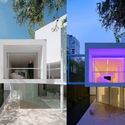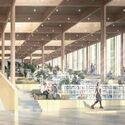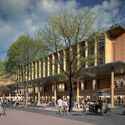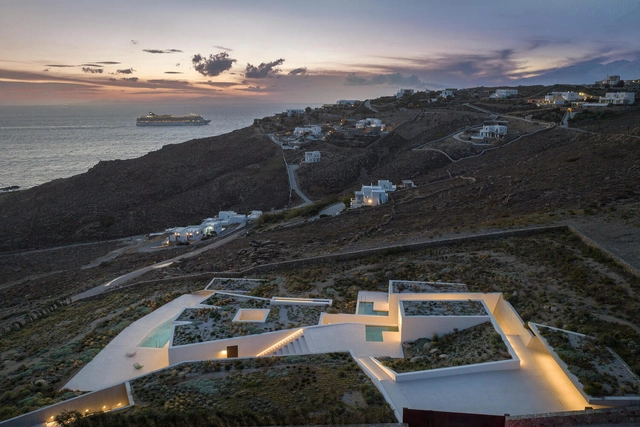
Proposta vencedora do Pavilhão do Brasil na Expo Osaka 2025. Autoria Studio MK27 e Magnetoscópio. Image Cortesia de Apex Brasil
The project led by architect Marcio Kogan was the winner of the competition for the Brazilian Pavilion at the next World Expo: Expo Osaka 2025, organized by the Brazilian Agency for the Promotion of Exports and Investments (ApexBrasil). The project is signed by professionals from MK27 and Magnetoscope. Besides Kogan, the architects Renata Furlanetto and Marcello Dantas are also authors.
https://www.archdaily.com/993672/studio-mk27-and-magnetoscope-win-competition-to-design-the-brazil-pavilion-at-expo-osaka-2025ArchDaily Team
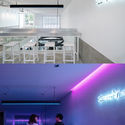
London and Tokyo-based arts and research practice MSCTY is the leading global agency for music and architecture established in 2010. "We believe that the things we hear are as important as those we see".
MSCTY gives a stage to urban environments through sound artists who interpret spatial qualities and architecture into their language of music. Strong connections with the Estonian music scene and a love for the fast-developing, yet raw and historically rich cityscape have led to a special incarnation of the project - MSCTY x Tallinn.
https://www.archdaily.com/993514/interpreting-spatial-qualities-and-architecture-into-music-with-arts-and-research-practice-mscty-at-tab-2022Nick Luscombe & Kirke Päss
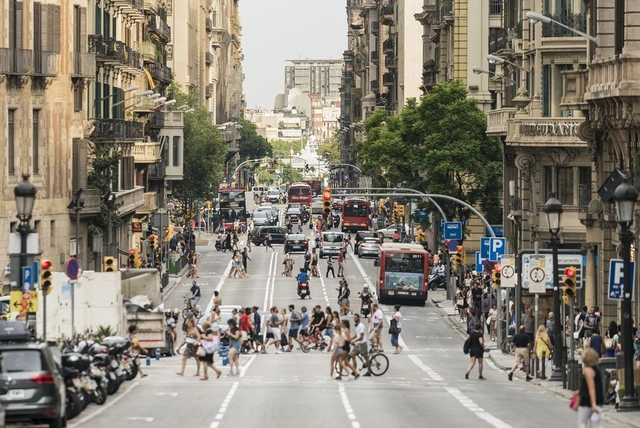
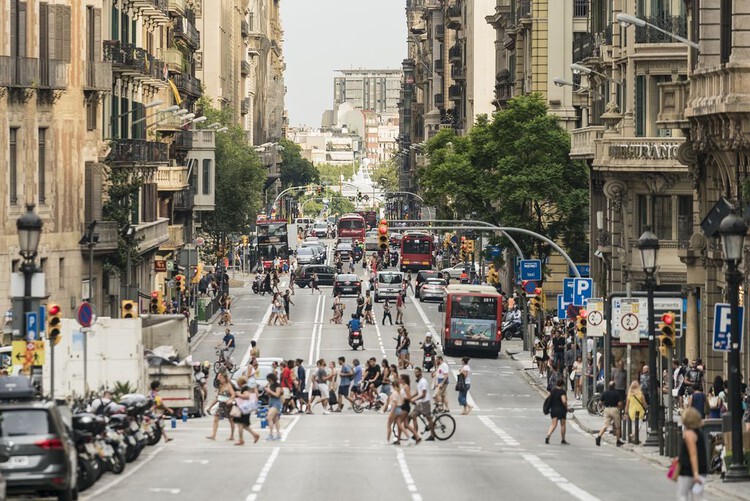
Ambitious technologists have claimed for decades that self-driving cars are the future. Yet, looking at recent years, the biggest revolution has come from vehicles on two wheels, not four. Fueled by the pandemic, increased oil prices, climate change and the desire for healthier lifestyles, we are now living in the midst of a bicycle renaissance. But to understand how we got here, it is crucial to look back. When the automobile became more widespread in the early 1900s, it quickly became a symbol of progress along with all it entailed: speed, privatisation and segregation. Adopting a car-centric approach, urban planners had to reorganise entire cities to separate traffic. Cars took over public spaces that used to host dynamic city life and parking lots, highways and gas stations became common landscapes. Pedestrians that once ruled the streets were herded into sidewalks and children relegated to fenced playgrounds. Ironically, cities were being designed for cars (not humans).
The Athens International Airport was decommissioned in 2001, leading to two decades of work for the local government to establish funding and a governance mechanism to transform the 600 acres of unused space into Europe's largest coastal park. The site has a layered history, from prehistoric settlements to the construction of the airport in the 20th century and the site being used for as an Olympic venue in 2004. Architecture office Sasaki is leading the design to transform the site again and create the Ellinikon Metropolitan Park, a restorative landscape and climate-positive design that will serve as a park, playground, and cultural center for the city of Athens. Developers are planning to break ground early next year.
The ninth edition of the MPavilion opened with an orange canopy installation designed by Bangkok-based practice all(zone) in collaboration with AECOM and Schiavello Architects. From December 2022 to April 2023, visitors will experience a vibrant and joyful setting made of upcycling materials, featuring an architectural lighting program by Melbourne-based design practice Bluebottle.
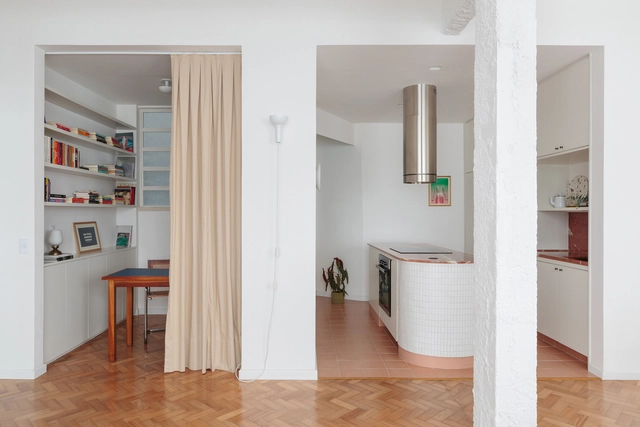
In many cultures, the kitchen has become not only a workspace, but also a meeting place, a social environment where family and friends gather for conversation and meals. Seeking to respond to this transformation from more integrated architectural plans and appliances that also have an aesthetic appeal, as well as practical, the choice of kitchen equipment, such as the stove, is no longer restricted to its technical conditions. Check out how to combine practical, technical and aesthetic aspects when choosing a stove.
Home to architectural styles spanning almost three hundred years, the is no city like New Orleans. The meld of French, Spanish, and Caribbean architectural influences, in conjunction with the demands of the hot and humid climate, has impacted the urban fabric as much as the culture itself. Located along the Mississippi River and close to the Gulf of Mexico coast, the construction of ports, NOLA’s trading history, and forceful natural phenomena like Hurricane Katrina in 2005 illustrate how water has shaped the city.
Following Hurricane Katrina, Orleans adapted its values to respond to the changing needs of its recovering community. Although reconstruction is not only architectural responsibility, New Orleanspublic architecture has contributed to revitalizing and reinhabiting the city after the disaster. Museums, parks, and churches, each of these places connects people to each other in ways that define and support community.
According to the latest survey carried out by the World Health Organization - WHO, in 2019 there were more than 700,000 suicides worldwide. In Brazil, records approach 14,000 cases per year, that is, on average 38 people commit suicide per day. In this context, “Yellow September” was created in Brazil, the largest anti-stigma campaign in the world that encourages everyone to actively act in the awareness and prevention of suicide, a topic that is still seen as taboo.
The era of petrol cars is coming to an end with the advent of batteries and electric cars – and so is the era of gas stations and the pollution they bring to communities.
Gas stations, by their very nature, are environmental hazards. Of the 450,000 hazardous locations in the US alone, half are contaminated by oil, with much of it coming from underground tanks leaking from former gas stations, creating risks of leaks and explosions.
Technology is disrupting the creative industry and it's only getting better, and faster. Innovation in the architecture industry has never been as rampant as it is at this moment. The advent of artificial intelligence (AI) in architecture - the first genuine 21st-century design method - is changing the way buildings are imagined and designed. AI image generatorslike Midjourney and DALL-E provide an efficient and explorative way of conceiving architectural concepts. Generated in less than 5 minutes, these images unveil an interesting design aesthetic that is emerging. In an exclusive interview with ArchDaily, architect and educator Matias del Campo hypothesizes what the future of architectural aesthetics would be.
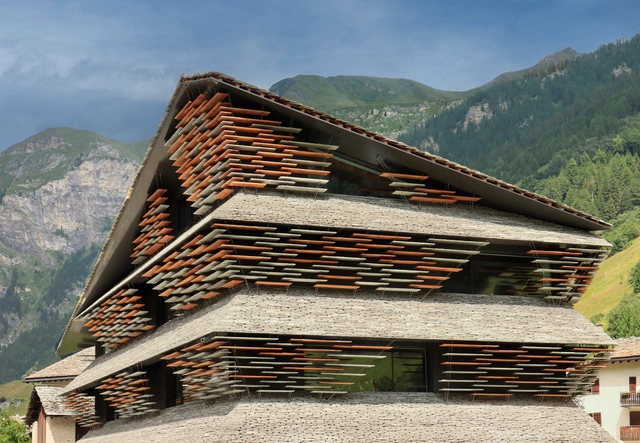
Contrary to what some people mistakenly say, half-timber is not a style, but a building technique. Brought to Brazil by German immigrants, it was used mainly in regions of Espírito Santo, Santa Catarina and Rio Grande do Sul. The technique has now become a strong attraction for tourists. But after all, what defines it?
https://www.archdaily.com/989527/what-is-half-timbered-architectureArchDaily Team
The American Institute of Architects (AIA) has named Carol Ross Barney, FAIA, as the recipient of the 2023 AIA Gold Medal, the institution’s highest annual honor. The award recognizes and applauds Carol Ross Barney’s focus on design excellence, social responsibility, and generosity. Through her transformative projects, she has endeavored to make the world a better place and, according to the jury, made “an indelible mark on the profession.”
Not only is L35 Architects currently renovating Real Madrid's Santiago Bernabeu stadium in Spain, it has also designed a new stadium in the capital of Bolivia. Selected through an international competition organized in 2021 by Club Bolivar and its partner City Football Group, construction is about to begin and completion is expected in 2025.
A selection of architectural firms and practitioners from all over the world will be announced as part of the 2023 generation of ArchDaily's New Practices this Tuesday, December 13, on ArchDaily and its versions in Portuguese, Spanish and Chinese.
Community development proposals in Disney World come from back days. One of Walt Disney's last visionary projects was the Experimental Prototype Community of Tomorrow (EPCOT), a center for American enterprise and urban living. Disney advocated that the problems of cities were the most critical issues facing society and planned a city that could develop in a controlled manner, contrary to the urban expansion in the USA during the first half of the last century. After Disney died in 1966, the "EPCOT" concept was abandoned as the company was uncertain about the feasibility of operating a city. Fifty- five years later, after a thorough search, Walt Disney World chose The Michaels Organization for its experience in building and managing attainable housing communities.
333 Kingsland Road & Hackney New Primary School / Henley Halebrown Architects. Image Courtesy of Henley Halebrown Architects
In an age where we have been going from hyperrealistic renders to digital models to the realm of the metaverse, physical architectural models have almost become a thing of the past. Nonetheless, whether it's to showcase the final project or to be used as a tool to explore different solutions to the same problem during the design phase, some architects still consider physical models part of their design process.

With the end of 2022 just around the corner, we have decided to look back at all the architectural models from the projects published this year on ArchDaily. The following selection, grouped into section models, abstract models, intricate models, interactive models, and models that use unconventional materials, lists the best of this year's physical models by our community.
As we wrap up 2022, we take a look back at how this year introduced new adaptations to the way we live, work, and interact with our built environment, especially after emerging from years of unprecedented changes. One way to describe this year's design identity is that there isn't one. Going through this transitional period, inspiration came from foreign travels, immersive virtual worlds, being one with the planet and the serenity that came with it, platforms that promote expressionism and individuality, and a trend-setting generation known for its bold perspectives.
David Adjaye, in partnership with Bedrock and the city of Cleveland, unveiled the masterplan for the Cuyahoga Riverfront, a 15-to-20-year vision that will transform 35 acres of the riverfront to improve accessibility, equity, sustainability, and resilience of the downtown area. The design embraces the city’s rich history and connection to nature and creates a sustainable infrastructure that prioritizes pedestrian movement and activates open public spaces. David Adjaye, a British-Ghanian architect, has been awarded Britain’s Order of Merit, making him the fifth architect to be appointed the honor.