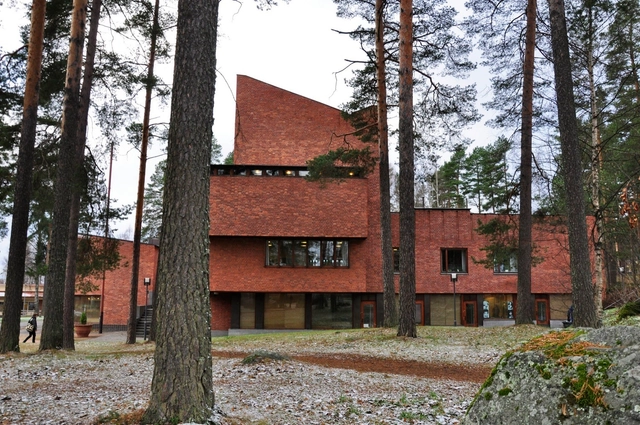
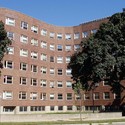
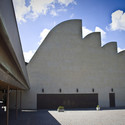
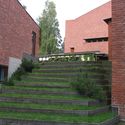
To commemorate the centenary of Elissa Aalto (1922-2022), the Alvar Aalto Foundation brought into tour an exhibition showcasing the life's work of this talented and influential Finnish architect and designer. From September to November 23, 2022, the exhibition sheds light on her public and private role in the everyday life of Alvar Aalto's architect's office alongside her famous architect husband. The tour will take place in the Cities of Rovaniemi, Alajärvi, and Tammisaari, home to many buildings designed by the legendary Finnish architect couple.
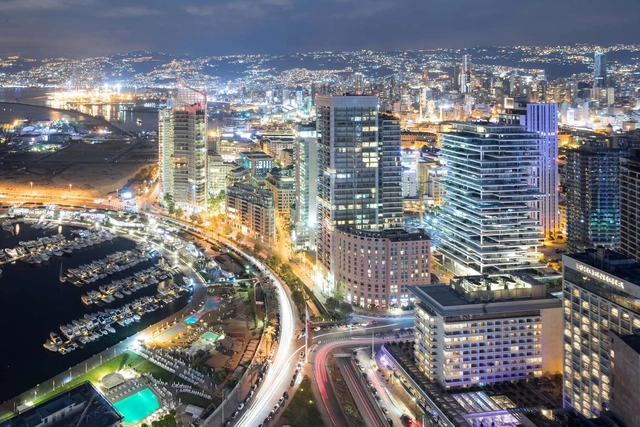
Situated on the coast of the Mediterranean Sea, Beirut is one of the oldest cities in the world that has been shaped throughout its 5,000 year history by Phoenicians, Romans, Greeks, and the Ottomans. The Lebanese capital has been for decades a cosmopolitan city and a focal cultural and geographical link between Europe and the Middle East.
Often labeled as a resilient city, Beirut has been subject to numerous devastating events throughout its history, from a brutal 15-year civil war to one of the biggest non-nuclear blasts in history. Nowadays, the city boasts a skyline full of contrasts, where contemporary buildings rise alongside Ottoman, Roman, and Byzantine ruins. Its architecture, along with its renowned cuisine, distinguished night life, archaeological sites, and hospitable people have reclaimed it as a sought-after touristic destination.
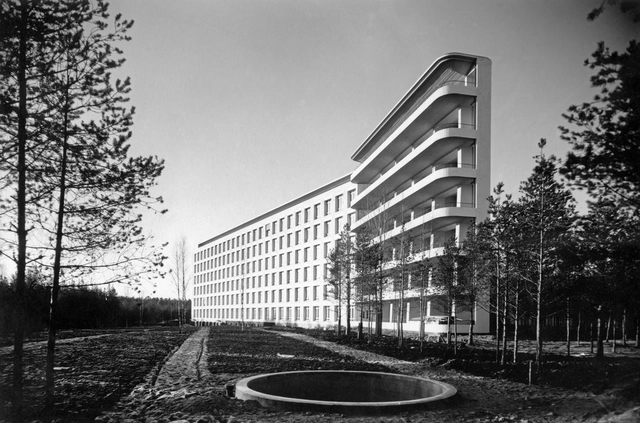
“Sick Architecture” opened on May 5th at CIVA in Brussels. Co-curated by Beatriz Colomina, the exhibition investigates the intrinsic relation between architecture and sickness. The architectural discourse always weaves itself through theories of body and brain, constructing the architect as a kind of doctor and the client as the patient. Architecture has been portrayed as a form of prevention and cure for thousands of years. Yet architecture is also often the cause of illness, from the institution of hospitals to toxic building materials and sick building syndrome. The outbreak of the COVID-19 pandemic further highlighted this topic.
Finnish architect Alvar Aalto was a pioneer of modern architecture and design, especially in his use of organic, naturally derived materials. When he decided to embark on a career as an architect, he traveled to Helsinki, the only place where he could find academic training in the profession. His journey did not end there, however, as his work can be seen around the world. Here, we have mapped out 20 of his most notable works that must be seen up close and in-person to truly be appreciated.
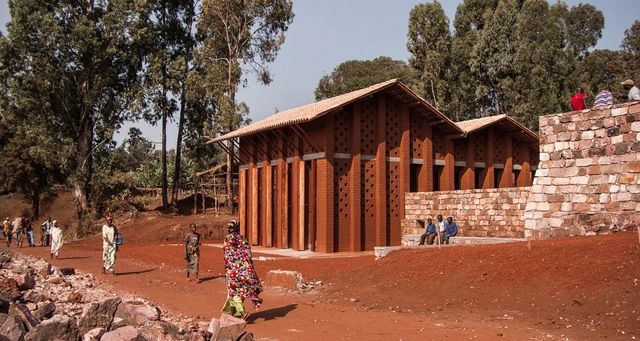
Library of Muyinga. Image Courtesy of BC Architects
In his 1983 now-classic essay Towards a Critical Regionalism, Six Points of an Architecture of Resistance, Kenneth Frampton discussed an alternative approach to architecture, one defined by climate, topography and tectonics, as a form of resistance to the placeness of Modern Architecture and the gratuitous ornamentation of Postmodernism. An architectural attitude, Critical Regionalism proposed an architecture that would embrace global influences while firmly rooted in its context. The following explores the value and contribution of Frampton’s ideas for contemporary architecture.
The Architecture Film Festival London, now at its third edition, fosters conversations around architecture, society and the built environment through the medium of film. Along with the International Film Competition, the 2021 programme, debuting on June 2nd and held online, will feature a collection of diverse thematic screenings, essays and events titled "Capsules", which offer a platform to multiple curatorial voices.
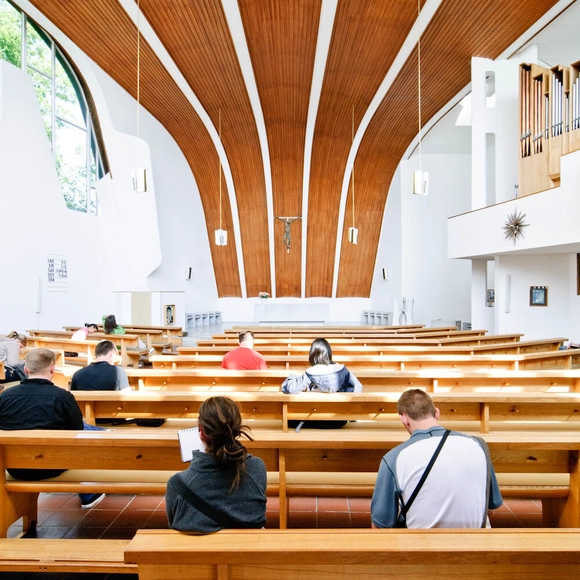
Many describe the work of Alvar Aalto as an embodiment of the concept of Gesamtkunstwerk (a total work of art), where architecture, design, and art merge into one. The Finnish architect is a pioneer in the so-called organic strand of modern architecture in the early 20th century and has strongly influenced what we know today as Scandinavian architecture. According to a description on the MoMA website: "his work reflected a deep desire to humanize architecture through an unorthodox handling of shapes and materials that was rational and intuitive." Its methods of bringing natural light into buildings are extolled and studied repeatedly until today. But throughout Aalto's career, wood has always been present and taken many different forms. From structures to ceilings to stools, Alvar Aalto brought this natural material to the fore.
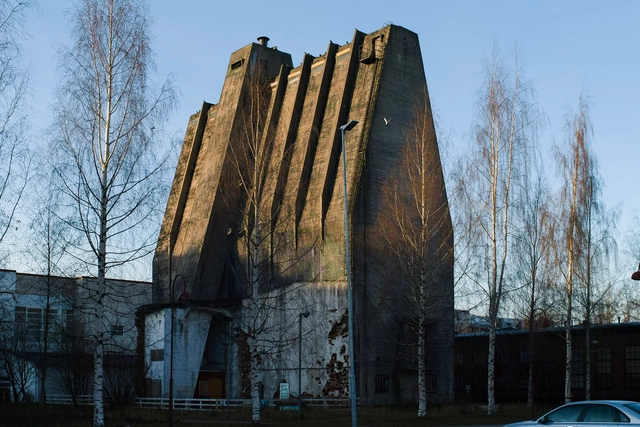
Skene Catling de la Peña and Factum Foundation are transforming Alvar Aalto’s iconic wood chip Silo into a research Centre promoting architectural preservation and re-use. The AALTOSIILO, a cathedral-like concrete structure “will become a point of focus for digitizing and communicating the importance of the industrial architecture of the north and – in turn - the impact industry has had on the environment”.
Luonnos Bagdadin taidemuseosta Irakiin (1957–58). Originaalipiirustus. Image Courtesy of Alvar Aalto Foundation
The Alvar Aalto Museum is showcasing one last exhibition before it undergoes a complete renovation, highlighting the architect’s unbuilt museum designs. While Aalto designed a total of 15 museum buildings, only three made it from concepts to the actual built structures. The exhibition entitled “The Dream of a Museum” includes both detailed and more sketch-like plans, along with competition entries.
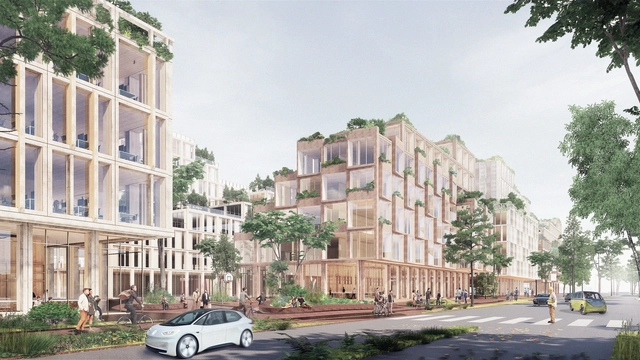
Creating new standards for a more connected and livable city, Henning Larsen has designed a New Masterplan for Wolfsburg, Germany. The new prototype for urbanism across the European continent diffuses new energy in the city center. Selected to design the project in a competition in 2019 that included competitors UNStudio and Bjarke Ingels Group, Henning Larsen’s proposal for phase 1 is expected to reach completion by 2023.
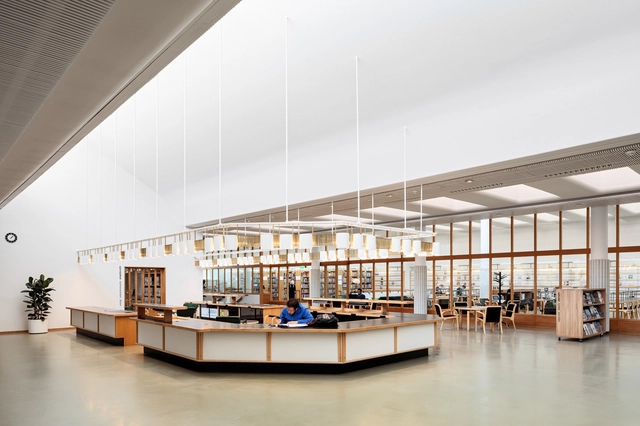
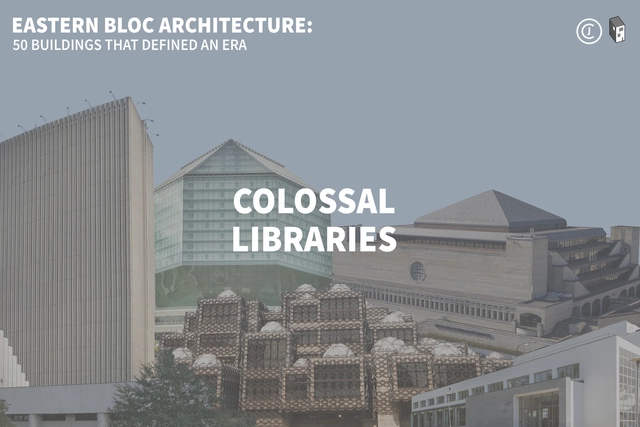
This article is part of "Eastern Bloc Architecture: 50 Buildings that Defined an Era", a collaborative series by The Calvert Journal and ArchDaily highlighting iconic architecture that had shaped the Eastern world. Every week both publications will be releasing a listing rounding up five Eastern Bloc projects of certain typology. Read on for your weekly dose: Colossal Libraries.
https://www.archdaily.com/943219/eastern-bloc-architecture-colossal-librariesLucía de la Torre
JKMM’s “Atlas” proposal won the international design competition for the new extension of The National Museum of Finland. Organized by the Finnish Heritage Agency, the National Museum of Finland and Senate Properties, the competition entitled “New National” or “Uusi Kansallinen” in Finnish, gathered 185 entries from all around the world.
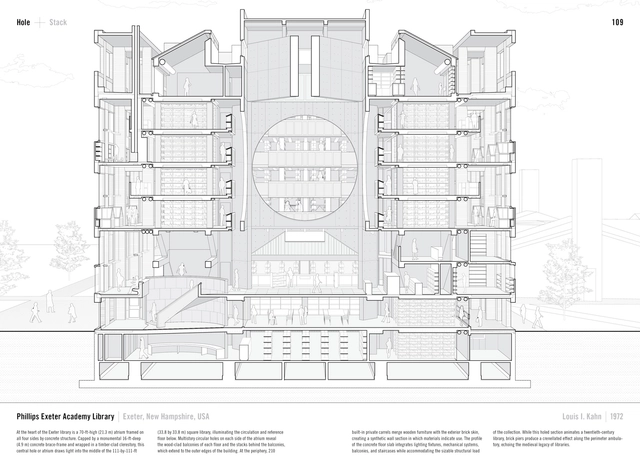
Phillips Exeter Academy Library by Louis I. Kahn (1972). Published in Manual of Section by Paul Lewis, Marc Tsurumaki, and David J. Lewis published by Princeton Architectural Press (2016). Image Courtesy of LTL Architects
For Paul Lewis, Marc Tsurumaki and David J. Lewis, the section “is often understood as a reductive drawing type, produced at the end of the design process to depict structural and material conditions in service of the construction contract.” A definition that will be familiar to most of those who have studied or worked in architecture at some point. We often think primarily of the plan, for it allows us to embrace the programmatic expectations of a project and provide a summary of the various functions required. In the modern age, digital modelling software programs offer ever more possibilities when it comes to creating complex three dimensional objects, making the section even more of an afterthought.
With theirManual of Section(2016), the three founding partners of LTL architects engage with section as an essential tool of architectural design, and let’s admit it, this reading might change your mind on the topic. For the co-authors, “thinking and designing through section requires the building of a discourse about section, recognizing it as a site of intervention.” Perhaps, indeed, we need to understand the capabilities of section drawings both to use them more efficiently and to enjoy doing so.
ArchDaily and Airbnb were both founded in 2008, but for two very different reasons. Since then, ArchDaily has amassed a vast database of tens of thousands of buildings, located in cities and countries all around the world. Meanwhile, Airbnb has revolutionized the way in which we explore these countries, and use these buildings, even if just for one night.
As one of the key figures of midcentury Modernism and perhaps Finland's most celebrated architect, Alvar Aalto (3 February 1898 – 11 May 1976) was known for his humanistic approach to Modernism. For his characteristically Finnish take on architecture, Aalto has become a key reference point for architecture in the Nordic countries, and his commitment to creating a total work of art left many examples of his design genius not only in buildings but also in their interior features, including furniture, lamps, and glassware design.
On the occasion of the centenary of Finland's Independence (Suomi 100), Rome’s Casa dell’Architettura is to host the “Architecture in Finland. From Alvar Aalto to new generations. Talk with Avanto Architects and Design Office KOKO3” conference on Tuesday 17th October 2017.
The renovation of the Aalto University Harald Herlin Learning Centre in Otaniemi, designed by NRT Architects in collaboration with JKMM Architects (interiors), has been selected as the winner of the 2017 Finlandia Prize for Architecture. Completed in 2016, the project is the first renovation to be awarded the prize. The original building was completed in 1970 to fit into the Alvar Aalto-designed Otaniemi campus plan.
Seniority is infamously important in the field of architecture. Despite occasionally being on the butt end of wage jokes, the field can actually pay relatively well—assuming that you’ve been working for a couple of decades. Even Bjarke Ingels, the tech-savvy, video-producing, Netflix-documentary-starring provocateur and founder of the ultra-contemporary BIG isn’t a millennial; at 42 the Dane is a full nine years older than Mark Zuckerberg.
As a result of this, it's common to lead a rich and complex life before finding architectural fame, and many of the world’s most successful architects started their careers off in an entirely different field. If you haven't landed your dream job yet, you may find the following list of famous architects' first gigs reassuring.














._Originaalipiirustus_Alvar_Aalto_-s%C3%A4%C3%A4ti%C3%B6..jpg?1604925160&format=webp&width=640&height=580)
_julkisivupiirustus._Alvar_Aalto_Museum_(1971-73)__facade._Original_drawing_Alvar_Aalto_Foundation..jpg?1604924810 "Alvar Aalto Museum (1971-73), facade. Original drawing . Image Courtesy of Alvar Aalto Foundation")
__pohjapiirustus__julkisivu_ja_poikkileikkaus._Perni%C3%B6_Museum_(1928-29)__Finland._Original_Drawing_Alvar_Aalto_Foundation..jpg?1604926408 "Perniö Museum (1928-29), Finland. Original Drawing . Image Courtesy of Alvar Aalto Foundation")
__Viro._Sis%C3%A4perspektiivi._Tallinn_Art_Museum_(193-37)__Estonia._Interior_perspective._Original_drawing_Alvar_Aalto_Foundation..jpg?1604926715 "Tallinn Art Museum (193-37), Estonia. Interior perspective. Original drawing . Image Courtesy of Alvar Aalto Foundation")
._Originaalipiirustus_Alvar_Aalto_-s%C3%A4%C3%A4ti%C3%B6..jpg?1604925160)








.jpg?1533734642 "VillaLóla / ARKÍS architects. Image © ARKÍS architects")