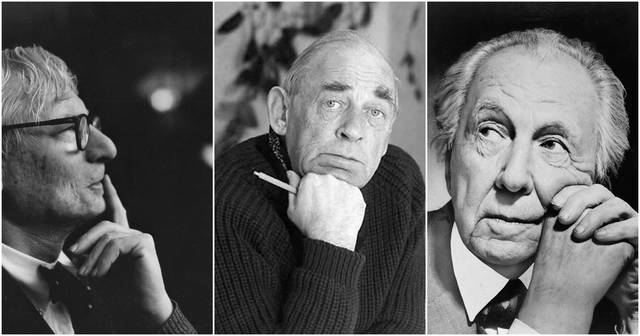
Famous architects are often seen as more enigma than person, but behind even the biggest names hide the scandals and tragedies of everyday life. As celebrities of a sort, many of the world's most famed architects have faced rumors and to this day there are questions about the truth of their private affairs. Clients and others in their studios would get a glimpse into an architect’s personal life, but sometimes the sheer force of personality that often comes with creative genius would prevent much insight. The fact remains, however, that these architects’ lives were more than the sum of their buildings.
Last year saw the Alvar Aalto Foundation experience a record-breaking number of visitors at each of its four sites – a total of 42,755 as opposed to the 36,744 people that toured the sites in 2015.
Of those numbers, The Alvar Aalto Museum and the Muuratsalo Experimental House in Jyväskylä received a total of 20,005 visitors combined, half of which had arrived from outside of Finland to explore the Museum, while also continuing the recent trend of an increasing number of visits over the past five years.
https://www.archdaily.com/804005/alvar-aalto-foundation-breaks-all-time-record-for-number-of-visitors-in-2016Osman Bari
Well-known architects are easy to admire or dismiss from afar, but up close, oddly humanizing habits often come to light. However, while we all have our quirks, most people's humanizing habits don't give an insight into how they became one of the most notable figures in their field of work. The following habits of several top architects reveal parts of their creative process, how they relax, or simply parts of their identity. Some are inspiring and some are surprising, but all give a small insight into the mental qualities that are required to be reach the peak of the architectural profession—from an exceptional work drive to an embrace of eccentricity (and a few more interesting qualities besides).
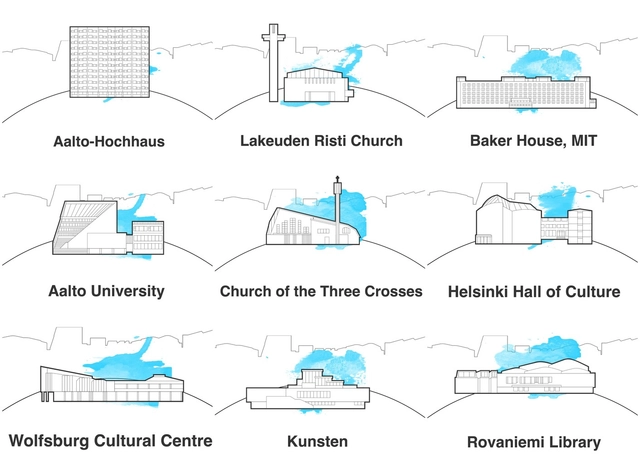
In commemoration of the 40th anniversary of the death of Finnish architect Alvar Aalto this May, Expedia Finland has created “The World According to Alvar,” an interactive visual portfolio containing some of his most notable buildings from around the world. The digital stereoscope allows you to browse through 15 seminal works including the Helsinki Hall of Culture and the Baker House Dormitory at MIT, with a graphic, photo and description for each project. The site will also link you to locations for each project, so you can start making plans for your own Aalto pilgrimage.
Continue after the break to give the portfolio a spin.
In terms of memorialization, being selected to represent your country as the face of a banknote is one of the highest honors you can achieve. Even if electronic transfer seems to be the way of the future, cash remains the reliable standard for exchange of goods and services, so being pasted to the front of a bill guarantees people will see your face on a near-daily basis, ensuring your legacy carries on.
In some countries, the names of the faces even become slang terms for the bills themselves. While “counting Le Corbusiers” doesn’t quite roll off the tongue, a select few architects have still been lucky enough to have been featured on such banknotes in recent history. Read on to find out who the 15 architects immortalized in currency are and what they’re worth.
Alvar Aalto was born in Alajärvi in central Finland and raised in Jyväskylä. Following the completion of his architectural studies at the Helsinki University of Technology he founded his own practice in 1923, based in Jyväskylä, and naming it Alvar Aalto, Architect and Monumental Artist. Although many of his early projects are characteristic examples of 'Nordic Classicism' the output of his practice would, following his marriage to fellow Architect Aino Marsio-Aalto (née Marsio), take on a Modernist aesthetic. From civic buildings to culture houses, university centers to churches, and one-off villas to student dormitories, the ten projects compiled here—spanning 1935 to 1978—celebrate the breadth of Aalto's œuvre.
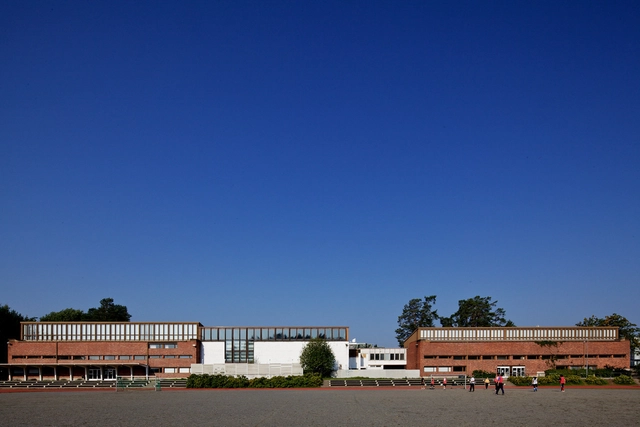
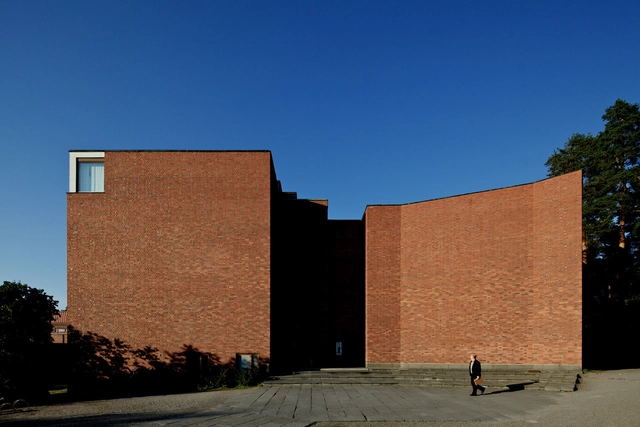
Jyväskylä, a city whose status as the center of Finnish culture and academia during the nineteenth century earned it the nickname “the Athens of Finland,” awarded Alvar Aalto the contract to design a university campus worthy of the city’s cultural heritage in 1951. Built around the pre-existing facilities of Finland’s Athenaeum, the new university would be designed with great care to respect both its natural and institutional surroundings.
The city of Jyväskylä was by no means unfamiliar to Aalto; he had moved there as a young boy with his family in 1903 and returned to form his practice in the city after qualifying as an architect in Helsinki in 1923. He was well acquainted with Jyväskylä’s Teacher Seminary, which had been a bastion of the study of the Finnish language since 1863. Such an institution was eminently important in a country that had spent most of its history as part of either Sweden or Russia. As such, the teaching of Finnish was considered an integral part of the awakening of the fledgling country’s national identity.[1]
In this article, which originally appeared in theCalvert Journal, Ksenia Litvinenko narrates the story of the K-2 Dacha – a governmental residence in St. Petersburg which sought to shrug off Russian Classicism and Soviet Modernism in favor of the principles of Finnish Modernism. Illustrated by photographs by Egor Rogalev and researched alongside Vladimir Frolov, this article examines a Modernist gem that you probably won't have heard of, or seen, before.
If you ever find yourself in St. Petersburg, take a taxi along the Pesochnaya embankment, far away from the polished attractions of the city centre. Sit back and watch the landscape changing on the other bank of the Malaya Nevka. Among the trees you will see the former dachas of Russian nobles, private residences of local officials and the buildings of the new elite, overlooking the river. This is the best and perhaps the only perspective from which to see the K-2 dacha.
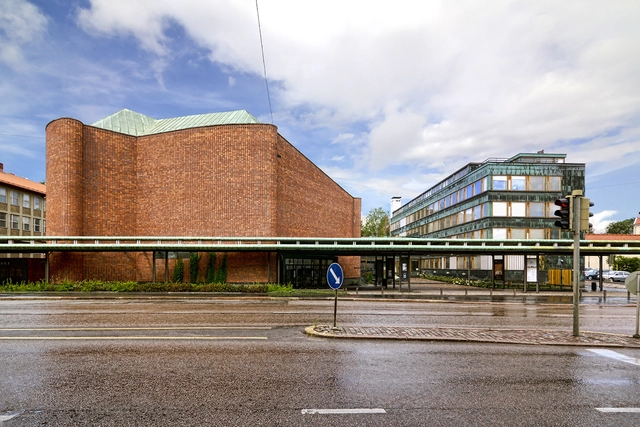
Originally built as the headquarters for the Finnish Communist Party, the House of Culture (Kultuuritalo in Finnish) has since established itself as one of Helsinki’s most popular concert venues.[1] Comprising a rectilinear copper office block, a curved brick auditorium, and a long canopy that binds them together, the House of Culture represents the pinnacle of Alvar Aalto’s work with red brick architecture in the 1950s.
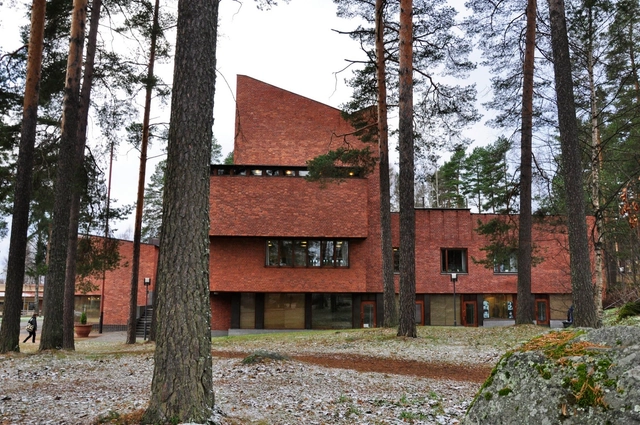
Occupying the center of a small farming town in Finland, Säynätsalo’s Town Hall might appear almost too monumental for its context. Designed by Alvar Aalto in 1949, the town hall is a study in opposition: elements of classicism and the monumental blended with modernity and intimacy to form a cohesive new center-point for the community. These and other aspects of the design initially proved somewhat divisive, and the Town Hall has not been without controversy since its inception.
Paimio Sanatorium, an early major work by Alvar Aalto, is the subject of an exhibition on show in the Gallery at the Alvar Aalto Museum from 12 February to 10 April 2016. The exhibition is based on a conservation management plan prepared for the first time in Finland. The plan involves the most detailed investigation so far of the hospital, which was built for tuberculosis patients.
The Nordic nations—Finland, Norway and Sweden—have reached a pivotal point in their collective, and individual, architectural identities. The Grandfathers of the universal Nordic style—including the likes of Sverre Fehn, Peter Celsing, Gunnar Asplund, Sigurd Lewerentz, Alvar Aalto, and Eero Saarinen—provided a foundation upon which architects and designers since have both thrived on and been confined by. The Nordic Pavilion at the 2016 Venice Biennale—directed by Alejandro Aravena—will be the moment to probe: to discuss, argue, debate and challenge what Nordic architecture really is and, perhaps more importantly, what it could be in years to come.
We're asking for every practice (and individual) across the world who have built work in Finland, Norway and Sweden in the past eight years to submit their project(s) and be part of the largest survey of contemporary Nordic architecture ever compiled.
Update: the Open Call for In Therapy closed on the 24th January 2016.
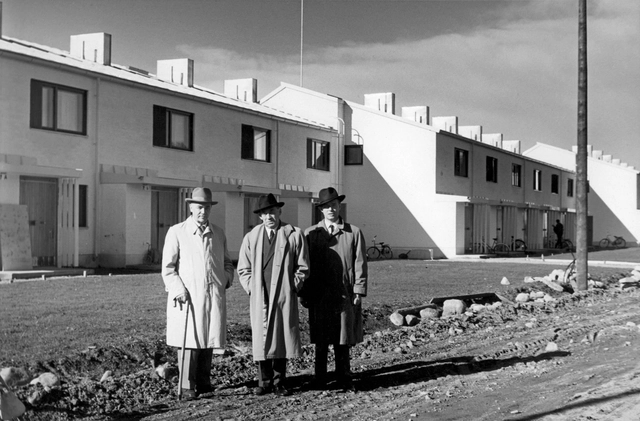
'The Finnish rowhouse – from working-class housing to middle-class dream' exhibition is showing gems of this lifestyle familiar to all Finns, with the hand of Alvar Aalto and his architect contemporaries powerfully in evidence.
Based on extensive research by Professor Riitta Nikula, the exhibition tells the intriguing story of the rowhouse, uncovering the eventful history of rowhouse living from the 1900s to the 1960s. The exhibition uses drawings, photographs and films to present this high-quality everyday architecture.
Tommi Lindh, director of the Alvar Aalto Foundation, shares four exciting reasons to enjoy the architectural offerings of Finland this summer.
Architecture hasn't been this intensively represented in the Finnish summer events ever. The whole summer is full of nice places to visit, but what makes August so very special is what's happening in Helsinki and Jyväskylä in the beginning of the month. The Alvar Aalto Symposium kicks off with lectures by the Museum of Finnish Architecture in Helsinki on Wednesday, August 5 and continues to Jyväskylä where the main event starts on Friday, August 7 with the first thematic session and a keynote presentation by Liu Xiaodu of Urbanus.
The Alvar Aalto Symposium gathers together top names in contemporary architecture. This year’s international figures include American architect Greg Lynn, one of the Symposium’s keynote speakers. In line with the theme of the event – DO! – speakers will be rolling up their sleeves and personally opening up about what architects and urban planners really do. The symposium will be held on 7–9 August 2015 in Jyväskylä, Finland.
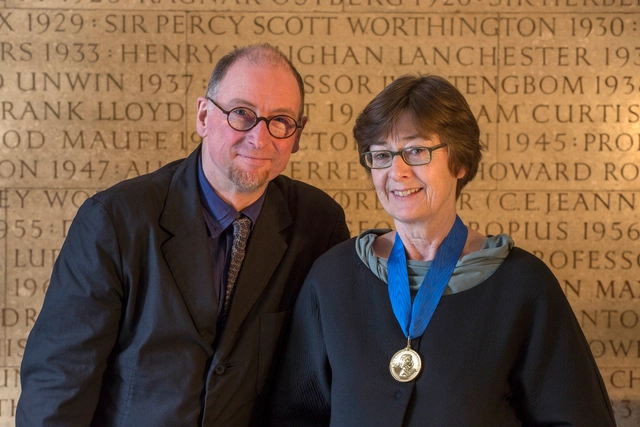
John Tuomey and Sheila O'Donnell - recipients of the 2015 Royal Gold Medal. Image Courtesy of RIBA
When Sheila O'Donnell and John Tuomey, who practice in partnership as O'Donnell + Tuomey, were named as this year's recipients of the RIBA Royal Gold Medal, a palpable collective satisfaction appeared to spread throughout the profession. No one could find criticism in Joseph Rykwert and Níall McLaughlin's nomination, nor the ultimate choice of the RIBA Honours Committee, to bestow the award upon the Irish team. Their astonishingly rigourous body of work, compiled and constructed over the last twenty five years, has an appeal which extends beyond Irish and British shores. A robust stock of cultural, community and educational projects, alongside family homes and social housing projects, leaves little doubt about the quality, depth and breadth of their mutual capabilities and the skill of those that they choose to collaborate with.
Read the conversation with the Gold Medallists after the break.
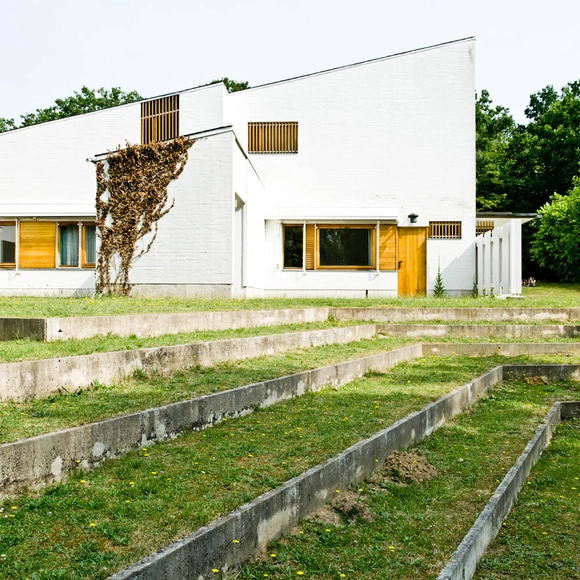
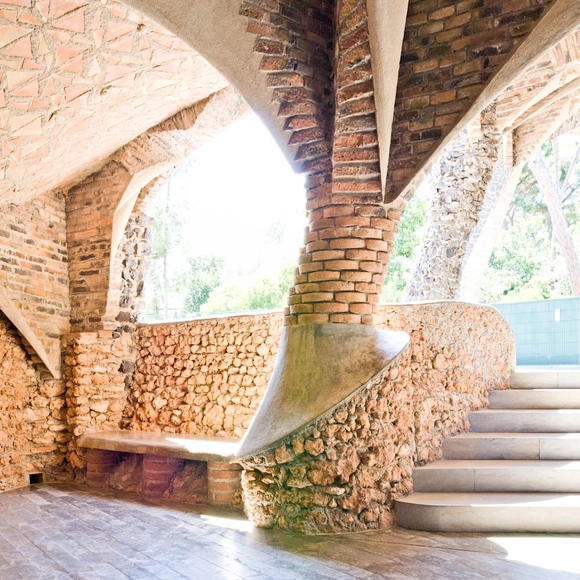
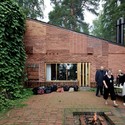
As one of the most ubiquitous forms of construction, it can sometimes be easy to overlook the humble brick. However, this prosaic building method can also be one of the most versatile materials available to architects, thanks to the experimentation of countless architects who, for centuries, have worked to create new forms of expression with the simple material. In this round up, we celebrate architects who, with their architectural classics, have expanded the possibilities of brick craft: Antoni Gaudí's fantastical vaulting at Colònia Güell and Alvar Aalto's experimental brick patterning at his house in Muuratsalo; the powerful brick piers of Kevin Roche and John Dinkeloo's Knights of Columbus Building and the Catalan vaults of Porro, Garatti and Gattardi's National Arts School of Cuba; and finally, what brick round up would be complete without the brick-whisperer himself - Louis Kahn and his all-brick fortress for the Indian Institute of Management.
The 2014 World Monuments Fund/Knoll Modernism Prize has been awarded to the Finnish Committee for the restoration of Alvar Aalto’s seminal Viipuri Library in Vyborg, Russia. “Designed by Aalto and constructed between 1927 and 1935 in what was then the Finnish city of Viipuri,” stated WMF in a press release, “the library reflects the emergence of Aalto’s distinctive combination of organic form and materials with the principles of clear functionalist expression that was to become the hallmark of his architecture.”
A quote from Barry Bergdoll and more images, after the break.