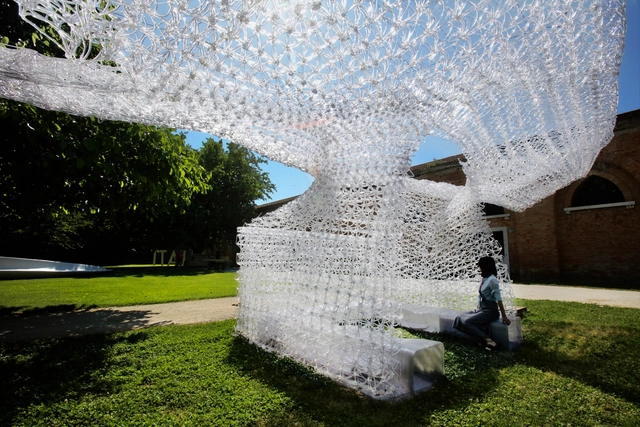
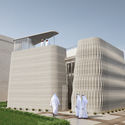
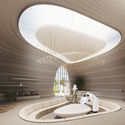
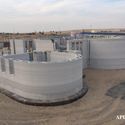
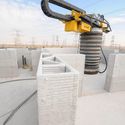
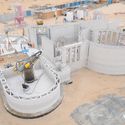
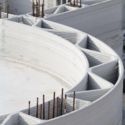
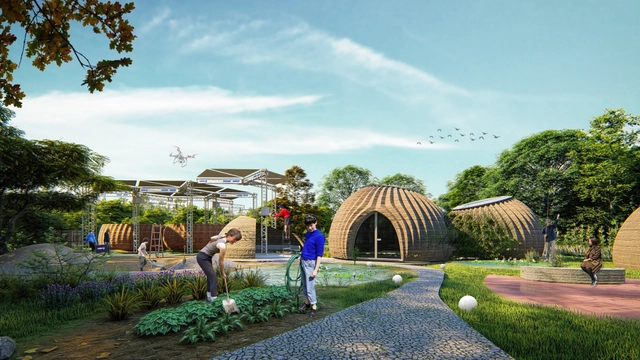
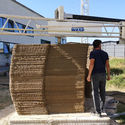
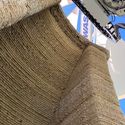
Robot-Printed 'Cloud Village' / Philip Feng Yuan's Team. Image Courtesy of Philip Feng Yuan
3D printing (as known as three-dimensional printing) is a type of rapid prototyping technology. It is a technology that uses powdered metal or plastic and other bondable materials to construct objects by printing layer by layer based on digital model files.
The viability of 3D Printing in architecture – has, at the very least – seen a seismic shift over the past few years. Usually relegated to prototypes or conceptual models, 3D Printed building designs are increasingly being actualised as physical projects. In 2013, WinSun, a Chinese company – was able to print 10 houses in a 24-hour period, becoming one of the first companies to achieve this feat using 3D Printing technology. More recently, in 2018, a family in France became the first in the world to live in a 3D Printed house. The city of Dubai is also seeking to have a quarter of its buildings be 3D Printed by 2025. These examples display the upwards category of this technology, and how it is very likely, as the years go by, this automation of building fabrication is even more integrated into the construction process than it is right now.
This week’s curated selection of Best Unbuilt Architecture highlights cultural structures submitted by the ArchDaily Community. From pavilions to installations, this article explores the topic of cultural urban interventions and presents approaches submitted to us from all over the world.
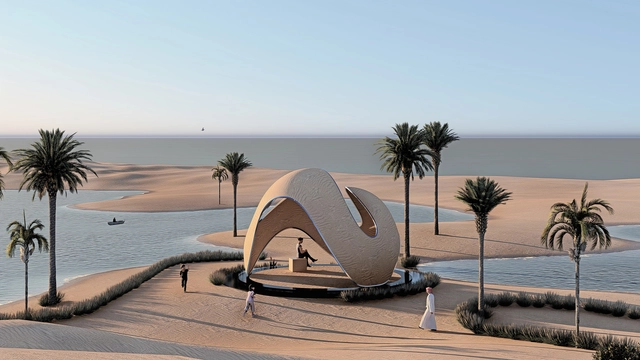
Featuring a pavilion nestled in the sand dunes of the Persian desert, an afrofuturistic, interactive art installation proposed for the upcoming Burning Man event, and a new take on summer cinemas in Russia, this roundup explores how architects reimagined traditional gathering places and created urban interventions in all scales. The round up also includes a collection of structures in the United Arab Emirates, United Sates of America, France, and the United Kingdom, each responding to different contexts and topographies.
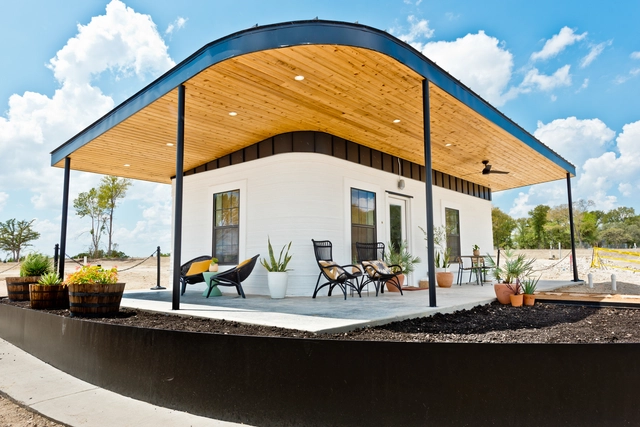
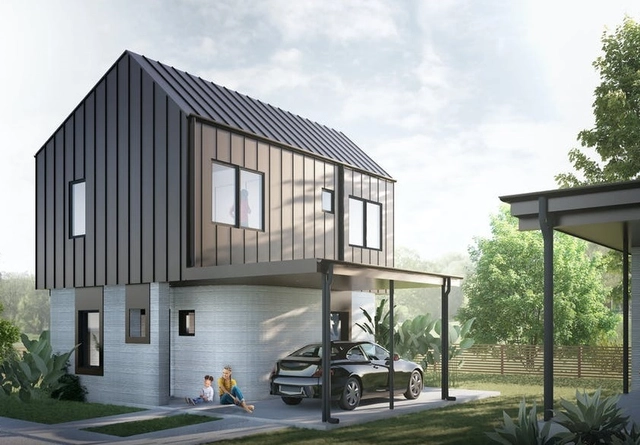
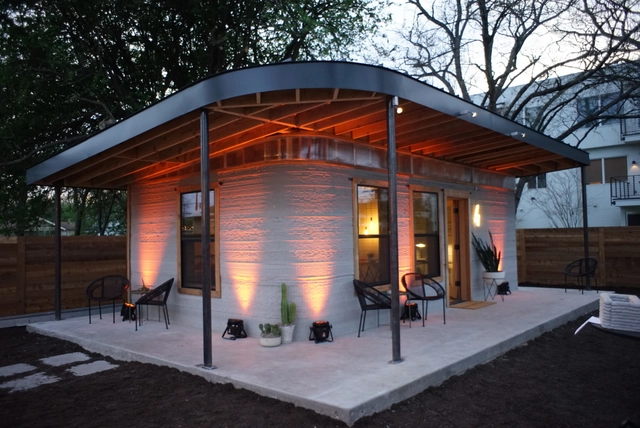
Kansas City developer 3Strands has announced U.S.A’s first 3D printed homes for sale, the company’s first multi-home project in Austin, Texas. Built with construction technology company ICON, the housing development includes two to four-bedroom homes in one of the fastest-growing cities in America. Designed by Logan Architecture, the project utilizes the Vulcan construction system to build each home.
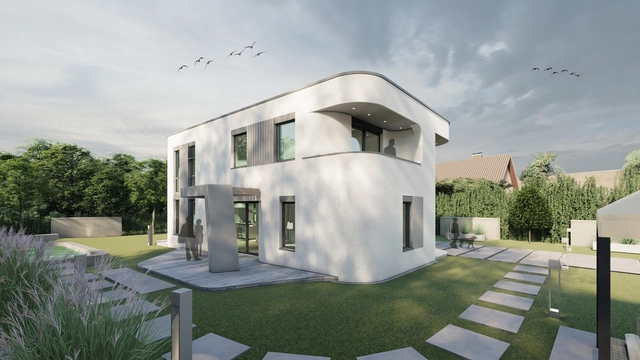
The first 3D printed residential building in Germany, built by PERI GmbH, and designed by MENSE-KORTE ingenieure+architekten is undergoing construction in Beckum, North Rhine-Westphalia. The two-story printed detached house with approx. 80 sqm of living space per floor is using a system put into practice in Germany for the first time. In fact, the construction technique has come through all of the regulatory approval processes over the last few weeks and months.
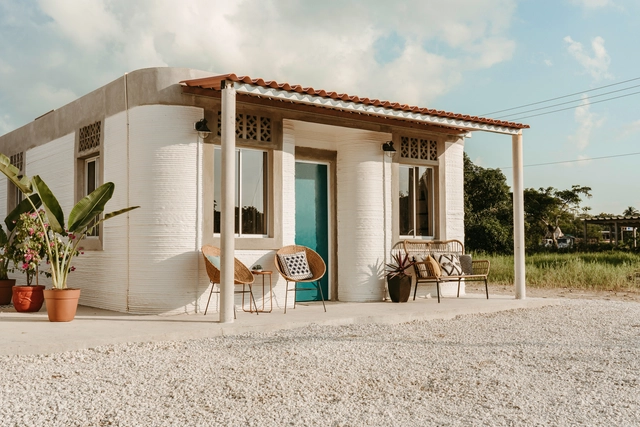
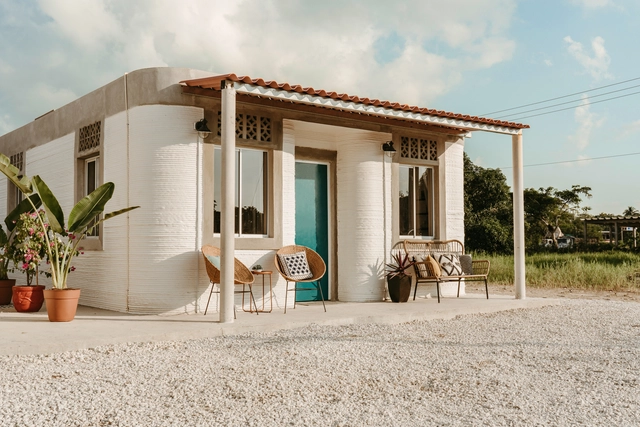
New Story Project - ICON - Mexico. Image Courtesy of ICON
BIG - Bjarke Ingels Group has joined a series of investors and partnered up with ICON, in order to push forward the use of 3D printing robotics to deliver dignified, resilient homes around the world. Aiming to contribute actively in the ongoing transformation, Bjarke Ingels, Founder and Creative Director of BIG stated that “additive manufacturing will play a transformative role in the future of construction”.
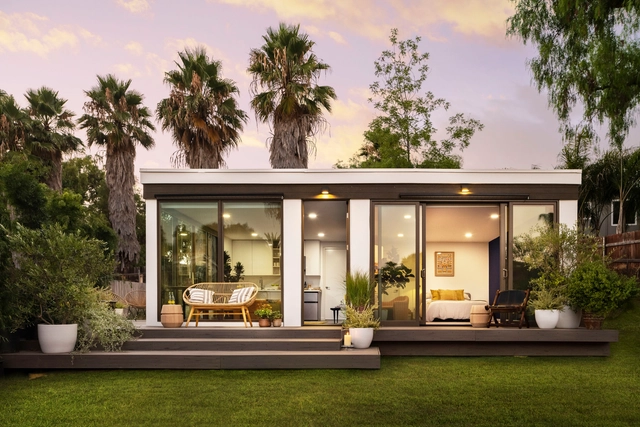
Construction technology company Mighty Buildings has completed a new 3D-printed Accessory Dwelling Unit in San Diego, California. The company recently launched with the aim of using 3D printing and robotic automation to build more affordable and sustainable homes. Their pilot project, the Mighty Duo B, comprises two modular units that took eight total weeks from fabrication to assembly on site.
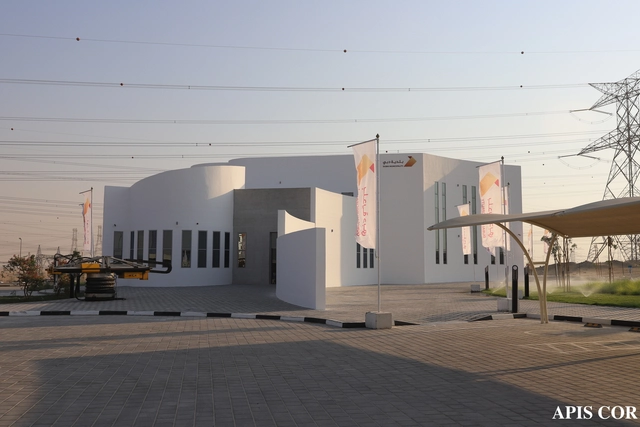
Once completed, the Dubai Municipality will become the world’s largest 3D printed building, standing tall at 9.5 meters with an area of 640 square meters. Executed by Apis Cor, a U.S.-based company, the structure was directly built on-site.
The world’s first 3D printed community is currently underway in a remote area in Mexico. The printer has been created as a solution to minimise homelessness and provide safe and adequate shelter for individuals.
New Story, a not for profit organisation, which was founded five years ago, aims to provide adequate shelter/housing for people exposed to extreme poverty and unsafe housing. New Story, to date, have constructed 2,700 homes catering for 15,000 people located in areas such as Haiti, El Salvador, Bolivia and Mexico. For these homes they have used traditional construction methods and in the past two years have started to explore innovative construction solutions for faster building production that caters for the ever changing social housing sector and housing crisis.
TECLA3DHouse daytime summer. Image Courtesy of Mario Cucinella Architects
Designed by MCA - Mario Cucinella Architects, engineered and built by WASP, TECLA is a prototype of an on-site 3D printed habitat, launched near Bologna, Italy. The innovative model creates future housing solutions and re-questions the idea of living in the city. It provides a shelter for everyone, through a sustainable, low-cost and efficient method.
AI SpaceFactory, a multi-planetary architectural and technology design agency, launched TERA, a high-tech and green eco-home designed for off-grid living on earth. Inspired by their NASA-award-winning Mars habitat MARSHA, the first TERA accepts limited pre-bookings on Indiegogo and will be available starting March 2020 for one year before it is recycled and reprinted elsewhere.
Editor's Note: This story was originally published 27 March 2018. It was recently announced that ICON, the construction company leading the project, has successfully raised $9 million in seed funding for the project. A new video of the project is included below.
Tech gets a bad rap for serving developed economies in the interest of money-making. It often takes a few cycles for the technologies that are truly helpful to reach the developing world, hence the unfortunate, slow-draining term called the “trickle effect.”
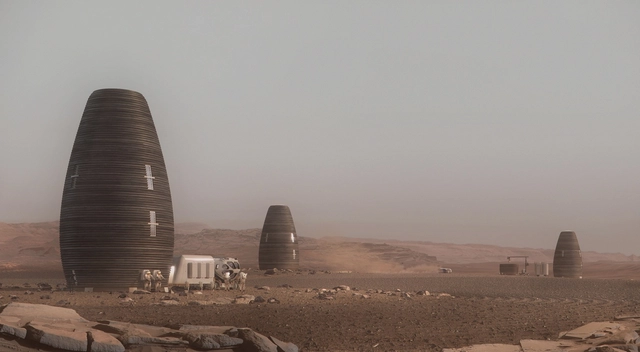
AI SpaceFactory has released details of their proposed cylindrical huts for the Planet Mars, designed as part of the 3D Printed Habitat Challenge organized by NASA. Project MARSHA (Mars HAbitat) was endorsed by NASA with a top prize of almost $21,000, one of five designs selected from a field of seventeen.
The competition asked participants to design an effective habitat for a crew of four astronauts to be located on the Red Planet, using construction techniques enabled by 3D printing. The submitted schemes were then ranked based on their innovation, architectural layout, and level of detail in BIM modeling.
Videos
Courtesy of Houben & Van Mierlo Architecten
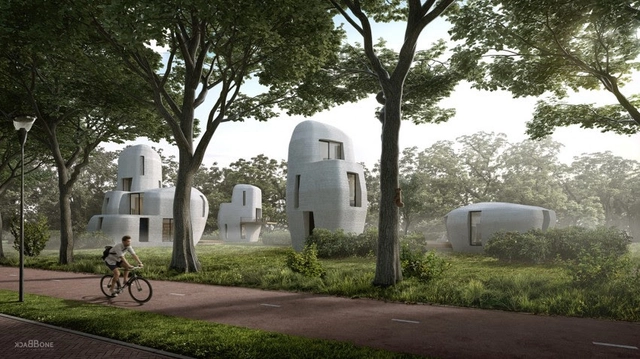
The Dutch city of Eindhoven is to host the world’s first commercial housing project based on 3D-concrete printing, with the first of five planned houses due to start construction this year. The units were developed by a collaborative team including local firm Houben & Van Mierlo Architecten, and the Eindhoven University of Technology. The pods will be purchased and let out by a real estate company upon completion.
The first house will be a single-floor, three-room house measuring 1000 square feet (95 square meters), to be followed by four multi-story units. The irregular shape of the buildings is based on “erratic blocks in the green landscape,” made possible due to the flexibility of form permitted by 3D-printing.
https://www.archdaily.com/895597/worlds-first-3d-printed-concrete-housing-project-to-be-built-in-eindhovenNiall Patrick Walsh
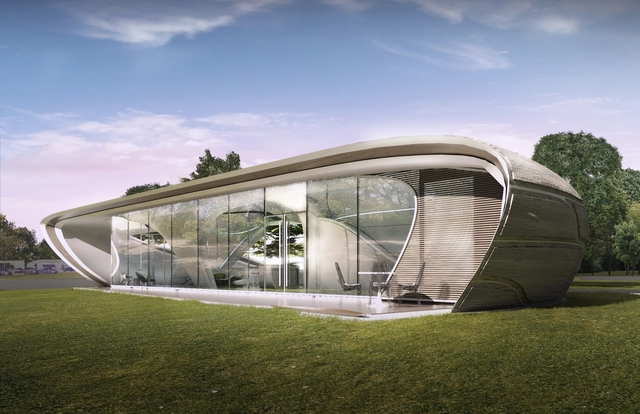
WATG Urban's first prize design for The Freeform Home Design Challenge in 2016 is now moving one step closer to becoming a reality. Since winning the competition, WATG's Chicago office has been developing the winning design, dubbed Curve Appeal, alongside Branch Technology. Curve Appeal is now undergoing the "wall section testing, research and development phase" with an anticipated goal of breaking ground later this year. This revolutionary project could change the way we construct complex, freeform structures.
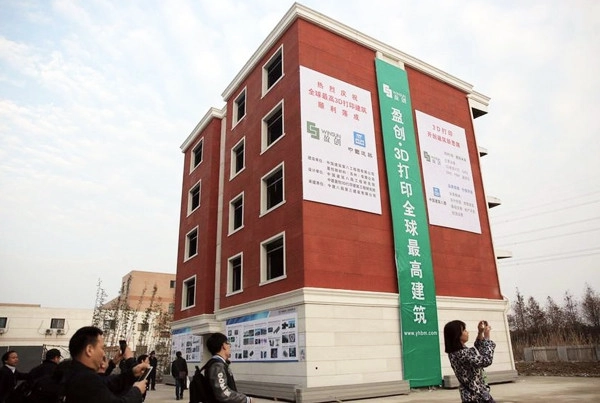
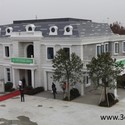
Once again, Chinese company WinSun Decoration Design Engineering Co has expanded the capabilities of 3D printing. After constructing ten houses in under twenty-four hours last year, now they are back with both the world's tallest 3D printed building - a five-story apartment block - and a 1,100 square meter mansion with internal and external decoration to boot.
On display in Suzhou Industrial Park in Jiangsu province, the two buildings represent new frontiers for 3D printed construction, finally demonstrating its potential for creating more traditional building typologies and therefore its suitability for use by mainstream developers.
Almost everything around us is made automatically: our shoes, our clothes, home appliances and cars – so why not buildings? Dr. Behrokh Khoshnevis, the Director of the Manufacturing Engineering Graduate Program at the University of Southern California, has set out to change that through the development of an automated construction process known as Contour Crafting. “Contour-crafting is basically scaling-up 3D printing to the scale of buildings. What we are hoping to generate is entire neighborhoods that are dignified at a fraction of the cost, at a fraction of the time, built far more safely and with architectural flexibility that would be unprecedented,” Khoshnevis says in this TedxTalk in Ojai, California.
The architects of Emerging Objectshave devised a scheme for a 3D printed house made from locally harvested salt and concrete. Known as the “3D Printed House 1.0,” the case study residence was commissioned by the Jin Hai Lake Resort Beijing. It integrates traditional construction methods with renewable 3D printed materials, manufactured by Emerging Objects, to build a house that is sustainable, structurally sound and beautiful.