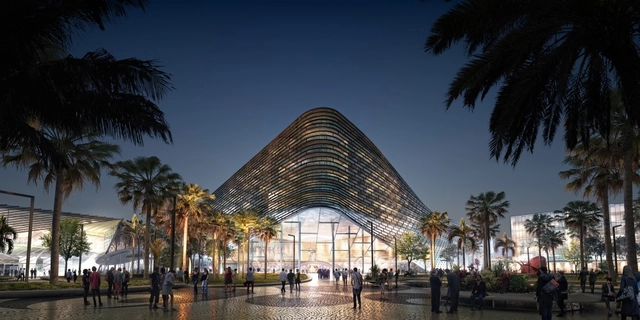
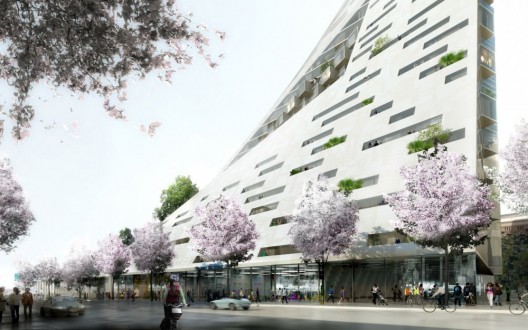
Four projects have been selected by the American Institute of Architects’ (AIA) for honorably expanding the role of the architect beyond the building and into the realms of urban design, regional and city planning, and community development. These projects will be honored with the AIA’s Institute Honor Awards for Regional and Urban Design at the 2015 National Convention and Design Exposition in Atlanta. See the winners, after the break.
After producing major revisions on a previously rejected design, BIG have had their second design rejected for the Kimball Art Center in Park City, Utah. City Hall rejected the design on the basis of appearance, arguing that it did not relate to the historic city centre "aesthetically, visually or historically." The second design by BIG marked a complete departure from the original that was selected as the winner of an architectural contest hosted by the Kimball Art Center.
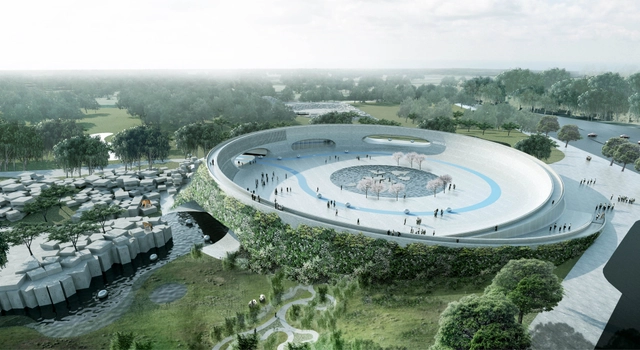
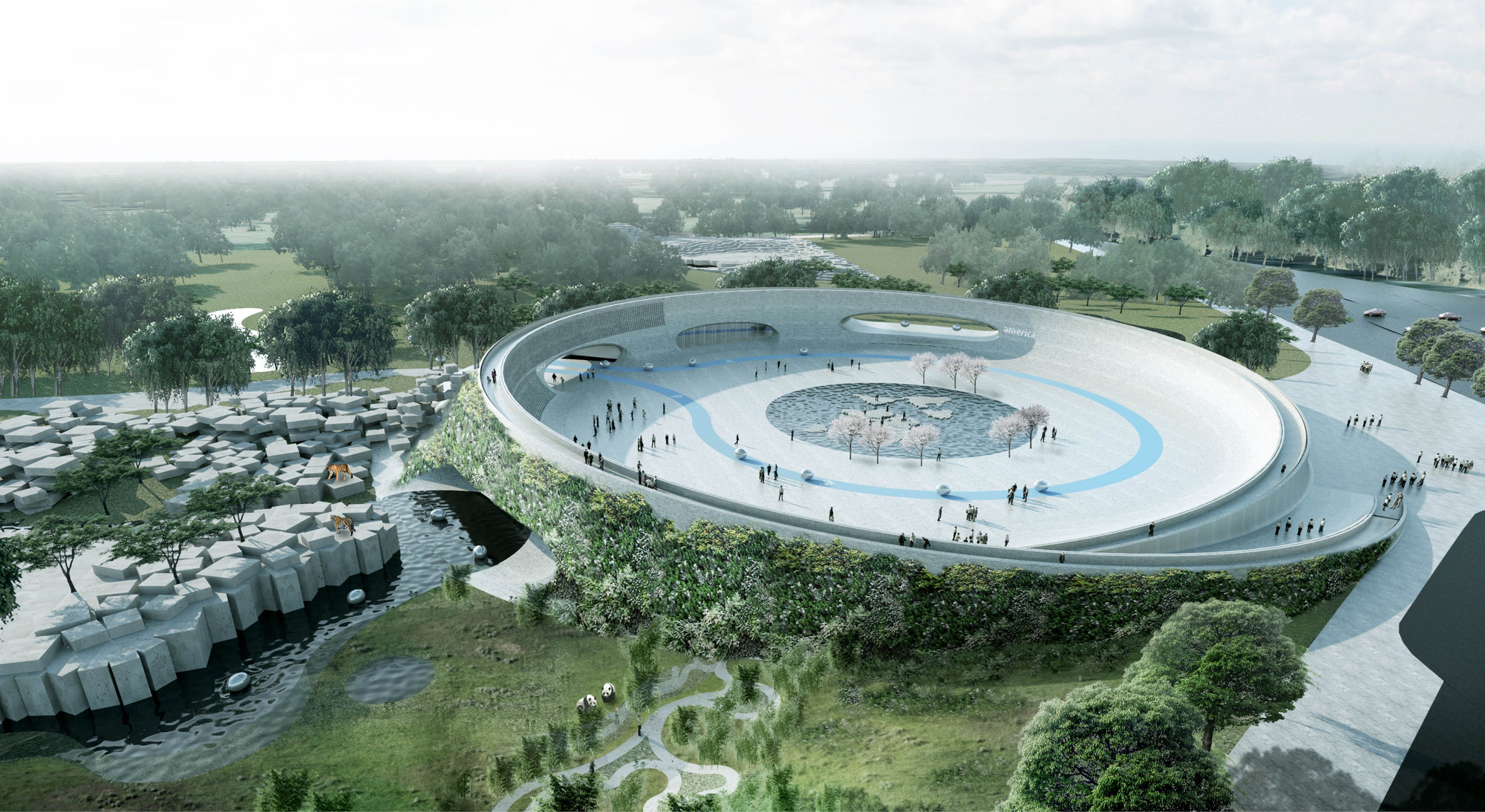
Danish architects BIG (Bjarke Ingels Group) have just released ambitious designs for a zoo in Givskud, Denmark. It's a project that provides an intriguing opportunity for, as BIG explains, the creation of a space with "the best possible and freest possible environment for the animals’ lives and relationships with each other and visitors." The firm has been working for the past two years to make Zootopia what the Danish press is calling "the world's most advanced zoo." According to Givskud Zoo's director Richard Østerballe, the park's transformation will benefit greatly from BIG's fresh approach to design--one that has been characterized by the integration of nature and natural elements into cutting-edge, innovative architecture.
The project will attempt to "integrate and hide buildings" within the landscape. Upon entering the zoo, visitors can either enter a large central square or climb the "building-landscape," allowing them to get a general overview of the layout of the park. From this central element, visitors can access different areas of the zoo. A 4km hiking trail connects the different areas (which represent the continents of Africa, America and Asia).
The first phase is expected to be completed in 2019 to coincide with the park's 50th anniversary.
Read on for more images and BIG's project statement.
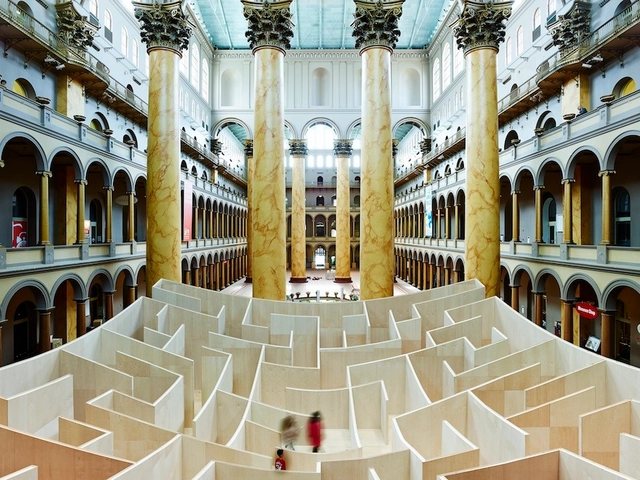
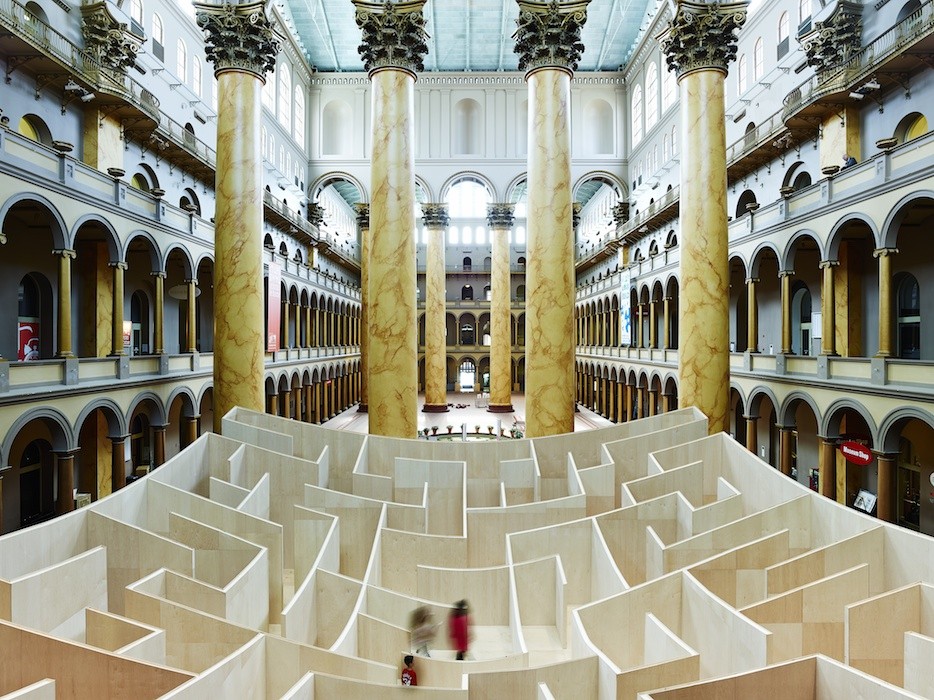
Images and video of the BIG Labyrinth have begun to appear on social media since it opened on July 4th at the National Building Museum (NBM) in Washington, DC.
The 61×61 foot maze, housed in the building’s grand atrium, will be open to visitors until September 1st. See more images and video, after the break...
Swiss luxury watchmaker Audemars Piguet have announced BIG as the designers for an extension to their headquarters in Le Brassus, near Le Chenit. The design includes gallery spaces for a museum, work spaces and a guest house. Conceived as a spiralling glass pavilion embedded in the landscape, BIG's design - entilted Maison des Fondateurs - will take visitors on a narrative journey through the company's 139-year history.
TAC tableware – designed in the 1960s by Walter Gropius and influenced by the Bauhaus style – has been given new life by BIG and the industrial design studio Kilo. The new tableware set features the heritage blue skylines of twelve cities, including Copenhagen, London, and New York. To check out the full set and spot the likes of Big Ben and the Statue of Liberty, head to the manufacturer's website by clicking here.
Videos
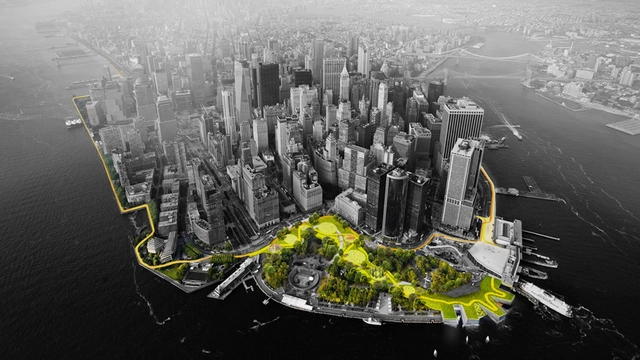
Render for The BIG U, "The Harbor Berm," an elevated path through the park. Image Courtesy of rebuildbydesign.org
Yesterday BIG, along with 9 other teams including OMA and WXY, unveiled their proposals for "Rebuild by Design," a competition which tasks teams with improving the resiliency of waterfront communities through locally-responsive, innovative design. Each proposal was required to be "flexible, easily phased, and able to integrate with existing projects in progress." As Henk Ovink, the Principal of "Rebuild by Design" as well as the Senior Advisor to the U.S. Department of Housing and Urban Development (HUD) Secretary Shaun Donovan, stated: "Rebuild by Design is not about making a plan, but about changing a culture." The winners will be announced later this spring.
BIG's proposal, The BIG U, is rooted in the firm's signature concepts of social infrastructure and hedonistic sustainability. It envisions a 10-mile protective system that encircles Manhattan, protecting the city from floods and storm water while simultaneously providing public realms specific to the needs of the city's diverse communities. Bjarke Ingels states: "We asked ourselves: What if we could envision the resilience infrastructure for Lower Manhattan in a way that wouldn’t be like a wall between the city and the water, but rather a string of pearls of social and environmental amenities tailored to their specific neighborhoods, that also happens to shield their various communities from flooding. Social infrastructure understood as a big overall strategy rooted in the local communities.”
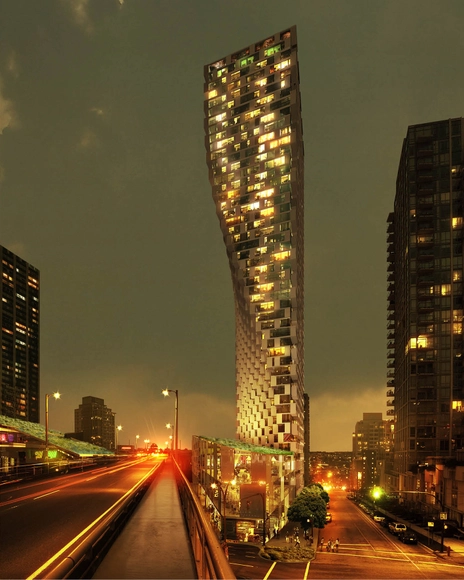
The wisdom of the Old West, New-Mexico based architect Antoine Predock (who designed the Canadian Museum for Human Rights in Winnipeg) and the vitality of the New East, BIG founder and principal Bjarke Ingels (whose office is responsible for the Beach & Howe Tower in Vancouver and Telus Sky in Calgary), are being distinguished by the Royal Architectural Institute of Canada (RAIC) this year with Honorary Fellowships for extraordinary achievement in the field of architecture. More on this news, here.
Although Arizona developer Novawest was determined to build BIG’s 420-foot observation tower in downtown Phoenix before the 2015 Super Bowl, failed negotiations has left them without a site. Once planned for the interior courtyard of the Arizona Science Center, the privately-funded project is now being considered for an undisclosed downtown site with completion rescheduled for 2016. Considering the project has received a considerable amount of support from city officials, it seems inevitable that the BIG pin will eventually be built despite harsh criticism from nearby residents. Modifications for the new site will be minimal. You can review the design here.
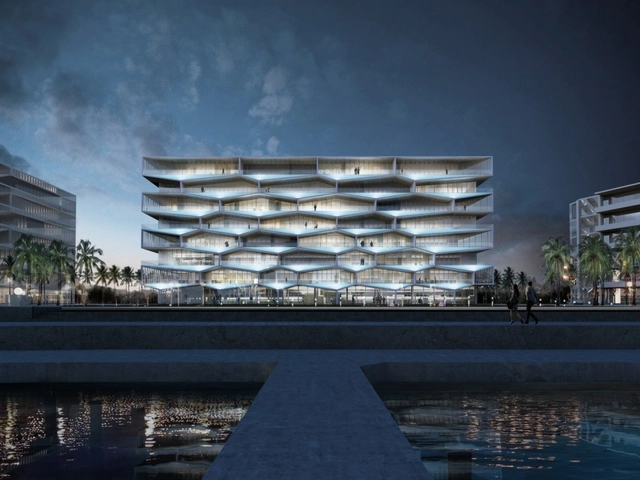
BIG has released plans, alongside collaborators HKS and Michael Diggiss Architects, of a luxury, mid-rise condominium at the Albany Bahamas resort. Located on the south coast of New Providence Island, “The Honeycomb” will offer 34, 3,000 to 8,000 square foot apartments, each complete with a private outdoor pool and summer kitchen integrated into the structure’s hexagonal-shaped facade.
In an effort to reestablish Mid-Market as an arts district in San Francisco, developer Joy Ou has commissioned BIG to design a mixed-use arts, housing and hotel complex on 950 Market St. As the San Francisco Business Times reports, Group I is collaborating with the Thacher family and the nonprofit 950 Center for Art & Education to develop the project, which could potentially include a 250-room hotel, 316 residential units, a 75,000-square-foot arts complex, and 15,000 square feet of retail. The project will be BIG's first in the Bay Area.
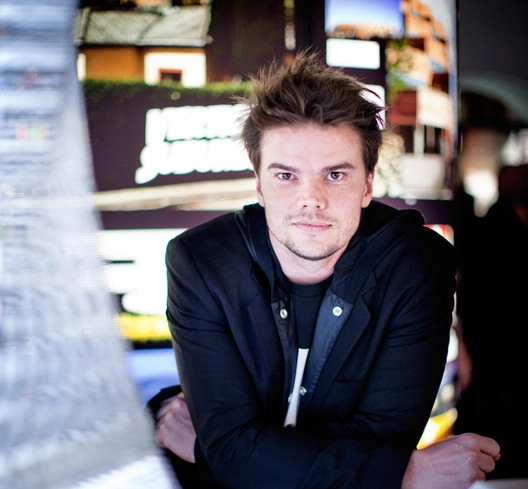
Few architects working today attract as much public acclaim and disciplinary head-scratching as Bjarke Ingels. Having recently arrived in New York, this self-proclaimed futurist is undertaking his own form of Manifest Destiny, reminding American architects how to act in their own country.
While his practice is often branded by the architectural establishment as naïve and opportunistic, such criticism is too quick to conflate Ingels’s outwardly optimistic persona with the brash formal agenda it enables. In the current economic climate, there are any number of gifted purveyors of form languishing in New York City. Despite this, Ingels has somehow managed to get away with proposing a pyramidal perimeter block in midtown New York, a looped pier in St. Petersburg Florida, and an art center in Park City, Utah massed as torqued log cabin while maintaining a straight face. Why, then, is his mode of operation considered unsophisticated by so many within the discipline?
Clearly, Ingels has figured something out about harnessing and transforming “the social” that American architects would do well to identify. So, in the manner of any good conspiracy theorist in search for the hidden method, let’s go to the chalkboard, or rather, the diagram...
Part of the answer may lie with Ingels’s brand of populism, which is as much about being social as it is about the social.
The Miami Beach Convention Center, a giant box of a building constructed in 1957, is in desperate need of a makeover and two design teams have bravely accepted the challenge. Team 1 is dubbed South Beach ACE (Arts, Culture, Entertainment District) and is a collaboration between Rem Koolhaas's OMA firm, Tishman, UIA, MVVA, Raymond Jungles and TVS. Team 2 goes by the name of Miami Beach Square and includes BIG, West 8, Fentress, JPA and Portman CMC. Both proposals completely re-imagine 52 acres of prime beach real estate and cost over a billion dollars in public and private funds. So, who does it better?
According to Business Insider and a number of other real estate development outlets, the "Dream Hub" project in Seoul Korea that drew designs from internationally renowned architects including Daniel Libeskind -designer of the master plan - MVRDV, Dominique Perrault, BIG, REX, KPF and Tange Associates is on the verge of collapse. The Yongsan Development Corporation reportedly defaulted on a major loan repayment, citing difficulties in raising funds due to the real estate slump since the 2008 global financial crisis. The collapse of the project is still speculative, as it is unclear how the next round of loans that are to mature in June will fare.
The $28 billion real estate "Dream Hub" project was to develop 56-acres in central Seoul into a modern business hub. In its planning it included shopping malls, hotels, department store, apartment blocks, and mixed-use office towers. Follow us after the break for a recap of the projects that were planned for this development.
It's official! Danish architect Bjarke Ingelsof BIG has been commissioned to collaborate with Ralph Appelbaum Associates (RAA) and COWI to design the first public LEGO® museum in the company's hometown of Billund, Denmark. The "LEGO® Brand House" and "experience centre" is intended to compliment the non-public "LEGO®Idea House", which is also located in Billund.
Bjarke Ingles, founder of BIG stated: “It's going to be looking at LEGO® from all its different aspects—LEGO® as an art form, its cultural impact. When we were doing the research for it [the LEGO® house], we realized, if you would consider it just an art museum, you would be able to fill it with so much user content of such a high quality...it is one of our great dreams at BIG that we are now able to design a building for and with the LEGO® group. I owe a huge personal debt to the LEGO® brick, and I can see in my nephews that its role in developing the child as a creative, thinking, imaginative human being becomes ever stronger in a world in which creativity and innovation are key elements in virtually all aspects of society.”
After an “arduous” public review and a heated debate over affordable housing, New York’s City Council has unanimously awarded final approval to BIG’s tetrahedral-shaped West 57th apartment building in Manhattan. As reported by Crain’s New York Business, a compromise has been made to include 173 affordable housing units within the 32-story, 750-unit residential building and the neighboring industrial building that will be converted into 100 additional rental apartments. As you may recall, the community board and Councilwoman Gail Brewer initially threatened to “torpedo the project” if the apartments were only made affordable for a 35 year period. However, Durst apparently won them over by contributing one million dollars into an affordable housing fund.
"The good news, which is the matra of my office and community board No. 4, is there will be, yes, by law, 35 years of income-restricted affordable housing," stated City Councilwoman Brewer, who represents the area.


.jpg?1420836447&format=webp&width=640&height=580)
.jpg?1420836358 "© BIG")


.jpg?1420836447)