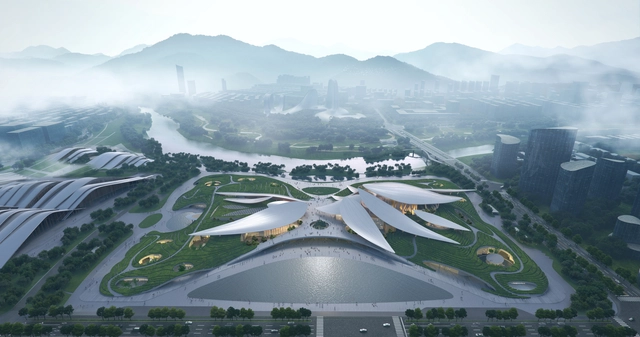
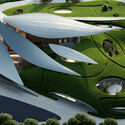
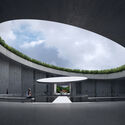
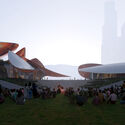
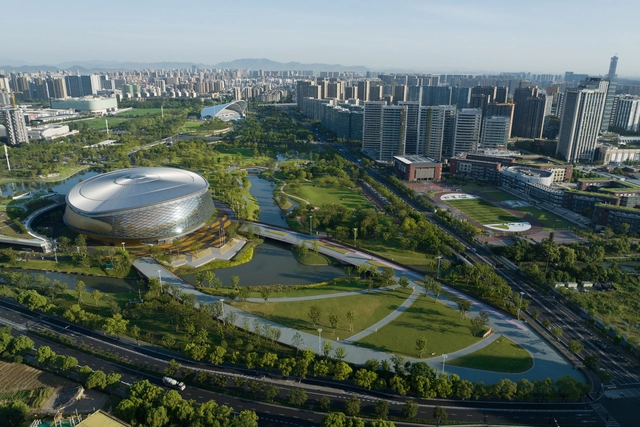
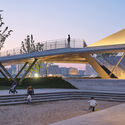
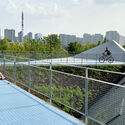
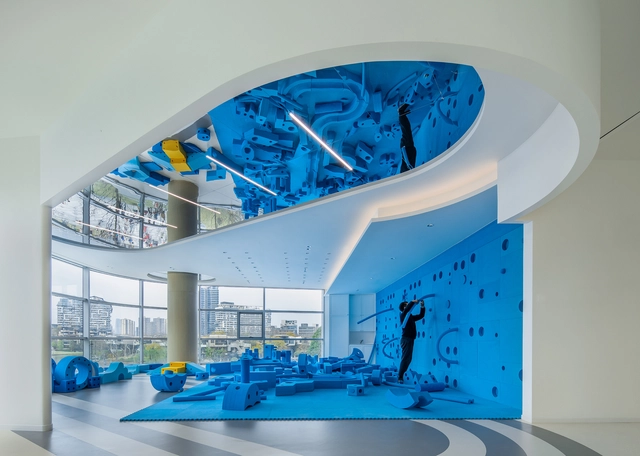
Anji Culture and Art Center . Image Courtesy of MAD Architects
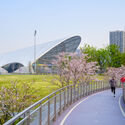
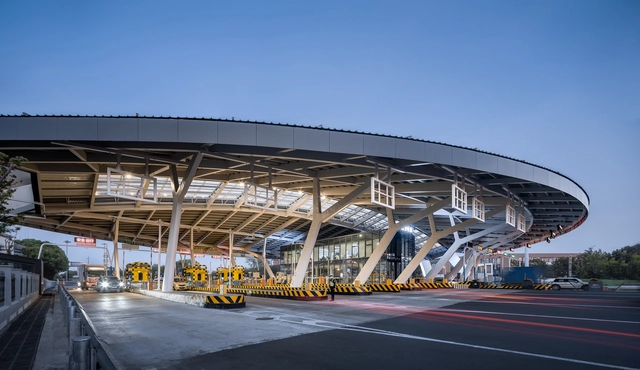
Led by Ma Yansong, MAD Architects has revealed the design of the Anji Culture and Art Center in the Zhejiang Province in southeast China. The new center, covering a site area of about 149,000 square meters, features six event venues: a Grand Theater, a Conference Center, a Leisure Center, a Sports Center, a Youth Activity Center, and an Art Education Center. All functions are spread out beneath bamboo-leaves-inspired roofs, referencing the Anji area, known as the ‘bamboo and white tea’ town of China. Construction of the center has begun and is expected to be completed and in use by 2025.
In 2018, Archi-Tectonics NYC and !Melk were announced as the winners of a competition to develop a masterplan transformation for the Hangzhou Asian Games Park 2022. Spanning 116 Acres, the now-completed project includes an expansive Eco Park and seven buildings. Although its initial purpose was to serve as a venue for the Hangzhou Asian Games 2022, the team extended its vision far beyond this event, charting a new path for the city’s environmental future.
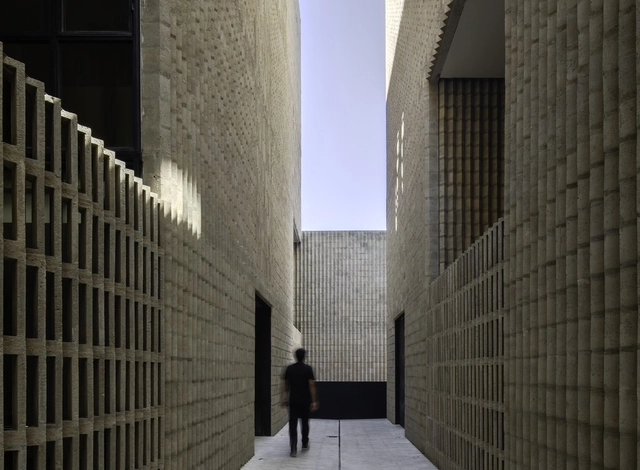
In the western part of Bogotá, between Calle 80 and the Juan Amarillo Wetland, lies one of the most interesting urban and architectural projects in the history of Colombia: the Ciudadela Colsubsidio. Created in 1983 as a response to Law 21 of 1982, which required social security organizations to provide housing for their members. Colsubsidio, the project manager, hired Germán Samper to tackle a 130-hectare plot located between two well-established neighborhoods (Santa Bárbara and Bolivia). The challenge was to connect these neighborhoods while creating a citadel that would consolidate various essential services for a population that, due to its geographical location, was distant from the center of Bogotá.
The challenge Samper faced was to develop a clear urban structure that would articulate the existing neighborhoods along the east-west axis and, along the north-south axis, connect the Juan Amarillo Wetland with Calle 80, the main road that would serve the entire neighborhood. From the initial design, it was evident that the architect was concerned with creating and developing a spatial experience for the residents, where the neighborhood itself would be the manager of spaces that directly integrate daily life with architecture, responsible for defining the spatial boundaries they aimed to create.
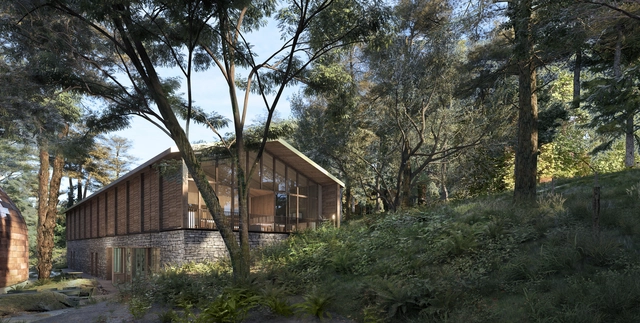
Sustainability has taken center stage in the broad world of architecture and design, inspiring and directing the construction of new structures towards environmental harmony. The use of wood, a classic material with enormous potential to lessen our ecological impact while providing limitless design possibilities, is a notable example of this movement's implementation. In the fight for sustainability in the field of architecture, wood has become an ally. Its distinctive qualities, such as renewability and carbon neutrality, have inspired creative methods among architects worldwide.
A wide range of architectural projects, from vital healthcare facilities to exciting mixed-use buildings, cultural hubs, and welcoming residential spaces, benefit from wood's extraordinary versatility as a building material. In fact, wood's natural warmth and biophilic qualities can create spaces that reduce stress and promote well-being. Furthermore, the carbon-neutral nature of wood aligns perfectly with the design industry's commitment to environmental responsibility.
Design stems from nuance, empathy, and understanding. The best solutions address the needs, identities, and context of a client and place. A designer's response needs to be informed by these different realities. Intersectional Design is a method of designing by thinking through how factors of identity (gender, race, sexuality, class, and many more) interact with one another. In understanding how these factors combine, we can more deeply understand the context of use and an individual user's priorities.