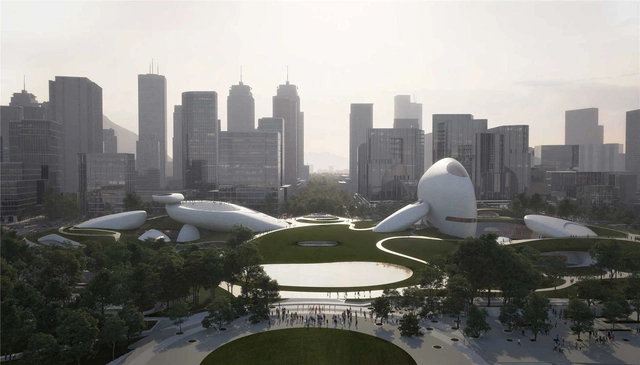
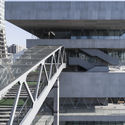
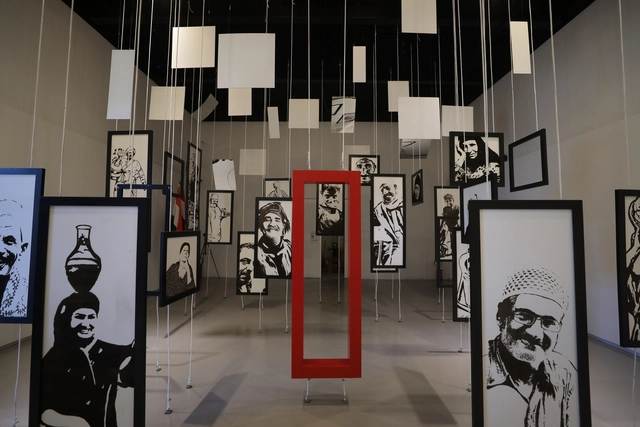
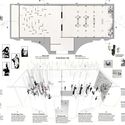
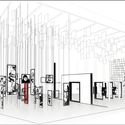
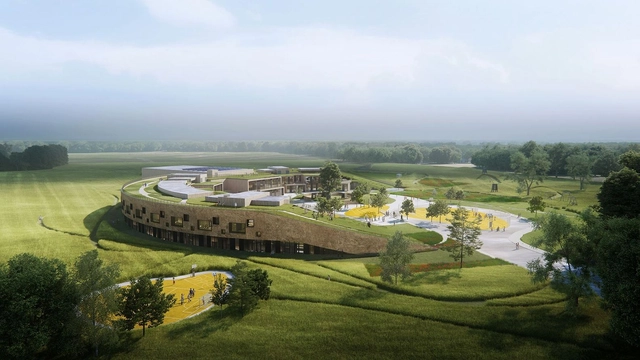
Shenzhen Bay Culture Park. Image Courtesy of Proloog
Shenzhen, as the modern metropolis in southeastern China that links Hong Kong to China’s mainland, has undergone rapid real estate development and intensive construction bidding in recent years.
“Shenzhen Ten Cultural Facilities of New Era” serves as a significant international design competition that has attracted much attention and investment from many high-level active architects worldwide.
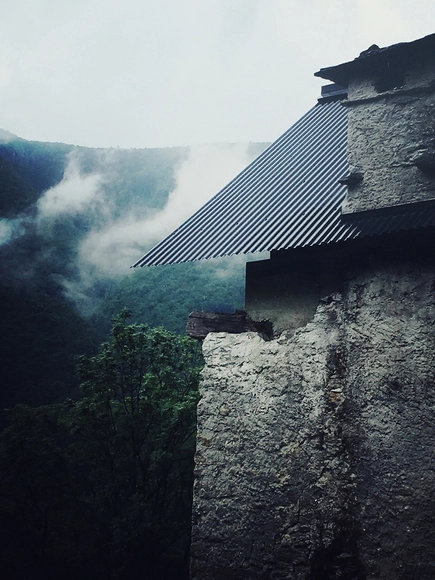
The Italian photgrapher, Aldo Amoretti created the initiative to invite people to share their favorite places around the world, with the objective of going beyond his vision and giving the chance to an audience to offer a different perspective of buildings and places.
https://www.archdaily.com/962396/from-your-eyes-to-my-eyes-selected-places-by-aldo-amorettiArchDaily Team
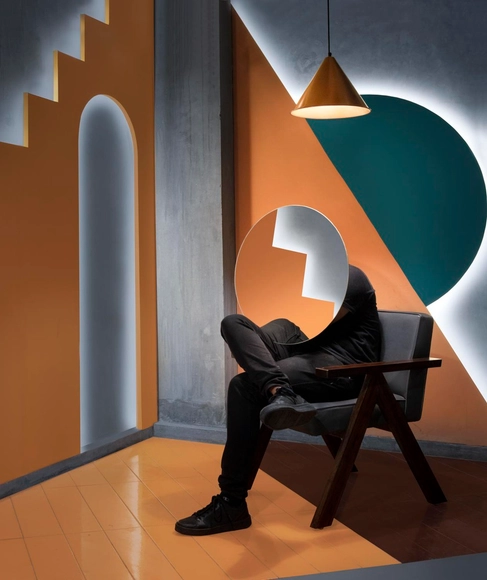
In this episode of “Behind the Scenes”, where we showcase the work of visionary photographers and ask about their experiences beyond what is seen by the public, we are presenting Niveditaa Gupta, an architectural photographer, and filmmaker based in New Delhi, India. Through her photos, she looks to create visuals that can prompt a discourse about architecture itself.
What if we could visit any building, regardless of whether it was ever built? Or, even after it has been demolished? This video and link below focus on a single house — the One Half House — designed by John Hejduk, to resurrect and explore. It uses the program Enscape to walk through the building in order to preserve and distribute the experience of architecture that does not exist in built form. The video offers a timeline to contextualize the role of the house in John Hejduk’s career and work, an analysis of the building, and initial reactions to walking through the building for the first time. In particular, the One Half House was pivotal for thinking about how architectural volumes might relate in space without the ordering device of a grid or a wall. What magic and other lessons are lurking in the design, hidden until we could experience it?
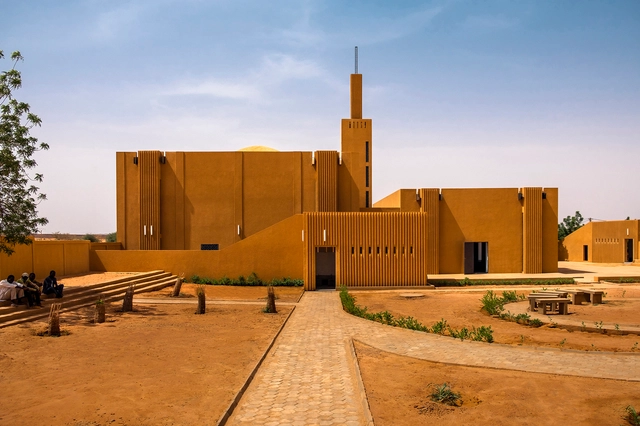
Atelier Masomi and Studio Chahar, "Hikma" Religious and Secular Complex in Dandaji, Niger, 2018. . Image Courtesy of Atelier Masomi. Photo: James Wang From the 2021 individual grant to Adil Dalbai and Livingstone Mukasa for "Africa Architecture Network"
Graham Foundation has released the names of the 2021 Individual Grant recipients - a grant supports innovative ideas in the fields of films, design, digital initiative, research, and exhibitions over the past 65 years. 71 creative individuals from across the world were chosen for their inventive ideas and creations that tackle pressing issues on society.
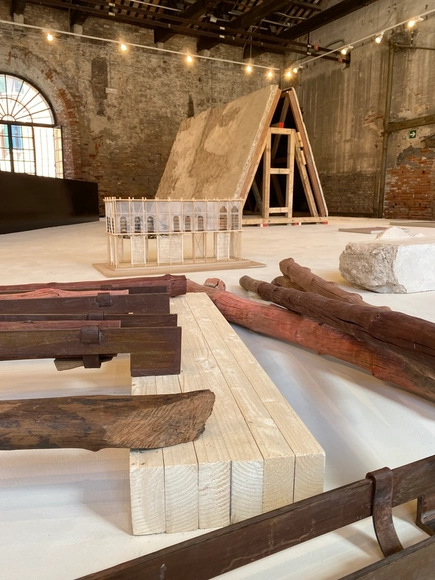
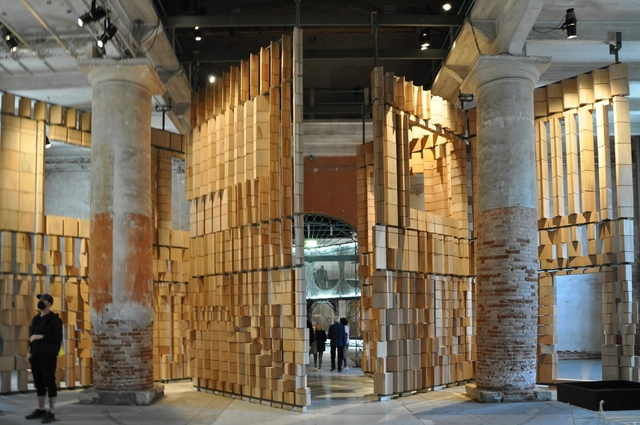
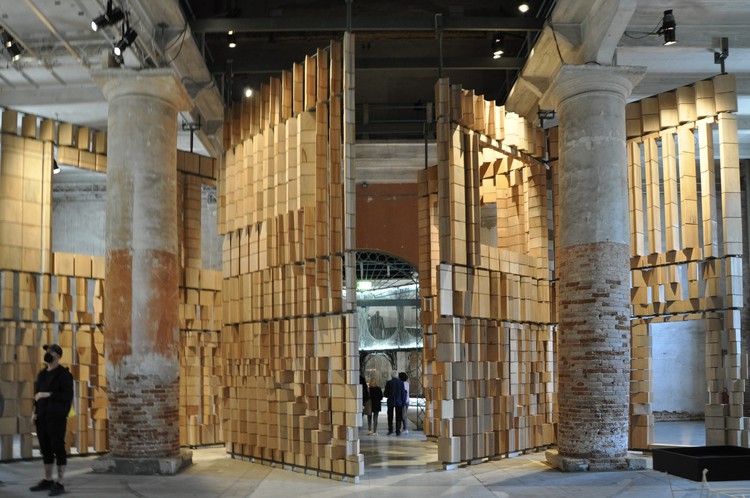
The 17th Venice Architecture Biennale debuted last week, showcasing a diverse and inspiring array of possible answers to the question “How will we live together”. Despite the many hurdles inflicted by the pandemic, this year’s edition of the event broadens the scope and reach of the Biennale, restating its role as a platform for inquiry, exploration, and disruptive thinking in architecture. Archdaily had the opportunity to meet in Venice with one of the co-curators of the US Pavilion, architect, author, and University of Illinois professor Paul Andersen, to discuss the idea behind the Pavilion and how it reflects the overarching theme of the Biennale.
A vault is a constructive technique that is achieved by compressing the materials forming it together. While this technique has existed since the time of the ancient Romans, certain types of vaulted ceilings, such as the Catalan or Valencian timbral vault, only reached popularity in some areas of the world at the start of the 19th century thanks to their lost cost and ready availability. With the ability to span over 30 meters and add substantial height to structures, vaulted ceilings became a go-to for the construction of industrial spaces such as workshops, factories, and warehouses.
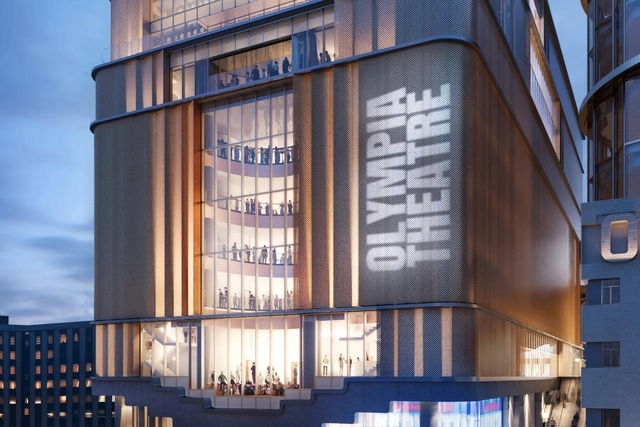
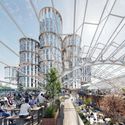
Haworth Tompkins, Heatherwick Studio and Spparc have shared new details of the first major new London theatre in over 45 years. The Olympia Theatre is part of the £1.3bn redevelopment of the Olympia exhibition center designed by Heatherwick Studio and Spparc. The 1,575-seat venue in west London will be operated by Trafalgar Entertainment, and the design includes a five-story building with a stacked auditorium.
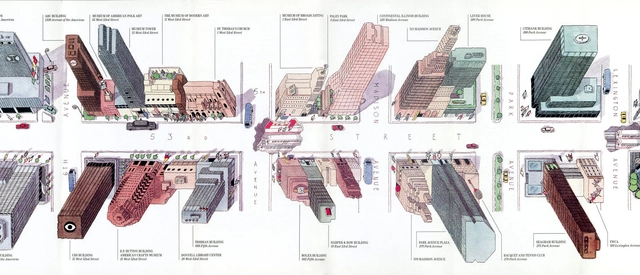
Martin Pederson interviewed this week Antonis Antoniou and Steven Heller, author of Decoding Manhattan, a new book that compiles over 250 architectural maps, diagrams, and graphics of the island of Manhattan in New York City, talking about the origin story of the book, the process of research, and the collaboration.
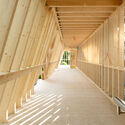
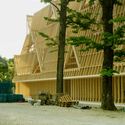
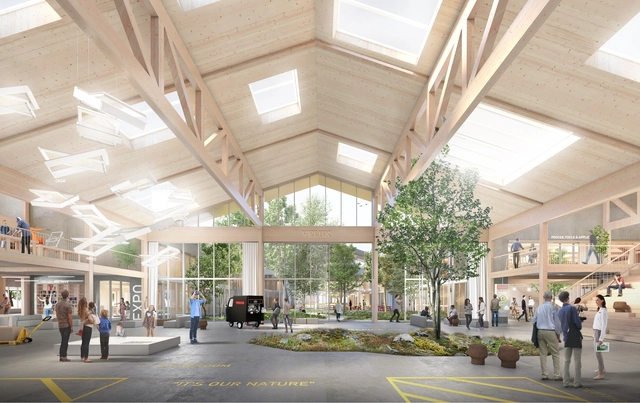
Praksis Arkitekter has won the competition to transform an old timber warehouse for VELUX Group in Østbirk, Denmark. As the company's largest production site, it will be transformed into a best-in-class innovation center. The existing wooden building was originally inaugurated in 1995 as a warehouse. The new rebuilt building will house most of the product development that VELUX Group is doing, which today is spread across the country and abroad.
The prominent Brazilian urbanist Jaime Lerner has passed away this Thursday, May 27, at the age of 83. Trained as an architect, Lerner was chosen by the American magazine Planetizen as the second most influential urban planner of all time, only behind Jane Jacobs. In addition to his career linked to architecture and urban planning, Lerner was three times mayor of Curitiba and twice governor of Paraná (1995-1998 and 1999-2002). Lerner graduated in Architecture in 1964 from the Federal University of Paraná (UFPR) and worked at the Curitiba Institute for Research and Urbanism (Ippuc) since its creation in 1965.
https://www.archdaily.com/962420/jaime-lerner-influential-brazilian-urbanist-passes-away-at-83Equipe ArchDaily Brasil
India is rethinking the future of housing through new typologies. Defined by historical and cultural influences, the country's contemporary architecture centers on discussions of how best to modernize. Built over millennia, India's housing projects are made to address diverse scales, programs and functions. Exploring a revitalized urban landscape, these modern housing projects have begun to set a new tone for the future.
Earlier this month, New York City Mayor Bill de Blasio announced the launch of the Open Boulevards program, an initiative that would temporarily close off car traffic on boulevard segments across several blocks, expanding the public space for dining, cultural activities and artistic performances. The project builds on the successful initiatives Open streets and Open Restaurants, which transformed the city’s streetscape to better serve diners, cyclists and pedestrians amidst the pandemic.
The terms space and place are often used interchangeably, but they can mean different things depending on the context in which they are used. Placemaking shows that the creation of places transcends the material dimension and involves aspects such as sociability, uses, activities, access, connections, comfort, and image, to create bonds between people and a sense of place.
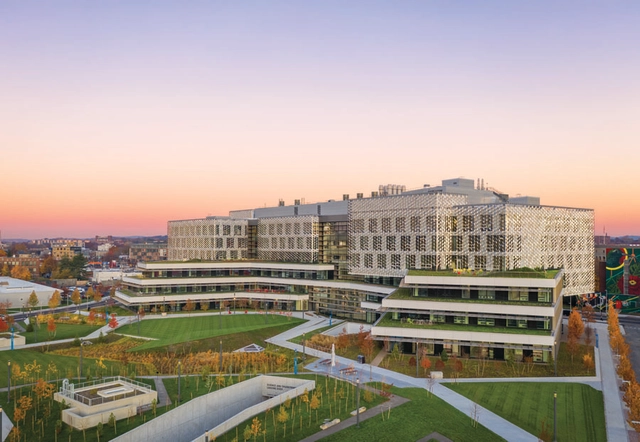
The massive new hub for lab research, by Behnisch Architekten, marks a new chapter of sustainable construction and campus planning. James McCown explores in his article originally published on Metropolis, Harvard's latest addition in the Boston campus, the new Science and Engineering Complex (SEC) designed by German-based firm Behnisch Architekten and centered on sustainability and well-being.
Videos
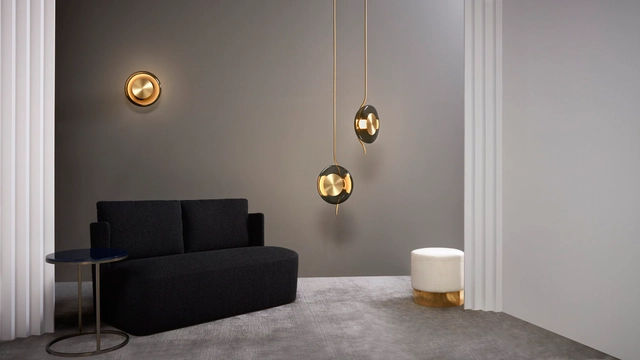
CTO Lighting’s striking new family of lights, Pendulum, combines hand-blown glass, brass and marble. The collection is its first collaboration with the Paris-based designer Dan Yeffet. Image Courtesy of CTO Lighting
For its new Pendulum collection, CTO Lighting has teamed up with AD100 designer Dan Yeffet, for an Anglo-French collaboration that celebrates ‘a shared vision of materiality and pure form.’
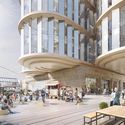
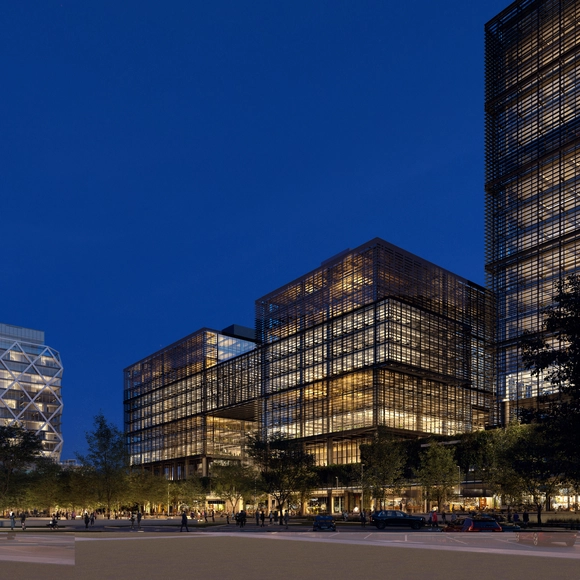
Olson Kundig has unveiled the design of 760 Ralph McGill Boulevard, a new mixed-use high-rise development situated along Atlanta’s BeltLine. Led by project developer New City, LLC, the 1.1 million-square-foot structure will include office and retail spaces organized around a central plaza. The project expands local civic and cultural amenities, and introduces a new flexible and functional workplace that also serves the surrounding community.
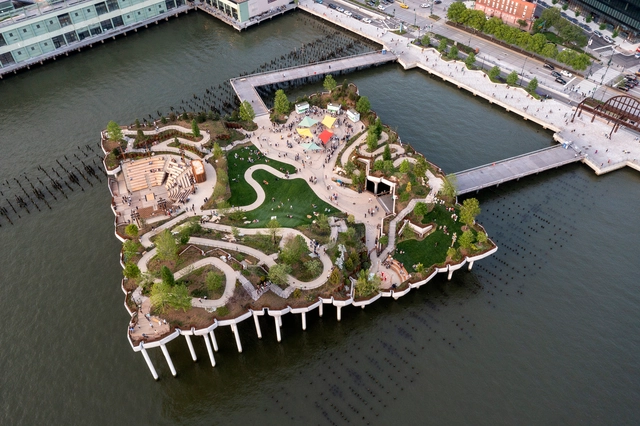
Designed by Heatherwick Studio, together with landscape architecture firm MNLA, the long-awaited Little Island project is New York’s newest major public space, showcasing a richly-planted piece of topography above the Hudson River. The design featuring a public park and performance venues reinvents the pier typology into an undulating artificial landscape. After surpassing many hurdles, the eight years in the making project is now open to the public, and the bold design is set to become an icon in New York.
After being shut down for more than a year, museums across the world are beginning to show signs of reopening. Most architecture and design events that were scheduled for 2020 have been pushed a year or two, depending on the severity of the pandemic in their respective regions. But while museums are open to the public once again, administrators have installed numerous precaution measures to ensure the safety of visitors and curators, and to avoid potential re-closures.
As international travels have been revived by government officials, and tourism is expected to recover gradually, read on to discover 18 museums and exhibitions that have begun welcoming visitors into their exhibition spaces as of May 2021, and the procedures required from the attendees before and during visitations.
Videos
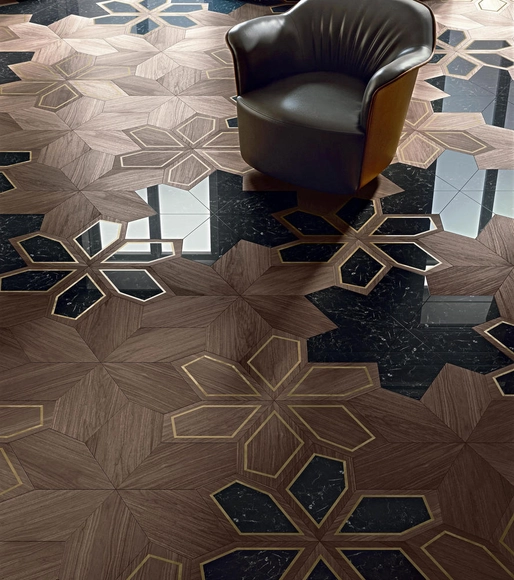
Azalea’s glossy marble and shiny brass capture natural light. Image Courtesy of Foglie d'Oro
Italian manufacturer Foglie d'Oro brings high-quality, responsibly sourced materials and precision craftsmanship together with as much expertise as the elements in its high-end parquet floors.
Popularly known as the lotus, the aquatic species Nelumbo nucifera has a useful particularity. Its leaves are self-cleaning, or ultra-hydrophobic. This means that no particles of dirt or water adhere to its leaf, which is especially useful in the humid and muddy environments where the plant typically grows. However, this effect does not derive from a perfectly smooth surface or a resinous layer on the leaves. The lotus is, in fact, full of tiny folds that reduce the area of the contact surface and repel all the particles that try to adhere there. The lotus effect has been studied by nanotechnologists in order to apply this same effect to products, such as surfaces, paints, fabrics, and tiles that can easily clean themselves. As trivial as this may seem, when we think of the resources applied to cleaning skyscraper glass or even of the reduction in photovoltaic energy generation due to dust on solar panels, we can get a sense of the infinite possibilities that hydrophobic surfaces could represent.
Nature, over billions of years, has developed adaptive solutions that are beginning to be understood by us with new technologies applied to the needs of areas such as the construction industry. When professionals such as scientists, biologists, engineers, architects, and others join forces and focus on understanding aspects of nature, with an empathetic and respectful view, the results can be impressive.
Located in Denmark’s Lolland-Falster region, Henning Larsen's New School in Sundby marked the commencement of a historic project for the country's sustainable educational-facility architecture. The primary school is set to be the largest construction project in Guldborgsund Municipality that ensures high sustainability parameters and community engagement. The school is expected to open its doors at the end of summer 2022, welcoming over 580 students in a nature-oriented premises.