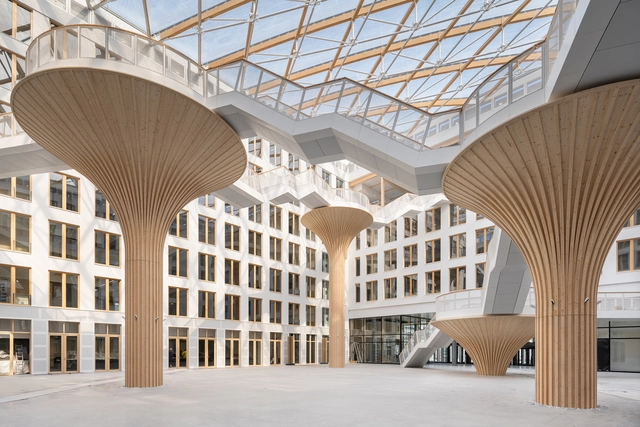
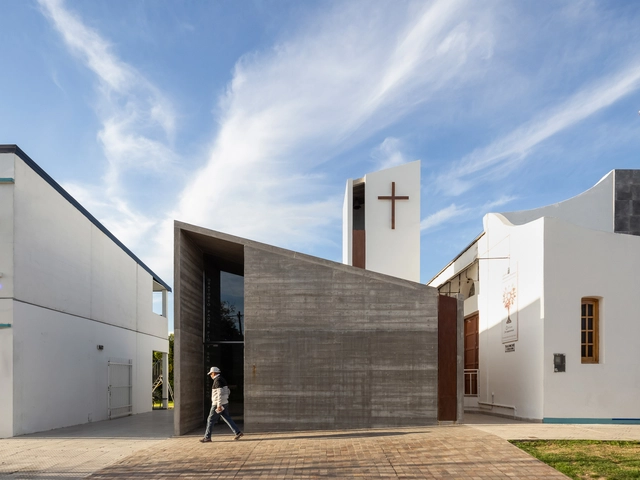
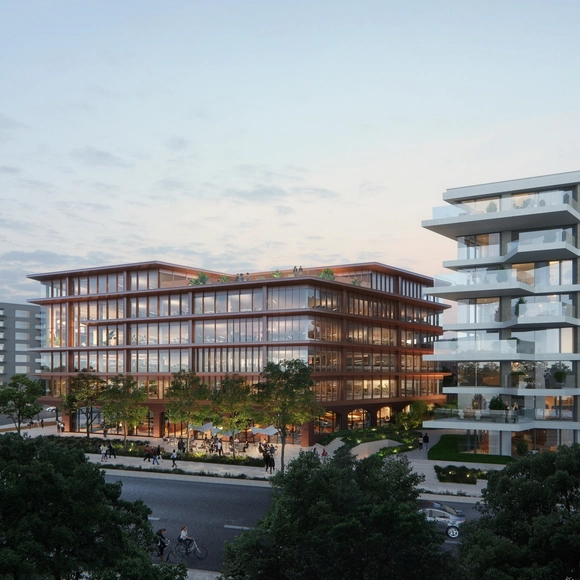
Located in the area between Sachsendamm and Berlin Südkreuz S-Bahn train station in Schöneberg, a new mixed-use complex, EDGE Suedkreuz Berlin, was completed last month by Berlin-based architect Sergei Tchoban and his firm Tchoban Voss Architekten with additional offices in Hamburg and Dresden. The complex comprises two freestanding structures—a larger Carré Building and a smaller Solitaire Building. Together they occupy their own block. The pair is now the largest hybrid-timber complex of buildings in Germany and one of the largest in Europe.
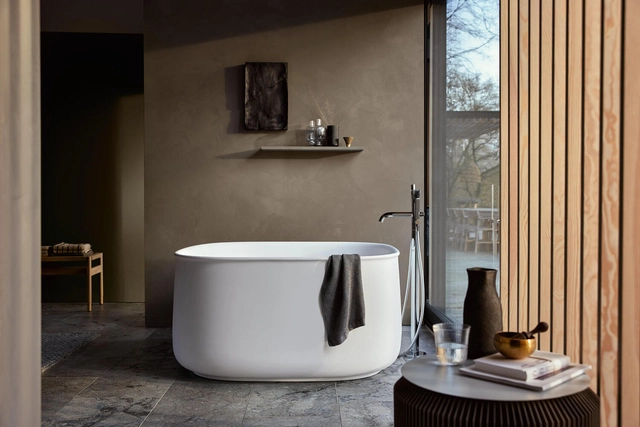
Zencha's freestanding bath, with its balanced and thoughtful design, and reminiscent of a Japanese tea bowl, really steals the show. Image Courtesy of Duravit
To start the day in a relaxed state of mind, it is good to have a natural sense of inner calm, or, failing that, a peaceful space to retreat to where stress can be left outside. In their first collaboration, Duravit and designer Sebastian Herkner transform the bathroom into a place of true well-being – for the restorative cleansing of body, mind and soul. Here, there really is nothing to remind one of everyday life, as the Zencha bathroom series transports us away, paying homage to the traditional tea ceremonies of Japan.
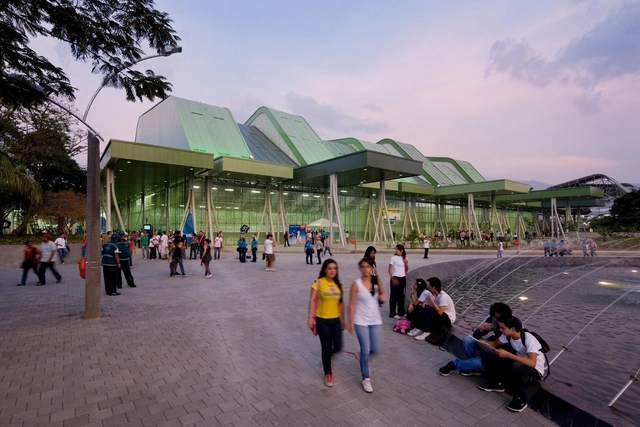
In 2013, Medellín (Colombia) was declared the most innovative city in the world as part of the City of the Year Competition, organized by the Wall Street Journal. It competed alongside metropolises like New York and Tel Aviv.
The Antioquian capital has become one of the most advanced technological and intellectual epicenters in Colombia, not to mention the important urban development that has occurred in the city since the beginning of 2010. The city’s mobility-orientated integrated infrastructure together with interventions of high social impact have turned Medellín into the center of the debate on the growth and development of Latin American cities.
The following projects tell you the story of a city that bet on urban consolidation through quality public spaces and projects that encouraged citizen management by supporting the development of marginalized areas in a process of social reconstruction, where architecture has played an important role as a spatial formulation tool.
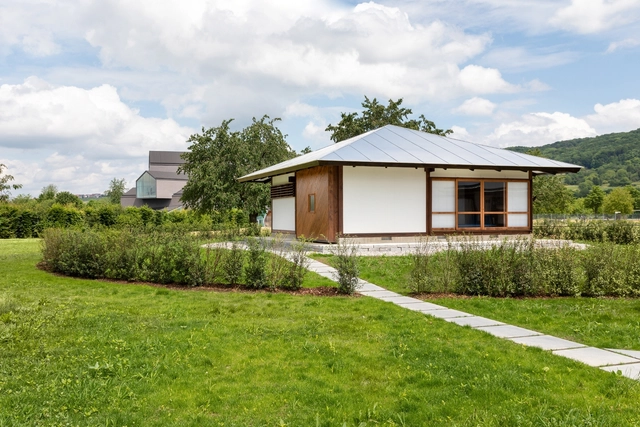
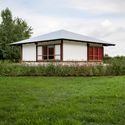
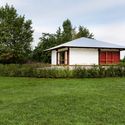
One of Japanese architect Kazuo Shinohara’s iconic architectures, designed under the so-called "First Style" has now been reconstructed on the Vitra Campus in Weil am Rhein. The Umbrella House, originally built in Tokyo in 1961, will serve as a venue for small gatherings on the campus, offering visitors insights on modern Japanese architecture. After the geodesic dome by Buckminster Fuller/George Howard in 1975, and a petrol station by Jean Prouvé in 1953, the project is the third historic building to be reconstructed on the Vitra Campus.
The “Reconstructing the Future for People and Planet” Conference, hosted by Bauhaus Earth and the Pontifical Academy of Sciences (PAS), has begun at the Casina Pio IV in the Vatican Gardens. The conference opened with a speech from Ursula von der Leyen, president of the European Commission. The extensive program brings together renowned scientists, architects, spatial planners, and policymakers to discuss the transformation of the built environment from a driver of climatic and societal crises into a force for regeneration.
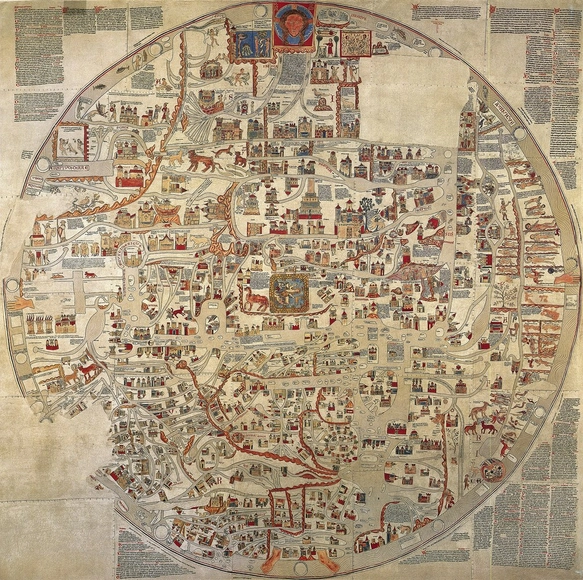
World map of 1300. Image via Wikicommons, under domain
Cartography consists of the flat, simplified and conventional geometric representation of the earth's surface, presented in the form of maps, charts or blueprints. Because it is a two-dimensional representation of something that is three-dimensional, all representations undergo some kind of deformation, so that the choice of a method takes into account not only technical aspects, but also political ones.
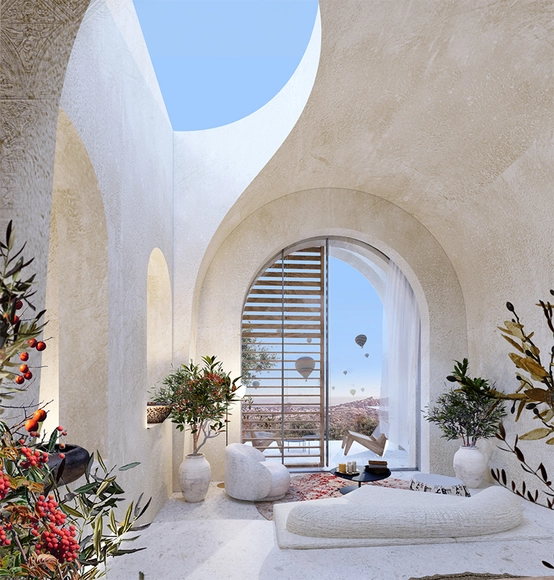
Cappadocia Spa Hotel by GAD ARCHITECTURE. Image Courtesy of GAD ARCHITECTURE
Offering short-term accommodation to travelers, hotels represent one of the main elements supporting the hospitality sector. They often aim to create a serene environment, isolated from the bustle of city life, yet representative of the local identity. Boutique hotels represent a rising sub-sector of hospitality design. These are small hotels typically between 10 and 100 rooms with carefully chosen interior design, providing a memorable experience to their guests. From historic renovations to contemporary ground-up hotels, hotel projects represent a great opportunity for architects to create unique environments centered around leisure and relaxation.
This week’s curated selection of Best Unbuilt Architecture highlights projects submitted by the ArchDaily community. Located in the forests of Portugal, on the shore of the Greek island of Crete, or in the deserts of Egypt, this round-up of unbuilt projects showcases how architects respond to local conditions in order to create designs that cater to the needs of tourists and travelers.
It is often times that when living in Japan, whether you're occupying a shared house or renting out your own apartment, you'll find yourself having a limited amount of space to work with. This primarily stems from land scarcity within the country, with 73% of the land available to us being considered mountainous, with another large percentage of the country's flat land serving as farmland and a means for agricultural purposes. There is also the issue surrounding overcrowding within Japan's urban areas. Due to these factors, inflation amongst properties is rife, thus, resulting in many residents turning to small dwellings.
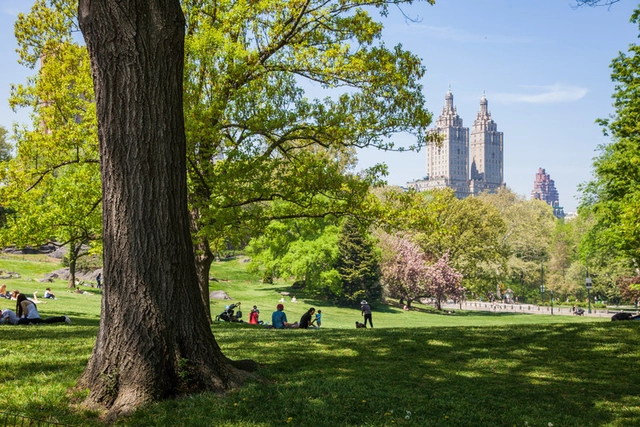
Whether it is a small balcony, access to green space or a private garden, the outdoor space has become a privilege for many, especially upon the dawn of the Covid-19 pandemic and the multiple lock down periods that followed. Green space in the city is constantly under threat, particularly since governments seek to increase housing densities in order to feed a growing demand for suburban development. As a result, the garden and access to green/outdoor spaces has decreased in recent times, as priorities lie in housing as many as possible, often with disregard to beneficial features such as access to outdoor areas in residential developments.
In terms of living conditions the lack of access to these spaces presents evident inequalities, uncovered during periods of lock down and restrictions during the pandemic. People were confined to their homes and local outdoor spaces, where they could exercise. Those who had access to these public spaces and had their own gardens/external space were very lucky in the sense that they were able to enjoy an element of the outside. While those less fortunate in flats and areas of depravity faced claustrophobic and demoralizing conditions, contained within the shell of their homes.
How relevant is the use of color in architecture? Throughout history, we find various scenarios where color takes centre stage in its integration with the architectural work. Nowadays this is no exception. This is because colour is a medium that can be used to provoke deep and immediate emotions and reactions in the person observing. Because of this, colour plays an important role in the architectural reading, as it has the power to clarify the components that make it up or, on the contrary, to change the perception of the work or space.
The following list shows various Latin American housing projects that have had a particular approach to color in their composition. In them, we see the conception of color as the integrator of the work, or as a means of enhancing a particular element, be it interior or exterior.
The Brick Award recognises and celebrates exceptional brick architecture from around the world. It creates a platform for architects and planners to present their innovative and creative projects and designs to an international audience.
Architecture can achieve great things and unite cultures and nature, as demonstrated by the outstanding buildings that won the International Brick Award 22. For the tenth time, Wienerberger shone the spotlight on exceptional brick building projects from all over the world. The aim of the Brick Award is to act as a torch bearer and source of inspiration for architecture, planning, urban development and culture. The 50 nominated projects also demonstrate the aesthetic and functional potential of ceramic building materials.
JW Marriott Hotel / Gensler. Image Courtesy of Gensler
Architectural Record has unveiled its list of Top 300 U.S. Architecture Firms of 2022, ranked by revenue for architectural services performed in 2021. Gensler, Perkins&Will, and HDR continued a three-year streak leading the annual rankingof the top 300 American architecture firms, joined by AECOM, which saw one of the largest reported increases in architecture revenue, rising from eighth to fourth place.
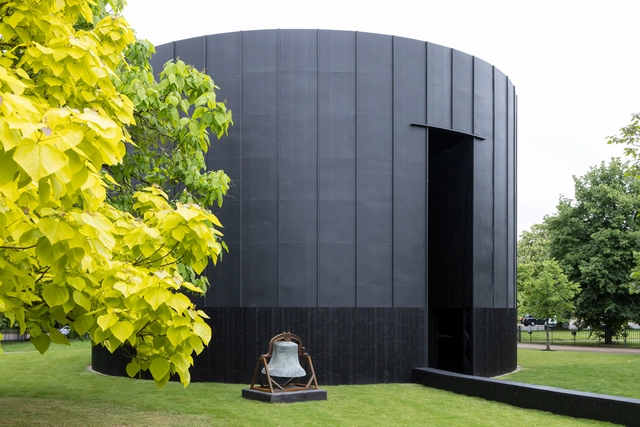
The 21st Serpentine Pavilion, Black Chapel, designed by Chicago-based artist Theaster Gates opens today, on June 10, 2022. On display until the 16th of October 2022, the project is realized with the architectural support of Adjaye Associates with Goldman Sachs’ patronage. In 2021, the Pavilion events program was planned to reflect Gates’ concept of interlinking architecture and music, particularly emphasizing artistic explorations of monastic sounds and hymns. The pavilion will act as a platform for Serpentine’s live program throughout the summer, offering the public space of reflection, connection, and joy.
In the field of design and construction, the question of gender is a point of conflict: who has the possibility of building? What are the alternatives for us architecture professionals? These are the questions that Taller General (re)think about. It is from these questions that Femingas, a participatory construction conference with a gender perspective, arose. These are manifested as an alternative to the construction of "mingas", days of joint work between the members of a community to achieve a common good.
Few spaces are as intimate and contemplative as prayer rooms. Designed as both stand-alone structures and part of larger projects, prayer rooms are made as an architecture of introspection. Located within a house of worship or funerary space, or for their own dedicated purpose, these quiet rooms offer tranquil areas to consider life and the passage of time. Reflecting larger ideas on specific faiths and spirituality, they are designed as spaces of symbolism and sanctuary.
Daylighting design is an essential aspect for creating brighter, healthier buildings for everyone. Considering that daylight has a unique ability to shape the experience of a space, it is important for architects and designers to take it into account in order to build healthier, more sustainable buildings. Good daylighting design can improve the health, mood, cognitive abilities and productivity of the occupants of homes, schools or workplaces, while reducing the energy consumption of the building.
We explore a few key factors that can influence daylight availability in buildings and how to account for them in your next project.
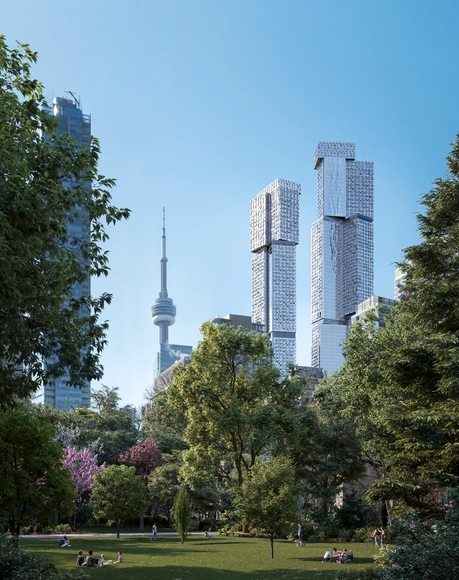
Great Gulf Group, Dream, and Westdale Properties, have unveiled renders of Frank Gehry's newest architecture in Toronto, Canada. Set to leave a mark on the city's skyline, Forma, the architect’s first residential tower in Canada and his tallest building yet rises 73 storeys and features a thoughtfully-appointed Gehry-designed lobby along with a striking custom art installation that reflects his visionary approach, as well as interiors by international design studio Paolo Ferrari.
Powerhouse Company has revealed a new design for THIS., a new mixed-use development in Amsterdam’s North District. Overlooking the waterfront of the IJ river, the complex offers the necessary amenities for both working and living in an area close to the city center. The ensemble includes a new office building, two waterfront private sector residential buildings, and two social housing blocks containing a total of 2017 homes. A Hidden Garden, designed by Delva Landscape Architecture and Urbanism, connects the residential and office buildings, creating a space for leisure and social activities.
Headquartered in Belo Horizonte, Minas Gerais, the architectural firm Arquitetos Associados presents a dynamic and varied way of dealing with each project. Based on a specific and specific work organization for each case, which allows for a varied team including external collaborators, the firm's way of working reflects on its unique projects.
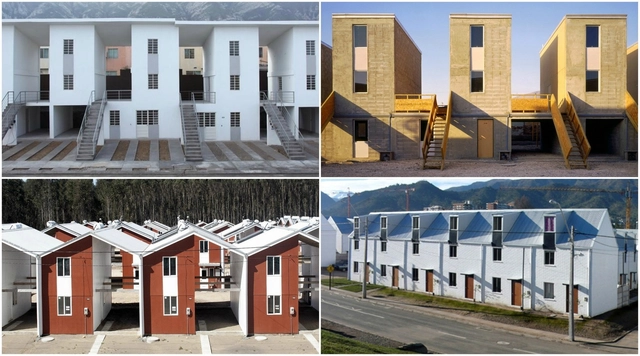
In 2016, Pritzker Prize winner Alejandro Aravena announced that his firm, ELEMENTAL, had released the rights to four of their social housing projects, and all documents would be uploaded to their website for public use. Aravena’s goal was to start a movement in which architects would work together to tackle the world’s challenges around housing shortages and affordability, especially with increased migration. The shared drawing sets and a description of the project’s principles provide architects with the necessary documentation for building a low-cost home, encouraging designers to do the same with their work, contractors to assist in building these homes, and governments to shift their thinking of how they can approach mass urbanization. Six years later, how has the concept of open-source architecture progressed, and how has it impacted the architectural profession ever since?
For Milano Design Week 2022, UniFor, a company of the Molteni Group specialized in workplace furnishing solutions, will be presenting PRINCIPLES, a new collection developed in collaboration with the international architecture firm, OMA. The unveiling of PRINCIPLES will take place in a new location with a prestigious address, Viale Pasubio, which is also home to the headquarters of Fondazione Feltrinelli and soon to become UniFor’s permanent showroom.
The fundamental concept of PRINCIPLES is to provide furnishings that can be used by anyone, at any time, to best support the flow of operations and communications required by the contemporary workplace.
In 1782, Bangkok became the capital of Siam – as Thailand was previously known. Its strategic position within the protective curve of Chao Phraya River to the West and the vast, swampy delta of the Sea of Mud that secured the city to the East was key. King Rama I modeled the new city on what had been the urban reference of Thailand since the 14th century: Ayutthaya, which by 1700 had become the largest city in the world with a total of 1 million inhabitants.
Bangkok progressively saw the construction of temples (wats), schools, libraries and hospitals. However, few other typologies were erected and the city lacked significant paved streets. Instead, the river and a network of interconnected canals served as the transport infrastructure of the city. With time, the floating houses anchored along the riverfront decreased and the pavements spread.
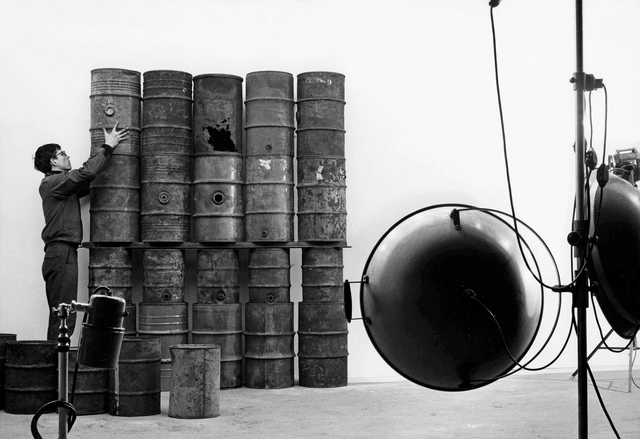
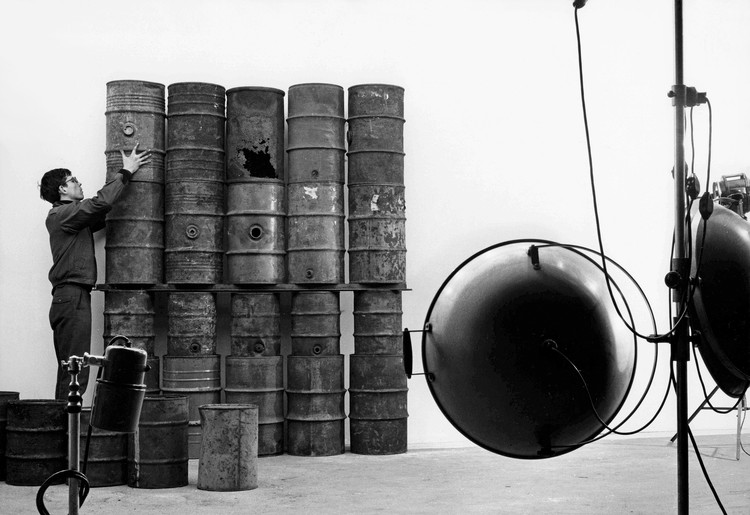
Gagosian Gallery Parishas announced an exhibition dedicated to Christo, presented in collaboration with the artist’s estate. Featuring sculptures made in Paris between 1958 and 1963, the exhibition features the earliest examples of Christo’s wrapped objects and barrel structures, many of which are exhibited for the first time, along with key works from his rarely shown Surfaces d’Empaquetage and Cratères series. The exhibition is open to the public on June 10, displayed across two floors of Gagosian’s rue de Ponthieu gallery, near Christo’s first Paris studio.