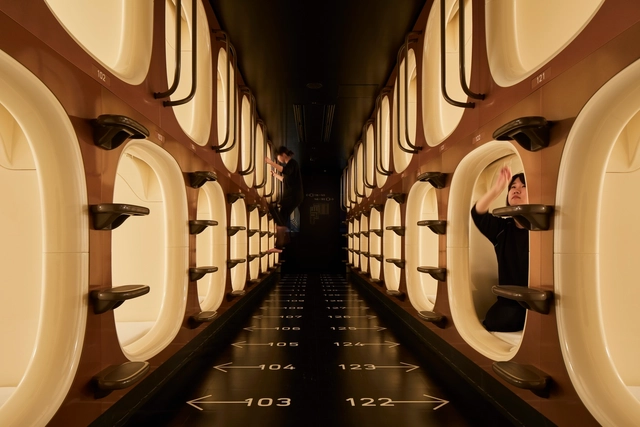
The capsule hotel is typically representative of the image that many people have of Japan, combining dense use of space, technical ingenuity, and a futuristic vibe. Capsule hotels, also known as pod hotels, are one of Japan’s best-known and unique types of lodgings. Typically located around major public transportation hubs in large metropolitan cities, they target individuals looking for a low-budget, single-night stay.
The Second Studio (formerly The Midnight Charette) is an explicit podcast about design, architecture, and the everyday. Hosted by Architects David Lee and Marina Bourderonnet, it features different creative professionals in unscripted conversations that allow for thoughtful takes and personal discussions.
A variety of subjects are covered with honesty and humor: some episodes are interviews, while others are tips for fellow designers, reviews of buildings and other projects, or casual explorations of everyday life and design. The Second Studio is also available on iTunes, Spotify, and YouTube.
This week David and Marina discuss undergraduate architecture thesis projects and studios, covering the differences between thesis projects, capstone projects, and dissertations; how to select a thesis topic; how to choose the right studio/professor; the value of doing a thesis; the unique challenges of thesis; and more.
https://www.archdaily.com/985063/the-second-studio-podcast-preparing-for-architecture-thesisThe Second Studio Podcast
The 25th of June 2022, marked 170 years since the birth of Antoni Gaudí, the greatest representative of Catalan Modernism, and we celebrate this day by sharing the story of his life and remembering his work.
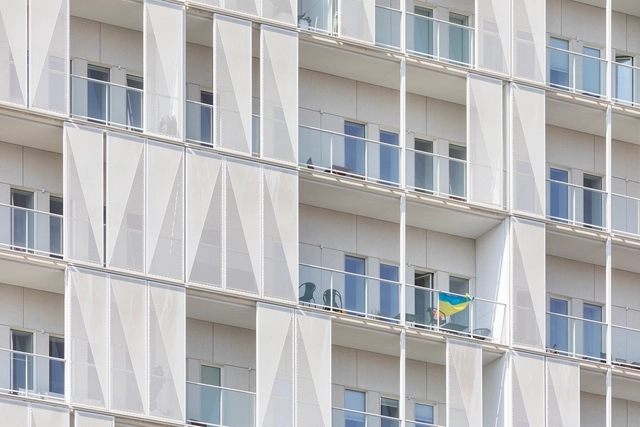
The past couple of decades introduced the world to new ways of living as a result of different social, economic, and ecological changes. Naturally, these changes found their way into the architecture and urban practice, provoking new concepts within traditional typologies. Designing a space, regardless of its function, has always prioritized users' needs and ensured practicality and functionality, but recently, keywords like flexibility, privacy, inclusivity, and eco-consciousness have become driving forces behind design processes. In this interior focus, we will look at how current cities and living trends across the world have reshaped interior design and introduced modifications to typical typologies.
The International VELUX Award jury has selected ten regional winners from the 507 submitted projects, from 211 schools of architecture around the world. The renowned jury was comprised of Anupama Kundoo, Anupama Kundoo architects (IN), John Ronan, John Ronan Architects (US), Rainer Hofmann, Bogevischs Buero (DE), Fuensanta Nieto, Nieto Sobejano Arquitos (ES), and Lotte Kragelund from VELUX A/S (DK), all of whom met for the jury meeting in Copenhagen.
Hoor Al Qasimi, the President of the Sharjah Architecture Triennial, and its curator Tosin Oshinowo, have announced the title and theme of the 2023 Triennial as "The Beauty of Impermanence: An Architecture of Adaptability". The theme reflects on the issues of scarcity in the Global South, and how this challenge has created a "culture of re-use, re-appropriation, innovation, collaboration and adaptation". Through these differing modes of practice, the event, which will be inaugurated in November 2023, will explore how people can "reorient global conversations to create a more sustainable, resilient, and equitable future".
In parallel with the restoration works underway at the Notre Dame de Paris cathedral, the city of Paris has launched a design competition to redevelop the cathedral’s surroundings. On June 27, the jury announced the team led by landscape designer Bas Smets as the winner of the competition. The project, planned to start in 2024, will reimagine the square and the underground parking spaces beneath it, including the archeological crypt, the Jean XXIII square located behind the cathedral, the Seine riverbanks, and the adjacent streets. This extensive project aims to bring Parisians back to the heart of Paris and welcome the 12 million visitors coming each year in better conditions.
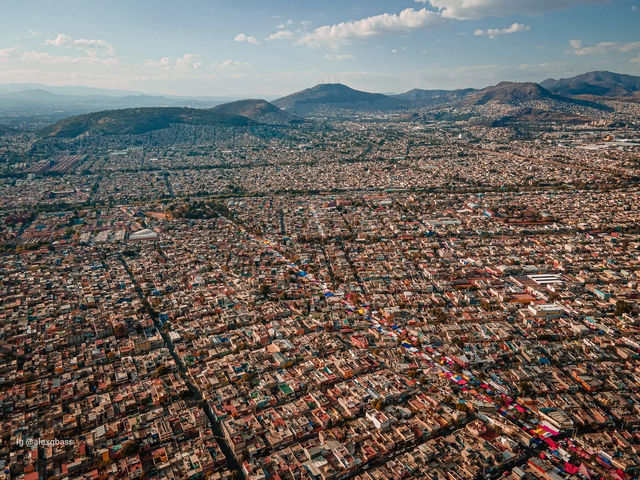
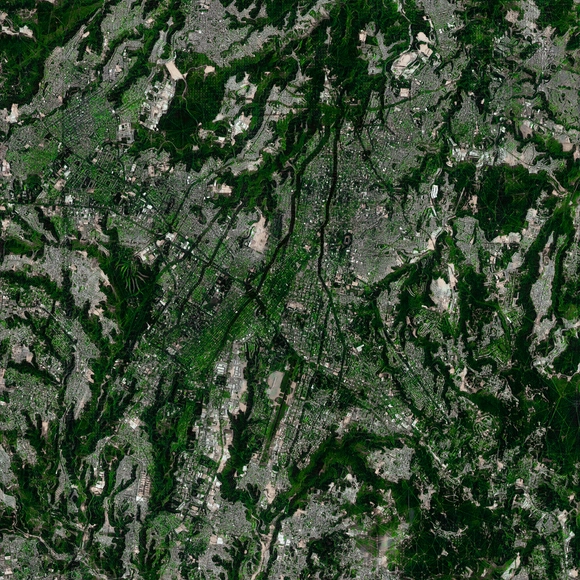
The region we know today as the Metropolitan Zone of the Valley of Mexico (ZMVM) has had a continuous and dynamic occupation for more than 4,000 years. Archaeological and anthropological evidence reveals the presence of complex human societies on the banks of the lake basin, starting with Tlatilco and Cuicuilco in the Preclassic period, passing through Teotihuacan in the Classic period, and culminating with the different urban centres of Nahua affiliation in the Postclassic period, with the cities of Mexico Tenochtitlan-Tlatelolco, as well as Texcoco, Azacapotzalco, Iztapalapa and Chalco, among many others, undoubtedly standing out.
https://www.archdaily.com/984712/the-aestheticisation-of-inequality-contrasting-landscapes-on-the-periphery-of-mexico-cityMónica Arellano y León Villegas
How might your persona or act differ if you were to put yourself before society’s expectations and limitations, embracing your queerness and preferences? Looking into the impact of individuality, we talked with Andreas Angelidakis, an architect to who refers to himself as “an architect who doesn’t build”, but views architecture as a site of social interaction, creating works that reflect on the urban culture by mixing ruins, digital media, and psychology to better understand the power of finding different design paths.
In the 1960s and 1970s, a series of critiques of the modern city appeared. Jane Jacobs’s attack on those intent on redeveloping New York City was the most immediately impactful, loosening the grip of Robert Moses and his followers, but others had a broader influence on practicing architects and planners. As an observer of San Francisco Bay Region’s cities, I wondered if their books from this period would shed light on current issues of adding density in urban contexts.
https://www.archdaily.com/985024/how-do-the-critics-of-yesteryear-think-about-urban-densityJohn J. Parman
Throughout the years, urban settings have been shifting and taking on new forms. Workspaces became more flexible, home-based offices are common and the increasing costs of housing have led to changes in the way dwellings are designed and built; while turning us towards public and communal outdoor areas for leisurely activities and social gatherings. Our shifting lifestyles are therefore shaping a new urban landscape that’s influencing the way we conceive and use these spaces. Despite everything, some smaller and often unrecognized typologies have persisted and remain as necessary as they’d always been.
They are not places of defined function, yet they still host valuable instances within our day-to-day lives. The latter are the Interstitial (or In-between) spaces, that act as buffers to, and link our private spaces to the public and functional buildings or landscapes. They are the hallways, waiting areas, elevators, staircases, entrances, and transitional zones weave our built environment together.
https://www.archdaily.com/984818/interstitial-spaces-and-public-life-the-overlooked-interventions-that-weave-our-built-environmentHana Abdel & Paula Pintos
Since the creation of BOGDAN & VAN BROECK in 2007, we have been focusing on the realisation of caring architecture, the activism for a high-quality urban culture and the redefinition of the traditional role of the architect. However, it was my experience in politics in Romania that helped me most with my involvement in public policy in…the Brussels-Capital Region. My position as Secretary of State in Romania, coordinating the field of cultural heritage from the perspective of heritage as a strategic resource in 2016-2017, and as co-founder of a Romanian political party in 2017-2019 made me embrace a holistic approach to regenerative development.
New York City is defined by its architecture, and in turn, diverse ways of living. As the nation's "metropolis," it has also faced some of the most challenging housing problems of any American city. From single-family homes to high-rise residential towers, housing has evolved at different paces and scales throughout the boroughs. In turn, each district and county is home to a wide range of residential styles and housing solutions.
Foster + Partners has completed the new headquarters for the National Bank of Kuwait, a 300-meter skyscraper with a distinctive presence among the buildings of Sharq, Kuwait city's growing financial district. The new tower promotes employee synergy and enhanced wellbeing by bringing all of the bank’s corporate employees together under one roof. The design combines environmentally-conscious features and structural innovation, providing an energy-efficient passive architecture that shields the offices from the extremes of Kuwait's climate.
EHDD has recently launched the Early-Phase Integrated Carbon (EPIC) Assessment tool, a free new web-based application developed to designers set goals and strategies to reduce carbon emissions from building and construction projects. The tool aims to fill a gap in the life-cycle assessment process and allow designers to identify the most impactful measures early in the project process. At the same time, other resources like Tally and EC3 are seen as crucial later in the design.
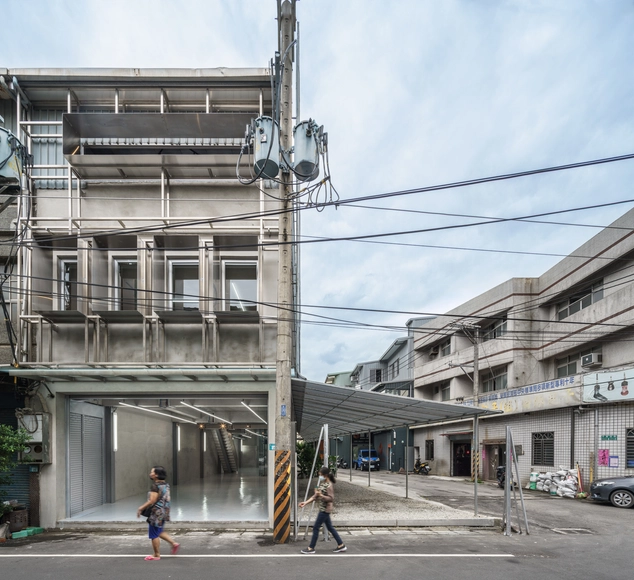
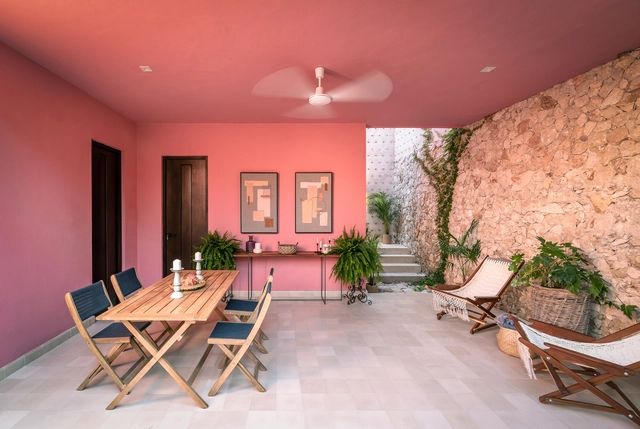
Casa Maca / Workshop, Diseño y Construcción. Image
Over the years, interior design has evolved according to the needs that arise, but above all according to the experiences it seeks to evoke in the user. In the last two years we have witnessed a radical change and a special interest in this subject because the pandemic forced us to pay specific attention to the configuration of the places we inhabit. This has brought about much more holistic designs that seek to address the wellbeing of the user, combining colours, sensory experiences, technology and natural elements that promote health.
Food pyramids are familiar to all of us. They are visual guides that show us the proportions of foods that we should supposedly eat on a daily basis, in order to stay healthy. Composed of a series of layers with different food types–such as grains, flour, fats, vegetables, and others–, at the base are the foods that should be consumed in larger quantities. Towards the top, each layer becomes successively smaller, indicating the foods that are meant to be ingested rarely. The pyramid can vary according to countries and cultures, but its main purpose is always to provide a guide for a balanced life. There are no prohibitions, but it does indicate some foods that should be consumed with caution because of their impacts on our health.
If we are what we eat, is it possible to also replicate this in the construction industry and our buildings? Using this same easy to understand visual language, the Royal Danish Academy Center for Industrialized Architecture (Cinark) developed the Construction Material Pyramid. The idea was to highlight the environmental impact of the most used construction materials, focusing on the analysis of the first three life phases: extraction of raw materials, transportation and manufacturing.
Nature has continually played muse to architects. Colors and forms from the natural world find themselves embedded in artificial edifices. Buildings are also shaped by patterns of the wind and sun, topography, and vegetation. While architecture is informed by the effects of nature, buildings have been proposed as inert objects that remain static in a biologically evolving world. Anthropocentric concrete “jungles” are devoid of life, separating humans from natural environments and causing imbalances that have manifested as pandemics. What would cities look like if there were no boundaries between humans and ecosystems?
The Europa Minimal Frame, a new aluminum architectural system, was developed by the company's R&D Department as a high-performing sliding system, emphasizing functionality, design and aesthetics. Recently awarded the Red Dot Award: Product Design 2022 in the Interior Design Elements category, the Minimal Frame aluminum system and its innovation, functionality and longevity present a number of benefits for designs which aspire to a minimalism that combines aesthetic simplicity and luxury.
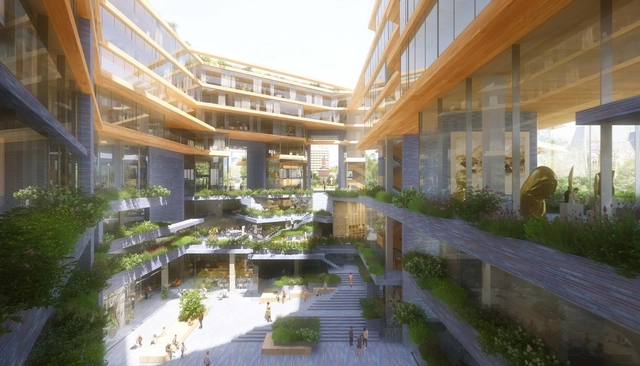
UNStudio has been announced as the winner of the international competition "Un Iași pentru Viitor" to design a new residential district in the historical center of Iași, Romania. For this competition, organized by Iulius company, four offices have been invited to participate, Foster + Partners, MVRDV, UNStudio, and Zaha Hadid Architects. The main challenge of the competition brief was designing a building well integrated into a complex urban environment marked by historic monuments of different ages, new archeological discoveries, and open public spaces and gardens. The winning proposal, titled „Bridging Time, Bridging Communities,” aims to offer a coherent response to the particularities of the site.
At the end of the 19th century, skateboarding emerged in the United States. Officially patented in 1936, the sport has already faced several prejudices, but like the social and urban dynamics of which it is a part, it has lasted to demonstrate that its experience goes far beyond conservative views and brought a new way of experiencing the city by trying movements of our own bodies in light of the urban or architectural design.
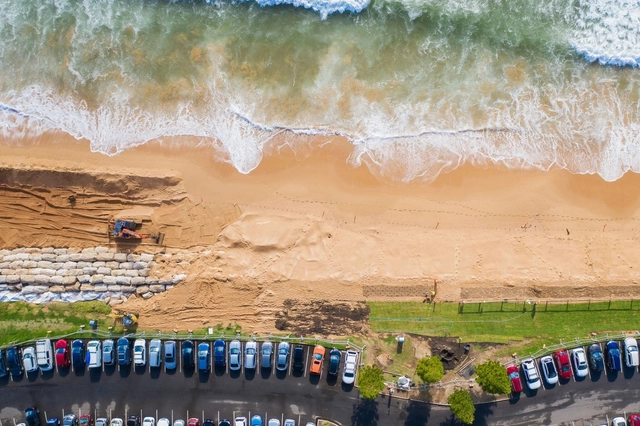
At the onset of the coronavirus pandemic in March 2020, affluent Parisians flocked to second homes on France’s Atlantic coast as a nationwide lockdown came down on the country. In June 2020, as the lockdown was eased in England, residents headed to seaside towns like Bournemouth to soak in sunny weather. The former scenario reflects the widening gap between France’s wealthy and the poor, whilst the latter is a reflection of the democratizing power of public-access beaches.
In both situations, what is sought out is the ecological calmness usually found on beaches. Globally, however, there’s an unsettling phenomenon, where intertwined with climate change and policy decisions, beaches are increasingly becoming private, inaccessible spaces.
Hello Wood launches the Builder Method; an international collaboration to develop a presence and action-based educational methodology. Through the process of building, participants not only build an object but they build a community and develop themselves.























.jpg?1657062520&format=webp&width=640&height=580)