Beyond the traditional boundaries of Scandinavian minimalism and Japanese wabi-sabi, the aesthetics from the far north and the far east have more parallels than one might think at first glance –it is not for nothing, after all, that they are so popularly combined with each other, creating the term Japandi.
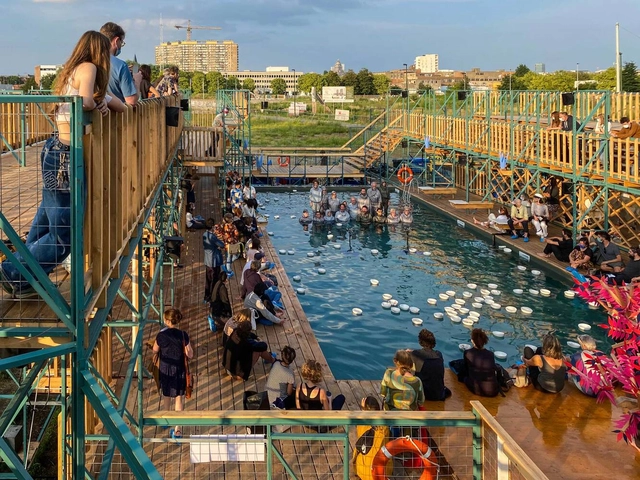
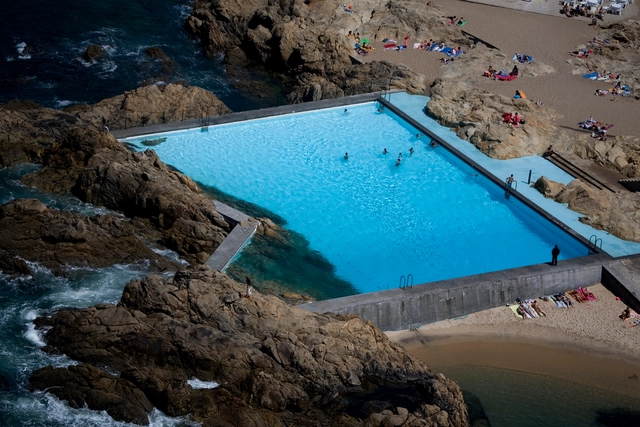
Often times in architecture, the way that a project's ability of its underscored elements to subtly carry a dialogue with the existing site is one of the most powerful moments in design. Swimming pools are a great example of these types of projects, since their designs often are a direct response to a variety of existing site conditions, including occupying both inside and outside spaces, assuming different forms, and incorporating a variety of finishes that might completely transform the aesthetic of the space.
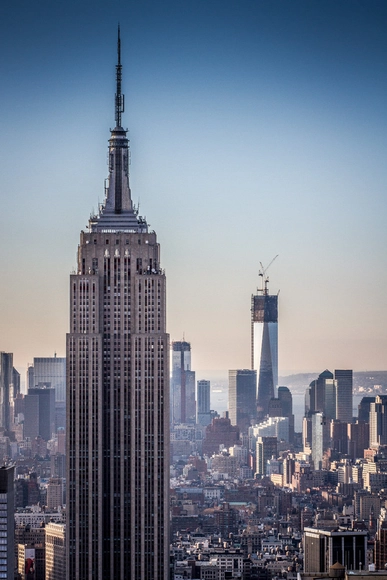
“A hundred times have I thought New York is a catastrophe, and fifty times: It is a beautiful catastrophe.” Le Corbusier. This architecture city guide celebrates Modernism in one of the world's greatest cities: New York. We embark on an architectural journey through nearly a century of innovative, revolutionary architecture: from early 20th century, revivalist Beaux-Arts; to machine-age Art Deco of the Inter-War period; to the elegant functionalism of the International Style; to the raw, exposed Brutalism characteristic of the Post-War years; and, finally, to the splendid forms of organic architecture. From world-renowned landmarks to undiscovered jewels, we invite you to explore the 2,028 blocks that make Manhattan an architectural mecca for citizens around the world.
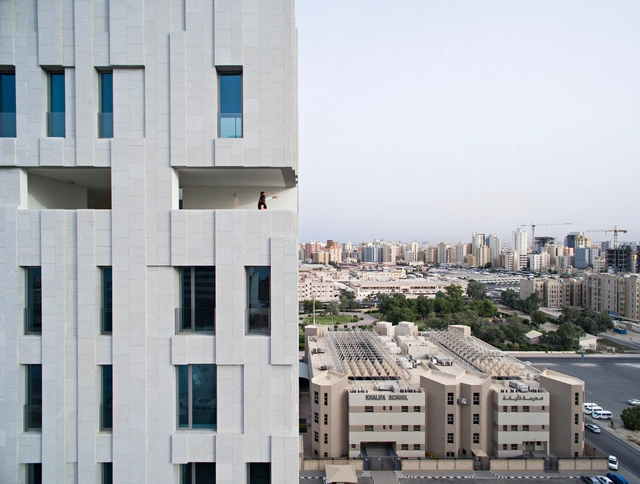
Fortunately, architecture has the power to solve numerous issues of the modern world and how we live in it, and there are infinite ways of doing so. However, not all architecture is effective in providing solutions while also being sensitive and thought-provoking. With a portfolio that is getting richer every year, SO–IL, an architecture practice based in New York City, has proven that buildings can actually do this and much more.
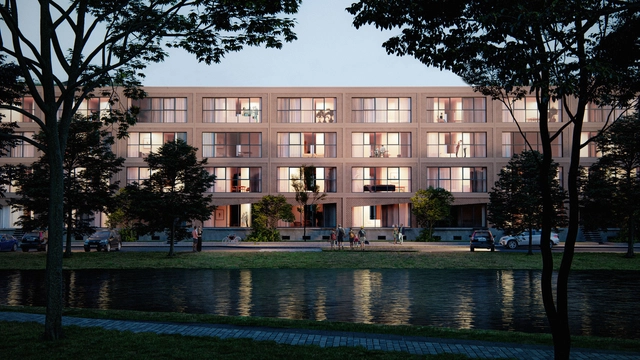
HA-HA, in partnership with BIK Bouw and Wooncompas Housing, will develop four social housing blocks for the community of Ridderkerk, near Rotterdam, Netherlands. The project uses materials from the existing social housing estate, built in the 1950s, and employs an innovative modular-timber system to create sustainable human-centered housing. The old buildings are planned to be disassembled and their components reused and integrated into the new development, which will increase the number of affordable units by 13%.
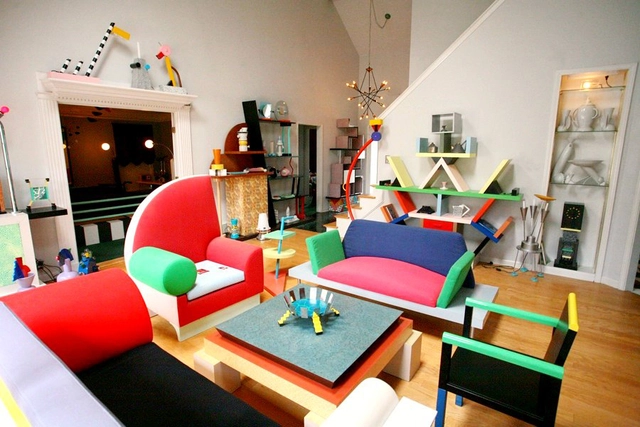
Memphis-Milano design collection 2010. By Dennis Zanone licensed under the Creative Commons Attribution-Share Alike 3.0 Unported license
Far from the US state of Tennessee, the Memphis movement emerged in Milan in the 1980s and revolutionized design. Its gaudy colors, exaggerated patterns and conflicting prints were intended to overturn the minimalism status quo of the time, also contradicting the functionalist design postulated by the Bauhaus with its purely aesthetic and ornamental forms.
In the 1960s, Jane Jacobs criticized modernist urban planning from the perspective of the integrated city. She believes that the purpose of urban renovation is to establish a better-integrated relationship between urban space and urban function by repairing the gap between them. Rather than "beautify" the urban environment.
There are few more powerful questions than “Where are you from?” People feel intensely connected to cities as places and to other people who feel that same kind of connection. In other words, we tend to understand and experience places in a very personal way.
Yet to understand place—indeed, to understand human settlements in general—it’s important to recognize that places are not created by accident. They are created on purpose to further a political or economic agenda. Better cities emerge when the people who shape them think more broadly and consciously about the places they are creating.
Hangar architecture is a relatively new building type. Ever since the Wright brothers stored and repaired their aircraft in a wooden hangar constructed in 1902, designers and builders have continued to rethink what these structures can be. Beyond actual airports and terminals, hangars are unique in that they're purpose-built to hold an aircraft or spacecraft. Today, how can this building type be challenged and reimagined?
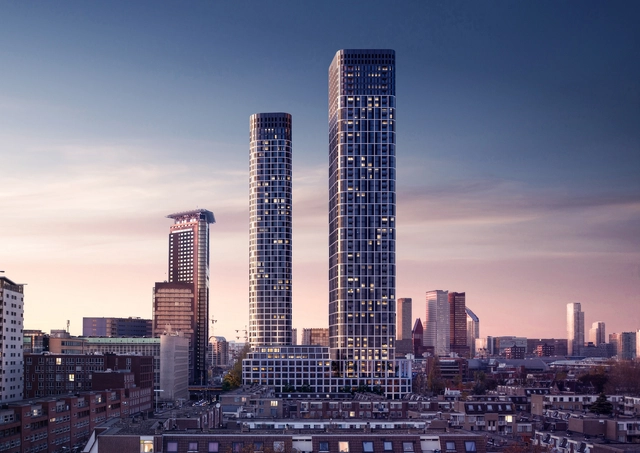
Dutch architecture firm Mecanoo has unveiled the design of what will soon become the tallest high-rise ensemble in the city of The Hague, in the Netherlands. Dubbed "The Grace", the project consists of two towers, one at 150 meters high and the other at 180 meters, becoming the tallest high-rise ensemble in the city. The residential project comes as a response to the growing demand for affordable housing, as well as fostering an enhanced sense of community.
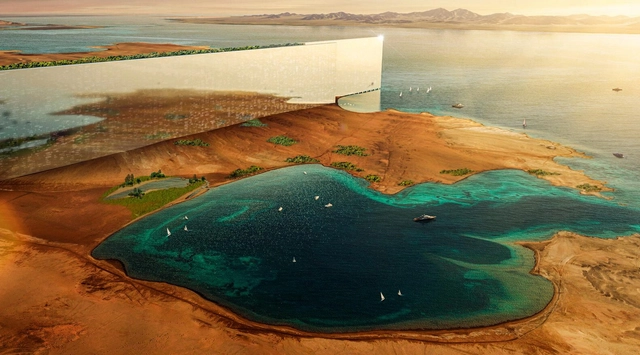
The Saudi Arabian government has released visuals of a 170-kilometer-long skyscraper as part of the NEOM project. Announced by crown prince Mohammed bin Salman, The Line is a reimagined urban development linking the coast of the Red Sea to the mountains and upper valleys of northwest Saudi Arabia. The compact structure, 200 meters wide, represents a social and economic experiment. The city aims to be zero-carbon, through the elimination of carbon-intensive infrastructures like cars and roads, and will operate on 100% renewable energy, including the operations of its industries.
FLOW, 2021 / POOL IS COOL, Decoratelier Jozef Wouters. Image Cortesía de CCCB
The European Prize for Urban Public Space is a biennial, honorary competition organised by the Centre of Contemporary Culture of Barcelona (CCCB), which, following its exhibition "The Reconquest of Europe" in 1999, decided to create a permanent observatory of European cities. The prize has been awarded since 2000, recognising the best interventions for the creation, transformation and recovery of public spaces in Europe.
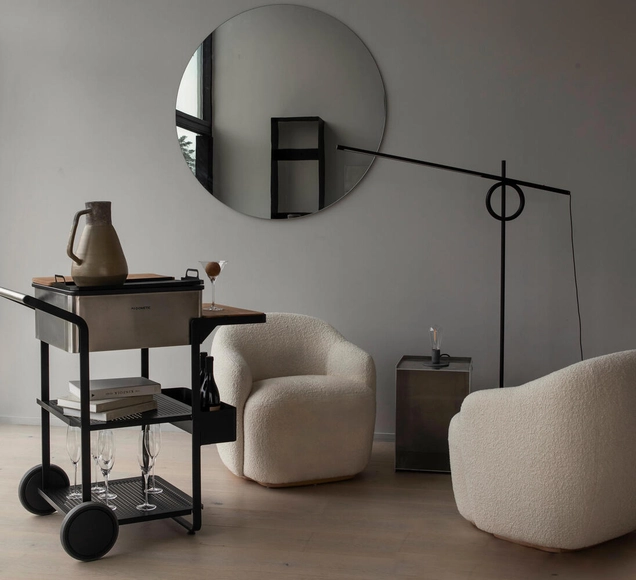
MoBar 50 / Dometic Home. Image Courtesy of Dometic Home
According to a recent survey by spirits industry market analysis firm IWSR, 54% of online buyers of alcohol in the U.S. made their first purchase during the pandemic. Most consumers decided to ‘treat themselves’ to more expensive spirit brands than usual, many opting for the higher shelf bottles in order to finally master the art of home-made cocktails – elaborate, to-be-sipped drinks worthy of the bigger investment. IWSR says that those habits are sticking. Along with them comes the need for an aesthetic plan of attack concerning the display of said pricey bottles: home bar architecture.
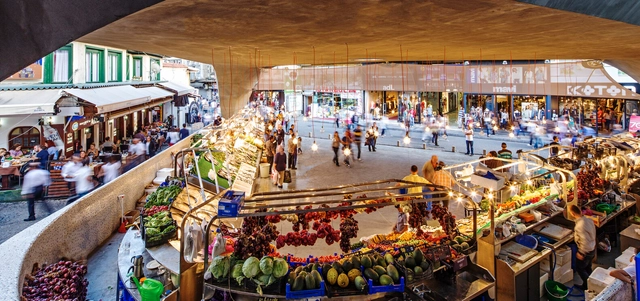
Every city is a complex environment, bringing together people, cultures, architecture, commerce, and even nature. While experiencing a city, a lot of attention is given to its appearance, but appearance is not everything. The theory of sensory design aims to go beyond vision and explore the richness of the built environment through textures, smells, and sounds. For city officials and planners, a lot of attention generally goes towards how a city looks and sounds, but in terms of smell, the focus is mainly on managing waste or cleaning unsanitary areas. Yet the sense of smell, so often overlooked, is strongly linked to the creation of emotional memories. It contributes to our understanding of the world; it reveals otherwise hidden cultural practices, and it rounds up the experience of an environment.
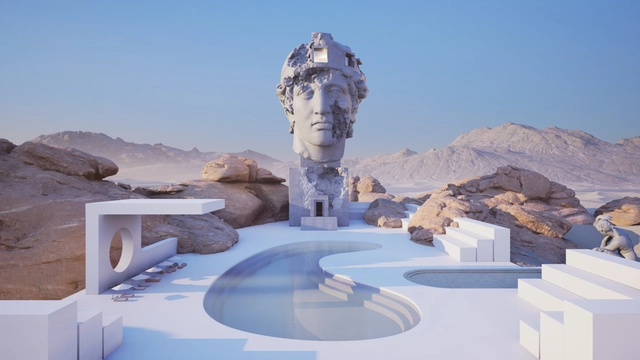
The Alexander Team and metaverse real estate development firm Everyrealm, have announced the launch of "The Row", a private, members-only metaverse real estate community featuring architecture designed by world-renowned artists. The Row will be launched on the metaverse world-building platform Mona, and will feature limited-edition series of 30 3D architectural landmarks, each sold as a 1-of-1 non-fungible token (NFT) designed by artists including Daniel Arsham, Misha Kahn, Andrés Reisinger, Alexis Christodoulou, Six N. Five, and Hard.
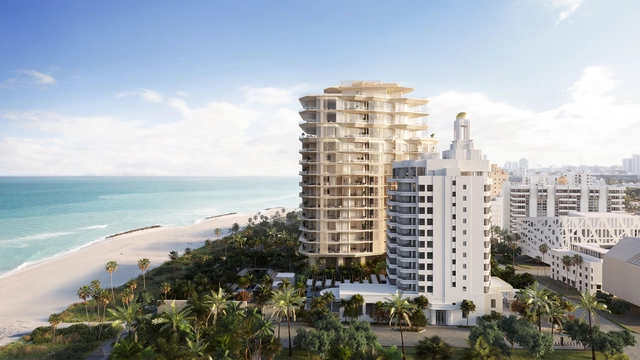
Japan-based architectural office Kengo Kuma and Associates has unveiled the design for what will become the studio’s first residential tower in the United States. Located on the oceanfront of Miami Beach, the 18-story structure will accommodate private condominiums for hospitality brand Aman. The project is adjacent to the Versailles building, a 1940s Art Deco hotel currently under restoration by architect Jean-Michel Gathy. The Art Deco architecture of Miami’s Faena district has a unique rhythm, which, according to the architect, was translated into the geometry of the new building through its vertical and horizontal lines.
As cities are increasingly vertical, buildings have been finding ways to take advantage of what roofs can bring to urban life. Through halls for parties, restaurants, swimming pools, and other programs, contemporary architecture has gained access to sunlight, natural ventilation and also to the horizon due to the occupation of the rooftops, making them attractive for both residential and commercial projects. However, the interest in appreciating the city from this point of view is not the result of verticalization alone, nor is it a merely technical alternative.
In June 2020, the statue of 17th-century slave trader Edward Colston was toppled in the southwestern city of Bristol in England. Before this, the statue sat on a plinth in a prominent public park, before being hauled into Bristol Harbour by Black Lives Matter protestors. This act has led to a long-overdue reckoning in the UK and other Western nations, a reckoning that has necessitated a deeper analysis of monuments that line cities, and how deeply imperialism can be interlinked with parts of the built environment. The ever-green question is, what do we do with these buildings?
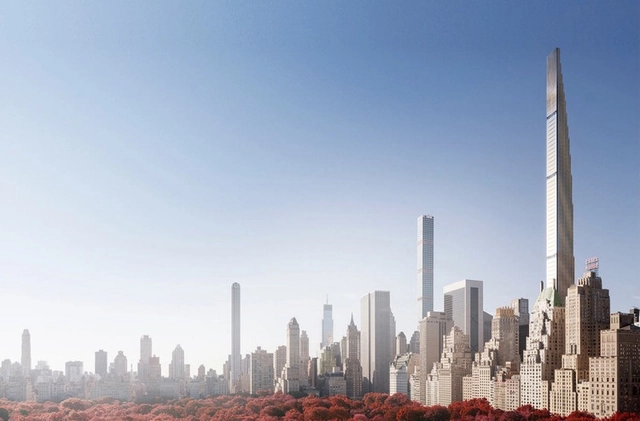
111 West 57th Street by SHop Architects. Image Courtesy of SHoP Architects
The world is facing an Urban Century. The world’s population is collapsing into city centers as manufacturing and agriculture need fewer humans because technology replaces the human hand with machines. The world's urban population has grown from 751 million in 1950 to 4.46 billion in 2021 and will grow to 6.68 billion by 2050.
While architects and designers want to define and control the future of our cities, the immediate reality of New York City, now, is a lesson in what may be our future. It’s response can be seen by the advent of The Tower the fabric of Manhattan.
Doreen Adengo. Image Courtesy of Adengo Architecture
Doreen Adengo, architect from Kampala, Uganda has passed away, as reported by African Futures Institute’s Instagram Account, after a long battle with cancer. Founder of Adengo Architecture in 2015, a research-based multi-disciplinary practice operating out of her hometown Kampala, Doreen, a registered architect in the United States and Uganda, had earned her undergraduate at the Catholic University (Bachelor of Science in Architecture) and graduate studies at Yale (Masters of Architecture). She has taught at The New School and Pratt Institute in New York, the University of Johannesburg’s Graduate School of Architecture, and was currently teaching at Uganda Martyrs University. In celebration of International Women’s Day 2022, Doreen Adengo was recognized by ArchDaily as one of the established practitioners implicated in change.
The expression "a perfect storm" refers to an event (typically an unfortunate one) which is exacerbated due to a confluence of negative or unpredictable factors. It is widely used when describing meteorological phenomena, but can also be applied to other contexts, such as the economy. The analogy can also be used to describe the relationship between the climate crisis and the world's dependence on concrete. As demonstrated in the Chatham House report, while cement (an essential element for concrete manufacturing) is extremely detrimental to the greenhouse effect and climate crisis –representing about 8% of global CO2 emissions–, its global production is nevertheless expected to increase over the next 30 years. It is said that this increase will stem from the demand for rapid urbanization in regions such as Southeast Asia and sub-Saharan Africa. At the same time, the last IPCC report warned that we only have 11 years to reduce emissions and prevent irreversible damage due to climate change. In other words, the cement industry is facing a significant expansion at a time when emissions need to fall rapidly – a perfect storm.
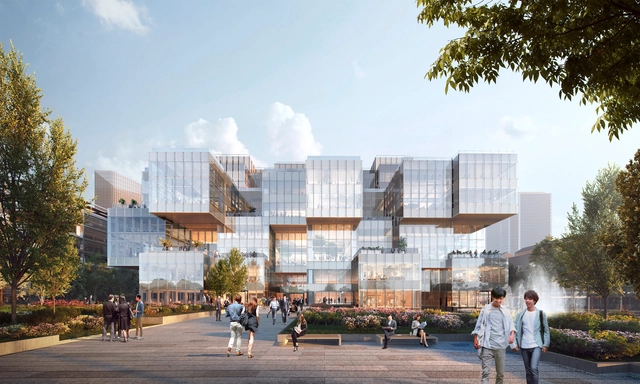
Skidmore, Owings & Merrill (SOM) has unveiled a dynamic, user-controlled headquarters for Chinese multinational technology company Alibaba's Xuhui District campus in Shanghai. Located in one of the city's premiere arts and innovation districts, the new workplace transforms the typical headquarters building “inside out”, highlighting the company’s "collaboration and creativity". The building's architecture is designed to resemble a cloud, symbolizing the company's digital presence in the Cloud, as well as the technology industry’s shifting skies of innovation.
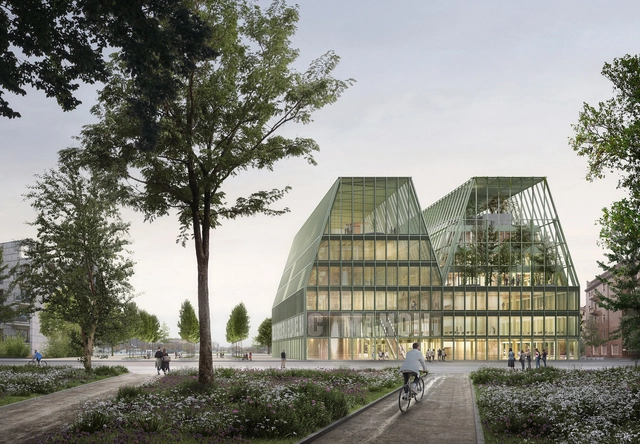
The municipality of Milan has announced the results of the competition to design the new European Library of Information and Culture (BEIC) in Milan, Italy. The winning team is composed of Onsite Studio, baukuh, Yellow Office, SCE Project, Studio Mistretta, Starching, Stain Engineering, Dotdotdot, (ab)Normal, Atmos Lab. The new building, situated in the Porta Vittoria area of Milan, aims to go beyond the traditional functions of a library to become a laboratory for the tools necessary to create contemporary culture.



.jpg?1379203393 "The University Village / James Ingo Freed & I.M. Pei (1967). Image Courtesy of Wikimedia Commons")





_2880.jpg?1657132541 "Esquire Office / Studio Bipolar. © Suryan//Dang")