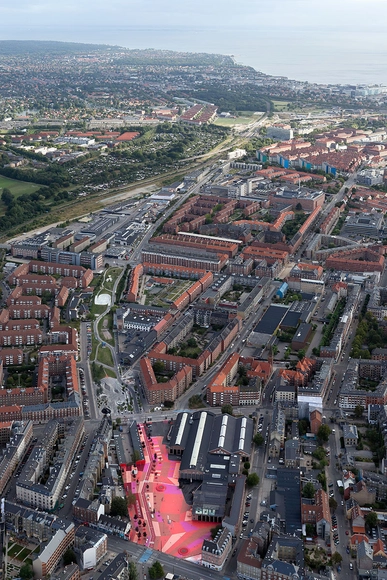
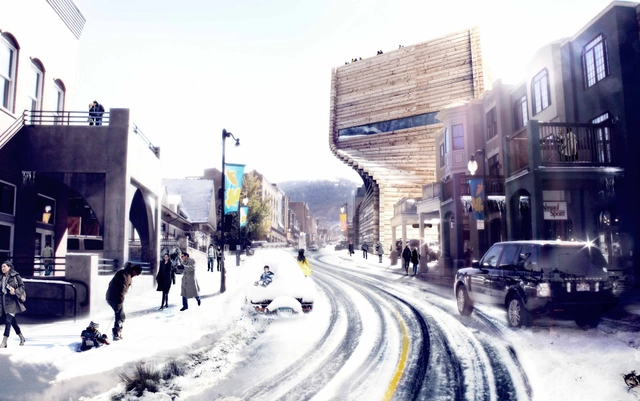
In a symposium to be held this week at the Manchester School of Architecture, Contextualism: Dead or Alive? will explore the importance of contextualism in contemporary architecture. Five key speakers will be featured, presenting papers discussing context both in its purest theoretical form and how it might be addressed in practice. From debating the significance of building traditions (Jonathan Foyle) to how Mecanoo, who recently completed the Library of Birmingham, have approached contextualism in the UK (Ernst ter Horst), the symposium will endeavor to uncover the ties between architecture and the wider urban realm.
In an enlightening interview on Future Cape Town, the Lord Mayor of Copenhagen Frank Jensen discusses what it is that makes Copenhagen, and Denmark as a whole, such a green-focused society. The key it seems goes beyond simple politics, stemming from a combination of early adoption, a robust and widely appreciated welfare system and a culture of collaborative innovation. You can read the full interview here.
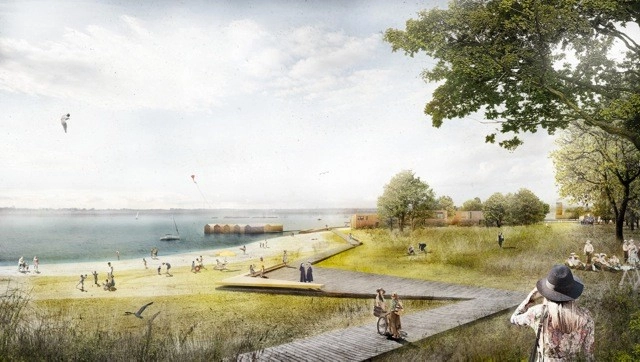
The winning entry of the Northern Shore Lake Zwenkau competition, which challenged select firms to introduce "holiday villages" and recreational activities to a small lake twenty minutes outside of Leipzig, Germany, was proposed by Labor4plus. Dubbed "Yearning Spaces," the proposal envisions a Western harbor village that concentrates recreational activity along the northern coast of Lake Zenkau and connects to eastwardly located "hermit huts" via hiking trails paralleling the shore.
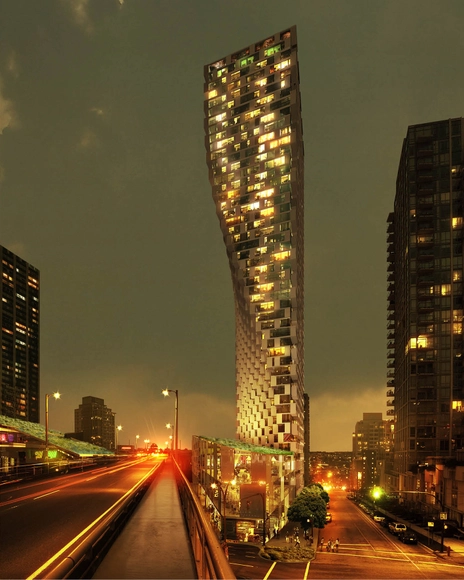
The wisdom of the Old West, New-Mexico based architect Antoine Predock (who designed the Canadian Museum for Human Rights in Winnipeg) and the vitality of the New East, BIG founder and principal Bjarke Ingels (whose office is responsible for the Beach & Howe Tower in Vancouver and Telus Sky in Calgary), are being distinguished by the Royal Architectural Institute of Canada (RAIC) this year with Honorary Fellowships for extraordinary achievement in the field of architecture. More on this news, here.
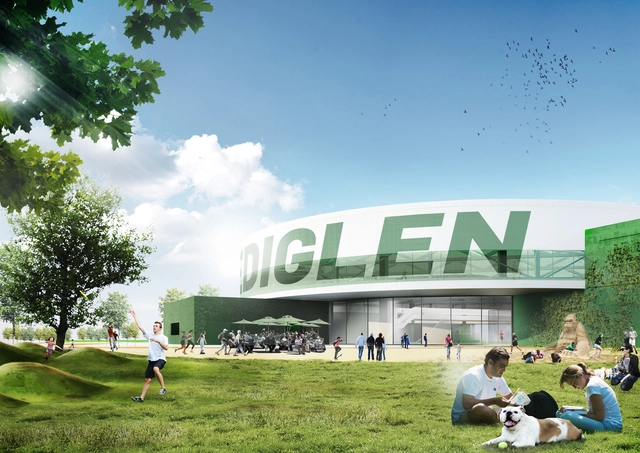
CEBRA's "Melting Pot," a multipurpose sports complex conceptualized and shortlisted in an invited competition for Randers, proposes a carefully integrated plug‘n play arena at the edge of the city where the urban, suburban, and natural environment coalesce as a dynamic community focal point.
In a symposium at the AIA New York Chapter, seismologists, earthquake engineers, seismic code experts, emergency response managers, and architects conversant in seismic design will assemble for a conversation on available technologies and testing capabilities that, surprisingly, are located in New York State. They will "clarify the evolving role of design professionals, the building industry, and municipal and federal agencies in safeguarding our local communities", as well as "educate the audience about the earthquakes, subsurface conditions, and construction approaches."
Danish schmidt hammer lassen architectshas been selected with New Zealand-based Architectus to design the New Central Library in Christchurch. An “anchor project” for the city’s post-disaster Recovery Plan, which aims to resurrect Christchurch as a more “greener, accessible” city following the devastation of the 2010 and 2011 earthquakes, the new library will serve as a catalyst to attract dwellers back into the city center.
Rice University has commissioned Diller Scofidio & Renfroto transform an existing parking lot between Alice Pratt Brown Hall, the home of Rice's Shepherd School of Music, and Rice Stadium into a 600-seat opera theater. Charles Renfro, a 1989 Rice graduate and the project’s lead architect, stated: "It feels really natural in a lot of ways to be returning to campus, a place I've spent so much time and love so much." Completion is scheduled for 2018.
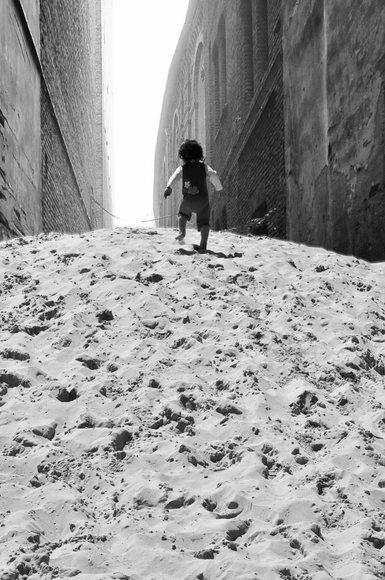
How often are spontaneous, primitive, radical actions implemented in large urban centres? Siempre Fiesta (or Always Party) by Andrés Carretero and Carolina Klocker was recently voted by the We-Traders community as their favourite in the recent Open Call Madrid competition. Viewing the city through children's eyes, where the order of the day is primarily playing or making, and using the concept of "free movement of our body in space" as a key driver, Carretero and Klocker developed a playful scheme that proposed filling a niche in Madrid's urban grid with sand as a way of managing the environment to create "comfortable space."
Elliott + Associates Architects(EAA) hasbeen commissioned to design the Oklahoma Contemporary Arts Center’s new home on 4.5 acre site at NW 11 and Broadway along Automobile Alley. Once complete, the new center will serve as a “gathering place for all ages to enjoy all forms of art” in addition to providing studios for artists, whether they are dancers, painters or ceramicists. More information, here.
The University of Michigan (UM) has commissioned Preston Scott Cohen and Integrated Design Solutions to design a $28 million expansion for its 40-year-old design building. Primarily planned to be used by the school’s architecture program, the new addition will include classrooms, studios and offices, as well as the renovation of existing studios. The news comes five years after schematic designs for the original expansion were abandoned. More information, here.
To accommodate for the inevitable growth in population, Tampere, Finland’s second largest city has shortlisted five teams to reimagine its largest railway station. With of vision of the Tampere Railway Station becoming a lively multi-functional city area by 2030, competitors have been asked to design an overall masterplan that will guide future development for the travel and service center area. The following architect-led teams have each received €80,000 to participate:
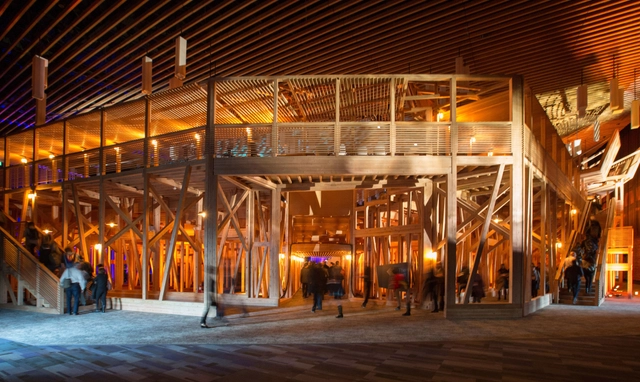
TED2014 commenced yesterday at the Vancouver Convention Center within a temporary 1200-seat auditorium designed by David Rockwell. Built from 600 wood components, and assembled in just 4.5 days, the pop-up theater was designed to be easily disassembled and reused by TED for years to come. Viewers are presented with sixteen seating options, from beanbags to lounge seating and traditional theater chairs, to ensure they are provided with the optimal listening, and sharing, experience. More images and a time-lapse video of construction, after the break.
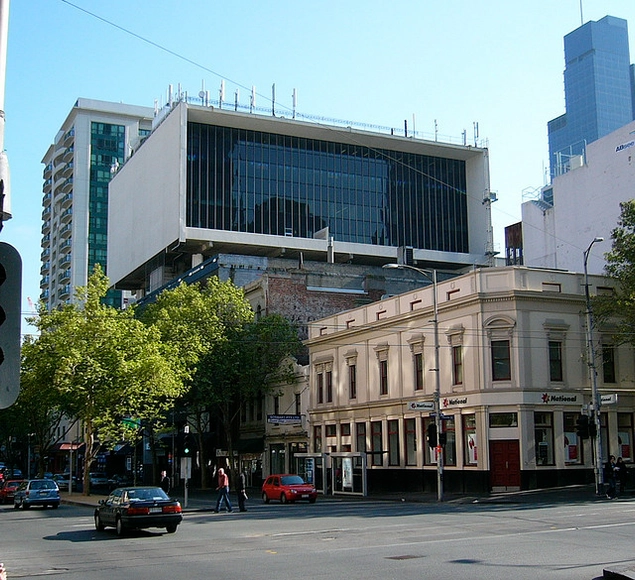
Melbourne newspapers are reporting on an argument breaking out over the preservation of the city's postwar modernist buildings, centering (as ever) on the dispute between their value as cultural heritage vs their 'ugliness' (you can see all the contested buildings in a neat graphic at The Age). While many are in favor of preservation, Alan Davies, in anarticle for Crikey, warns that the cultural benefit in protecting these buildings should always be weighed against the cost of preventing the developments that would have taken their place. Read the full article here.
The Hague government officials have named KAAN Architecten’s design for the Facilicom Consortium PPS B30 as winner of the PPP contract for the Bezuidenhoutseweg 30 project. Originally built in 1917 for the Department of Agriculture, Nature Management and Fisheries, KAAN is expected to transform the existing National Heritage Site facilities into a vibrant and open “modern day think tank” for the Dutch government.