Soil is the foundation of the Earth in which we all inhabit. We grow from it, prosper from it, build upon it, pollute it, and dichotomize it. Soil is an organic material providing a sustainable base for life. Yet, polarized as degrading and dirty. How is it that soil can unite nations, yet divide people? What power does it have in cultivating the built environment and defining its boundaries?
On September 8, 2019, Austrian’s largest public art installation to date opened to the public. Titled FOR FOREST – The Unending Attraction of Nature, the artwork transforms the Wörthersee Football Stadium in Klagenfurt into a native central European forest. Conceived by Swiss curator Klaus Littmann and inspired by a dystopian drawing by Austrian artist and architect Max Peintner, the installation advocates for pressing contemporary issues such as climate change and deforestation. Through the structural containment of this massive forest, it suggests that nature may someday only be found in specially designated spaces, as animals are today in zoos. Landscape architecture was supervised by Enea Landscape Architecture.
https://www.archdaily.com/924835/austrian-stadium-is-transformed-into-giant-forestLilly Cao
Jacob Witzling may lack formal architectural training, but his passion for nature and cabin architecture has provided him with all the tools needed to both design and construct idyllic living spaces. Witzling’s cabins can be found throughout the United States; these structures are often sequestered to the woods, providing a remote escape from urban centers and suburban sprawl.
Witzling’s interest in cabins began at the age of 16. His father, an architect and engineer, provided him with a preliminary exposure to the world of designing and building. “I needed to exist in the woods, and even though I had never built anything other than a blanket fort, I knew that my passion to create would be sufficient,” says Witzling. “I remember pouring over the pages of my dad’s favorite book, 'Handmade Houses: A Guide to the Woodbutcher’s Art.' I would gaze at the pictures from inside my blanket fort and daydream about building one of my own.”
Fake news, alternative facts, virtual realities... Media that were meant to connect us are taking on a life of their own. They blur borders between the actual world and its image and they answer questions about true or false with the loudest voice or strongest image. Our workshops this year offer a reality-check. They dip your hands into matter, confront ancient knowledge with high-tech, engage you with innovative companies and let you connect to real people - here and now!
Continuing towards its goal of creating design-forward structures that are available to the public and installable anywhere, Revolution Precrafted's series has unveiled its latest pavilion design by Ben van Berkel, founder and principal architect of UNStudio. The limited edition Ellipsicoon (a portmanteau of Ellipse and Cocoon) is available now through Revolution Precrafted’s website, joining the selection of prefabricated pavilions and single-family home designs by the likes of Zaha Hadid, Jean Nouvel, and Daniel Libeskind.
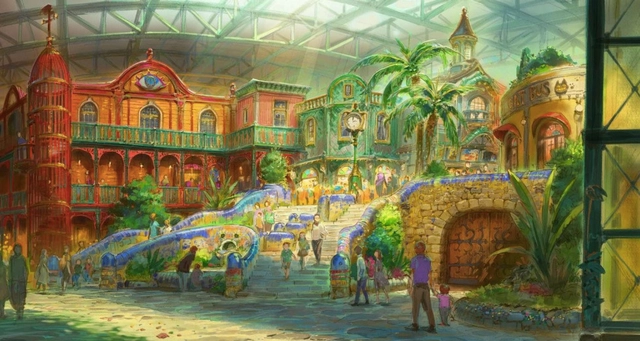
The Big Ghibli Warehouse. Image Courtesy of Studio Ghibli / Aichi Prefecture
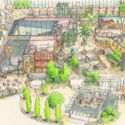
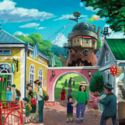
A Studio GhibliTheme Park is Coming to Japan in 2022. New images released by Studio Ghibli and Aichi Prefecture showcase the park themed around the Japanese animation film studio, best known for its anime feature films. Located on a 200-hectare area of land previously used to host the 2005 World’s Fair, the park seeks to “inherit the philosophy of the World Expo to the next generation,” with an emphasis placed on leisure, walking, and history.
https://www.archdaily.com/893743/a-studio-ghibli-theme-park-is-coming-to-japan-in-2022Niall Patrick Walsh
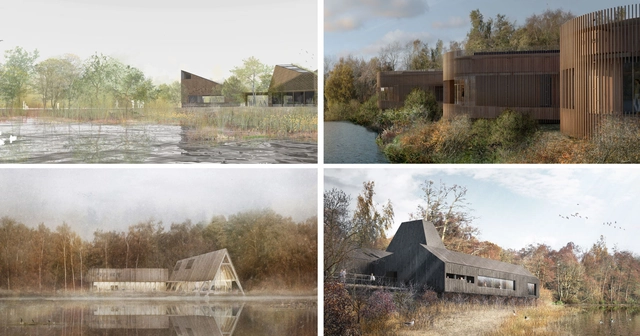
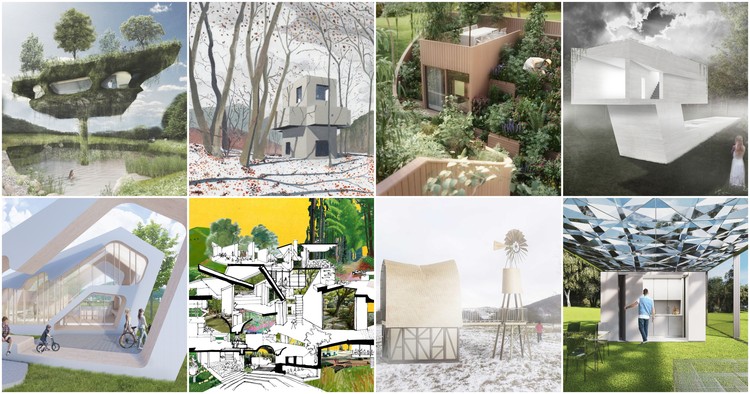
The shortlisted schemes for the RIBACompetition to design the new Innovative Nature and Wellbeing Center, located in Sevenoaks Wildlife Reserve, are now on display to the public. The competition launched last October by Kent Wildlife Trust, in partnership with The Royal Institute of British Architects (RIBA), as an open design competition "seeking worldwide architects and teams to put forward designs that promote learning, wellbeing, curiosity and nature" for a new visitor center at Sevenoaks.
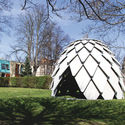
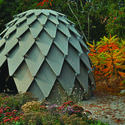
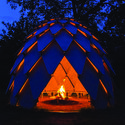
Designed by Czech designers Atelier SAD and distributed by mmcité1, this mobile, nature-inspired gazebo is a playground must-have for children and adults alike. 109 waterproof, plywood scales are treated with resistant glaze and connected by galvanized joints to create a self-supporting, sustainable structure.
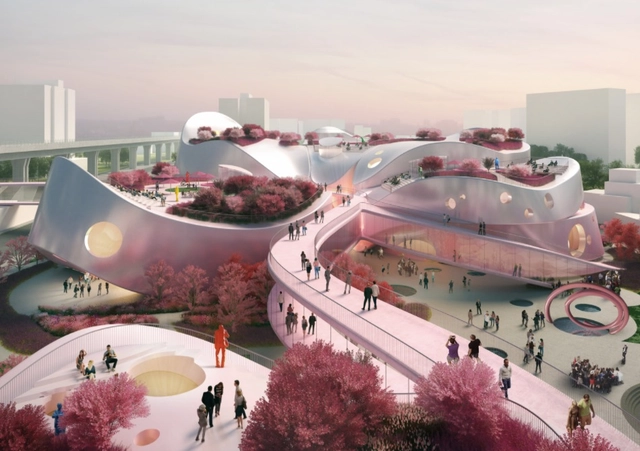
Throughout the design process, MVRDV drew inspiration from the natural world, recognizing the potential for public spaces in the rapidly-expanding Taoyuan City to blur the boundaries between the built and natural environment.
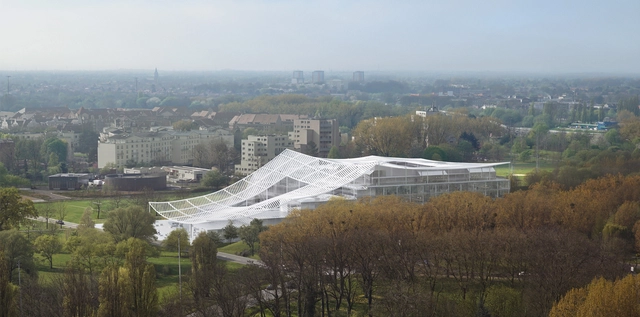
Sou Fujimoto and Coldefy & Associés Architects Urban Planners’ proposal for a pale sweeping canopy enclosing a stacked glazed volume was among the four finalists for the new Palais de justice in Lille, France organized by the Public Agency for Justice’s Real Estate (APIJ). Though the competition drew 139 international proposals, from which OMA was ultimately selected, Fujimoto and Coldefy & Associés' graceful structure was designed to house the high and district courts as well as public spaces within a facility in dialogue with its natural surroundings.
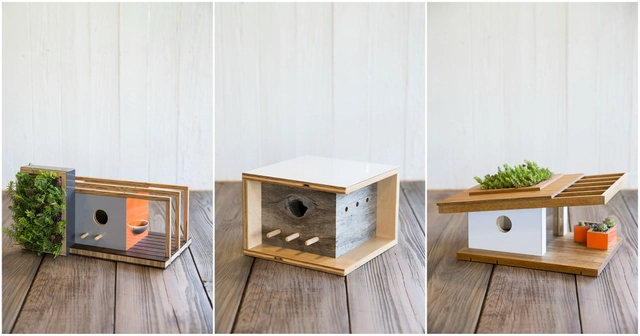
Douglas Barnhard, the owner of the home decor company Sourgrassbuilt, designs and builds birdhouses. Built out of repurposed materials, his designs are inspired by mid-century modernism and pay homage to the likes of Frank Lloyd Wright, Joseph Eichler and the Bauhaus School in Germany yet mix with Barnhard's experience of the rich surf and skate scene in Santa Cruz.
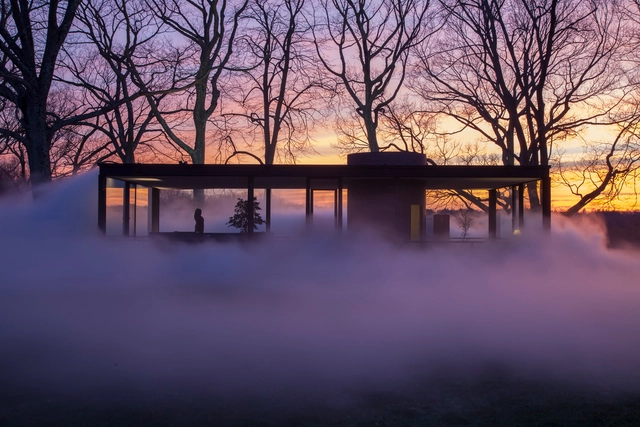
Taking photographs in fog can be an experience as chaotic as it is enchanting. Although working with this phenomenon can be risky, since fog dramatically modifies the available light and the atmosphere of a scene, if you know how to take advantage of it, the result can lead to perfect photographs. Below is a selection of 10 images from prominent photographers such as Kevin Scott, Richard Barnes, and Koichi Torimura.
Videos
Courtesy of Flickr User Will Brown, licensed under CC BY 2.0
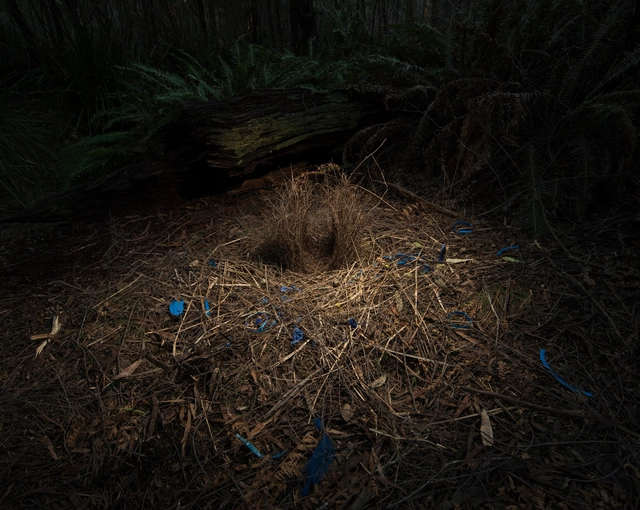
Think your decked-out bachelor pad is the slickest on the block? Think again. That reputation now resides in the carefully constructed abode of the bowerbird, which transforms the art of building into the art of seduction. Native to Australia and New Guinea, the bowerbird dedicates months to construct elaborate woven nests, known as bowers, as a means of attracting mates in one of nature’s most unique courting rituals.
https://www.archdaily.com/873098/power-to-the-bower-a-birds-architectural-method-of-seductionOsman Bari
As the boundary that separates work and leisure in the 21st Century continues to be blurred by technology, architects Christoph Hesse and Neeraj Bhatia sought out to uncover a tranquil solution. The pair are co-curating an upcoming exhibition at the Kulturbahnhof Kassel in Germany as part of Experimenta Urbana in a show called “Ways of Life,” which opens July 5th.
This international initiative seeks to discover “a new nomaticism.” A gathering of 19 emerging architecture offices each presents a dwelling encompassed in nature. These buildings are often equal parts project and manifesto. The show’s overarching theme is the delicate balance of naturally induced relaxation and programmatically encouraged productivity. Each firm must additionally consider constraints that include limited square footage, integration of rapidly advancing information technology, and a strictly sustainable design.
This month marks the 150th anniversary of the birth of acclaimed American architect, visionary, and social critic Frank Lloyd Wright -considered by many to be one of the greatest architects of his time.
As a pioneer of the term 'organic architecture', one of his most iconic representative works is Fallingwater, set upon a waterfall in rural Pennsylvania. From its unveiling, the scheme has evoked enduring reflection on the relationship between man, architecture, and most prominently in Frank Lloyd Wright's mind - nature.
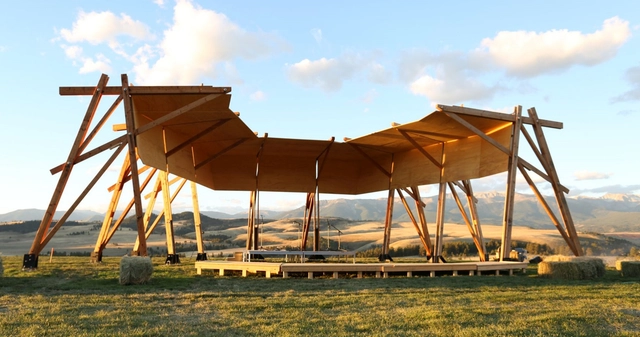
The Tiara at Tippet Rise Art Center, Design by Alban Bassuet and Willem Boning, with Arup Engineers. Lead Architect: Gunnstock Timber Frames. Image courtesy of Tippet Rise. Photo by Alban Bassuet.
Celebrating the unique creative spirit that drives architecture and design, the Architecture & Design Film Festival (ADFF) comes to Tippet Rise Art Center, the 10,260-acre sculpture park and classical music center in the Montana highlands, this September. Architect Kyle Bergman, ADFF’s founder, will bring a lineup of eight films to Tippet Rise that intimately explore the connections between nature and architecture and examine how architects from around the world grapple with the constraints and inspirations presented by their sites. After an extraordinary summer of music at Tippet Rise, the film festival will cap off the season by celebrating the art center’s equally extraordinary landscape and sculpture. The three-day event will feature guest speakers and Q&A sessions.
Imagine that London becomes the world’s first National Park City. This large-scale and long-term vision has the potential to transform how Londoners live and how the city works. But what would London look like?

.jpg?1568407487&format=webp&width=640&height=580)
.jpg?1568407514 "© UNIMO Studios")
.jpg?1568407733 "© UNIMO Studios")
.jpg?1568407787 "© UNIMO Studios")
.jpg?1568407611 "© UNIMO Studios")
.jpg?1568407487)
lumadeline.jpg?1539283261)

.jpg?1527130515&format=webp&width=640&height=580)
.jpg?1527130564 "Courtesy of UNStudio")
.jpg?1527130554 "Courtesy of UNStudio")
.jpg?1527130539 "Courtesy of UNStudio")
.jpg?1527130531 "Courtesy of UNStudio")
.jpg?1527130515)