1. ArchDaily
  2. Housing Crisis

Housing Crisis: The Latest Architecture and News

Angola Introduces Large-Scale Concrete 3D-Printing to Address Housing Crisis

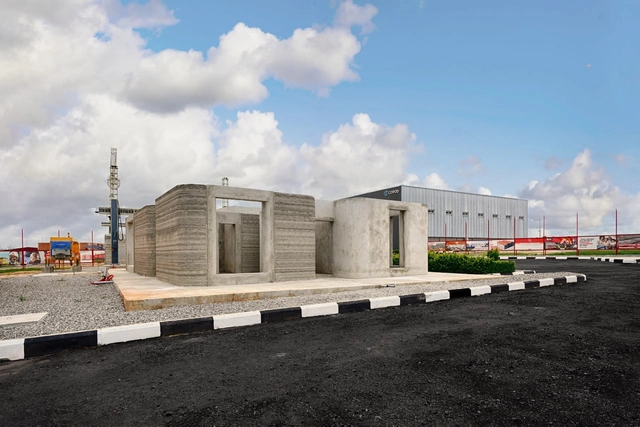
According to the World Bank, the Angola National Urbanization and Housing Program (PNUH), launched in 2008, aimed to build one million new housing units. However, by 2024, it had delivered only approximately 220,000. Power2Build, an Angolan construction startup, estimates the current housing deficit in Angola at around three million homes, with the situation particularly critical in Luanda, one of the fastest-growing cities on the African continent. With an entirely Angolan multidisciplinary team, Power2Build aims to contribute to reducing this deficit through the use of automated 3D concrete printing technology. Implemented on-site with large-scale construction printers from Danish company COBOD, the system is expected to accelerate construction timelines and improve building quality. Large-scale cement-based 3D printing eliminates the need for traditional molds by precisely placing or solidifying specific volumes of material in sequential layers using computer-controlled positioning. The process involves three key stages: data preparation, material preparation, and printing.


Angola Introduces Large-Scale Concrete 3D-Printing to Address Housing Crisis - Image 1 of 4Angola Introduces Large-Scale Concrete 3D-Printing to Address Housing Crisis - Image 2 of 4Angola Introduces Large-Scale Concrete 3D-Printing to Address Housing Crisis - Image 3 of 4Angola Introduces Large-Scale Concrete 3D-Printing to Address Housing Crisis - Image 4 of 4Angola Introduces Large-Scale Concrete 3D-Printing to Address Housing Crisis - More Images+ 13

To Build Law: The CCA Documents HouseEurope!’s Campaign for Legal Change in European Architecture

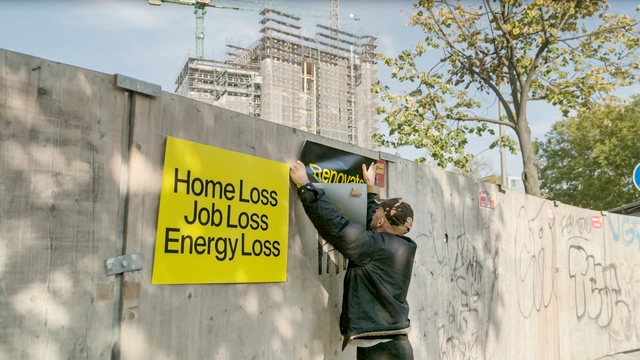
During 2024, the Canadian Centre for Architecture (CCA) launched a three-part documentary and exhibition series titled Groundwork, exploring alternative modes of practice in light of the current climate crisis. The process began with a series of studio visits in search of offices addressing substantial questions for contemporary architecture through practice, culminating in the selection of three projects: Xu Tiantian's "minimal intervention" museum on Meizhou Island, Carla Juaçaba's community pavilions in a coffee field in Minas Gerais, and bplus.xyz (b+)'s European Citizens' Initiative for a new legal framework to facilitate the renovation and transformation of existing buildings. The latter, HouseEurope!, was recently recognized as the winner of the seventh edition of the OBEL Award and was showcased at the international exhibition of the Venice Architecture Biennale 2025.

To Build Law: The CCA Documents HouseEurope!’s Campaign for Legal Change in European Architecture - Imagen 1 de 4To Build Law: The CCA Documents HouseEurope!’s Campaign for Legal Change in European Architecture - Imagen 2 de 4To Build Law: The CCA Documents HouseEurope!’s Campaign for Legal Change in European Architecture - Imagen 3 de 4To Build Law: The CCA Documents HouseEurope!’s Campaign for Legal Change in European Architecture - Imagen 4 de 4To Build Law: The CCA Documents HouseEurope!’s Campaign for Legal Change in European Architecture - More Images+ 14

MAST Reveals Floating Neighborhood Design for Rotterdam’s Disused Spoorweghaven Dock

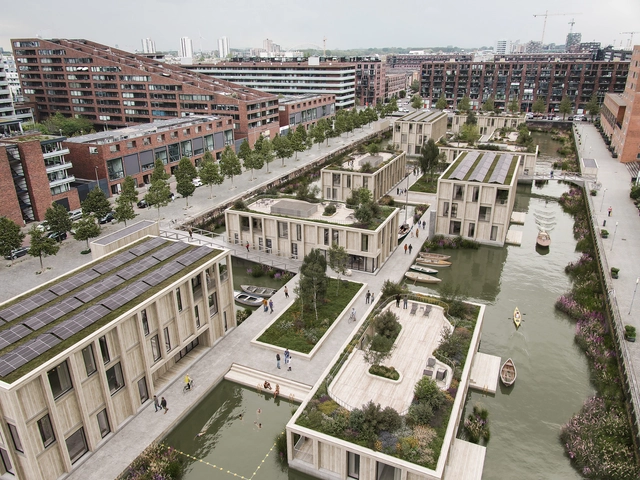
Danish maritime architecture studio MAST, in collaboration with construction company BIK Bouw, has designed a new floating community for the disused Spoorweghaven dock in Rotterdam, Netherlands. The proposed neighborhood, which has received initial support from the Municipality of Rotterdam, includes over 100 apartments, public spaces, commercial units, and a recreational harbor near the city center. Floating architecture is MAST's response to the Netherlands' housing crisis, offering a modular, adaptable solution for building a wide range of structures on water.

MAST Reveals Floating Neighborhood Design for Rotterdam’s Disused Spoorweghaven Dock - Imagen 1 de 4MAST Reveals Floating Neighborhood Design for Rotterdam’s Disused Spoorweghaven Dock - Imagen 4 de 4MAST Reveals Floating Neighborhood Design for Rotterdam’s Disused Spoorweghaven Dock - Imagen 2 de 4MAST Reveals Floating Neighborhood Design for Rotterdam’s Disused Spoorweghaven Dock - Imagen 3 de 4MAST Reveals Floating Neighborhood Design for Rotterdam’s Disused Spoorweghaven Dock - More Images+ 10

Gensler Announces Plans to Transform Times Square Office Tower into Housing in New York City

The Empire State Development (ESD) Board of Directors has approved a major office-to-residential conversion project at 5 Times Square, New York City, as announced by the New York state government. Originally built in 2002 as the headquarters for Ernst & Young, with Kohn Pedersen Fox (KPF) as the design architect, the building has been largely vacant since the corporation vacated the premises in 2022, with vacancy rates remaining around 75 percent. Gensler's proposal aims to repurpose this underutilized office space into a mixed-use complex, introducing up to 1,250 new homes, including 313 permanently affordable units.

Gensler Announces Plans to Transform Times Square Office Tower into Housing in New York City - Imagen 1 de 4Gensler Announces Plans to Transform Times Square Office Tower into Housing in New York City - Imagen 2 de 4Gensler Announces Plans to Transform Times Square Office Tower into Housing in New York City - Imagen 3 de 4Gensler Announces Plans to Transform Times Square Office Tower into Housing in New York City - Imagen 4 de 4Gensler Announces Plans to Transform Times Square Office Tower into Housing in New York City - More Images+ 2

Los Angeles Approves Adaptive Reuse Ordinance 2.0 to Tackle Housing Shortage

The Los Angeles City Council has approved the revised Citywide Adaptive Reuse Ordinance (Citywide ARO), which is planned to take effect in 2025. Building on the success of the 1999 ordinance, which facilitated the creation of over 12,000 housing units in Downtown LA, the updated policy aims to address the city's ongoing housing crisis and repurpose underutilized buildings.

Los Angeles Approves Adaptive Reuse Ordinance 2.0 to Tackle Housing Shortage - Image 1 of 4Los Angeles Approves Adaptive Reuse Ordinance 2.0 to Tackle Housing Shortage - Image 2 of 4Los Angeles Approves Adaptive Reuse Ordinance 2.0 to Tackle Housing Shortage - Image 3 of 4Los Angeles Approves Adaptive Reuse Ordinance 2.0 to Tackle Housing Shortage - Image 4 of 4Los Angeles Approves Adaptive Reuse Ordinance 2.0 to Tackle Housing Shortage - More Images+ 1

Los Angeles Officials Pass Regulation to Expedite the Rebuilding Process

Devastating wildfires across Los Angelesa have resulted in widespread destruction, displacing thousands of residents, and necessitating a rapid and efficient rebuilding process. Two executive orders have been issued to expedite the rebuilding process, one by Los Angeles Mayor Karen Bass and another by California Governor Newsom, both intending to remove significant regulatory hurdles and expedite project approvals.

Social Modern Housing in Spain: Addressing the Crisis with Adaptable and Sustainable Solutions

Subscriber Access | 

The housing crisis, the need for effective land management policies, and the growing demand for housing aid are global challenges, and Spain has taken significant steps to address these issues in recent years. While this effort is closely tied to rehabilitating obsolete buildings, it also tackles the challenges of densification and gentrification. These factors have prompted the exploration of new housing models and ways of living, leading to the development of affordable residential buildings designed to accommodate large numbers of inhabitants while maintaining high-quality living standards.

Social Modern Housing in Spain: Addressing the Crisis with Adaptable and Sustainable Solutions - Image 1 of 4Social Modern Housing in Spain: Addressing the Crisis with Adaptable and Sustainable Solutions - Image 2 of 4Social Modern Housing in Spain: Addressing the Crisis with Adaptable and Sustainable Solutions - Image 3 of 4Social Modern Housing in Spain: Addressing the Crisis with Adaptable and Sustainable Solutions - Image 4 of 4Social Modern Housing in Spain: Addressing the Crisis with Adaptable and Sustainable Solutions - More Images+ 16

The Most Liveable Cities in the World in 2024: Discover Top Quality of Life Locations Globally

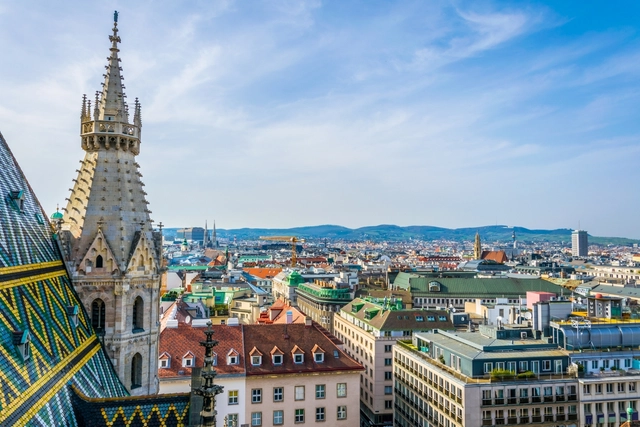
The pursuit of an ideal city has long been a topic of debate among architects and urban planners. In addition to aesthetic identity and cultural heritage, the quality of life in every city represents perhaps the most important marker in this pursuit. This year, the Economist Intelligence Unit (EIU), a sister company of The Economist, has released its Global Liveability Index 2024, highlighting the cities that excel in this ongoing quest. For the third consecutive year, Vienna ranked as the most liveable city in the world. European cities Copenhagen, Zurich, and Geneva also rank high, attributed to their smaller populations, which contribute to lower crime rates and less congestion. In comparison with the 2023 ranking, the numbers for North American and Australian cities have been dragged down by the ongoing housing crisis.

The assessment ranks 173 cities from around the world. Each city is scored based on 30 qualitative and quantitative factors evaluating 5 categories: stability, healthcare, culture and environment, education, and infrastructure. The scores are based on external data points, in-house analysts, and in-city contributors. The category of stability has registered the biggest decline, as protests and armed conflicts increased in incidence. At the bottom of the cist, the city of Damascus, Syria, continues to be ranked as the least liveable city in the survey, followed by Tripoli, Libya, reflecting severe instability.

The Most Liveable Cities in the World in 2024: Discover Top Quality of Life Locations Globally  - Image 1 of 4The Most Liveable Cities in the World in 2024: Discover Top Quality of Life Locations Globally  - Image 2 of 4The Most Liveable Cities in the World in 2024: Discover Top Quality of Life Locations Globally  - Image 3 of 4The Most Liveable Cities in the World in 2024: Discover Top Quality of Life Locations Globally  - Image 4 of 4The Most Liveable Cities in the World in 2024: Discover Top Quality of Life Locations Globally  - More Images+ 8

Buildner and Norman Foster Announce Kharkiv Housing Challenge Results

 | Sponsored Content

Buildner has announced the results of the Kharkiv Housing Challenge, the first competition in a two-part series focused on rebuilding Ukraine. Kharkiv, Ukraine's second-largest city, has been deeply affected by the ongoing conflict, and this competition is part of a broader effort to rebuild its housing and public spaces.

By Residents for Residents: What is the Baugruppe System?

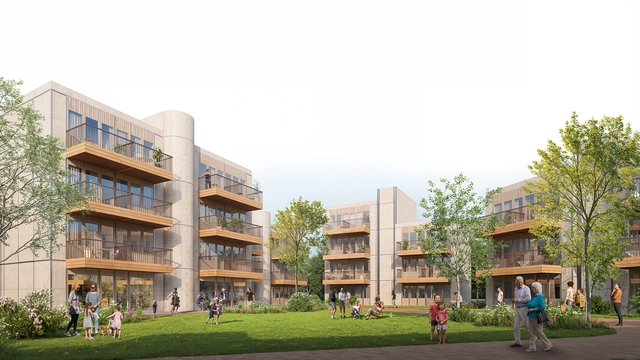
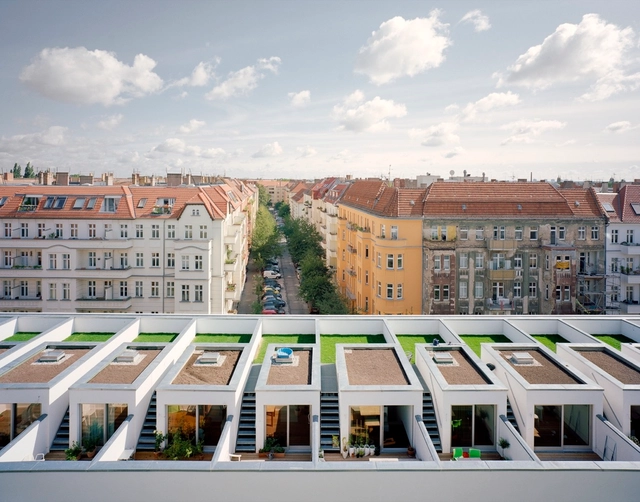
Designing a typical residential building rarely involves its future residents. Often created by property developers in response to predefined market demands, the projects are rarely optimized for livability. An emerging development system that began in Germany aims to change this dynamic and reposition the residents at the core of the new housing developments. The Baugruppe system, German for "building group," proposes an alternative approach to housing that allows groups of individuals to come together to design and construct their residential spaces, bypassing traditional developers to create personalized and sustainable living environments.

By Residents for Residents: What is the Baugruppe System?  - Image 1 of 4By Residents for Residents: What is the Baugruppe System?  - Image 2 of 4By Residents for Residents: What is the Baugruppe System?  - Image 3 of 4By Residents for Residents: What is the Baugruppe System?  - Image 4 of 4By Residents for Residents: What is the Baugruppe System?  - More Images+ 13

Collective Housing in Barcelona: The Sustainable and Cooperative Model of Lacol

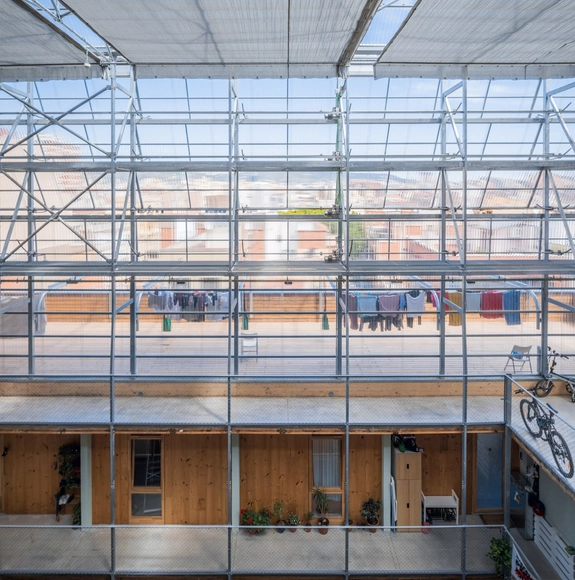
One of the biggest current challenges in large cities is the housing crisis and the lack of efficient solutions to mitigate its effects on citizens. This problem is exacerbated in cities where tourism and vacation or temporary housing dominate the market, distancing residents from the possibility of accessing affordable urban housing. Furthermore, gentrification, driven by rising rents and real estate speculation, contributes to the displacement of local communities, transforming traditional neighborhoods into areas exclusively oriented toward tourist consumption.

Collective Housing in Barcelona: The Sustainable and Cooperative Model of Lacol - Imagen 1 de 4Collective Housing in Barcelona: The Sustainable and Cooperative Model of Lacol - Imagen 2 de 4Collective Housing in Barcelona: The Sustainable and Cooperative Model of Lacol - Imagen 3 de 4Collective Housing in Barcelona: The Sustainable and Cooperative Model of Lacol - Imagen 4 de 4Collective Housing in Barcelona: The Sustainable and Cooperative Model of Lacol - More Images+ 3

How Dense Is Too Dense? The Future of Social Housing in Metropolises

Subscriber Access | 

Density in cities is often touted as a positive and desirable way to live. Various studies have repeatedly suggested that higher density can lead to better lifestyles, a more sustainable environment, and improved health. In The Death and Life of Great American Cities, journalist Jane Jacobs identifies several possible advantages of density: increased walkability, close-knit communities, and a concentration of resources while maintaining diversity that better serves the population.

Naturally, a higher population density prevents the formation of ghost towns and vacant shops, which can become hotbeds for crime. However, these positive views on dense living environments often rest on optimistic assumptions about urbanism, such as minimal friction among individuals, easily maintained hygiene and a natural formation of diversity.

How Dense Is Too Dense?  The Future of Social Housing in Metropolises - Image 1 of 4How Dense Is Too Dense?  The Future of Social Housing in Metropolises - Image 2 of 4How Dense Is Too Dense?  The Future of Social Housing in Metropolises - Image 3 of 4How Dense Is Too Dense?  The Future of Social Housing in Metropolises - Image 4 of 4How Dense Is Too Dense?  The Future of Social Housing in Metropolises - More Images+ 2

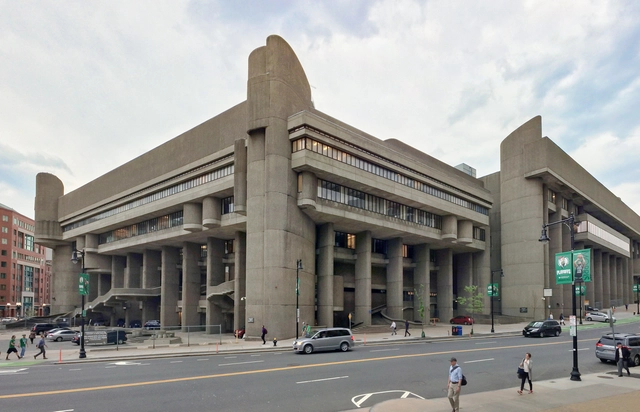
Paul Rudolph’s Brutalist Government Service Center in Boston Proposed for Mixed-Use Housing Transformation

The Massachusetts administration, under Governor Maura Healey, has unveiled a new housing-centric proposal for the controversial Boston Government Service Center designed by Paul Rudolph and opened in 1971. Previously proposed to be redeveloped by the architecture office NBBJ with offices and commercial spaces, the updated vision aims to transform the Erich Lindemann and Charles F. Hurley buildings into housing facilities as part of the state’s goal to address the housing crisis while allowing for the historic preservation of the Brutalist structure.

Paul Rudolph’s Brutalist Government Service Center in Boston Proposed for Mixed-Use Housing Transformation - Imagem 1 de 4Paul Rudolph’s Brutalist Government Service Center in Boston Proposed for Mixed-Use Housing Transformation - Imagem 2 de 4Paul Rudolph’s Brutalist Government Service Center in Boston Proposed for Mixed-Use Housing Transformation - Imagem 3 de 4Paul Rudolph’s Brutalist Government Service Center in Boston Proposed for Mixed-Use Housing Transformation - Imagem 4 de 4Paul Rudolph’s Brutalist Government Service Center in Boston Proposed for Mixed-Use Housing Transformation - More Images+ 4

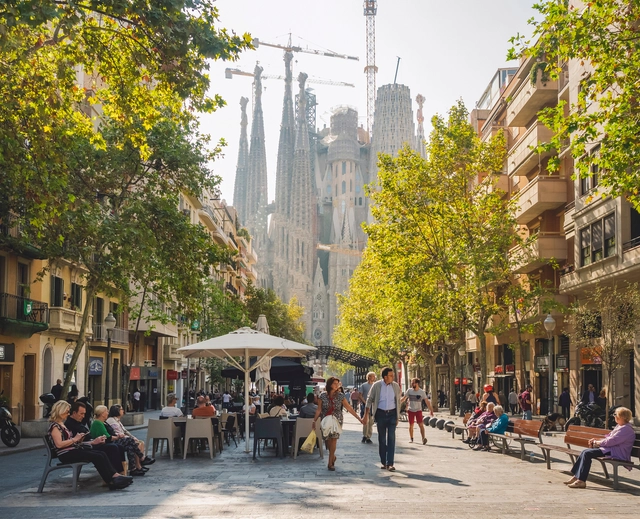
Barcelona Plans to Ban Tourist Apartment Rentals to Ease the Housing Crisis

The Spanish city of Barcelona, one of Europe's top tourist destinations, has announced a plan to ban apartment rentals to tourists by November 2028. The move, announced by Mayor Jaume Collboni, aims to alleviate the long-standing housing crisis, lower prices for residents, improve livability, and increase the city’s affordable housing stock. Over the past 10 years, the rise in short-term rentals has driven rents up by 68%, and the cost of buying a house by 38%, contributing significantly to a cost-of-living crisis.

Barcelona Plans to Ban Tourist Apartment Rentals to Ease the Housing Crisis - Imagem 1 de 4Barcelona Plans to Ban Tourist Apartment Rentals to Ease the Housing Crisis - Imagem 2 de 4Barcelona Plans to Ban Tourist Apartment Rentals to Ease the Housing Crisis - Imagem 3 de 4Barcelona Plans to Ban Tourist Apartment Rentals to Ease the Housing Crisis - Imagem 4 de 4Barcelona Plans to Ban Tourist Apartment Rentals to Ease the Housing Crisis - More Images+ 1

Lessons from Los Angeles: The United States' Path to Regulating Accessory Dwelling Units

Subscriber Access | 

Cities in the US are embracing Accessory Dwelling Units (ADUs) to address the nationwide housing crisis. Often built on existing single-family home lots, ADUs offer an affordable option for increasing housing availability in established neighborhoods. However, like any new housing development, effective regulations are critical for widespread adoption. Los Angeles has emerged as a testing ground in using ADUs to address its housing shortage, providing valuable insights for other cities. The city's experience underlines the challenges of establishing regulations, while also promoting the benefits of ADUs as an affordable housing solution.

Lessons from Los Angeles: The United States' Path to Regulating Accessory Dwelling Units - 1 的图像 4Lessons from Los Angeles: The United States' Path to Regulating Accessory Dwelling Units - 2 的图像 4Lessons from Los Angeles: The United States' Path to Regulating Accessory Dwelling Units - 3 的图像 4Lessons from Los Angeles: The United States' Path to Regulating Accessory Dwelling Units - 4 的图像 4Lessons from Los Angeles: The United States' Path to Regulating Accessory Dwelling Units - More Images+ 3

MTspace Studio Designs Flood-Resistant 3D Printed Homes for ICON's Initiative99 Competition

In an open competition, ICON’s Initiative 99 requested participants to design a home using ICON’s 3D printing technologies while keeping the construction budget under $99,000. Among the three selected winners for the Open Category, New Zealand-based office MTspace Studio proposes a robust flood-resistant design, in response to the housing crisis in New Zealand’s flood zones. Titled “Wai Home” after the Māori word for water, the concept revolves around the idea of working with this essential natural element. The design features innovative rainwater collection and storage systems, along with elements to increase the resilience of the construction in the face of increasing threats.

MTspace Studio Designs Flood-Resistant 3D Printed Homes for ICON's Initiative99 Competition - 1 的图像 4MTspace Studio Designs Flood-Resistant 3D Printed Homes for ICON's Initiative99 Competition - 2 的图像 4MTspace Studio Designs Flood-Resistant 3D Printed Homes for ICON's Initiative99 Competition - 3 的图像 4MTspace Studio Designs Flood-Resistant 3D Printed Homes for ICON's Initiative99 Competition - 4 的图像 4MTspace Studio Designs Flood-Resistant 3D Printed Homes for ICON's Initiative99 Competition - More Images+ 8

Low-Cost Housing in India: A Multistakeholder Approach

Subscriber Access | 

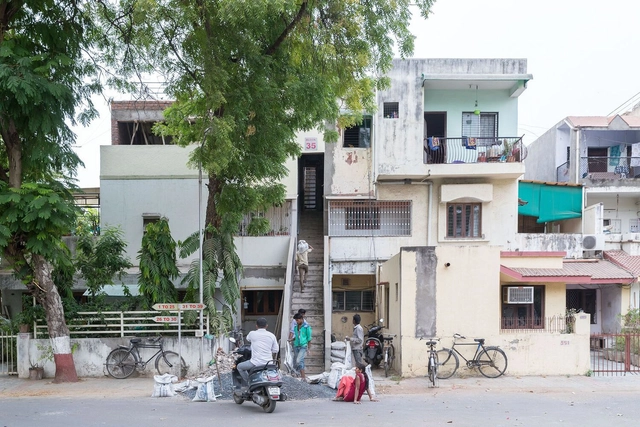
In a nation grappling with a severe housing shortage for its economically weakest sections, the concept of "low-cost housing" has surprisingly faded from public consciousness and policy discourse. A crisis impacting millions of the nation's poorest, the need for affordable housing has become even more pressing as India's population overtakes China to emerge as the most populous nation. If left unaddressed, the housing crisis may result in mass homelessness and undignified living conditions for citizens.

Low-Cost Housing in India: A Multistakeholder Approach - 1 的图像 4Low-Cost Housing in India: A Multistakeholder Approach - 2 的图像 4Low-Cost Housing in India: A Multistakeholder Approach - 4 的图像 4Low-Cost Housing in India: A Multistakeholder Approach - 3 的图像 4Low-Cost Housing in India: A Multistakeholder Approach - More Images

How Modular Construction Can Provide Architectural Aid: From Rapid-Response to Transitional and Affordable Housing

Ever since the Industrial Revolution and the introduction of mass production, the ownership and use of simple products and services like flush toilets with running water, electricity, heating, and cooling are seen as human rights in many areas of the world. With the majority of homes and residential projects being individually designed and built to order – therefore without the speed and cost advantages of mass production – an underperforming housing construction sector means many people – even in the world’s richest countries – are being denied one of the most basic human rights, having somewhere to call home.

The UNHCR (UN Refugee Agency) states that there were over 100 million forcibly displaced people worldwide in 2023 – a figure that has tripled over the last 10 years. For host countries, finding safe, sustainable housing solutions for those in need, both in the short- and the long-term, is an ongoing and dramatically worsening challenge.

How Modular Construction Can Provide Architectural Aid: From Rapid-Response to Transitional and Affordable Housing - 1 的图像 4How Modular Construction Can Provide Architectural Aid: From Rapid-Response to Transitional and Affordable Housing - 2 的图像 4How Modular Construction Can Provide Architectural Aid: From Rapid-Response to Transitional and Affordable Housing - 3 的图像 4How Modular Construction Can Provide Architectural Aid: From Rapid-Response to Transitional and Affordable Housing - 4 的图像 4How Modular Construction Can Provide Architectural Aid: From Rapid-Response to Transitional and Affordable Housing - More Images+ 5