1. ArchDaily
  2. Artigos

Artigos: The Latest Architecture and News

Subscriber Access

Immerse Yourself in These Unbelievable Modernist Visualizations

Immerse Yourself in These Unbelievable Modernist Visualizations - Image 1 of 4
© Alexis Christodoulou

Cape Town native Alexis Christodoulou is a winemaker by day but also dabbles in the art of 3D visualization. His Instagram (@teaaalexis) is a striking composition of intricate spaces rich with color, light, and materiality. Crafted entirely from scratch, each of Christodoulou's digital worlds appears to be influenced by many of the modernist masters. In a recent interview with Curbed, Christodoulou lists Aldo Rossi, David Chipperfield and Le Corbusier among his inspirations.

Much has been said about the new "Instagram aesthetic." Put that together with the emerging role of Instagram and other social media platforms in the design process, and the result is a new type of digital art form. Christodoulou's page is the creative collection of a year-long personal challenge to regularly create and publish images of his own fantasy worlds, which has resulted in a community of nearly 20K followers.

Get lost in more of the images below.
Subscriber Access

Architecture's Evolving Role: How Community-Engaged Design Can Encourage Social Change

The role of the architect—and even architecture itself—in society today is changing. A lack of interest in critical social issues from a profession that holds such high responsibility within a community is a problem that should no longer be avoided.

In an exhibit currently on show at the Center for Architecture and Design in Seattle titled "In the Public Interest," Garrett Nelli Assoc. AIA challenges the profession of architecture to establish a focus on more community-engaged design. With the help of the 2017 AIA Seattle Emerging Professionals Travel Scholarship, Nelli traveled to Los Angeles, rural Alabama, Haiti, Italy and New Orleans, all the while analyzing how the built environment has the ability to influence social change.

Read on for an edited interview with Nelli about his research and how you can begin to implement elements into your design practice to help promote social change in your own communities.

Subscriber Access

18 Different Projects That Feature the Color Green

18 Different Projects That Feature the Color Green - Image 5 of 4
© Maarten Willemstein

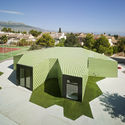
Over the centuries green has signified many emotions; love, jealousy, health, and more recently the environment. Particularly in the middle ages, it was used to suggest wealth and riches, being used by Leonardo da Vinci as the color of Mona Lisa’s dress. It has also been part of the important tradition to wear green on St. Patrick’s Day as part of the celebrations, a custom in Ireland that dates as far back as 1640.

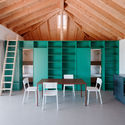
When it comes to architecture, green color buildings stand out in cities that are usually abundant with brick, concrete and steel and their monochrome palette. In 2017 we saw the revitalizing shade of green, ‘greenery’, being named Pantone’s Color of the Year so it’s no wonder that there are copious numbers of buildings and interiors adorning such a refreshing tone.

Is green the new black? It’s up to you to decide as you scroll through the 18 gorgeous projects below featuring green with such pride.

18 Different Projects That Feature the Color Green - Image 1 of 418 Different Projects That Feature the Color Green - Image 2 of 418 Different Projects That Feature the Color Green - Image 3 of 418 Different Projects That Feature the Color Green - Image 4 of 418 Different Projects That Feature the Color Green - More Images+ 14

Subscriber Access

Here's What the Alphabet Looks Like When Converted into Baroque Palace Designs

Johann David Steingruber was a German architect and designer with over 100 buildings to his name, including many churches, town halls, school buildings and even breweries. However, perhaps what he is best known for today are the intricate illustrations of his 1773 Architectural Alphabet, in which he converted the alphabet into plans for a series of eccentric baroque palaces.

Done more as a "labor of love" rather than for any practical reason, Steingruber's book is a compilation of playful and intricate spatial relationships, with each letter providing its own unique set of challenges. Even though the letters naturally offer more complex shapes than we would ordinarily use for plans, the spaces somehow make sense. The baroque style of oval antichambers, domes, and vaults is evident not only in the plans but also in the elevations.

Subscriber Access

These Office Interiors are Inspired by Well-Known Fonts

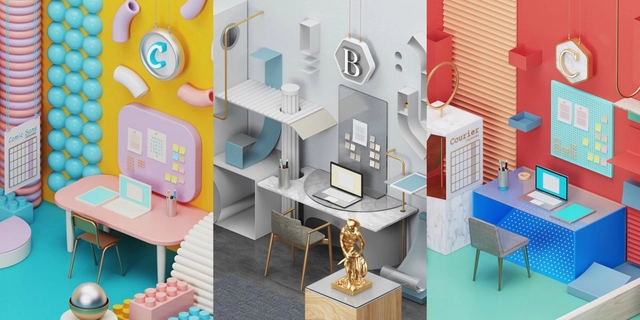
As many architects know, fonts have their own personality - so to use them as inspiration for office decors isn’t as crazy as you might think. Typography has the ability to instantly tell a narrative to the reader before needing to read the words, hence why we can take the decision-making behind which font to use in a project or scheme very seriously. They can hold the utmost importance in graphic design and architecture, as we often find ourselves displeased if the font is inefficient or disproportionate (take comic sans for example).

Seven unique, iconic fonts have been used as a base for each of the interior design projects below. Using their heritage, connotations, and style of the typography, HomeAdvisor have stylised each of the rooms to embody their identities and make us question their character.

Website For Women Pioneers in Architecture

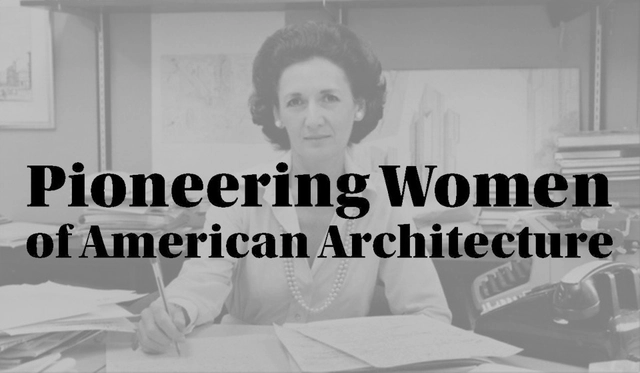
The Beverly Willis Architecture Foundation launched a website called “Pioneering Women of American Architecture.” The website seeks to promote and document important women in architecture. It is the end result of numerous house conducting interviews, collecting research and photo documentation, as well as fact-checking. Since 2012, Beverly Willis and Wanda Bubriski have been working towards bringing to light the complete works of women architects in America.

Subscriber Access

These Modernist Birdhouses are Inspired by Famous Architects

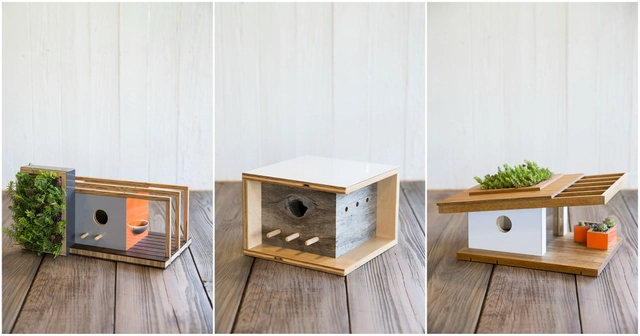
Douglas Barnhard, the owner of the home decor company Sourgrassbuilt, designs and builds birdhouses. Built out of repurposed materials, his designs are inspired by mid-century modernism and pay homage to the likes of Frank Lloyd Wright, Joseph Eichler and the Bauhaus School in Germany yet mix with Barnhard's experience of the rich surf and skate scene in Santa Cruz.

Subscriber Access

8 Common Materials You May Not Have Realized Are Sustainable

Sustainability. A word that, for many of us, has been driven into our minds from the very start of our careers as architects. We have a responsibility to the planet and future generations to design buildings that are socially conscious—from solar panels to triple-glazed windows, we have tried it all.

Ultimately, whether our designs are sustainable comes down to the early decisions we make for the building, with our choice of materials having a huge effect on the overall carbon footprint. With new technologies come new ways of incorporating abundantly found materials into the skin of the building that could reduce the building's embodied energy and enhance the structure's properties.

In this article, we have compiled a list of 8 familiar materials that you wouldn't initially associate with sustainability but which you might consider for your next design.

Subscriber Access

Could Cork Be Nature’s Answer to Our Environmental and Construction Needs?

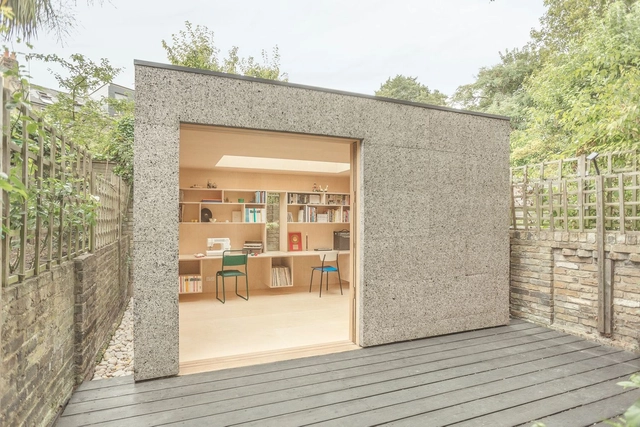
Unbeknown to many, cork is something of a dark horse when it comes to the environment—a model of a sustainable industry and building material. By its very nature, cork is both recyclable and renewable, as it is the only tree that regenerates its bark, while harvesting that bark causes the tree no harm.

Cork has been sneaking its way into our buildings for many years now; due to its hard-wearing properties it can be found, for example, in the checkerboard flooring of the Library of Congress. Even NASA has been wise to cork's light weight and insulation capacity, using it as an insulator for their space shuttles.

Subscriber Access

Studio Libeskind's Military Museum Through the Lens of Alexandra Timpau

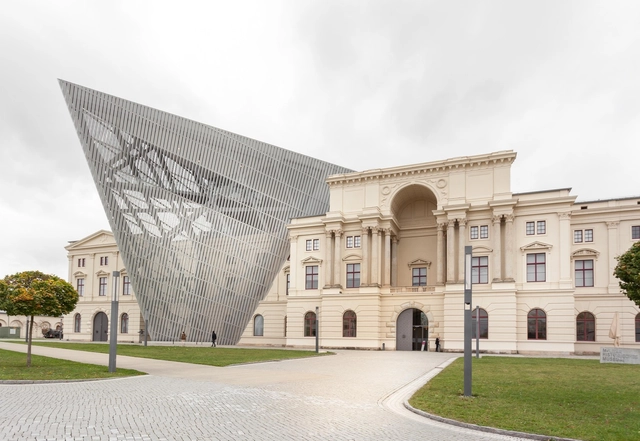
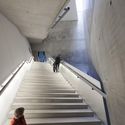
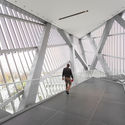
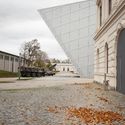
The complications of war and violence demanded a bold piece of architecture to provoke the public's understanding of the impact it had on Germany. Daniel Libeskind chooses to engage with such events in his extension to Dresden's Military History Museum, by crashing a huge steel and concrete structure through the neoclassical facade, tearing apart the symmetry of the original building. Photographer Alexandra Timpau has captured the sharp edges and harsh angles of the museum's extension that convey the pain and the stark reality of war Libeskind and the museum refer to.

Studio Libeskind's Military Museum Through the Lens of Alexandra Timpau - Films & ArchitectureStudio Libeskind's Military Museum Through the Lens of Alexandra Timpau - Films & ArchitectureStudio Libeskind's Military Museum Through the Lens of Alexandra Timpau - Films & ArchitectureStudio Libeskind's Military Museum Through the Lens of Alexandra Timpau - Films & ArchitectureStudio Libeskind's Military Museum Through the Lens of Alexandra Timpau - More Images+ 23

Extreme Cities: The Densest, Coldest, Remotest, Most Visited (etc) Human Settlements on Earth

Extreme Cities: The Densest, Coldest, Remotest, Most Visited (etc) Human Settlements on Earth - Image 5 of 4
Hong Kong Khush N licensed under CC BY-NC-ND 2.0

Humans are adaptable animals; we have evolved to adjust to, and survive in, many difficult and extreme conditions. In some cases, these extremes are natural, while in other modern cities extreme living situations are created by us, and we are forced to accept and adjust. Here is a list of extreme settlement conditions: some challenging, some wonderful and all of them offering a fascinating insight into how we occupy the planet in 2017.

Subscriber Access

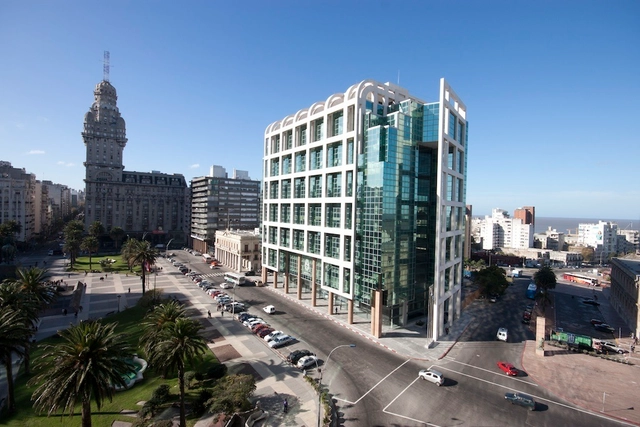
Architecture Guide to Montevideo: 15 Sites That Every Architect Should Visit

There are a number of reasons to visit the architecture of Montevideo: the coastal city is the result of a complex interaction of historical factors that provided multiple trends and architectural styles, currently coexisting at par. Its streets and buildings tell the story of its past.

The city´s architectural sites are easily found walking around Ciudad Vieja (Old Town) or in the renowned Rambla. Below is a list of 15 sites that every architect should know of and visit.

5 Online Resources That Explore The Intersection Between Landscape, Architecture and Culture

At times, Landscape design lacks proper consideration or its overlooked within architecture, as a result of current but preconceived notions within architectural practice and education that privilege building over site, or the constructed over the existing. While at face value, landscape is treated as an abject and constant entity of sorts, the reality is that it possesses a layered complexity of patterns and ecosystems, much of which is increasingly impacted by our own actions, more significantly than what meets the eye.

At the same time, the definition of landscape is constantly evolving to encompass a greater number of influences and factors. We have cultural, built and ecological landscapes, which influence one another and come about as a result of the intersection between the architecture and the environment that we are presented with. As a result, it is important to view terrain in a more holistic light, acknowledging its ecological underpinnings and well as the anthropological effects it is subject to, both physically and theoretically. Here is a list of five online resources, which investigate the interdisciplinary nature of landscape design and its relation to architecture and culture.

Painting the Post-Digital: The Meaning Behind the Motifs

Painting the Post-Digital: The Meaning Behind the Motifs - Image 1 of 4
Courtesy of Fala Atelier

The ever-growing realm of “post-digital” drawing is currently at the forefront of a healthy dosage of discourse, appreciation and even criticism, as professionals and students alike continue to push the envelope of accepted architectural representation and exchange a waning hyperrealism for the quirks and character of alternative visual narratives. Central to this new wave of illustration is the inclusion and appropriation of specific icons and characters from famous pieces of modern art, selected in particular from the works of David Hockney, Edward Hopper and Henri Rousseau, whose work undoubtedly remains at the forefront of their individual crafts and styles.

Subscriber Access

In Seasonal Harmony - The Changing Nature of Frank Lloyd Wright's Fallingwater

This month marks the 150th anniversary of the birth of acclaimed American architect, visionary, and social critic Frank Lloyd Wright -considered by many to be one of the greatest architects of his time.

As a pioneer of the term 'organic architecture', one of his most iconic representative works is Fallingwater, set upon a waterfall in rural Pennsylvania. From its unveiling, the scheme has evoked enduring reflection on the relationship between man, architecture, and most prominently in Frank Lloyd Wright's mind - nature.

Subscriber Access

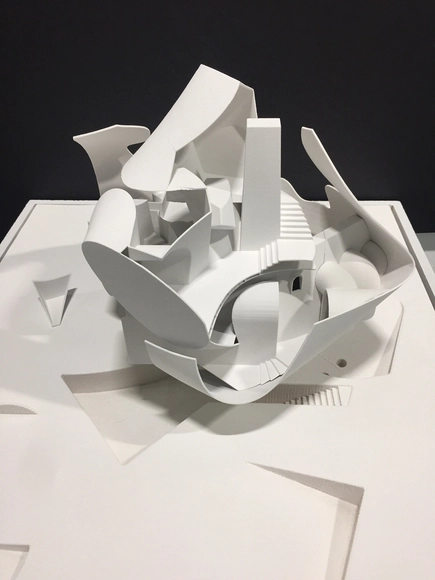
SCI-Arc’s New Undergraduate Curriculum Radically Rethinks Conventional Educational Models

SCI-Arc, one of the few remaining schools whose undergraduate program culminates in a thesis project, asks students to locate their position within the discipline, theorize a problem around that position, create a project that tests their theory, and ultimately to present and defend that position to an audience of future peers and professionals. It’s a cathartic endeavor that is to some degree fraught with anxiety, as defining a position and speculating on the future of the discipline can be a rather daunting endeavor.

SCI-Arc’s New Undergraduate Curriculum Radically Rethinks Conventional Educational Models - Image 1 of 4SCI-Arc’s New Undergraduate Curriculum Radically Rethinks Conventional Educational Models - Image 2 of 4SCI-Arc’s New Undergraduate Curriculum Radically Rethinks Conventional Educational Models - Image 3 of 4SCI-Arc’s New Undergraduate Curriculum Radically Rethinks Conventional Educational Models - Image 4 of 4SCI-Arc’s New Undergraduate Curriculum Radically Rethinks Conventional Educational Models - More Images+ 3

Subscriber Access

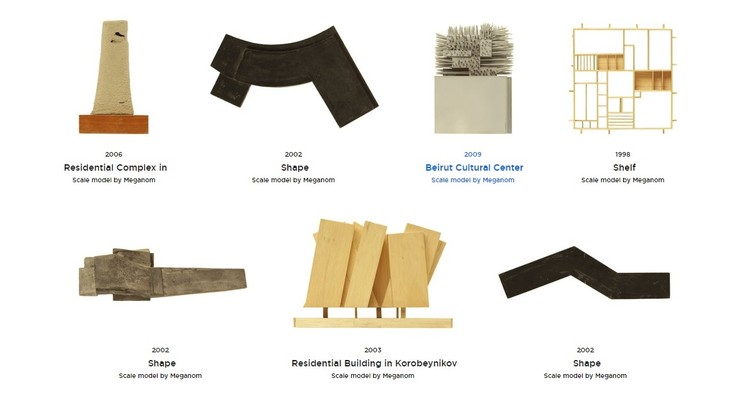
The Blog As A Museum: Meganom Makes its Online Exhibition Debut with Thngs

The Blog As A Museum: Meganom Makes its Online Exhibition Debut with Thngs - Image 5 of 4
Courtesy of Thngs Co.

Our experience of information is changing. We now consume more and more information digitally, with much of this being non-textual. Videos, photos and GIFs have become commonplace, with technology allowing these mediums to be as easily shareable as text. This gives way to another trend: the increase in the number and accessibility of online platforms. Not only is more information being digitized, but more dynamic ways of digitization are being developed; multimedia articles and online exhibitions, for example, hope to provide a more engaging way of sharing information.

The Blog As A Museum: Meganom Makes its Online Exhibition Debut with Thngs - Image 1 of 4The Blog As A Museum: Meganom Makes its Online Exhibition Debut with Thngs - Image 2 of 4The Blog As A Museum: Meganom Makes its Online Exhibition Debut with Thngs - Image 3 of 4The Blog As A Museum: Meganom Makes its Online Exhibition Debut with Thngs - Image 4 of 4The Blog As A Museum: Meganom Makes its Online Exhibition Debut with Thngs - More Images+ 16

Subscriber Access

5 Ways to Improve Senior Wellness through Centres for Healthy Living

Today we live in a rapidly aging society. The shift in the population pyramid means that traditional healthcare systems need to be reimagined in order to efficiently support an increasing senior population. This added pressure on healthcare is significant--the number of older adults in the US alone requiring long-term healthcare support is set to increase from 15 million to 27 million by 2050. By partnering with designers, healthcare providers can create valuable responses to address these growing needs.

One building typology that expresses this designer-provider partnership are centers for healthy living (CHL). CHLs help to bridge the gap between the senior living and healthcare sectors, and go beyond simple clinic or exercise spaces. Taking a more holistic approach, they seek to become accessible destinations for programs that nurture wellness while providing a sense of place and community.

In a new downloadable report, Perkins Eastman have explored this typology in great depth by investigating existing CHLs. Through spatial and market research, case studies and user surveys, their findings identify strategies for improving upon the CHL model in the future. Read on for our summary of their discoveries.