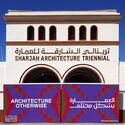
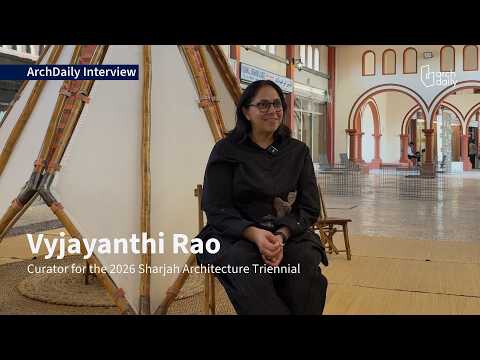
The third edition of the Sharjah Architecture Triennial (SAT03), titled Architecture Otherwise: Building Civic Infrastructure for Collective Futures, opened on November 14, 2026, and will run until April 14, 2027, across Sharjah, United Arab Emirates. Curated by anthropologist Vyjayanthi Rao and Associate Curator Tau Tavengwa, the edition brings together different forms of spatial knowledge and practice, considering how collective life is shaped through interactions, relationships, and negotiations. During the Triennial's opening week, ArchDaily's Editor-in-Chief Christele Harrouk spoke with Rao about the thinking behind this curatorial direction, the relationship between architecture and civic infrastructure, and the potential of architectural practice to engage with broader social and political conditions.
Architectural Education: The Latest Architecture and News
"Any User of a Space Is Also Its Producer": In Conversation With Vyjayanthi Rao at the 2026 Sharjah Architecture Triennial
Timber Is Not the New Concrete: A Free Tool for Sizing Wood Structures

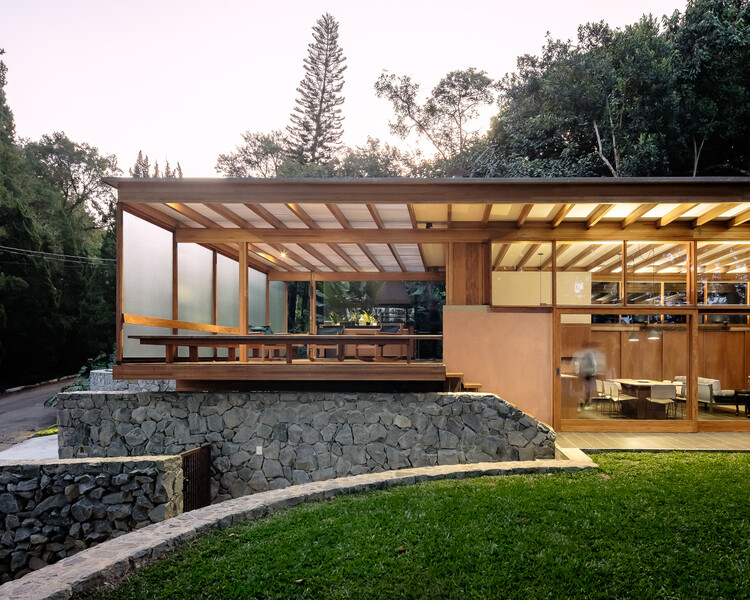
Every material brings its own logic to design. Its structural behavior, production methods, and the ways its components are connected influence what can be built and at what cost. In timber structures, the placement of supports, the arrangement of beams, and the panel layout affect material consumption and construction feasibility.
Grain direction influences wood's strength, while factors such as species, growing conditions, and moisture content also affect its properties. Preliminary sizing therefore requires specific knowledge of the material. With decades of experience designing and building timber structures, ITA collaborates with architects to develop solutions that align spatial intentions with the material's characteristics. This experience, combined with work in university workshops, led to FIBRA, a free preliminary sizing tool for engineered timber structures, designed to support experimentation in the early stages of design.
Beyond Buildings: ArchDaily's November Editorial Focus

"Design a cultural center on a desert coastline, in the style of Alvar Aalto, wood structure, golden hour, aerial drone shot, photorealistic, 4K." Within seconds, a line like this returns a convincing image. What is less visible is the shift it demands. For centuries, architectural imagination relied on the body: the hand that sketches, the fingers that shape a model, or, more recently, the click of a mouse in computational tools. Words came afterward, to explain what had already taken form. Today, the order is increasingly reversed. Before an image can exist, it must first be described: its references named, its materials listed, its mood specified.
This translation is not trivial. Intuition rarely arrives as a written sentence, and much of what architects imagine resists description. Yet as words increasingly become the entry point to the image, they also shape what can be imagined. The vocabulary available to describe a space begins to define the space itself.


Constructed Fictions: Inside the Work of Balsa Crosetto Piazzi

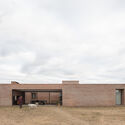
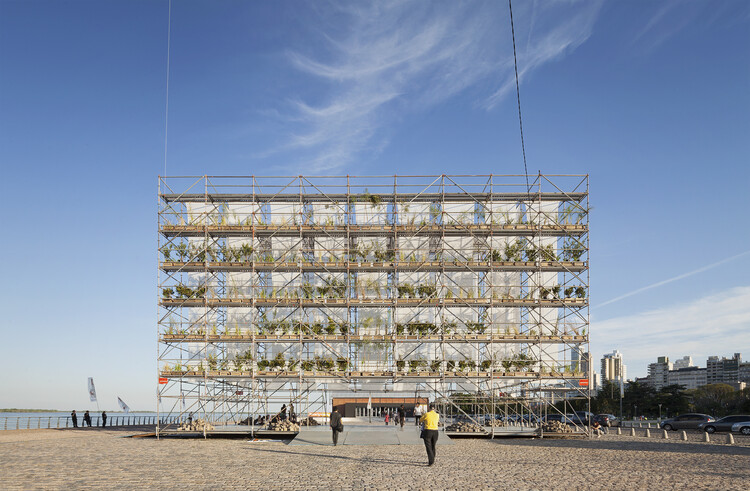
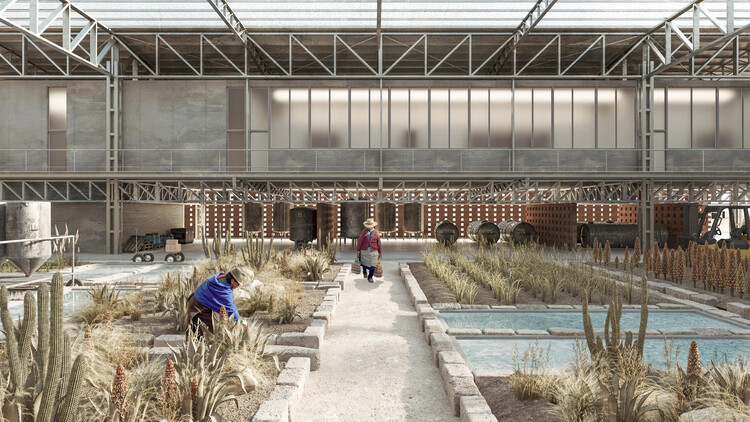
Balsa Crosetto Piazzi is an architecture practice founded in 2015, based in Córdoba, Argentina, and Boston, USA. Led by architects Juan Manuel Balsa, Rocío Crosetto Brizzio, and Leandro Piazzi, the core of their work is the material side of architecture. For them, a building is not just a finished object, but rather a way to organize everything that goes into making it. Their work is shaped by a slow process; during the construction and design stages, they pay attention to where the materials come from, who does the work, what skills those people already have, and what's actually available nearby. This allows their built work to become a platform that serves as a starting point, bringing all of these pieces together. In that sense, they also describe their projects as opportunities to "deconstruct entrenched conditions."
Learning Through Practice: Why Architecture Students Enter Competitions

On paper, entering an architecture competition is one of the most challenging things an architecture student can do. What draws students to them is the chance to experiment, approaching a loosely defined program that leaves room to test unconventional ideas and unfamiliar tools outside the rhythm of the semester. That distance from assessment is a relatively recent development, as competitions were once central to architectural education.
At the École des Beaux-Arts, teaching was split between the atelier, where students developed projects under a practising architect, and the competition, where a jury of professors judged the students' work without having followed its development. This model was later brought to schools such as MIT, Penn, and Cornell by French-trained instructors. Over time, most schools held on to the atelier, which became the design studio, and pushed the competition to the edges of the curriculum.
Farshid Moussavi Receives the 2026 Soane Medal

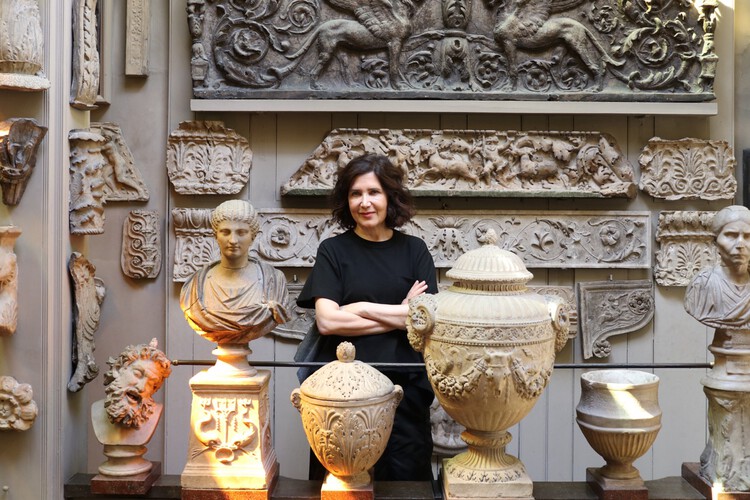
Farshid Moussavi has been awarded the 2026 Soane Medal for her contributions to architectural practice, history, and theory. The Iranian-born architect and educator, who founded Farshid Moussavi Architecture (FMA) in 2011, will receive the medal at the Royal Academy in London on November 24, 2026, where she will also deliver a public lecture. The annual award, established by Sir John Soane's Museum in 2017, recognizes individuals whose work has contributed to a broader understanding of architecture and its role in society.
African Futures Institute Transforms Former Warehouse Into Headquarters in Accra, Ghana

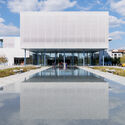
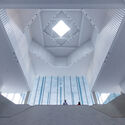
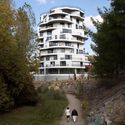
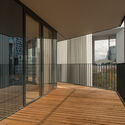
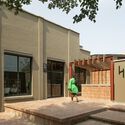
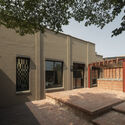
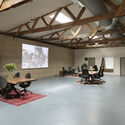
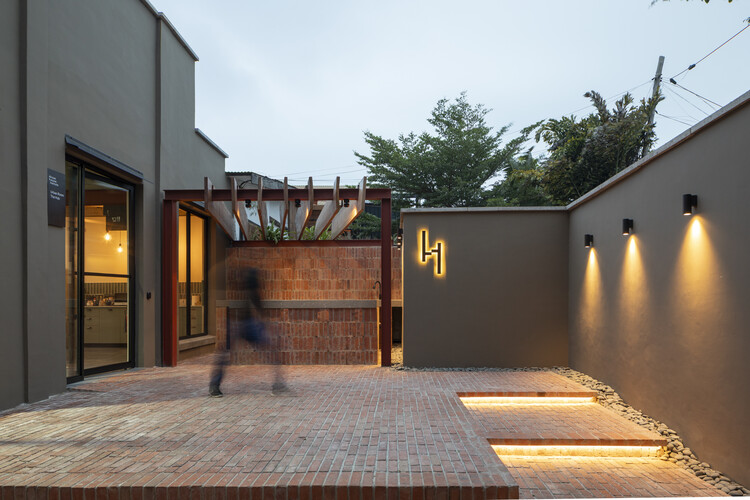
The African Futures Institute (AFI) has completed its new headquarters in Accra, Ghana, transforming a former tile warehouse in the city's Osu neighbourhood into a centre for architectural education, research, exhibitions, and public programmes. The project retains the existing industrial structure while introducing spaces for teaching, workshops, performances, screenings, and gatherings. Its completion gives the Institute a permanent base in Accra after several years of operating through programmes, partnerships, and temporary spaces across Africa and beyond.

ArchDaily Student Ambassadors 2026/2027. Apply Now

Applications for this year are now closed.
ArchDaily began on campus, founded by two architecture students shortly after graduation who believed that ideas in architecture and design should be accessible to all, reaching far and wide. Eighteen years later, while our tools have advanced, our horizons broadened, and our opportunities expanded, our core mission remains unchanged. ArchDaily is now officially launching the Student Ambassador Program, empowering the next generation of architects to play an active role in connecting their campus to the global architectural discourse.
Elia Zenghelis, Co-Founder of OMA and Architectural Educator, Passes Away at 89

Elia Zenghelis, Greek architect, co-founder of the Office for Metropolitan Architecture (OMA), and one of the most influential architectural educators of the late twentieth century, died on August 30, 2026, at the age of 89. His death marks the passing of a figure whose influence on architectural thought extended far beyond the buildings he designed, shaping the intellectual formation of several generations of architects through decades of teaching across Europe and the United States.
Born in Athens in 1937, Zenghelis studied architecture at the Architectural Association School of Architecture in London, completing his studies in 1961. He joined the practice of Douglas Stephen and Partners, where he worked until 1971, while simultaneously beginning to teach at the AA in 1963. At the school, he became a prominent voice for a more radical, avant-garde architectural discourse, helping to transform the AA into a fertile ground for radical ideas.
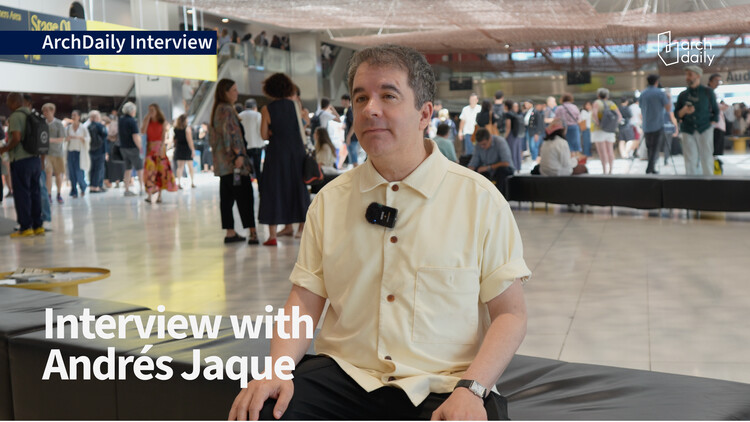
"Design Is Inseparable from Activism": In Conversation with Andrés Jaque at the UIA World Congress of Architects 2026
At the UIA World Congress of Architects 2026 in Barcelona, the theme Becoming. Architectures for a Planet in Transition framed architecture as a discipline operating within environmental, political, and social transformations rather than outside them. Among the speakers participating in this edition was architect Andrés Jaque, founder of the Office for Political Innovation and Dean of Columbia University's Graduate School of Architecture, Planning and Preservation (GSAPP). During the Congress, ArchDaily spoke with Jaque about architecture's capacity to generate alternatives, the role of experimentation in education, and why transition should be understood as a condition rather than a destination.

Pedagogy in Space: Architecture Schools' Hidden Curriculum

This article is part of our new Opinion section, a format for argument-driven essays on critical questions shaping our field.
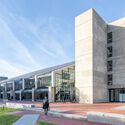
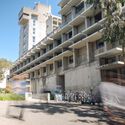
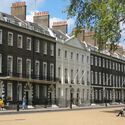
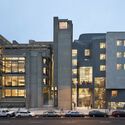
Before architecture students become authors of space, they are subjected to one. For years, they work inside a building that teaches without announcing itself as a teacher. It organizes their exhaustion, their ambition, their visibility, their solitude, their friendships, their sense of scale, and their relationship to judgment. Long before a student can articulate a position on architecture, the school has already offered one in its implicit built environment.
This is not to suggest that buildings determine architects. The influence is slower and less complete than that. A school building operates more like a hidden curriculum: a spatial discipline that works alongside faculty, syllabi, institutional culture, and student life. It teaches through access and obstruction, program adjacencies, daylight exposures, and scale. It produces habits of attention before it produces explicit beliefs.
The Lasting Impact of Architectural Education: Training Professionals to Question Convention

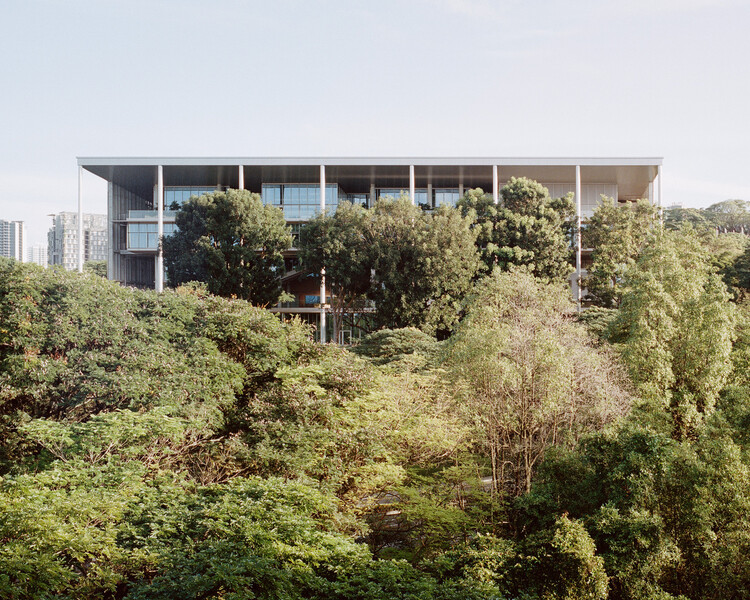
Architectural schools usually leave lasting marks on their students, shaping their style and critical inquiry long after formal education has ended. For example, SCI-Arc, founded in 1972 and based in downtown Los Angeles, is an institution recognized for its culture of experimentation, critical investigation, and creative independence, building a reputation based on the idea that architecture should be understood as a field open to dialogue with art, technology, design, and contemporary culture. The diversity of trajectories of its alumni demonstrates how this environment can generate distinct professional approaches, but united by the same willingness to explore new possibilities.
See and Foresee: Architectural Research Across Four Southeastern European Cities

Cities in Southeastern Europe do not wait to be read. They accumulate, layer upon layer of socialist planning, post-socialist disruption, and the quieter, less legible work of citizens remaking space from the ground up. Here, space and legacy insist on their own terms. What happens to architectural research when the cities that we observe already seem to know something our discipline has not yet learned to see?
Mastering Interdisciplinary Architecture and Sustainable Urbanism at UC Berkeley

Today, interdisciplinary learning and exchange are more important than ever in addressing increasingly complex environmental, social, and urban challenges.
Each summer, the University of California, Berkeley's College of Environmental Design (CED) becomes an intensive laboratory for architectural, landscape, and urban exploration. Through two complementary programs—Design + Innovation for Sustainable Cities (DISC) and the Summer Institutes—Berkeley offers an immersive curriculum grounded in disciplinary rigor, intentional exchange, and a shared institutional culture. Together, these programs reflect CED's long-standing multidisciplinary structure, with architecture, landscape architecture, city planning, and urban design thriving and collaborating under one roof.
Master's Programs in Architecture in Barcelona 2026: Innovation, Specialization, and a City in Motion

In 2026, Barcelona will become the global epicenter of architecture as it is named the World Capital of Architecture by UNESCO and the UIA. This recognition reinforces the city's role as an urban laboratory for innovation, sustainability, and contemporary design. Against this backdrop, pursuing a master's degree in architecture in Barcelona offers an opportunity for architects and industry professionals looking to specialize and connect with the trends transforming the discipline.
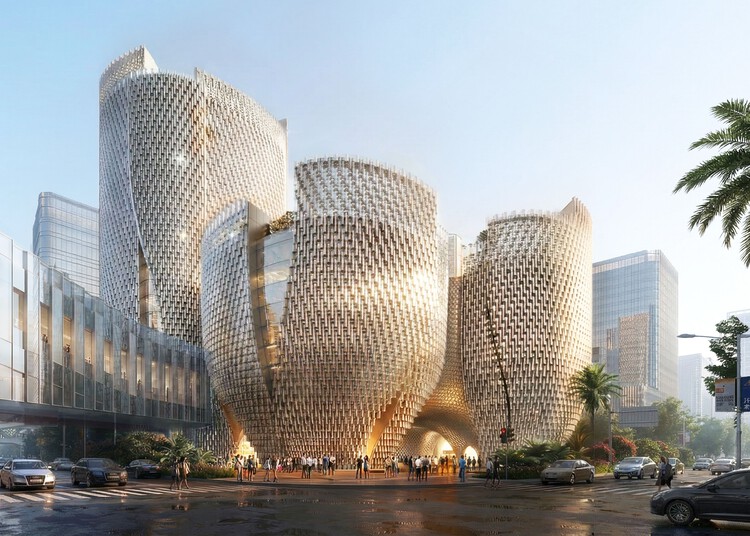
Zaha Hadid’s Legacy and Büro Ole Scheeren’s Róng Museum: This Week’s Review

As architectural discourse continues to expand across cultural, educational, and civic domains, this week's developments highlight how the discipline operates simultaneously through legacy, knowledge production, and large-scale public engagement. From reflections on influential figures and their enduring impact to evolving academic landscapes and new forms of cultural infrastructure, architecture is positioned as both a repository of ideas and an active agent in shaping contemporary identities. At the same time, projects spanning entertainment, museums, and waterfront developments point to a growing emphasis on hybrid programs and experiential environments, where architecture mediates between culture, public life, and global audiences.

Discover the Top Universities for Architecture and the Built Environment in 2026, According to QS Rankings

The 2026 edition of the QS World University Rankings, published by Quacquarelli Symonds, presents an updated overview of leading academic institutions worldwide. In the field of Architecture and the Built Environment, the 2026 edition once again evaluates universities across regions, reflecting both long-standing academic excellence and shifting global dynamics. The Bartlett School of Architecture maintains its position at the top of the ranking, continuing its multi-year lead, while the overall composition of the top 10 signals subtle but notable changes rather than major disruptions.

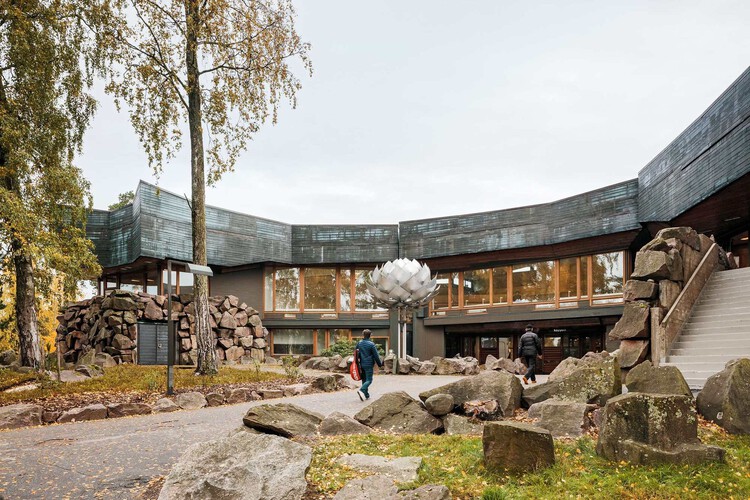
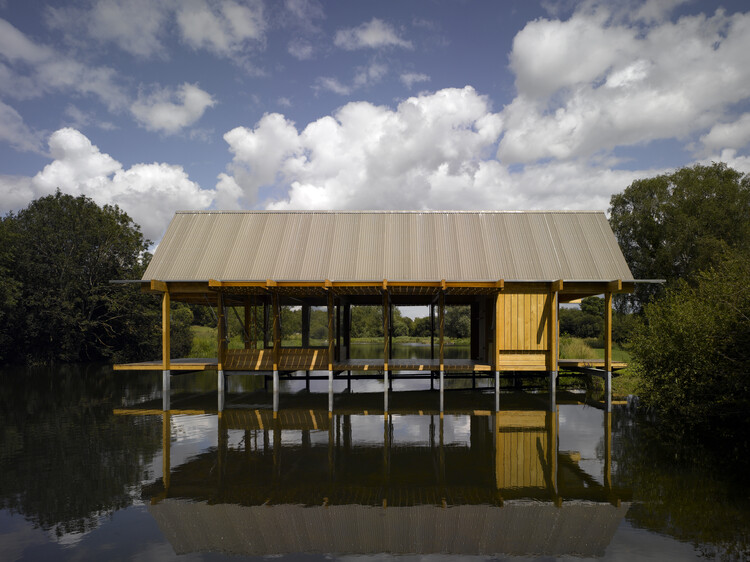
Níall McLaughlin Receives the 2026 RIBA Royal Gold Medal for Architecture

The Royal Institute of British Architects (RIBA) has announced that Irish architect, educator, and writer Níall McLaughlin will receive the 2026 Royal Gold Medal for Architecture. Awarded on behalf of His Majesty the King, the Royal Gold Medal is among the significant international distinctions in architecture, recognizing a sustained contribution to the advancement of the discipline through built work, education, and critical discourse. In announcing the award, RIBA noted McLaughlin's long-standing influence across architectural practice and pedagogy, citing a career that spans more than three decades and reflects a consistent engagement with the cultural, environmental, and social dimensions of architecture.