1. ArchDaily
  2. Elia Zenghelis

Elia Zenghelis: The Latest Architecture and News

Subscriber Access

Learning Through Practice: Why Architecture Students Enter Competitions

Audio available

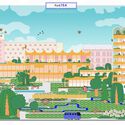
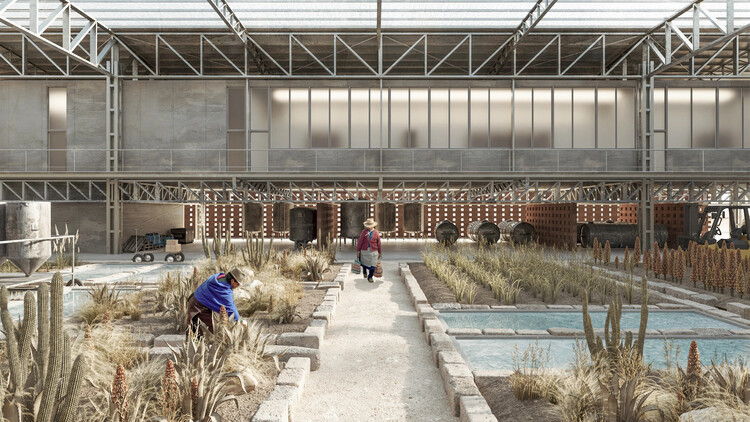
On paper, entering an architecture competition is one of the most challenging things an architecture student can do. What draws students to them is the chance to experiment, approaching a loosely defined program that leaves room to test unconventional ideas and unfamiliar tools outside the rhythm of the semester. That distance from assessment is a relatively recent development, as competitions were once central to architectural education.

At the École des Beaux-Arts, teaching was split between the atelier, where students developed projects under a practising architect, and the competition, where a jury of professors judged the students' work without having followed its development. This model was later brought to schools such as MIT, Penn, and Cornell by French-trained instructors. Over time, most schools held on to the atelier, which became the design studio, and pushed the competition to the edges of the curriculum.
Learning Through Practice: Why Architecture Students Enter Competitions - Image 1 of 4Learning Through Practice: Why Architecture Students Enter Competitions - Image 2 of 4Learning Through Practice: Why Architecture Students Enter Competitions - Image 3 of 4Learning Through Practice: Why Architecture Students Enter Competitions - Image 4 of 4Learning Through Practice: Why Architecture Students Enter Competitions - More Images+ 12

Subscriber Access

Freedom and Architecture: Anneke Abhelakh on "The Albanian Files"

Audio available

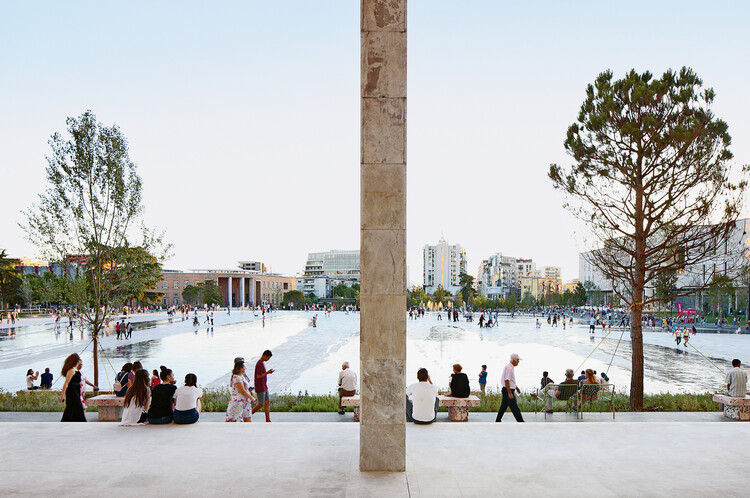
For the past twenty years, Albania has been one of the most active construction territories in Europe. Dozens of international architects have been working there on projects that promise to alter the drawing, the structure, and the cities of a country still recovering from the regimes of the last century. To acknowledge that growth, and those changes in the landscape, is also to acknowledge that behind every form there is a story, and that there are files that tell us more than architecture itself.

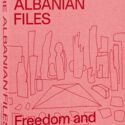
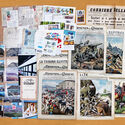
Edited by Anneke Abhelakh and published by Lars Müller Publishers, with a foreword by Prime Minister Edi Rama, The Albanian Files has compiled two decades of work of sixty international architecture offices working in Albania into a dense publication whose format, color, and sheer presence amount to a statement in the reading of the country's recent history. The publication works as an extended document, a cartography of what these processes left behind. Much of what takes shape across its pages describes structures of power, patterns of commissioning, and positions whose consequences have proved controversial. Revealing is a sign of transparency, but it is also a sign that some things should never have been hidden in the first place. Albania, more than ever, with its aspirations to open a territory and its growing wish to engage with the world (through tourism and the prospect of EU membership), needs this clarity.

Freedom and Architecture: Anneke Abhelakh on "The Albanian Files" - Image 1 of 4Freedom and Architecture: Anneke Abhelakh on "The Albanian Files" - Image 2 of 4Freedom and Architecture: Anneke Abhelakh on "The Albanian Files" - Image 3 of 4Freedom and Architecture: Anneke Abhelakh on "The Albanian Files" - Image 4 of 4Freedom and Architecture: Anneke Abhelakh on The Albanian Files - More Images+ 4

Subscriber Access

Elia Zenghelis, Co-Founder of OMA and Architectural Educator, Passes Away at 89

Audio available

Elia Zenghelis, Greek architect, co-founder of the Office for Metropolitan Architecture (OMA), and one of the most influential architectural educators of the late twentieth century, died on August 30, 2026, at the age of 89. His death marks the passing of a figure whose influence on architectural thought extended far beyond the buildings he designed, shaping the intellectual formation of several generations of architects through decades of teaching across Europe and the United States.

Born in Athens in 1937, Zenghelis studied architecture at the Architectural Association School of Architecture in London, completing his studies in 1961. He joined the practice of Douglas Stephen and Partners, where he worked until 1971, while simultaneously beginning to teach at the AA in 1963. At the school, he became a prominent voice for a more radical, avant-garde architectural discourse, helping to transform the AA into a fertile ground for radical ideas.

Albania Pavilion Explores the Intersections of Architecture, History, and Identity at the 2025 Venice Biennale

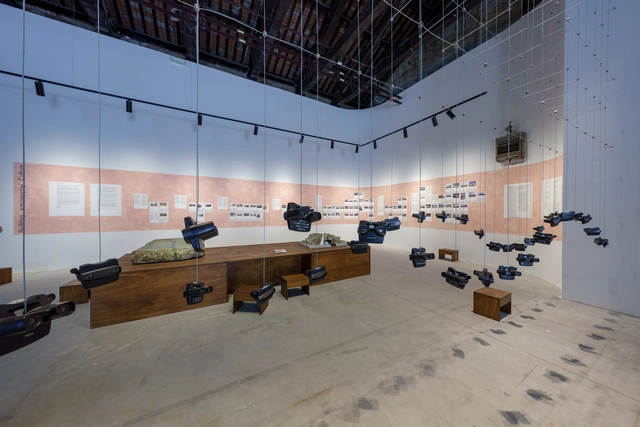
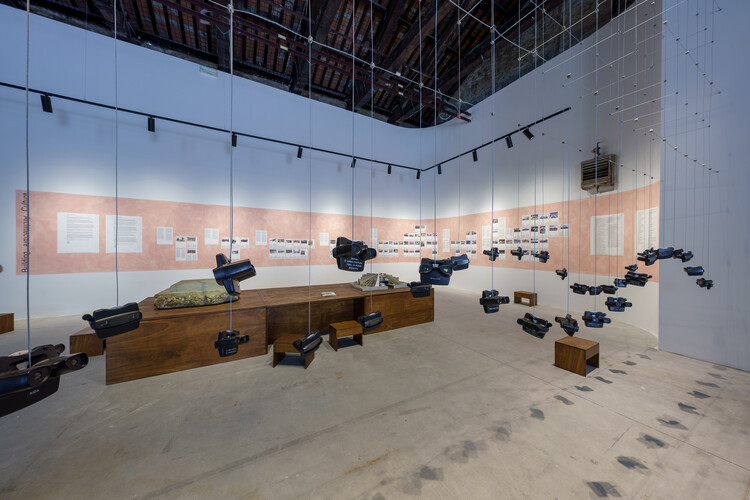
Curated by Anneke Abhelakh, the Albania Pavilion at the 2025 Venice Architecture Biennale, titled "Building Architecture Culture", explores how the country's architecture embodies its political, cultural, and social transformations. Albania's built environment reflects a layered history, from Ottoman and Italian rule to communist isolation and post-socialist transformation, each leaving visible marks on its cities and public spaces. The pavilion examines how architecture both responds to and shapes collective memory, public space, and civic engagement, framing these questions through past, present, and future perspectives.

Albania Pavilion Explores the Intersections of Architecture, History, and Identity at the 2025 Venice Biennale - Image 1 of 4Albania Pavilion Explores the Intersections of Architecture, History, and Identity at the 2025 Venice Biennale - Image 2 of 4Albania Pavilion Explores the Intersections of Architecture, History, and Identity at the 2025 Venice Biennale - Image 3 of 4Albania Pavilion Explores the Intersections of Architecture, History, and Identity at the 2025 Venice Biennale - Image 4 of 4Albania Pavilion Explores the Intersections of Architecture, History, and Identity at the 2025 Venice Biennale - More Images+ 25

AD Classics: Dutch Parliament Extension / OMA

This article was originally published on April 22, 2016. To read the stories behind other celebrated architecture projects, visit our AD Classics section.

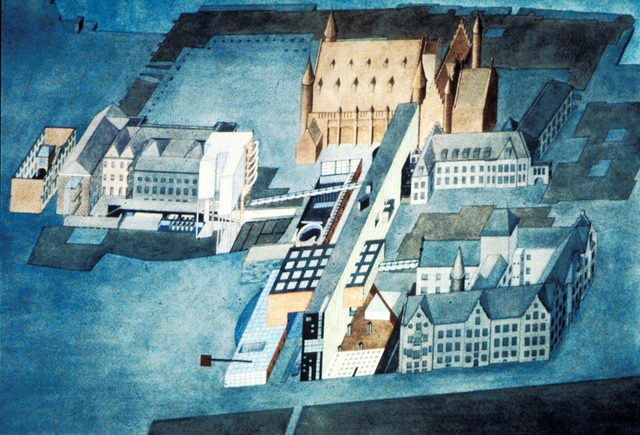
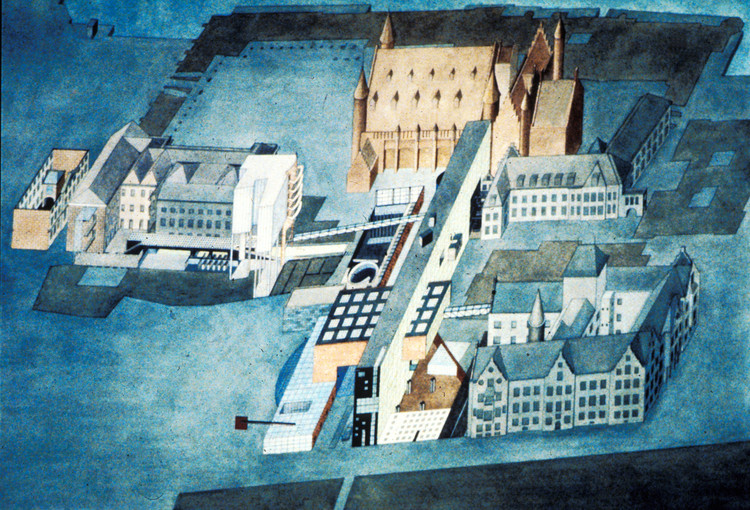
Designed shortly before Zaha Hadid left the Office of Metropolitan Architecture (OMA)—led by Rem Koolhaas—to found her practice, Zaha Hadid Architects, the proposed extension for the Dutch Parliament firmly rejects the notion that imitation is the sincerest form of flattery. Rather than mimic the style of the existing historic buildings, OMA elected to pay tribute to the complex’s accretive construction by inserting a collection of visibly postmodern, geometric elements. These new buildings, unapologetic products of the late 1970s, would have served as unmistakable indicators of the passage of time, creating a graphic reminder of the Parliament’s long history.

AD Classics: Dutch Parliament Extension / OMA - Landmarks & MonumentsAD Classics: Dutch Parliament Extension / OMA - Landmarks & MonumentsAD Classics: Dutch Parliament Extension / OMA - Landmarks & MonumentsAD Classics: Dutch Parliament Extension / OMA - Landmarks & Monuments, FacadeAD Classics: Dutch Parliament Extension / OMA - More Images+ 4

Watch Harvard GSD Celebrate Zaha Hadid in this Discussion Including Patrik Schumacher and Elia Zenghelis

In October, the Harvard Graduate School of Design (Harvard GSD) hosted “Zaha Hadid: A Celebration,” an evening of presentations and discussion around the extraordinary work and life of the late Zaha Hadid. Six months on from Hadid’s sudden passing in March, the Dean of Harvard GSD, Mohsen Mostafavi, introduced the event as the appropriate time to focus on creative recognition and “an evening of incredible celebration and enjoyment.”

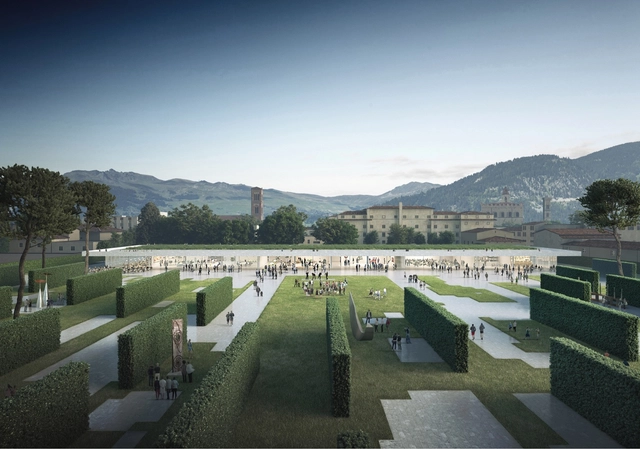
OBR with Michel Desvigne Wins Competition to Design New Central Park in Prato, Italy

OBR Paolo Brescia and Tommaso Principi and Michel Desvigne Paysagiste have been announced of the winners of first prize in the international competition to design the new Parco Centrale (Central Park) in Prato, Italy.

The 230-team competition asked architects to design a new 3-hectare urban park in Prato’s historical city center on the site of the former city hospital, within the perimeter of the city walls. The project is intended to meet the needs of a contemporary city while driving socio-economic development of the city center through “enhancements to its touristic vocation, sustainability and accessibility.”

The jury, chaired by architect Bernard Tschumi, unanimously selected the winning proposal for “its ability to offer to the city of Prato an original, innovative and practical solution.” Commented Tschumi on the design, “The project is remarkable in the way it understands and celebrates the history of Prato and of its medieval walls. At the same time, it looks to the future and to the development of the city and its diverse population.”

The jury also released the full rankings of the 10 finalist teams. Learn about the winning design and see the entries from all 10 of the finalists, after the break.

Subscriber Access

Elia Zenghelis and Steven Holl Share Lessons Learned from a Life in Architecture

In the latest video on architecture and urbanism from 32BNY, Steven Holl and his associate Dimitra Tsachrelia sit down with Elia Zenghelis, a founding partner at OMA and former lecturer at the Architectural Association in London. After forty-five years in architecture, Zenghelis has come to a series of conclusions, including a long-standing belief that men obstruct the design potential of their female colleagues, creating an imbalance in the professional landscape. "Women are much better architects than men," proclaims Zenghelis, former professor to Steven Holl, Rem Koolhaas and Zaha Hadid (as well as a former collaborator of the latter two). Sitting in Holl's New York office, Zenghelis argues that women have a certain intuition that proves essential to the creation of great design. "It's men that dominate the scene - something has to happen," he says.

Read on for more on the contents of the video.

Subscriber Access

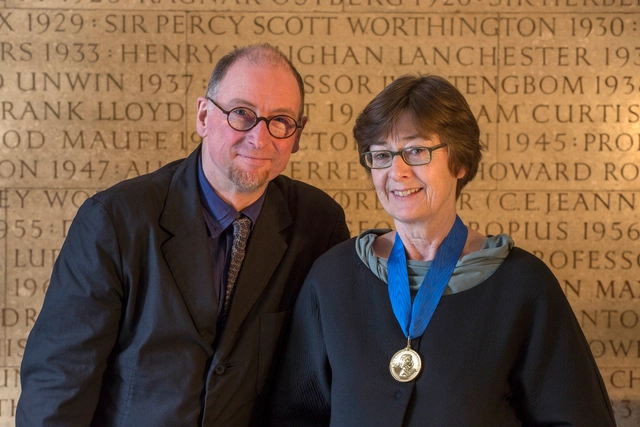
In Conversation With Sheila O'Donnell And John Tuomey, 2015 Royal Gold Medallists

When Sheila O'Donnell and John Tuomey, who practice in partnership as O'Donnell + Tuomey, were named as this year's recipients of the RIBA Royal Gold Medal, a palpable collective satisfaction appeared to spread throughout the profession. No one could find criticism in Joseph Rykwert and Níall McLaughlin's nomination, nor the ultimate choice of the RIBA Honours Committee, to bestow the award upon the Irish team. Their astonishingly rigourous body of work, compiled and constructed over the last twenty five years, has an appeal which extends beyond Irish and British shores. A robust stock of cultural, community and educational projects, alongside family homes and social housing projects, leaves little doubt about the quality, depth and breadth of their mutual capabilities and the skill of those that they choose to collaborate with.

Read the conversation with the Gold Medallists after the break.

In Conversation With Sheila O'Donnell And John Tuomey, 2015 Royal Gold Medallists - Image 1 of 4In Conversation With Sheila O'Donnell And John Tuomey, 2015 Royal Gold Medallists - Image 2 of 4In Conversation With Sheila O'Donnell And John Tuomey, 2015 Royal Gold Medallists - Image 3 of 4In Conversation With Sheila O'Donnell And John Tuomey, 2015 Royal Gold Medallists - Image 4 of 4In Conversation With Sheila O'Donnell And John Tuomey, 2015 Royal Gold Medallists - More Images+ 16