-
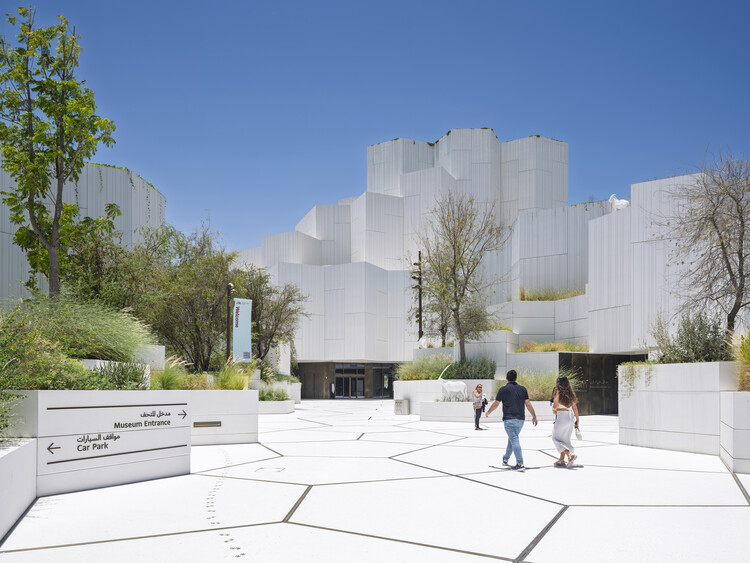
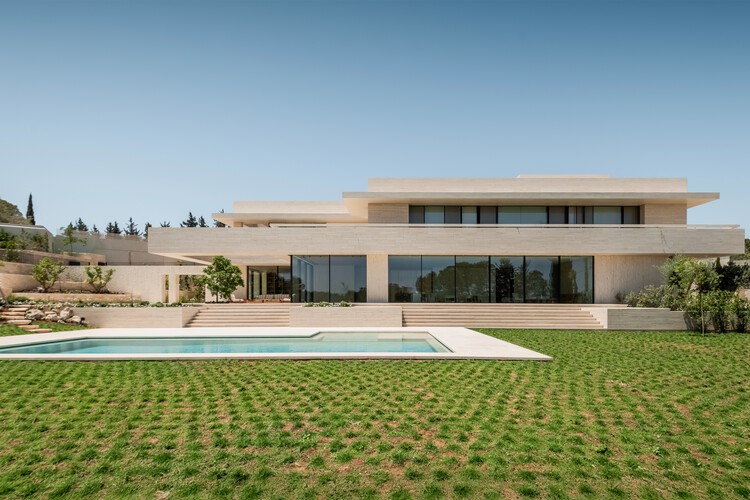
Architects: Bittar Arquitetura
- Area: 9139 ft²
- Year: 2018
-
Manufacturers: AutoDesk, Hunter Douglas, VitrA


With a deeply social body of work dedicated to public use, João da Gama Filgueiras Lima, known as Lelé, became one of the key figures in Brazilian architecture. Over his 60-year career, he built hospitals, schools, transit terminals, bus shelters, courthouses, government offices, and other administrative headquarters.
Across all these projects, he combined a meticulous care for materials and the workforce with technical and artistic excellence. He understood, like few others, how to leverage natural light and ventilation to promote energy efficiency and user well-being.

No País dos Arquitectos is a podcast created by Sara Nunes, who also runs the architectural film production company Building Pictures. The podcast aims to introduce the professionals, projects, and stories behind landmark contemporary Portuguese architecture. With just over 10 million inhabitants, Portugal is a highly compelling country in this professional field, with an architectural output that far exceeds what its population or territorial scale might suggest.
In this episode, Sara talks with architect Adalberto Dias about the Guindais Funicular project in Porto. Listen to the full interview and read an excerpt of the transcript below:


Registration is now open for the second edition of the self-paced course “Heritage Education, Diversity, and Environment in the Federal District.” Open to the general public, the course is part of the work plan under a cooperation agreement signed between the National Institute of Historical and Artistic Heritage (Iphan) in the Federal District (DF) and the State Secretariat of Education of the DF (SEEDF).


Something is deeply wrong when the most beautiful streets in Brazil would be forbidden from being built today. Indeed, the vast majority of Brazilian master plans prohibit any of us from building houses and buildings with the very characteristics that led these streets to be voted the most beautiful in the country.

Seeking a more noble purpose for its Municipal Market, the municipality of Ponta Grossa, Paraná, launched a national design competition in September 2021. The site, previously filled with debris and hoarding, will be redeveloped to accommodate 180 commercial stalls, a food court, and parking. Last December, the jury announced Austral Studio, a Curitiba-based office led by architect Henrique Wosiack Zulian, as the competition winner.

Achieving greater independence in energy generation is one way to offset rising electricity bills. Consequently, small-scale renewable energy systems are becoming increasingly common. In Sorocaba, in the state of São Paulo, the startup Vida Maker has developed a micro-power plant that can be powered by solar panels, wind energy, and hydroelectric generators.
Operating as a generator, the system can serve as a power source for electronics, household appliances, and lighting.

In its most widely accepted definition, sustainable development is understood as meeting the needs of the present generation without compromising the ability of future generations to meet their own. While often associated with environmental and natural resource issues, sustainable development goes further, encompassing social and economic aspects such as justice, inclusion, and poverty eradication.


A travessa—or crossway—represents transversality over convention; it is a shortcut that avoids the obvious, an alternative for shortening paths and connecting disparate pieces juxtaposed by its presence.

Marcelino Melo, also known as Nenê, is a multimedia artist who works with audiovisual productions and has recently gained recognition for his work with miniature house sculptures that depict life in the peripheries. Born in Alagoas, Nenê arrived in São Paulo in his early teens and discovered Hip Hop, a moment he considers fundamental to the development of his work. The sculpture project, known as Quebradinha, is featured in the Carolina Maria de Jesus exhibition at the Instituto Moreira Salles in São Paulo, while also amassing over 190,000 followers on Instagram, with videos and posts exceeding millions of views.


The Covid-19 pandemic hit public transit hard. Initially, global ridership dropped by up to 80%, and by the end of 2020, public transit was still operating with only about 20% of its pre-pandemic passenger volume. The concern is that, if public transit does not recover, people will increasingly opt for private vehicles.

Over the last few decades, discussions on addressing climate challenges have unfolded even as we experience their effects. Although cars and motorcycles are the primary emitters of pollutants, buses also play a significant role in greenhouse gas emissions and the rise of illnesses related to air pollution. In this regard, adopting new technologies, such as electric buses and alternative fuels, is essential to reducing their impact on public health and the environment.